Los Angeles, CA
Ice maker repair in Los Angeles County.
94 cities and neighborhoods across Los Angeles County, part of Los Angeles — 14 with a page on what that place does to an ice maker.
Mon–Sat, 8am–8pm
- 94 places covered
- 14 with a page
- 10 repairs we do here
Book a visit
Three short steps, about a minute.
or call (844) 773-0701
Loading appointment form…
The appointment form couldn’t load. Please try again.
What Los Angeles County does
to an ice maker.
Where ice makers sit in Los Angeles County: designed kitchens and bars, outdoor bars, gated communities.
All of Los AngelesDesigned kitchens and bars
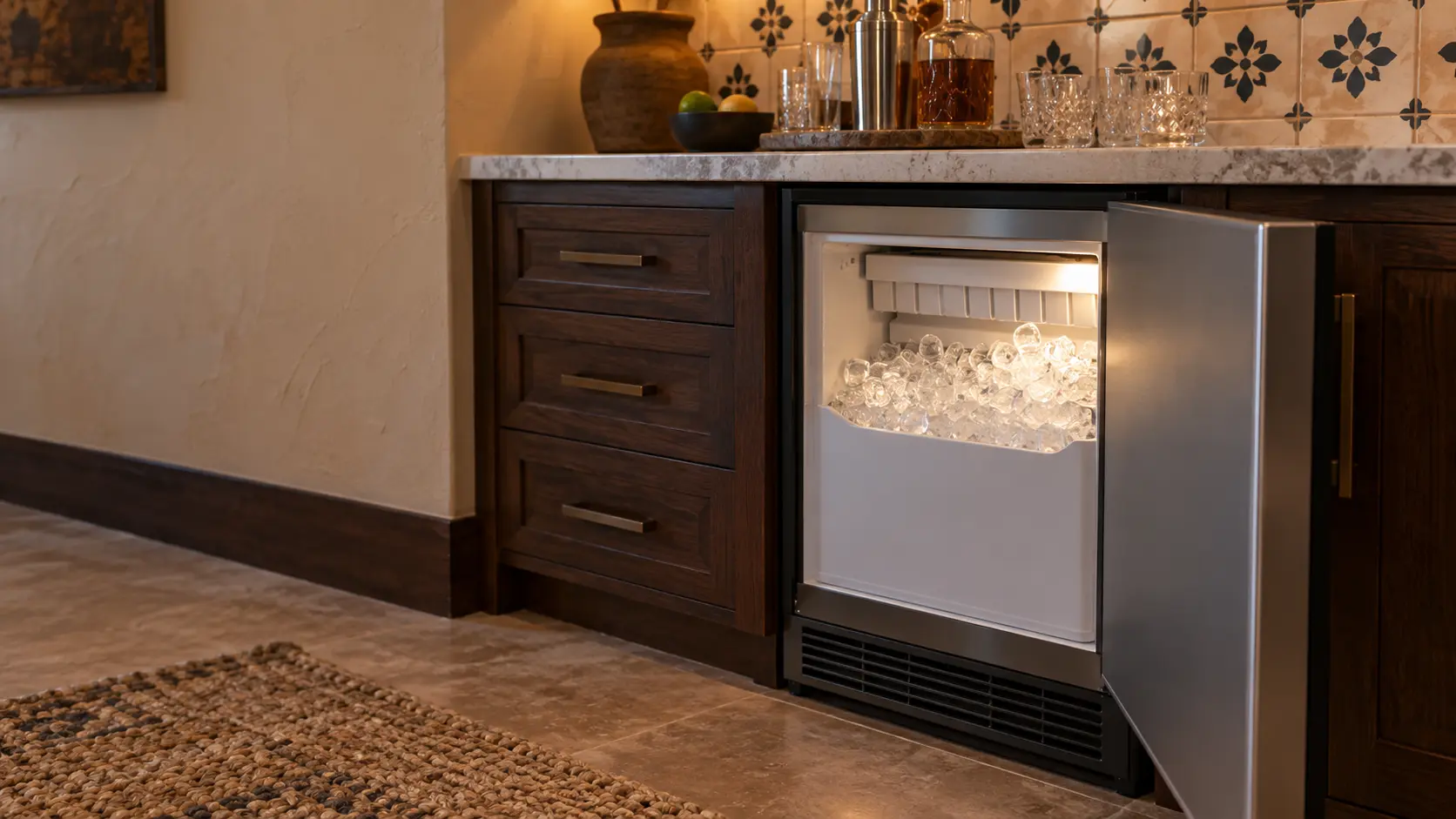
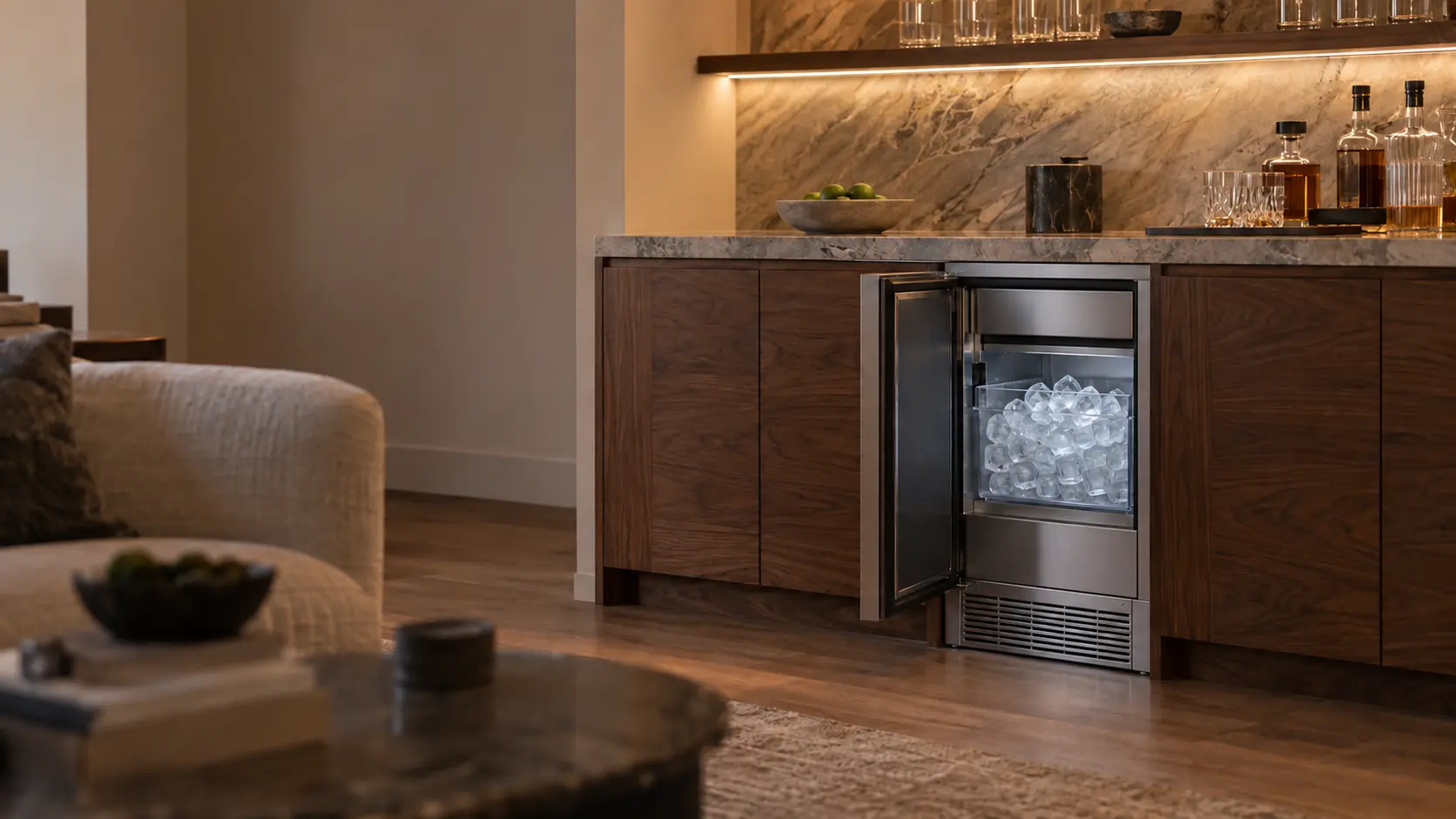
A designed kitchen may carry three sources of ice at once, the door dispenser, a freezer drawer mold and an undercounter unit at the bar, each on its own supply branch, so mapping which valve feeds which is the first step in any leak call there.
Outdoor bars
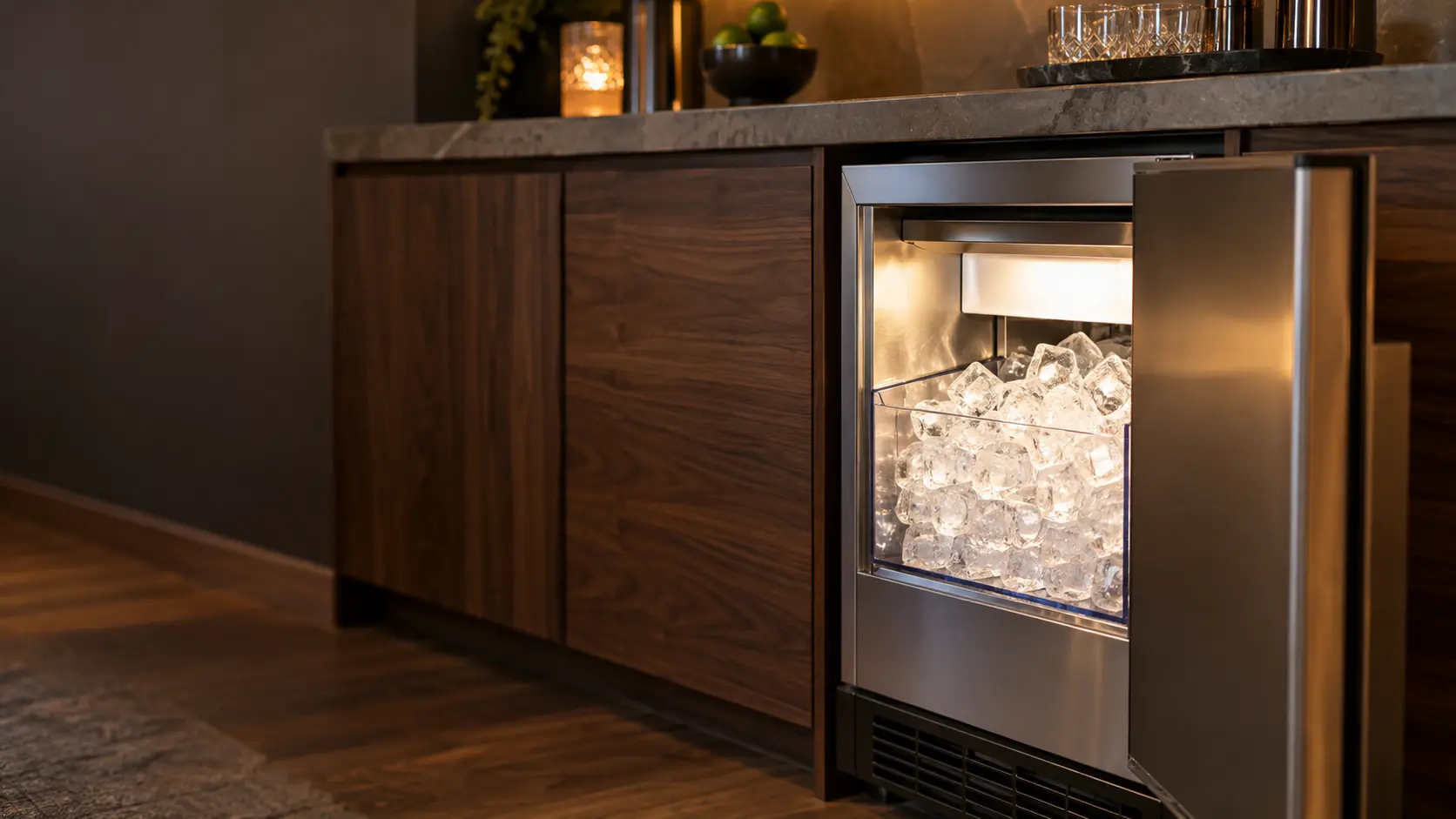
Pool chemicals, pollen and leaves drift into an outdoor ice maker whenever its door is left open, so clearing debris from the drain and from the freezing surface, followed by a sanitizing cycle, is part of every outdoor service.
Gated communities
Estate houses behind a gate often run a whole-house softener or a filtration room, and when the softener runs out of salt the ice maker is the first to show it, with chalky cubes and a scaled mold, so the softener is read as part of the visit.
Where we go
in Los Angeles County.
94 cities and neighborhoods across Los Angeles County, part of Los Angeles, 14 of them with a page on what that place does to an ice maker. The same visit in each.
Bel Air
Water for Bel Air Estates, one of LADWP's Western Los Angeles communities, comes from aqueduct supply out of the Owens Valley and Mono Basin plus State Water Project deliveries.
Beverly Hills
Houses where the kitchen carries a panel-ready column with an ice maker and a separate clear-ice unit at the bar, the water is mineral-rich, and a housekeeper usually reports the first cloudy batch.
Brentwood
Family houses that host often, where the ice maker is expected to keep up with pool afternoons and weekend parties, so a slow harvest, a bin that clumps in the heat or a dispenser that jams shows up the day it matters most.
Calabasas
The Las Virgenes water district, whose headquarters is in Calabasas, owns no local drinking water source and imports all the water it delivers.
Hancock Park
Developer George Allan Hancock divided the tract into lots during the 1920s, and the neighborhood is known for architecturally distinctive houses.
Holmby Hills
Zoning in Holmby Hills allowed lots as large as four acres on land Arthur Letts Sr.
Malibu
Beach houses and canyon homes that stay shut between visits or fill with renters, where an outdoor ice maker faces sea spray on one side and hard, imported water on the other, and the first guest after a gap is often the one to discover its drain or its valve has given up.
Manhattan Beach
Manhattan Beach water averages about 310 ppm of hardness, blended from 45 percent local groundwater and 55 percent imported surface water.
Pacific Palisades
Rebuilt lots and surviving houses alike, where the ice makers in rebuilt kitchens sit on brand-new supply lines, and homes still standing after the January 2025 fire had their plumbing flushed and their ice makers cleaned before the ice could be trusted again.
Palos Verdes Estates
Since 1970 Cal Water has run the peninsula's water system, which reaches Rancho Palos Verdes, Palos Verdes Estates, Rolling Hills Estates, Rolling Hills and a slice of Lomita.
Pasadena
Craftsman houses whose kitchens were modernized around the original plumbing, where an ice maker's line may tap into old galvanized pipe that sheds scale into the valve screen, on top of water that is already mineral-heavy.
San Marino
Lot minimums in San Marino vary across seven zoning districts.
Santa Monica
Santa Monica pumps up to three quarters of its supply from its own wells in the Arcadia, Charnock and Olympic sub-basins, and Metropolitan fills in the last quarter.
Studio City
Mack Sennett's 1927 studio lot, today Radford Studio Center, gave Studio City its name.
Also covered in Los Angeles County
- Agoura HillsAgoura Hills has been part of the Las Virgenes water district since at least 1990, and state water bought from Metropolitan is the district's sole source.
- AlhambraAlhambra, in the western San Gabriel Valley east of downtown Los Angeles, had 82,868 residents in the 2020 census.
- ArcadiaLucky Baldwin oversaw Arcadia's incorporation in 1903 and served as its first mayor.
- Beverly GroveIn 2008 a city ordinance amended the zoning map to formally recognize the Beverly Grove area of the Wilshire Community Plan.
- BeverlywoodMany Beverlywood residents have pressed the City Council to cap new home sizes, arguing that bigger rebuilds change the neighborhood's feel.
- BradburyBradbury has three parts: the gated Bradbury Estates, the gated Woodlyn Lane and an ungated remainder.
- BurbankBurbank joined the Metropolitan Water District in 1928, among its first 13 member cities.
- Canoga ParkNearly two thirds of Canoga Park housing, 63.6 percent, is rented.
- CarthayJust under two thirds of Carthay's homes, 64.7 percent, are rented.
- Century CityApartment owners hold 60.4 percent of Century City's housing, with renters in the remaining 39.6 percent.
- ChatsworthChatsworth's housing is 71.1 percent owner-occupied.
- Cheviot HillsLADWP's water report names Cheviot Hills as a Western Los Angeles community served with aqueduct and State Project water.
- Culver CityCulver City was headquarters to Hughes Aircraft from 1932 to 1986, and Sony Pictures Entertainment and NPR West keep headquarters there today.
- Del ReyRenters occupy about 70.7 percent of Del Rey's housing, up sharply from 55.2 percent in 2008.
- Echo ParkLADWP supplies Echo Park from its eastern system, which runs on State Project and Colorado River Aqueduct water.
- El SegundoIndustrial and commercial uses take up roughly three quarters of El Segundo's land, and the Chevron refinery by itself occupies over a quarter of it.
- EncinoEncino is one of the San Fernando Valley communities LADWP serves with a mix of aqueduct water, local wells and State Water Project supply.
- FairfaxNearly 72 percent of homes in the Fairfax District are rented, and any exterior change in its historic district must clear the Office of Historic Resources.
- GlendaleBy 2014 thousands of luxury apartments had gone up in downtown Glendale.
- Granada HillsGranada Hills can claim the Valley's first oil well, drilled in 1876 at what is now the north end of Zelzah Avenue.
- Hermosa BeachWesterly sea breezes help keep smog away from Hermosa Beach on 360 days a year.
- Hidden HillsHidden Hills has no sidewalks or streetlights, and many of its two-acre lots are ringed by white three-rail fences.
- HollywoodSanta Ana winds reach Hollywood mostly in fall and winter, bringing strong gusts, higher temperatures and low humidity that raise wildfire risk.
- Hollywood / Central LAGriffith Park, the largest public park in Los Angeles, lies within Central Los Angeles alongside twenty-three city neighborhoods spread over about 58 square miles.
- Hollywood HillsLADWP groups the Hollywood Hills with its San Fernando Valley communities, served from the aqueduct, local groundwater and the State Project.
- Hollywood Hills WestHollywood Hills West touches Studio City on the north, Hollywood and West Hollywood on the south, and Beverly Hills and Coldwater Canyon on the west.
- KoreatownKoreatown gets its water through LADWP's central system, a mix of aqueduct, State Project and local groundwater supply.
- La Cañada FlintridgeLocal springs once supplied most of the area's water, and today the Foothill Municipal Water District, formed in 1952, buys imported water through Metropolitan while local sources meet around a fifth of demand.
- Lake BalboaThe census found 24,328 residents in the 3.13 square miles of Lake Balboa, about average density for Los Angeles.
- Larchmont VillageClose to three quarters of Larchmont's housing, 72.9 percent, is rented.
- Laurel CanyonIn 1907 the Bungalow Land subdivision took shape at Laurel Canyon Boulevard and Lookout Mountain Avenue, with a roadhouse tavern called Bungalow Inn.
- Los FelizA May 2007 wildfire burned uninhabited terrain in Los Feliz and Griffith Park, including Dante's View.
- Malibu / Santa Monica MountainsDry summers, relieved only by coastal fog, leave the Santa Monica Mountains prone to wildfire, most of all when Santa Ana winds blow.
- Mar VistaMar Vista appears on LADWP's list of Western Los Angeles communities, whose water blends Los Angeles Aqueduct and State Water Project supplies.
- Marina del ReyOf the 8,065 housing units counted in Marina del Rey, roughly 15 percent stood empty.
- Mid-WilshireThe Park Mile section of Mid-Wilshire keeps a three-story height limit and bans painted signs on building exteriors to protect its single-family character.
- Miracle MileFinished in 1929 in black and gold, the Deco Building at 5209 Wilshire holds a National Register listing.
- MonroviaThe first airmail flight from Monrovia Airport took off on May 19, 1938.
- Mount OlympusWith roughly three houses to the acre, Mount Olympus also sees periodic mudslides.
- Nichols CanyonIn 1981 Nichols Canyon was among several canyons exposed to heavy rain damage after it emerged that the city lacked funds to continue flood control projects.
- North HollywoodAbout three in four North Hollywood homes, 75.4 percent, are rented.
- NorthridgeRenters and owners split Northridge's housing nearly evenly, 46.4 to 53.6 percent.
- PalmsUntil the early 1960s most of Palms was Craftsman and Spanish Colonial houses and small duplexes and triplexes, before much of that stock was replaced by larger apartment buildings.
- Pico-RobertsonNearly three in four homes in South Robertson, 73.1 percent, are rented.
- Playa del ReyPlaya del Rey counted 16,230 residents in 2018, most of them in the dense apartment and condominium blocks of its eastern part.
- Playa VistaOwners occupy 54.8 percent of Playa Vista's housing and renters 28.5 percent, in a planned community that began development in 2002.
- Porter RanchA 1988 brush fire pushed by 70 mph Santa Ana winds crossed Aliso Creek and destroyed 13 homes in Porter Ranch while damaging 23 more.
- Rancho Palos VerdesGas service began returning to most Portuguese Bend landslide homes in Rancho Palos Verdes by May 2025, once monitoring showed no measurable ground movement.
- Rancho ParkRancho Park was part of Westwood until Olympic Boulevard divided the area, and in the 1930s its southern half lobbied for an identity of its own.
- Redondo BeachRedondo Beach rejected, as incomplete, a 2023 plan for 2,700 homes and shops on the site of an aging waterfront power plant.
- ResedaThe epicenter of the 1994 Northridge earthquake lay in Reseda, just west of Reseda Boulevard between Arminta and Ingomar streets.
- Rolling HillsRolling Hills requires white exterior paint on its houses, and owners must keep horse facilities or at least room for stalls on their lots.
- Rolling Hills EstatesA landslide that may have started moving in 2022 wrecked several homes on Peartree Lane in July 2023.
- San Fernando ValleyFor all its low-density reputation, the Valley's Panorama City, North Hollywood, Van Nuys, Reseda, Canoga Park and Northridge contain some of the densest census tracts in Los Angeles.
- San GabrielOf San Gabriel's occupied housing, 54.1 percent is rented.
- San Gabriel ValleyThe San Gabriel Valley counts among the most ethnically diverse regions in the United States.
- SawtelleThe land that became Sawtelle drew people for centuries because of its abundant spring water.
- Sherman OaksRenters hold close to 59 percent of the homes in Sherman Oaks, and owners the other 41 percent.
- Sierra MadreThe first electric lights in Sierra Madre were installed by the Edison Electric Company.
- Silver LakeThe Silver Lake and Ivanhoe reservoirs supplied 600,000 homes in downtown and South Los Angeles until 2013, when underground Headworks reservoirs took over that job.
- South BayOil refineries in the South Bay turn out a large share of the petroleum products used across Southern California, Nevada and Arizona.
- South PasadenaThe 2020 census counted 26,943 people in South Pasadena, up from 25,619 in 2010.
- Sunset StripThe Sunset Strip runs from West Hollywood's border with Los Angeles near Marmont Lane to its border with Beverly Hills at Phyllis Street.
- TarzanaTarzana's tap water arrives via LADWP's Valley system, mixing aqueduct water, local wells and State Project deliveries.
- Temple CityTemple City remained a city in name only until the post-war population boom led to its incorporation on May 25, 1960.
- Toluca LakeToluca Lake, now a private lake kept full by wells, was fed by artesian springs before pumping lowered the water table.
- TopangaThe January 2025 Palisades Fire burned through Topanga Canyon and parts of the community amid extreme drought and severe Santa Ana winds.
- TorranceThe original Olmsted Brothers tract of Torrance spans 109 city blocks in residential, commercial and industrial districts, and many of its houses turned 100 in 2012.
- Valley GlenMore than 3,000 homes between Hazeltine and Whitsett avenues went into Valley Glen when it was formed.
- Valley VillageAlong Valley Village's main boulevards a 2006 count found 1,073 condos and 8,213 apartments, while 3,881 houses lined its side streets.
- Van NuysAlmost three quarters of Van Nuys homes, 73.9 percent, are rented.
- VeniceThe inland walk streets of Venice hold about 620 single-family homes reached by rear alleys, and the city recognizes a larger North Venice Walk Streets Historic District.
- West HillsOwners hold 87.4 percent of West Hills homes and renters only 12.6 percent.
- West HollywoodThe streets around Fountain Avenue, Harper Avenue and Havenhurst Drive hold many 1920s Spanish Revival and Art Deco apartment buildings, a number of them by Leland Bryant.
- WestchesterWestchester sits in LADWP's Western Los Angeles water area, supplied from the aqueduct and the State Project.
- Westlake VillageDrinking water, recycled water and sewer service in Westlake Village all come from the Las Virgenes water district.
- WestsideMuch of the Westside inside city limits falls in LADWP's Western Los Angeles water area, from Pacific Palisades and Brentwood down to Venice and Westchester.
- WestwoodRenters occupy 64.1 percent of Westwood's housing, and condominium towers crowd the Wilshire corridor east of Westwood Boulevard.
- Windsor SquareAccording to its neighborhood association, Windsor Square has about 1,100 houses between Beverly and Wilshire boulevards.
- Woodland HillsWoodland Hills grew out of the town of Girard, founded in 1922 by Victor Girard Kleinberger and renamed Woodland Hills in 1945.
A visit in
Los Angeles County.
Four steps from the call to a working ice maker, the same in all 94 places of Los Angeles County.
What repairs cost- 01Water traced from the valve to the mold
- 02A number before the work
- 03Everyday ice maker parts already on board
- 04Filled, frozen and dropped in front of you
When an ice maker
cannot wait in Los Angeles County.
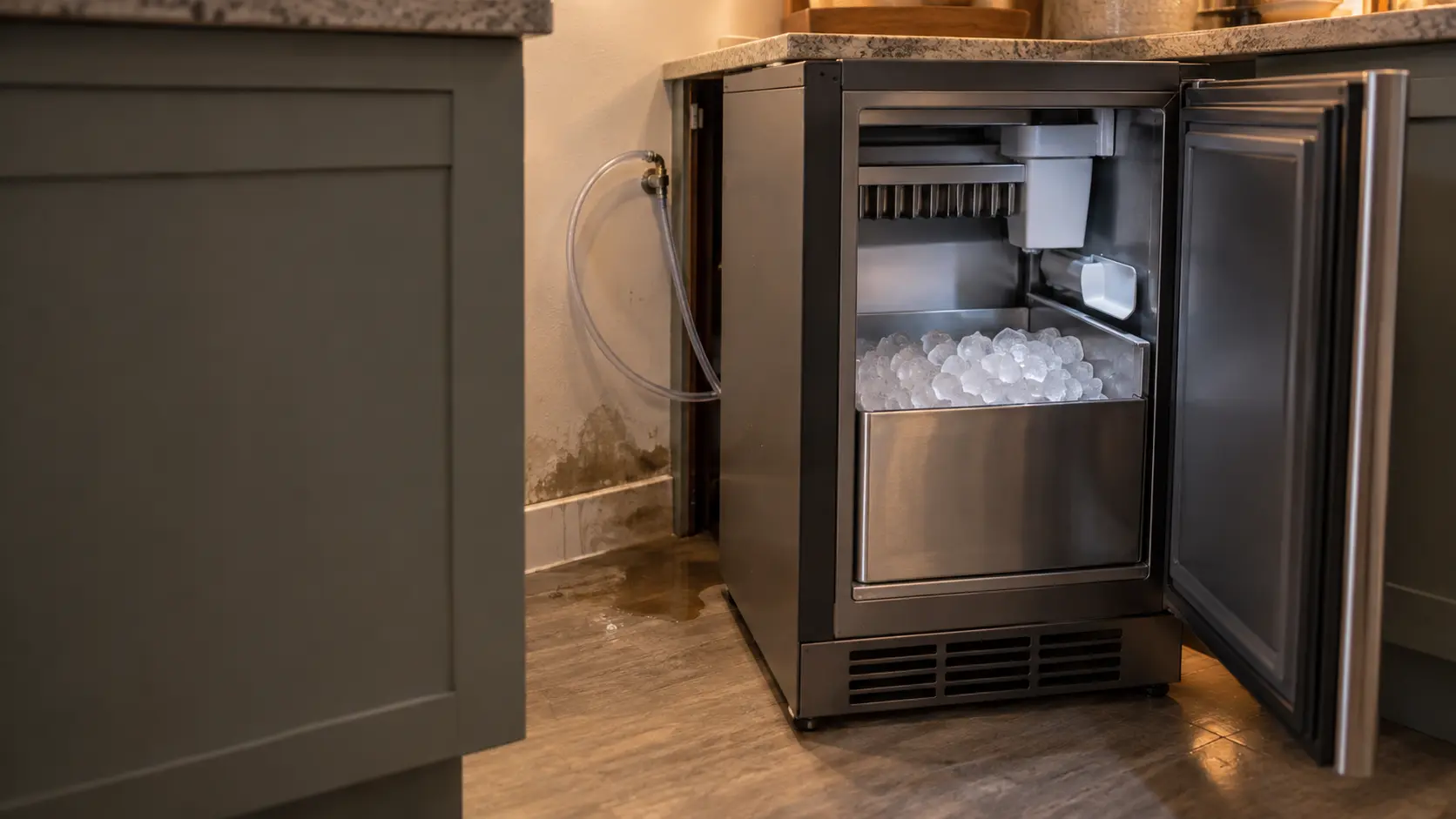
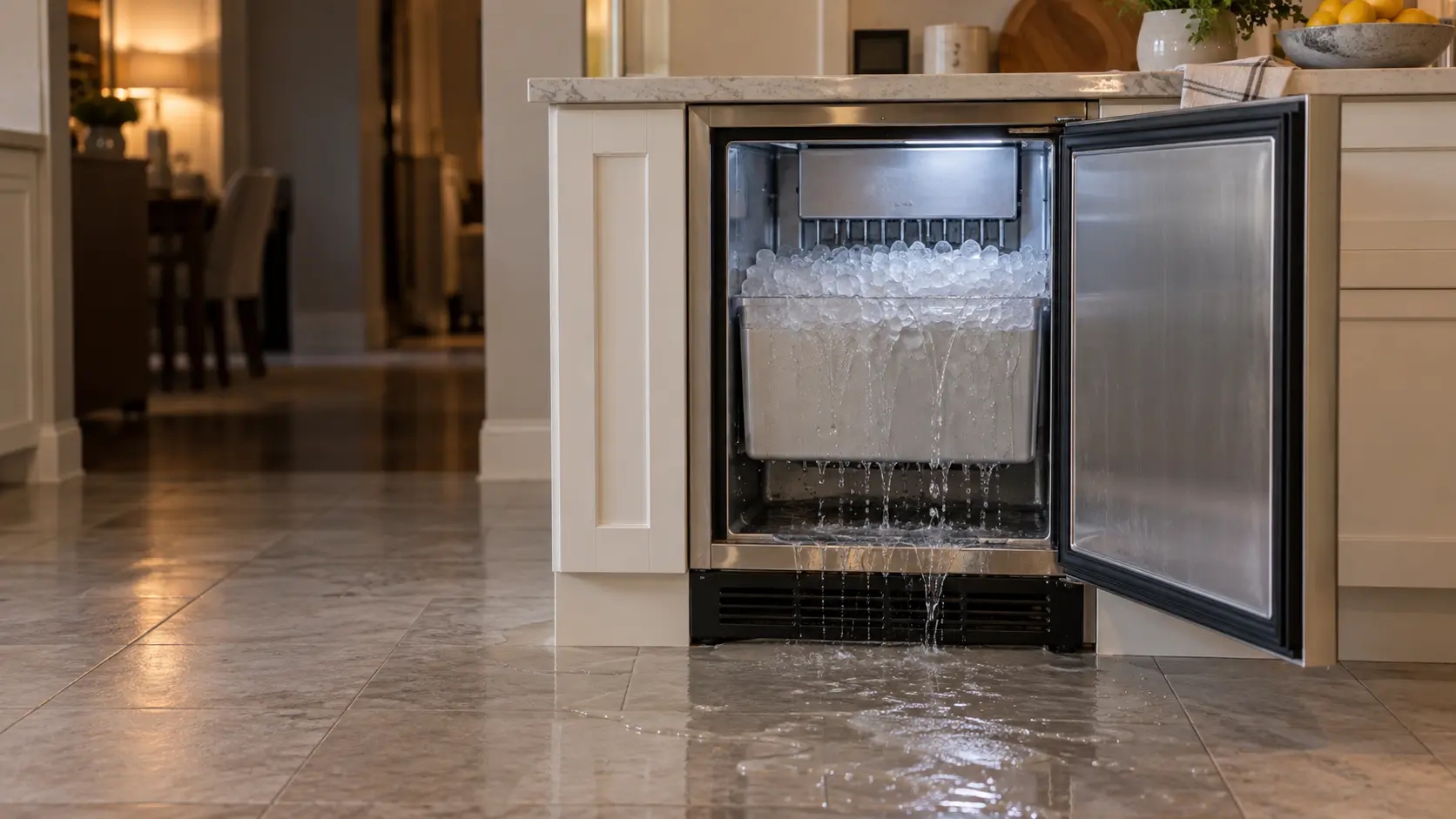
Across Los Angeles County, the four problems where a water line, a drain or a leaking ice maker has water heading toward the floor, the cabinets or the wiring.
All 17 problems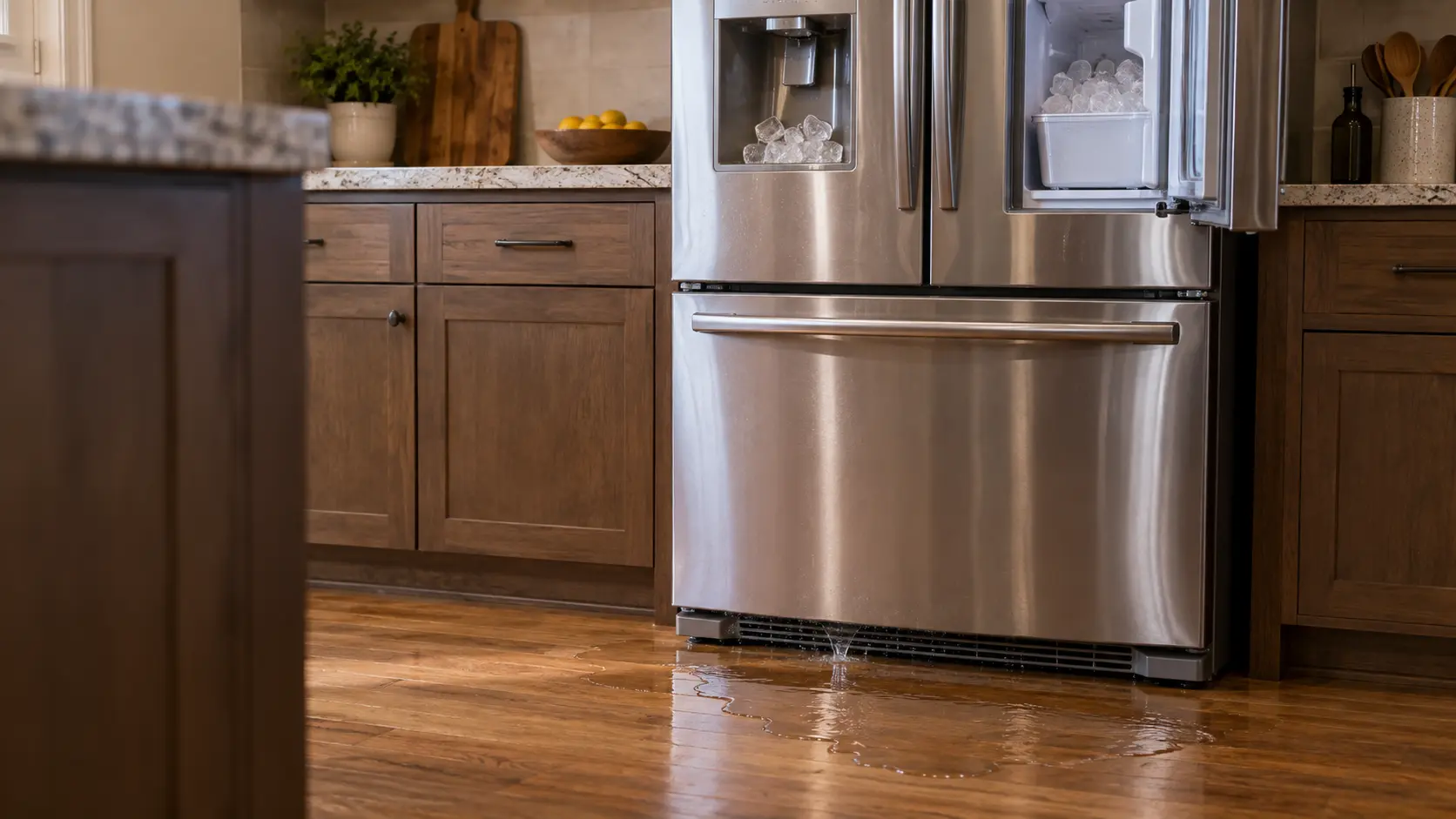
All of
Los Angeles.
Los Angeles County is the county where we repair ice makers in Los Angeles.
All of Los AngelesBack to your everyday
Ice maker trouble in Los Angeles County?
Book with the town, what you are seeing and the model number — 94 places across Los Angeles County, the same ice maker visit in each.