
Ice Maker Making Small or Hollow Cubes
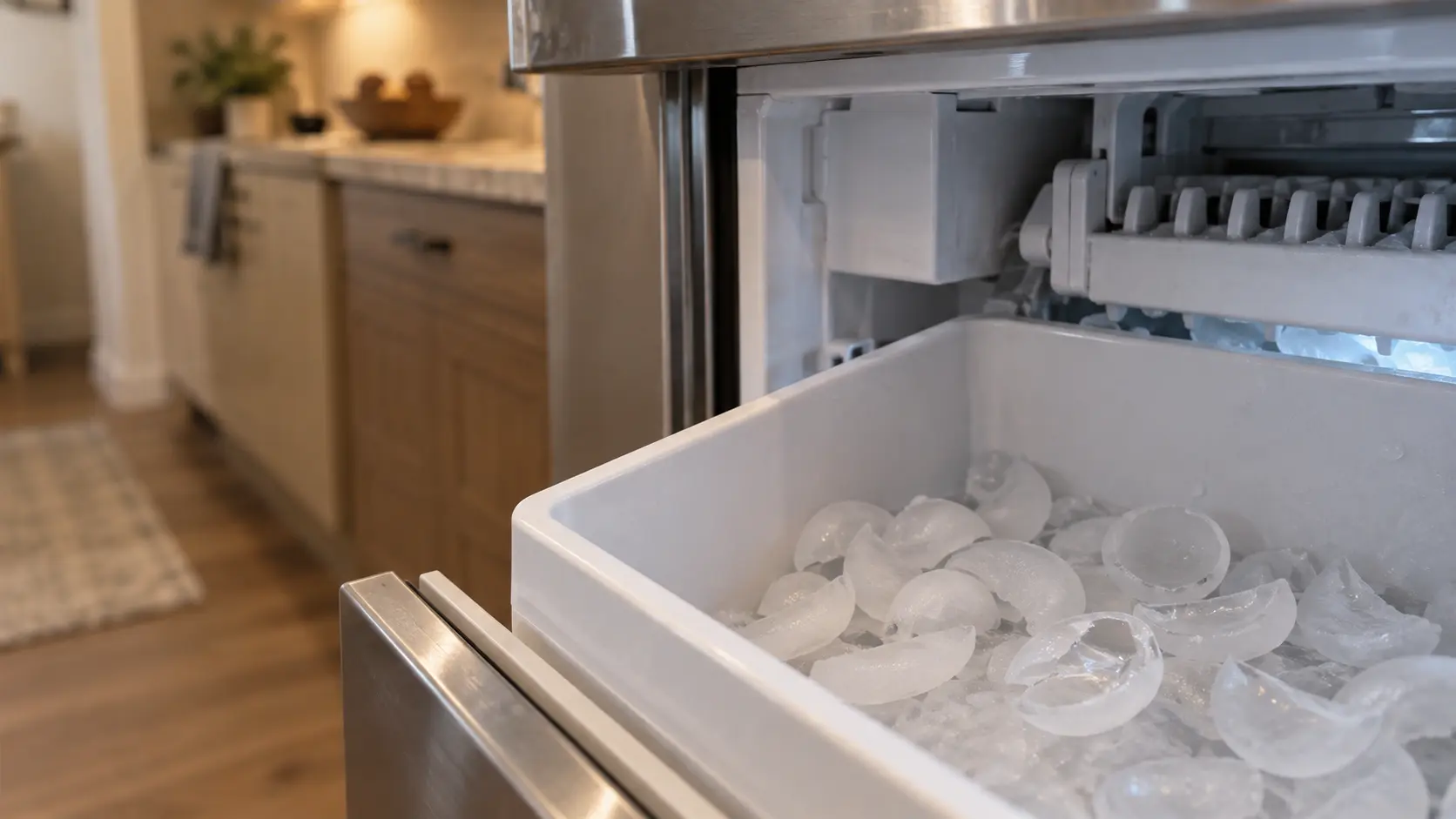
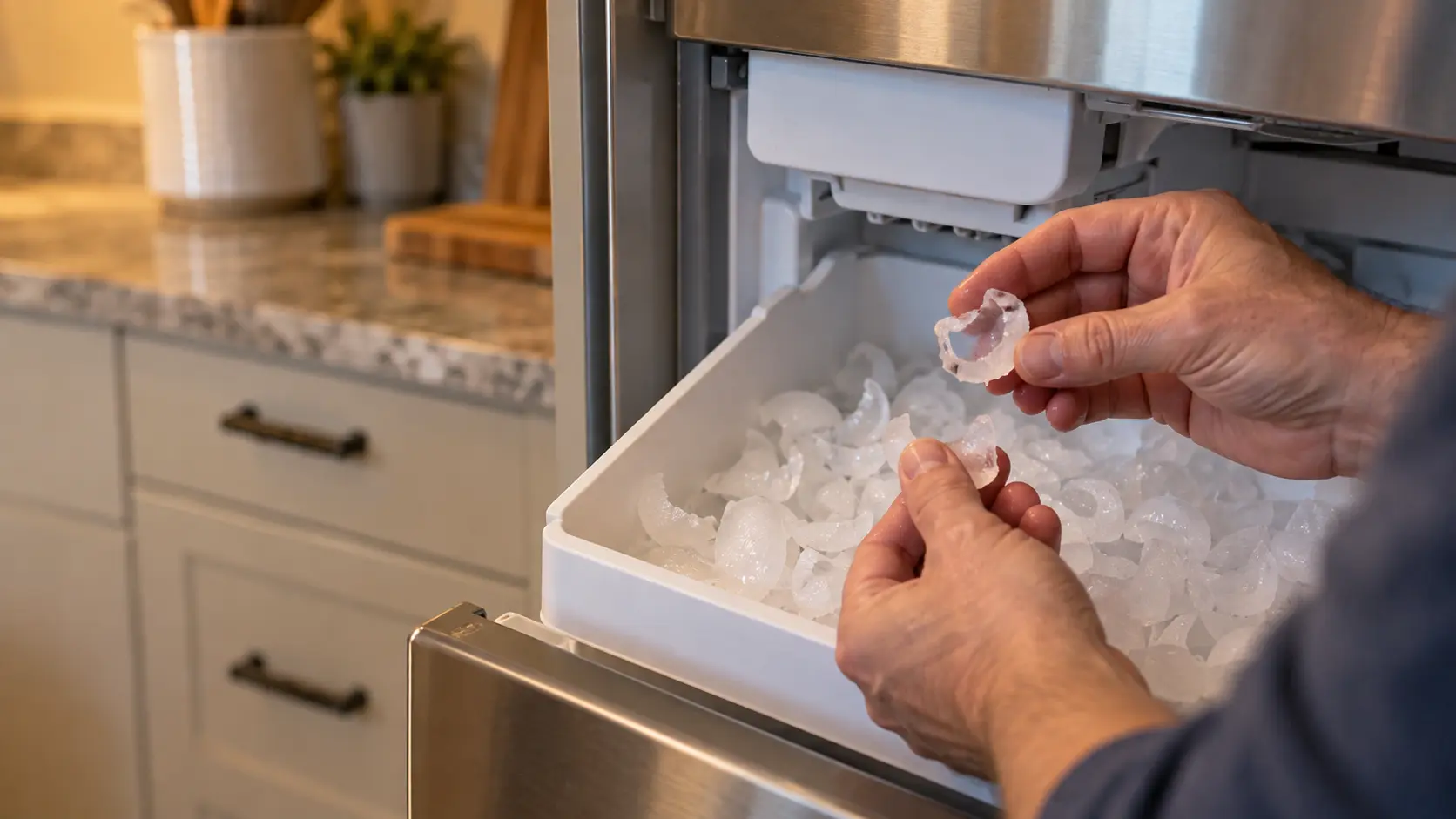
The ice maker making small cubes, thin crescents, hollow shells with water inside or fragments that break apart in the bin tells you the mold is not getting a full fill.
Mon–Sat, 8am–8pm
- 5 checks before you book
- 5 questions that narrow it
- 6 causes, cheapest first
Book a visit
Three short steps, about a minute.
or call (844) 773-0701
Loading appointment form…
The appointment form couldn’t load. Please try again.
What it
usually means.
Each fill is timed rather than measured. The valve opens for a set number of seconds and trusts the water pressure to deliver the right amount. If the pressure is low, the filter is clogged or the fill tube is partly iced, the same seconds bring less water and the cubes come out small, thin at one end or missing one or two cups. Hollow cubes are a different story: the outside froze and the ice maker harvested before the center had finished, which points at a mold that is not cold enough or a thermostat that reads it wrong. On a clear-ice undercounter unit, thin sheets usually mean scale on the plate or a thickness setting that needs adjusting. The shape of the cube is one of the most useful clues on the whole appliance.
 The 6 causes, cheapest first
Answer these first
Are all the cubes small, or only the ones from one end of the mold?
Do the cubes break open with water inside, or are they solid but thin?
Does the door dispenser pour water noticeably slower than it used to?
Is the home on a well, a reverse osmosis system or a whole-house filter?
When was the ice maker filter last replaced?
Check these
before you book.
Ice maker making small cubes: 5 checks, and none of them costs anything.
Replace the water filter if it is due, and run a few glasses through the dispenser afterward to clear the air.
Make sure the valve that feeds the ice maker is turned fully open.
Break a cube open: water in the middle points at the harvest timing, a solid but thin cube points at the water supply.
Also worth checking
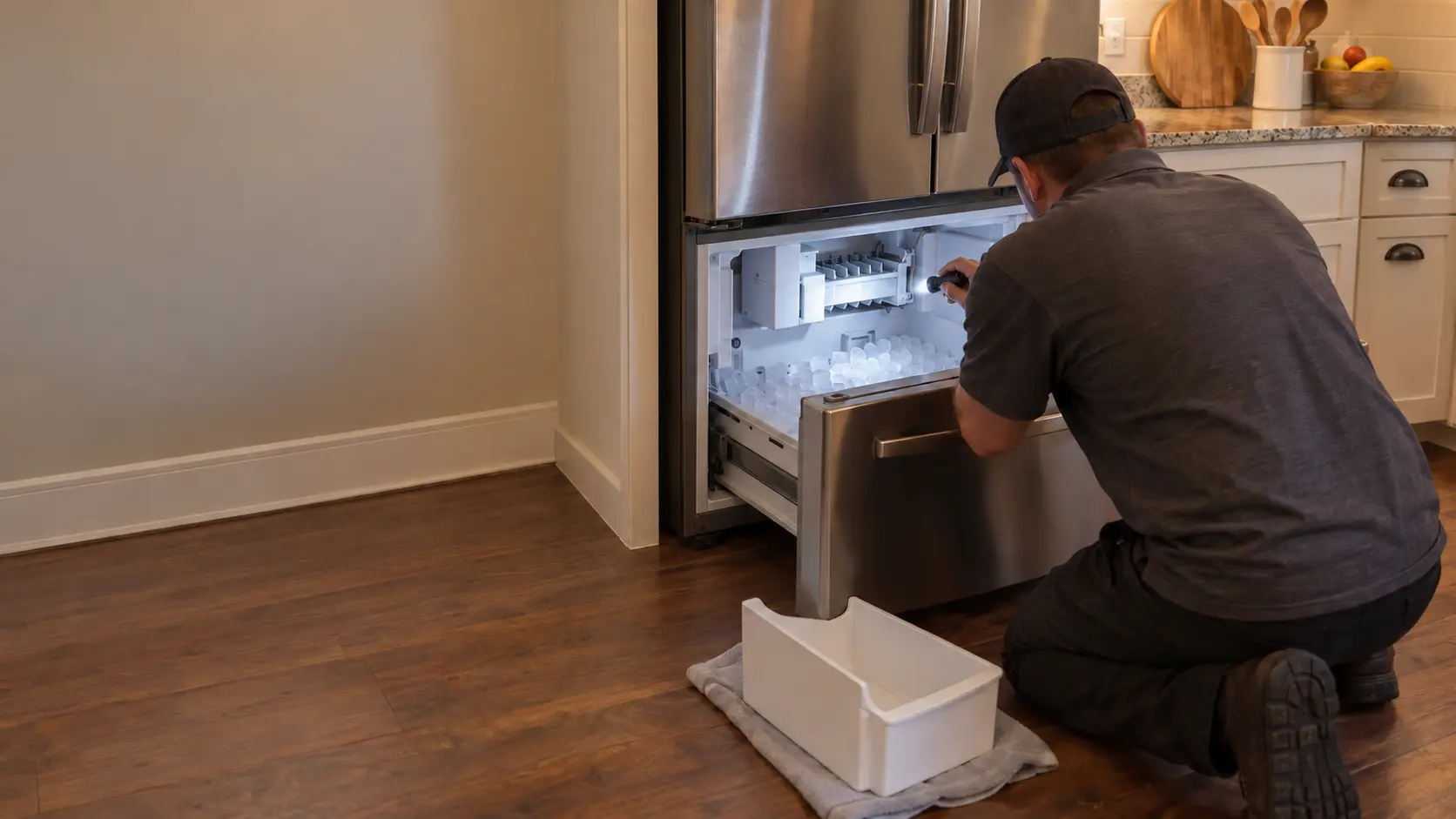
- Look at the fill tube at the back of the mold for a collar of ice.
- Tell us if the home has a well, a reverse osmosis system or a whole-house filter.
How soon does it need a visit?
Small or hollow cubes are not urgent. Change the filter and check the valve first; if the cubes stay small, book a visit before a narrowing fill tube or a clogged valve stops the ice altogether.
The causes,
cheapest first.
6 things ice maker making small or hollow cubes turns out to be, from filter past its life to low house water pressure.
The cost guide-
01 lowest
Filter past its life
As a cartridge loads with sediment it slows the flow, and a timed fill delivers less water every week. A fresh cartridge often brings full cubes back within a day.
-
02 low
Fill tube partly iced
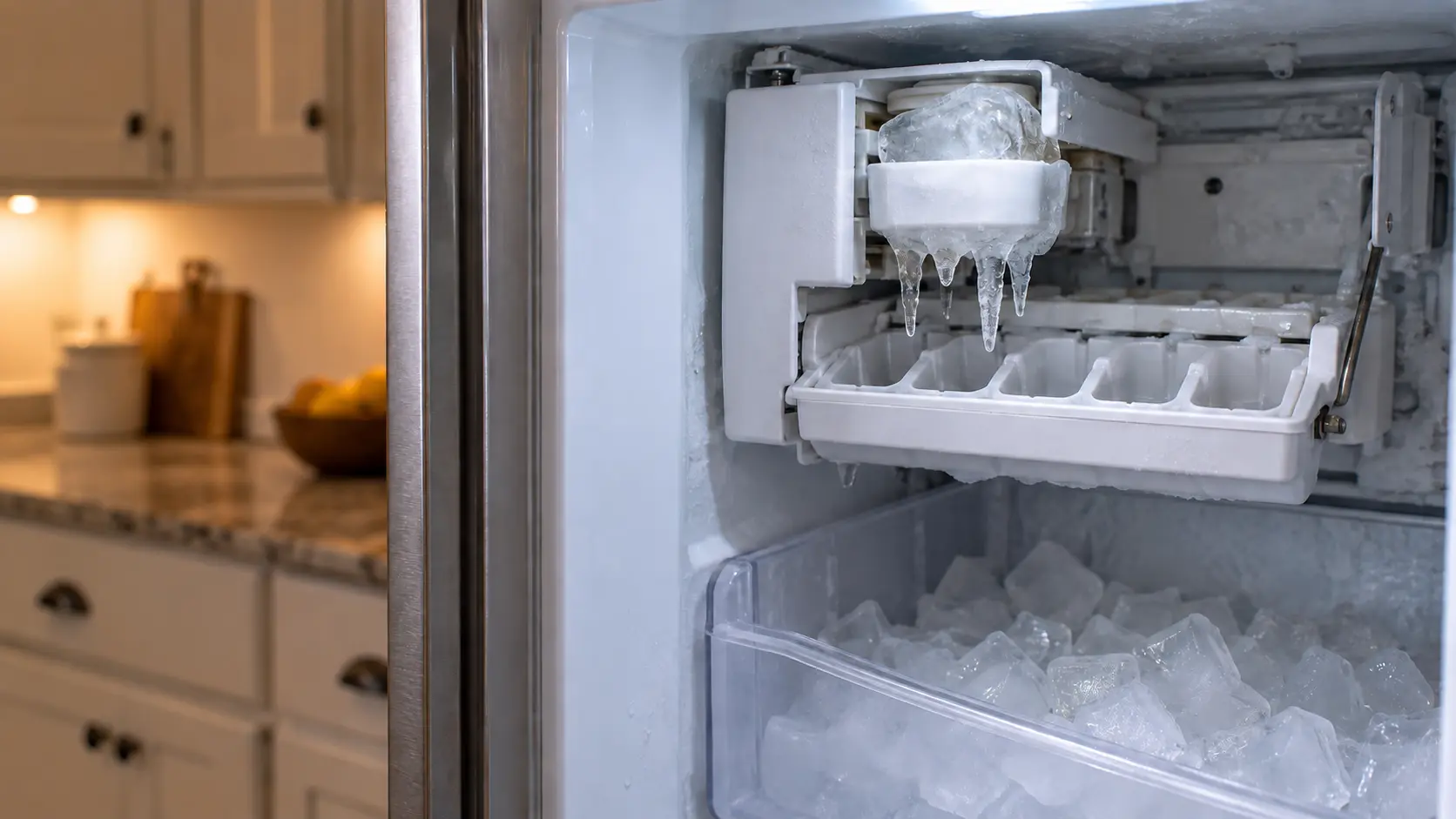
A ring of ice inside the tube narrows it before it blocks it outright. Small cubes this week are often an empty mold next week.
-
03 low to moderate
Inlet valve screen clogged
The valve has a fine screen at its inlet to stop grit. Once it clogs, every fill is short no matter how good the filter is.
-
04 low to moderate
Scale on an undercounter plate
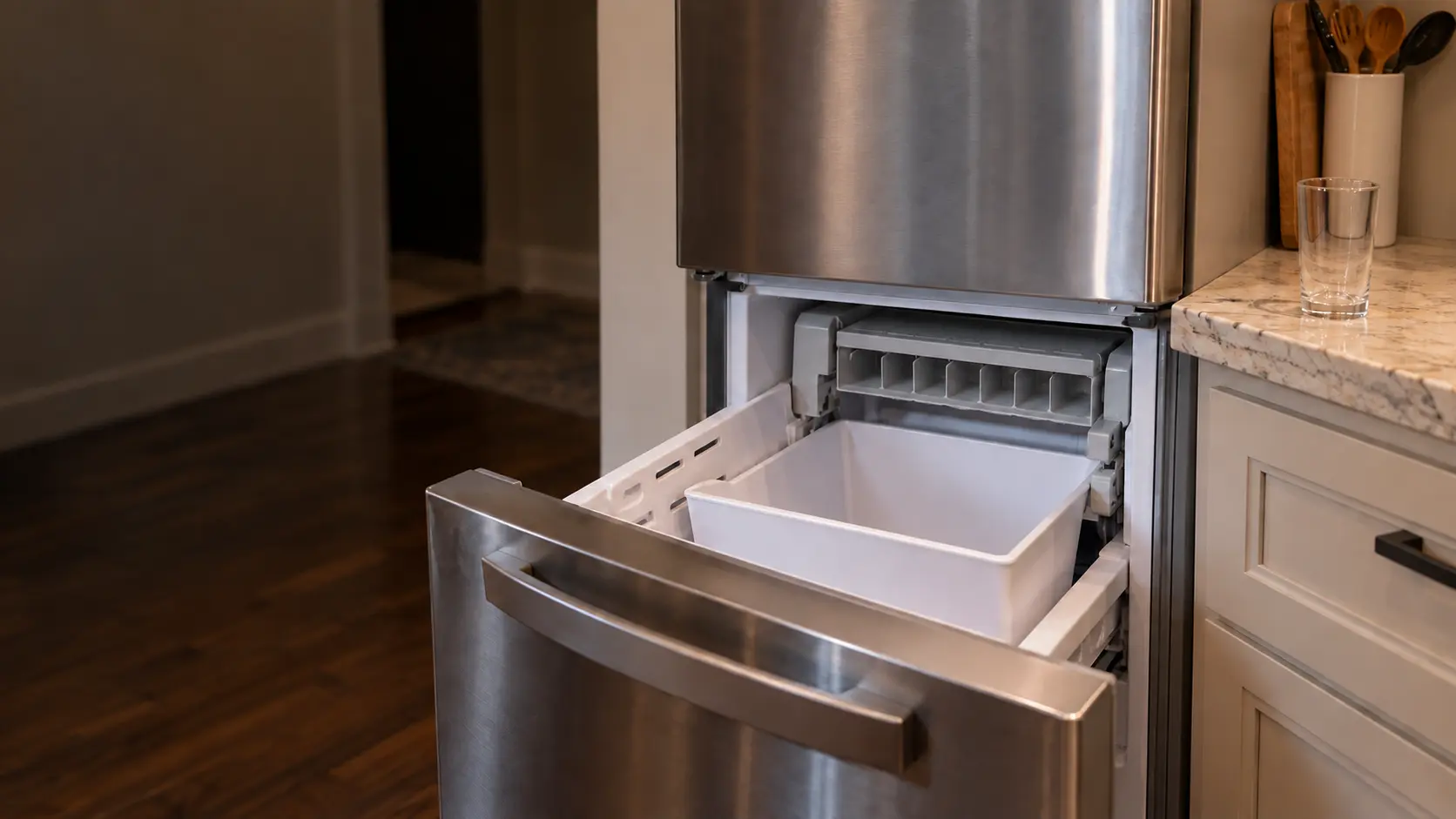
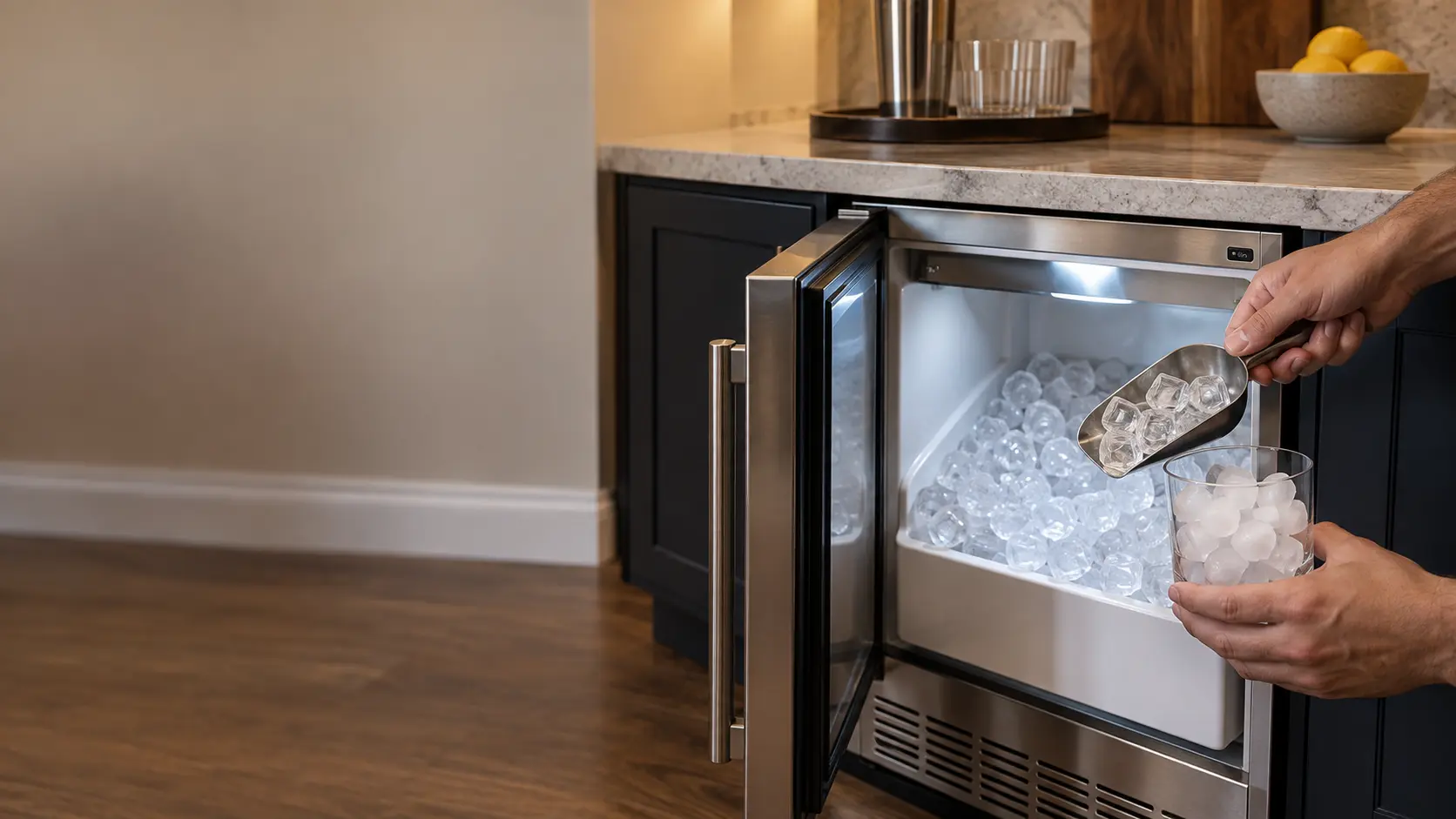
Clear-ice units freeze water on a chilled plate or grid. Scale insulates it, the sheets stay thin and harvest takes longer; a descaling usually brings full cubes back.
-
05 moderate
Mold thermostat harvesting early
The sensor on the mold decides when the cubes are frozen. When it reads colder than the water really is, harvest starts too soon and the cubes come out hollow.
-
06 varies
Low house water pressure
A partly closed supply valve, a long thin line or a reverse osmosis tank that has lost its charge feeds the valve below the pressure it needs. The fill runs its full time and still comes up short.
What else
it could be.
Most often confused with no ice coming from the ice maker, then ice maker fill tube frozen.
All problemsCodes that come with it
EEBertazzoni · Temperature sensorsWater filter symbolBertazzoni · Mode, not a failureTime to Clean flashingCafé · Mode, not a failureFilter indicator blinking redDacor · Mode, not a failureReplace Water FilterElectrolux · Mode, not a failureWater Filter StatusFrigidaire · Mode, not a failure
Also related
The makes
it happens on.
27 makes on this site; ice maker making small or hollow cubes can show up on any of them. Each mark opens that make's own page.
All 27 brandsIce Maker Making Small or Hollow Cubes,
where we come out.
9 metros, each with its own page.
All service areasTampa BayFL · 31 areas
Miami / South FloridaFL · 47 areas
New York MetroNY · 75 areas
HoustonTX · 36 areas
ChicagoIL · 50 areas
Los AngelesCA · 95 areas
San DiegoCA · 31 areas

Questions about
ice maker making small or hollow cubes.
Can a reverse osmosis system cause small cubes?
Why are only the cubes at one end of the mold small?
Is it safe to use hollow cubes?
Does my undercounter unit have a cube thickness setting?
Back to your everyday
Still seeing ice maker making small or hollow cubes?
Book with what you checked above — 5 answers save the technician the first part of the visit.