
Undercounter Ice Maker Repair
A built-in residential ice maker that lives under a kitchen, bar or basement counter, making clear cubes or chewable nugget ice on its own cooling system, with a water line in and a gravity drain or a small drain pump out.
Mon–Sat, 8am–8pm
- 4 things that fail on it
- 12 makes build it
- 6 problems it shows
Book a visit
Three short steps, about a minute.
or call (844) 773-0701
Loading appointment form…
The appointment form couldn’t load. Please try again.
Is yours
an undercounter?
An undercounter ice maker is a complete appliance in a cabinet-sized box, usually 15 inches wide, with a front door that opens onto an insulated bin. It does not share anything with the rest of the kitchen except water and power. Clear-ice models run a thin stream of water over a cold plate and let the ice grow in layers, so minerals stay in the water and go down the drain; nugget models freeze water inside a cylinder and an auger scrapes it into soft, chewable pieces. That means two water paths instead of one: a supply line with its own valve, and a drain that carries away melt and the water that was not frozen, either by gravity to a floor drain or standpipe, or with a small pump that lifts it to the sink drain. Most calls on these models come down to one of those two paths, or to scale building up on the plate or in the cylinder.
 What fails on an undercounter ice maker
How to tell
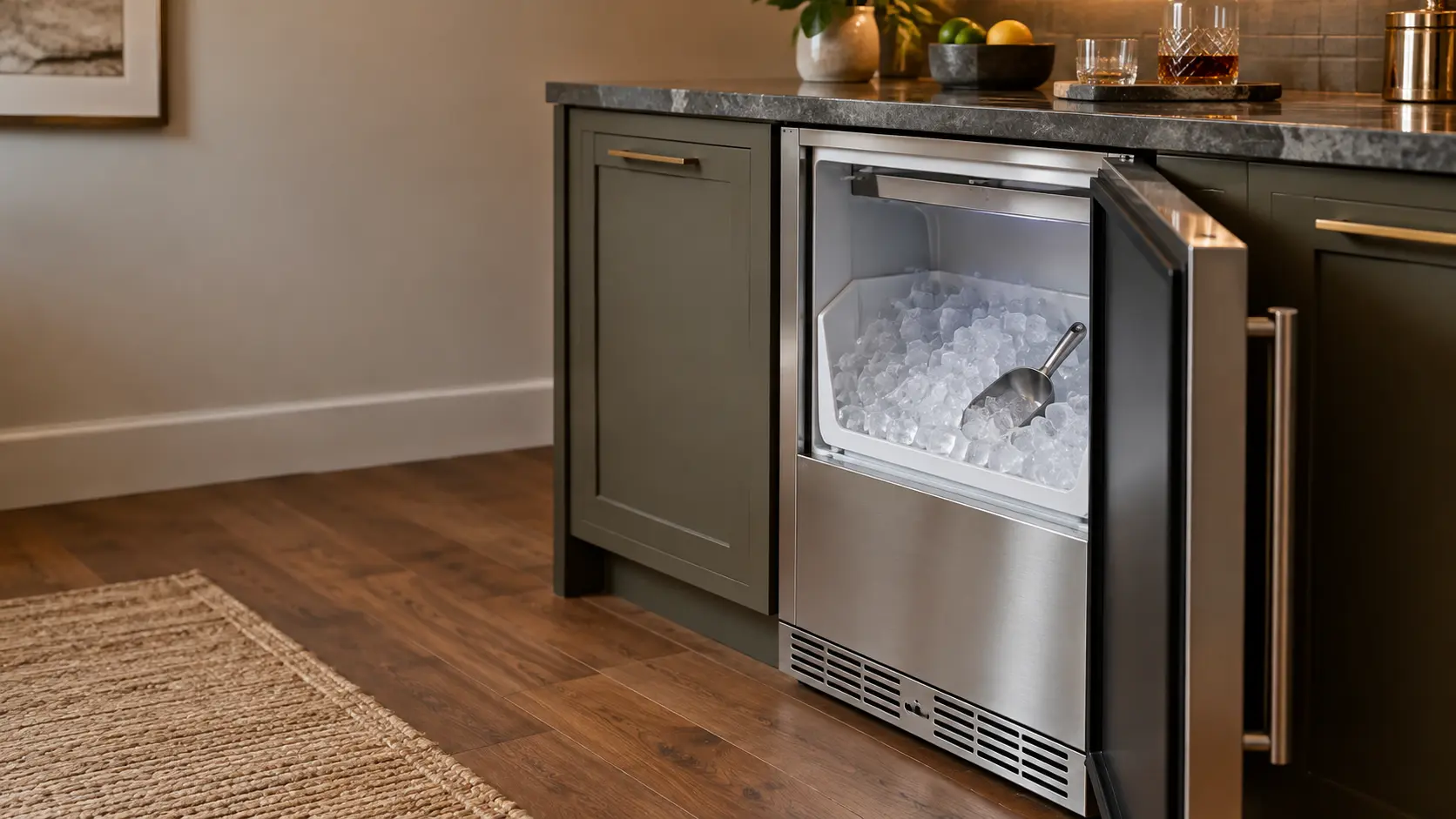
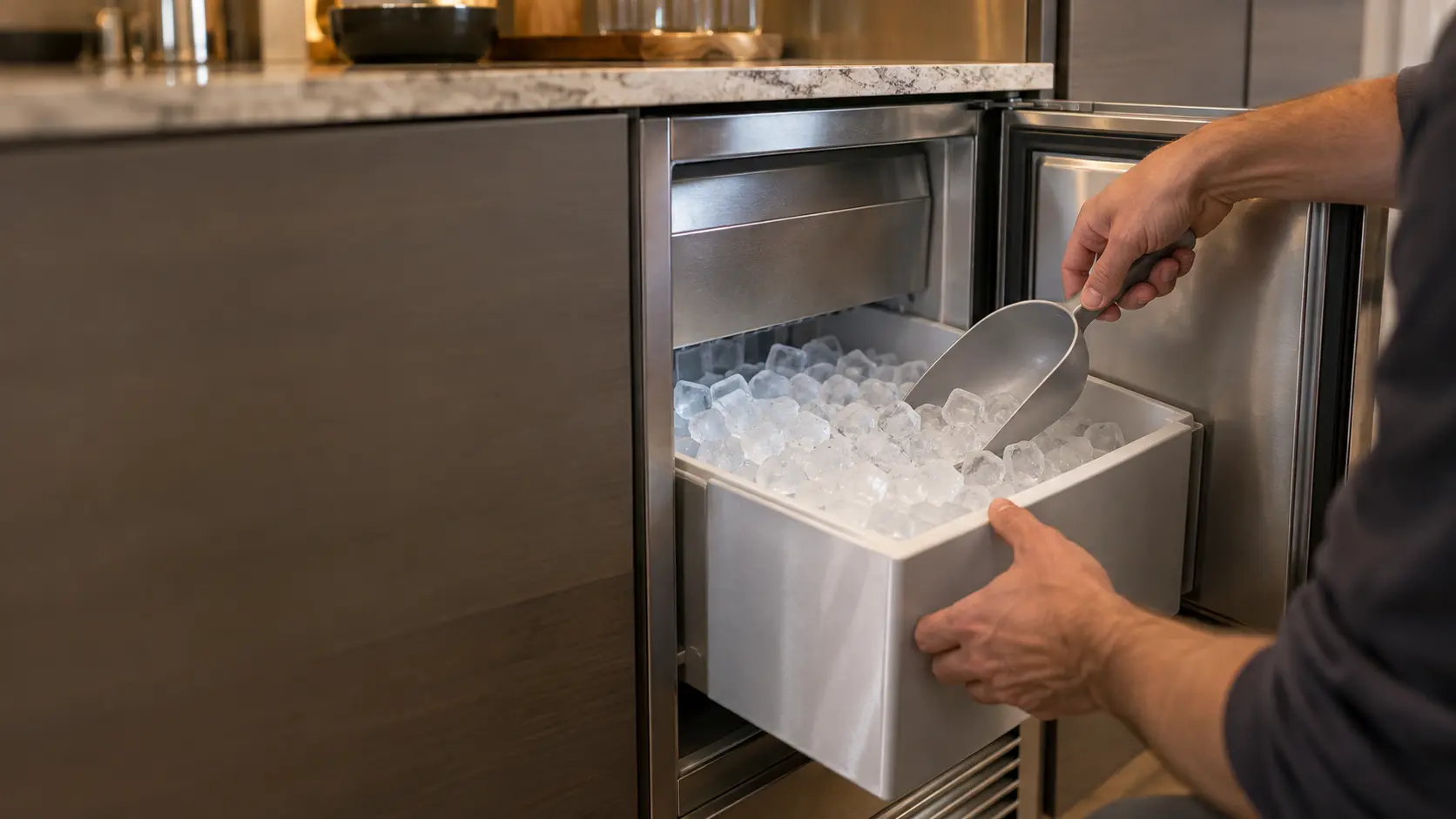
It sits under the counter like a small appliance of its own, with a full-width door that opens down or to the side onto a deep bin of ice.
Opening the door shows a scoop and a pile of clear, square or crescent cubes, or soft pellets of nugget ice, with no other food inside.
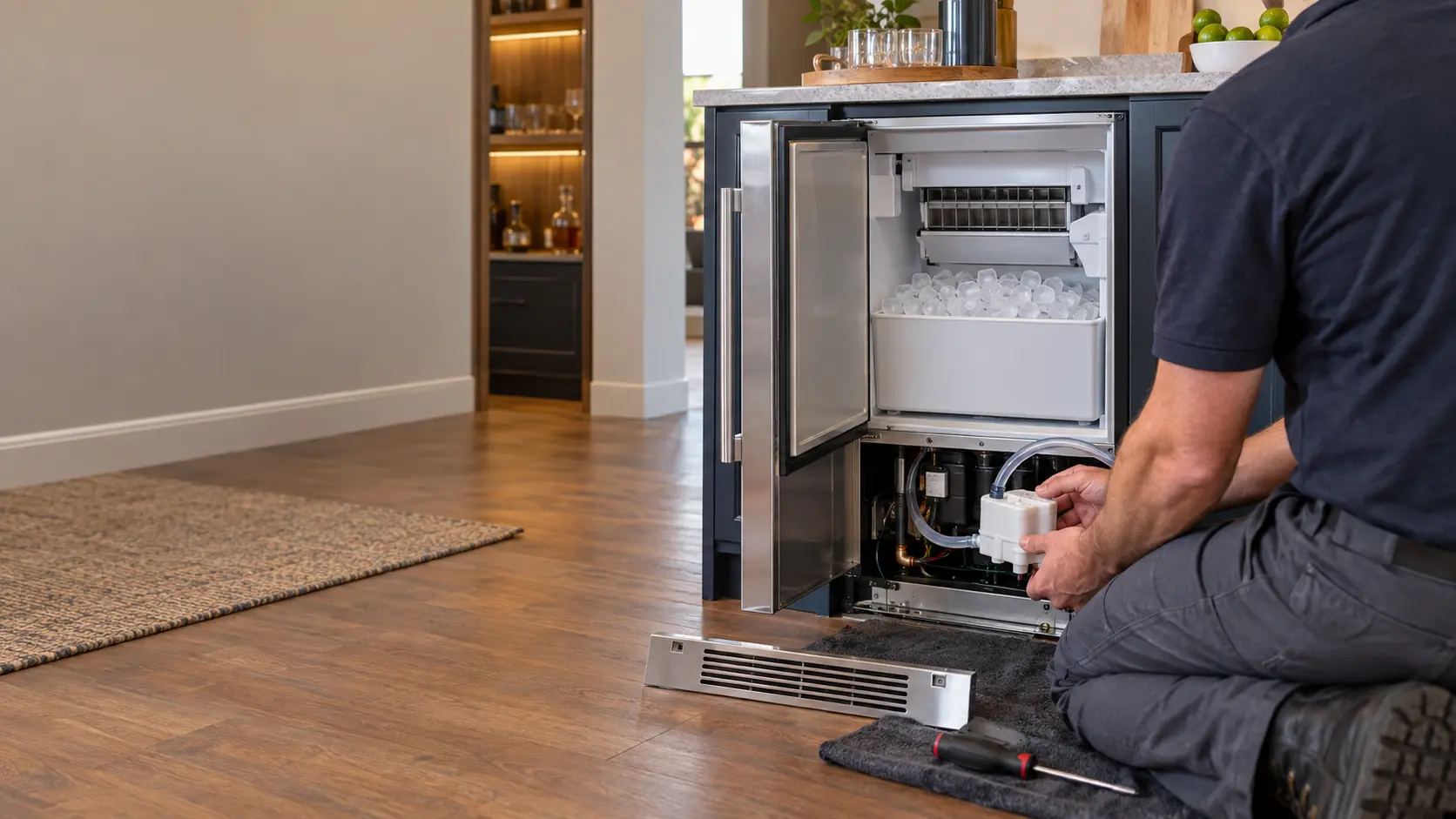
Behind the lower kickplate or in the cabinet next to it there is a water supply valve and either a drain hose into a floor drain or a small pump box.
A control on the top edge of the door frame, or behind the kickplate, has a clean or descale button and one or more indicator lights.
Not yours?Door ice makerFreezer ice makerCountertop ice maker
What fails
on this design.
On an undercounter ice maker: a drain that backs up, scale on the plate or in the cylinder, a water valve that sticks open or closed, the cooling side losing its grip.
The problems it showsA drain that backs up
A kinked hose, a clogged drain pump or a gravity drain with too little fall lets melt water stand in the bin and eventually spill out of the door. It is the single most common reason water appears on the floor in front of one.
Scale on the plate or in the cylinder
Hard water leaves a white crust that slows harvest, clouds the ice and, on a nugget model, makes the auger labor. Regular descaling keeps it away; neglected, it stops the ice maker altogether.
A water valve that sticks open or closed
An inlet valve that will not close keeps the reservoir overflowing into the drain, and a drain that cannot keep up turns that into a flood. One that will not open starves the ice maker, and the light for low water or a clean cycle comes on.
The cooling side losing its grip
A condenser choked with lint or pet hair, a fan that has stopped, or a cabinet with no room to breathe makes the ice maker slow and warm. The sealed system itself fails less often and is the costliest repair it has.
Getting at it,
and whether to.
Most undercounter models service from the front: the kickplate and the lower panel come off, and the water valve, drain pump and condenser sit behind them.
What repairs costOn the visit
- When the plate, the evaporator or the control is at the back, the unit slides out of its cabinet on its leveling legs, with the water valve shut and a towel on the floor first.
- A unit on a gravity drain needs the drain hose to fall steadily to its outlet; a pump model needs its discharge line clear to the sink or standpipe, so both ends are checked.
- Before the visit, turn the ice maker off and let the bin empty or move the ice to a cooler, since a door left open for long melts the bin into the drain.
Repair or replace
Built-in ice makers cost enough and fit their cabinetry tightly enough that most problems are worth repairing, especially the drain, the water valve, a pump, a fan or a thorough descaling. The question gets harder when the sealed cooling system fails on an older unit, or when the control board for a discontinued model is no longer made. In that case the technician weighs the part against a new unit sized for the same opening, and tells you which way the numbers point.
Book a visit for an undercounter ice makerThe problems
it shows.
On an undercounter ice maker, most often undercounter ice maker not draining.
All problems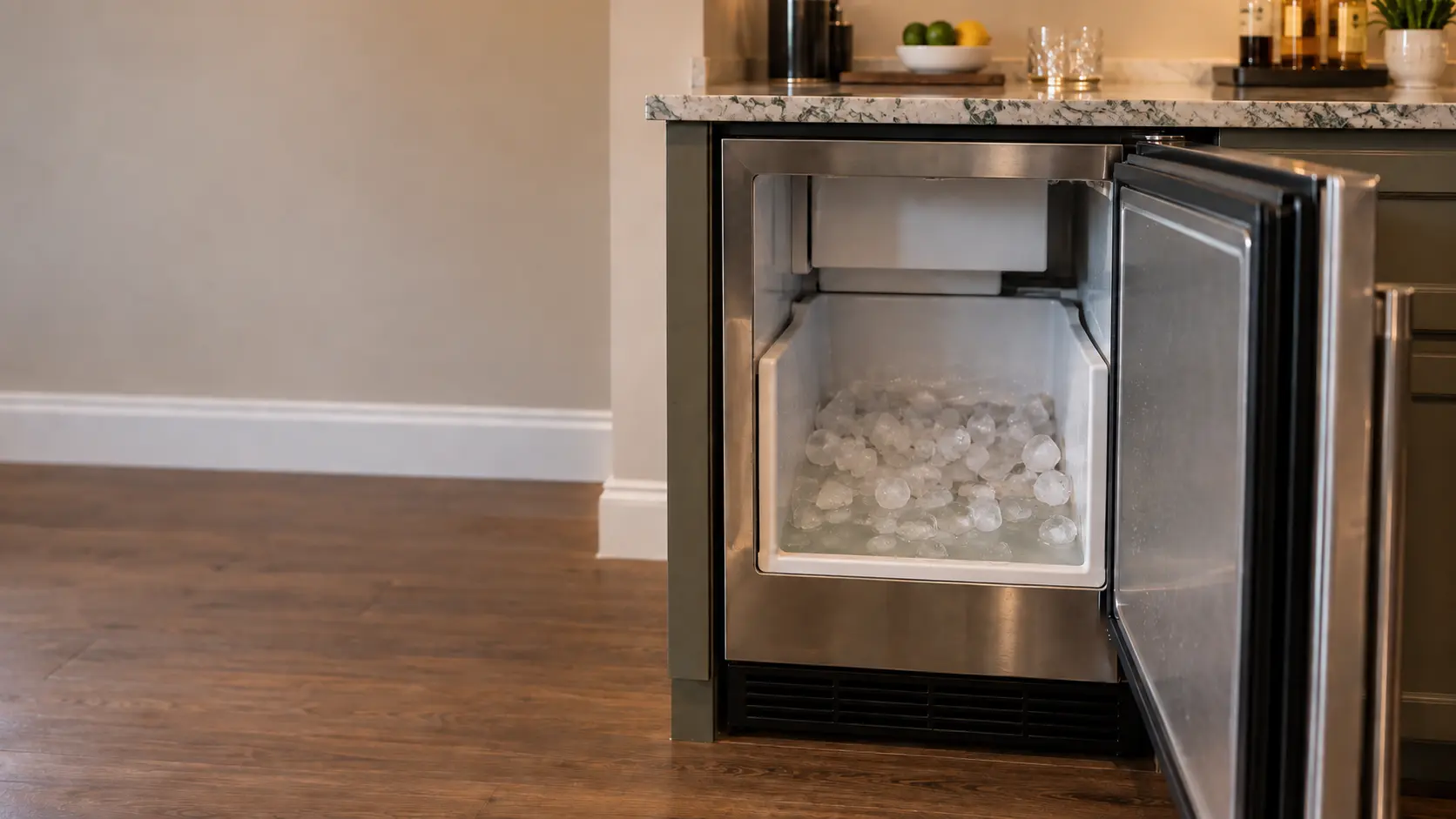
Undercounter Ice Maker Not Draining
5 causes, cheapest first
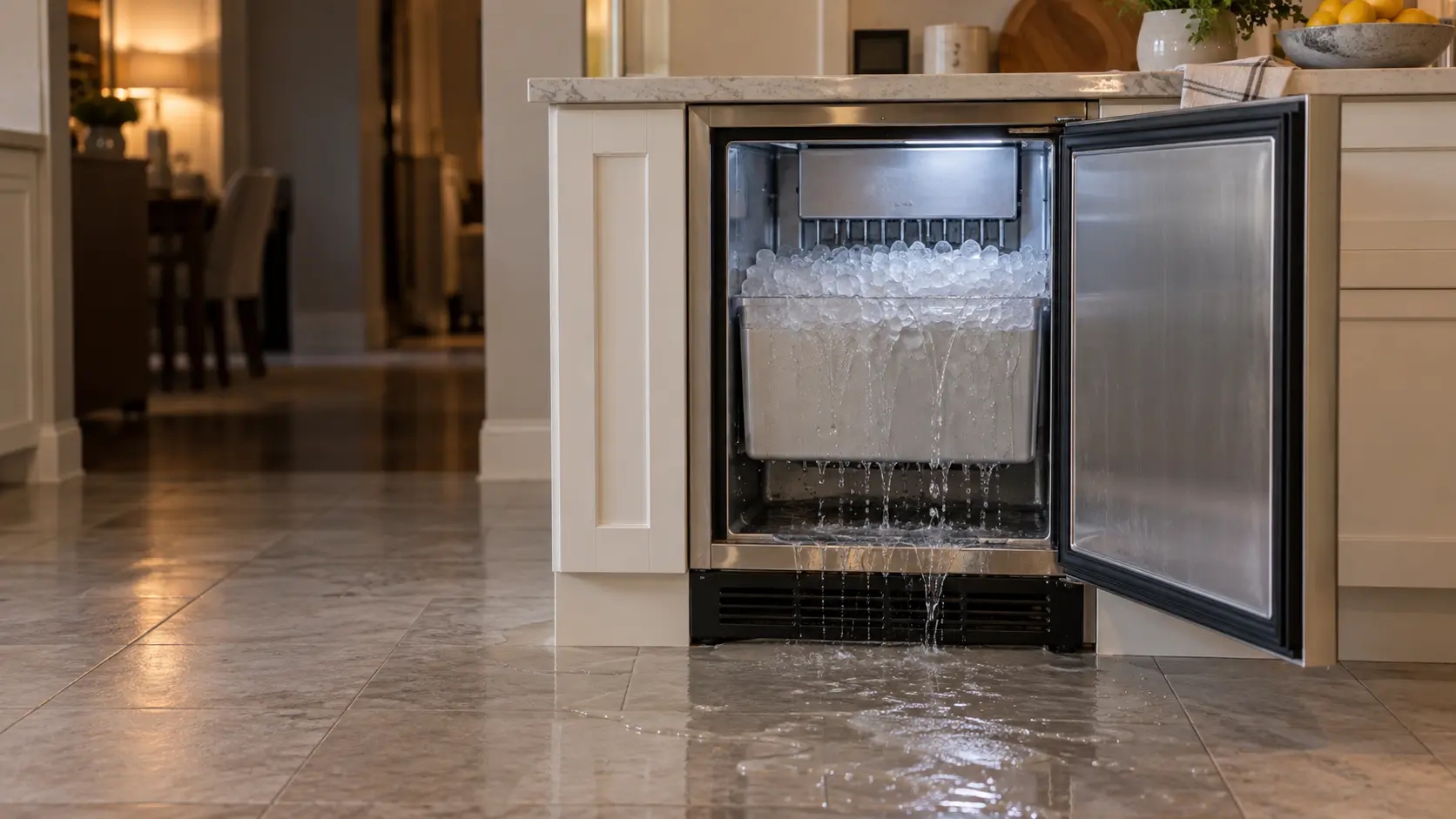
Undercounter Ice Maker Overflowing
6 causes, cheapest first
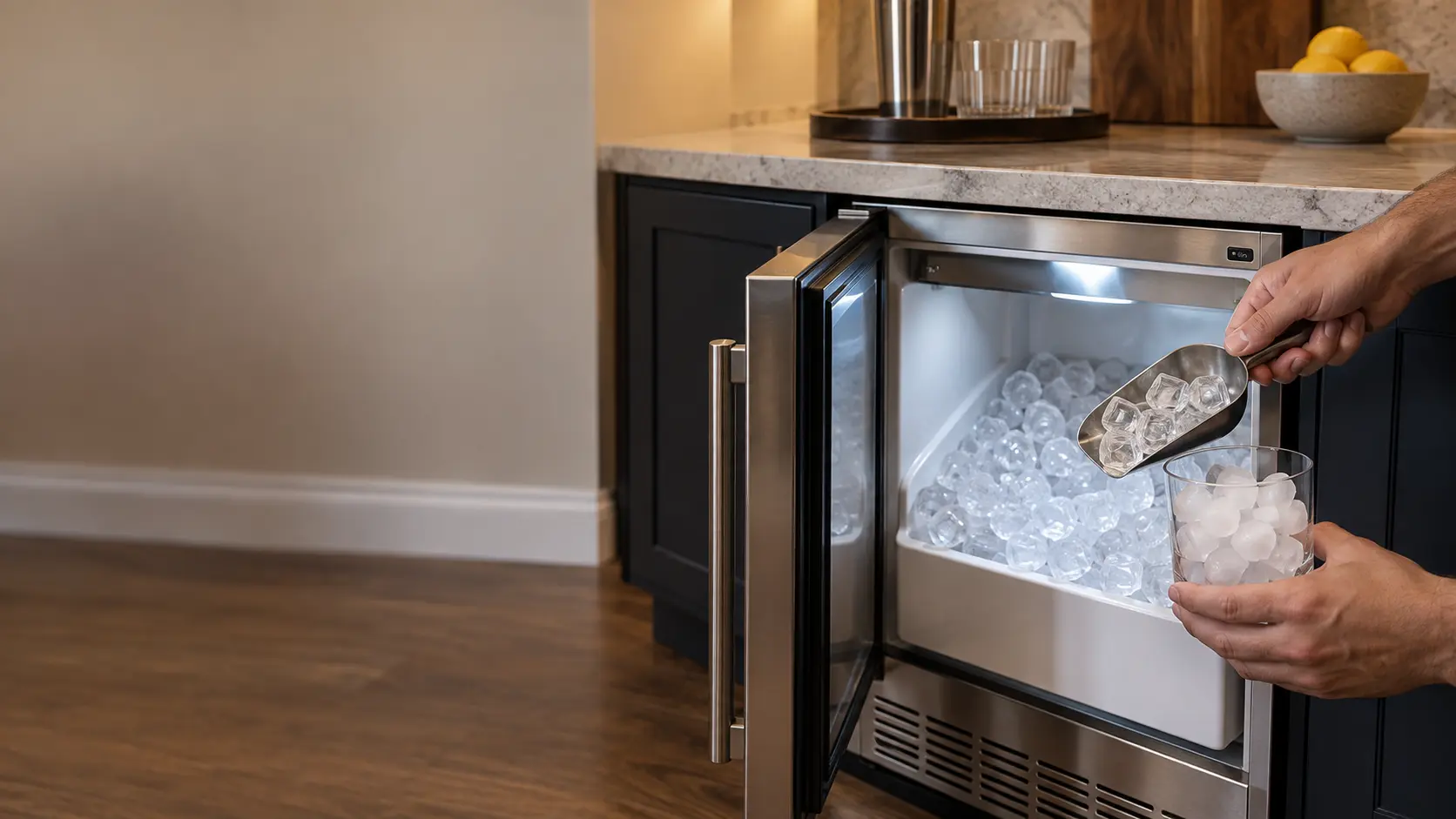
Cloudy or Discolored Ice
6 causes, cheapest first
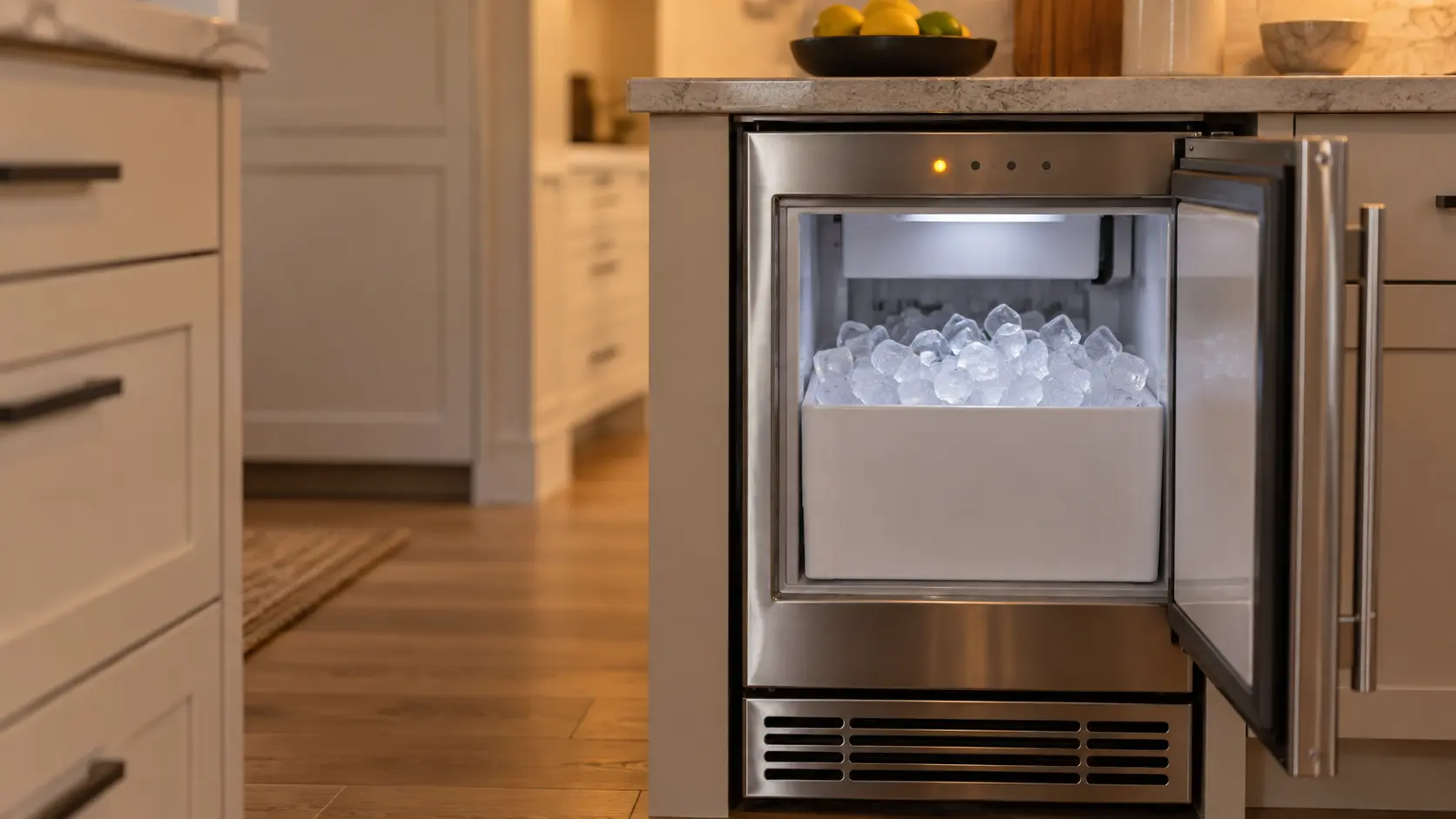
Ice Maker Light Flashing
6 causes, cheapest first
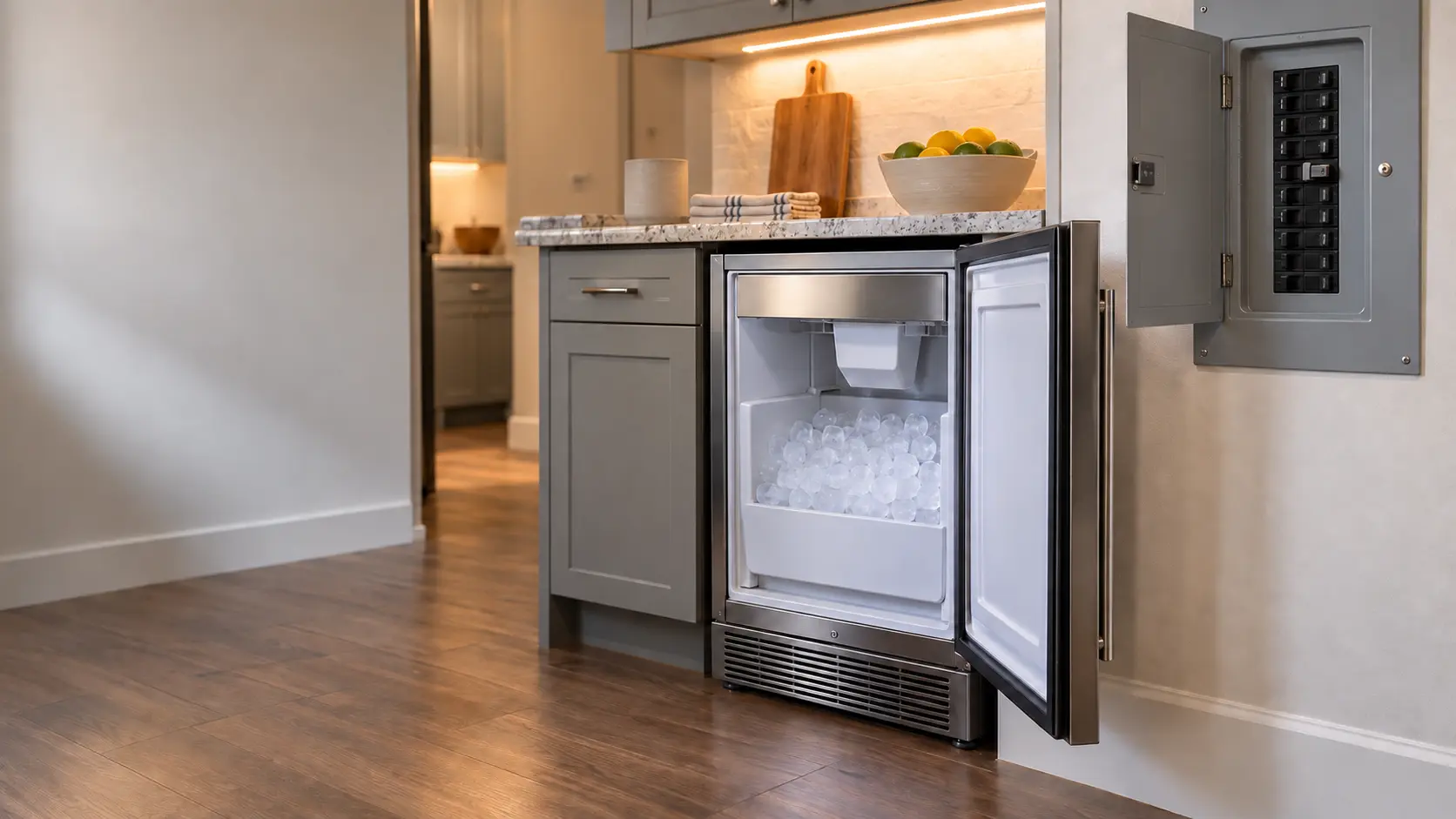
Ice Maker Tripping the Breaker
5 causes, cheapest first
Ice Maker Error Code
8 causes, cheapest first
Who builds
an undercounter.
12 of the makes on this site build an undercounter ice maker. Each mark opens that make's own page.
All 27 brandsUndercounter ice maker repair,
where we come out.
9 metros, each with its own page.
All service areasTampa BayFL · 31 areas
Miami / South FloridaFL · 47 areas
New York MetroNY · 75 areas
HoustonTX · 36 areas
ChicagoIL · 50 areas
Los AngelesCA · 95 areas
San DiegoCA · 31 areas

Questions about
undercounter ice makers.
Why does the bin in my undercounter unit always have some water at the bottom?
How often should an undercounter unit be descaled?
Our unit sits in a basement bar with no floor drain. Can it still work?
What should I do if water is spreading out from under the ice maker?
Back to your everyday
Is it an undercounter ice maker?
Say so when you book — it changes what the technician brings and how the visit is planned.