
Door Ice Maker Repair
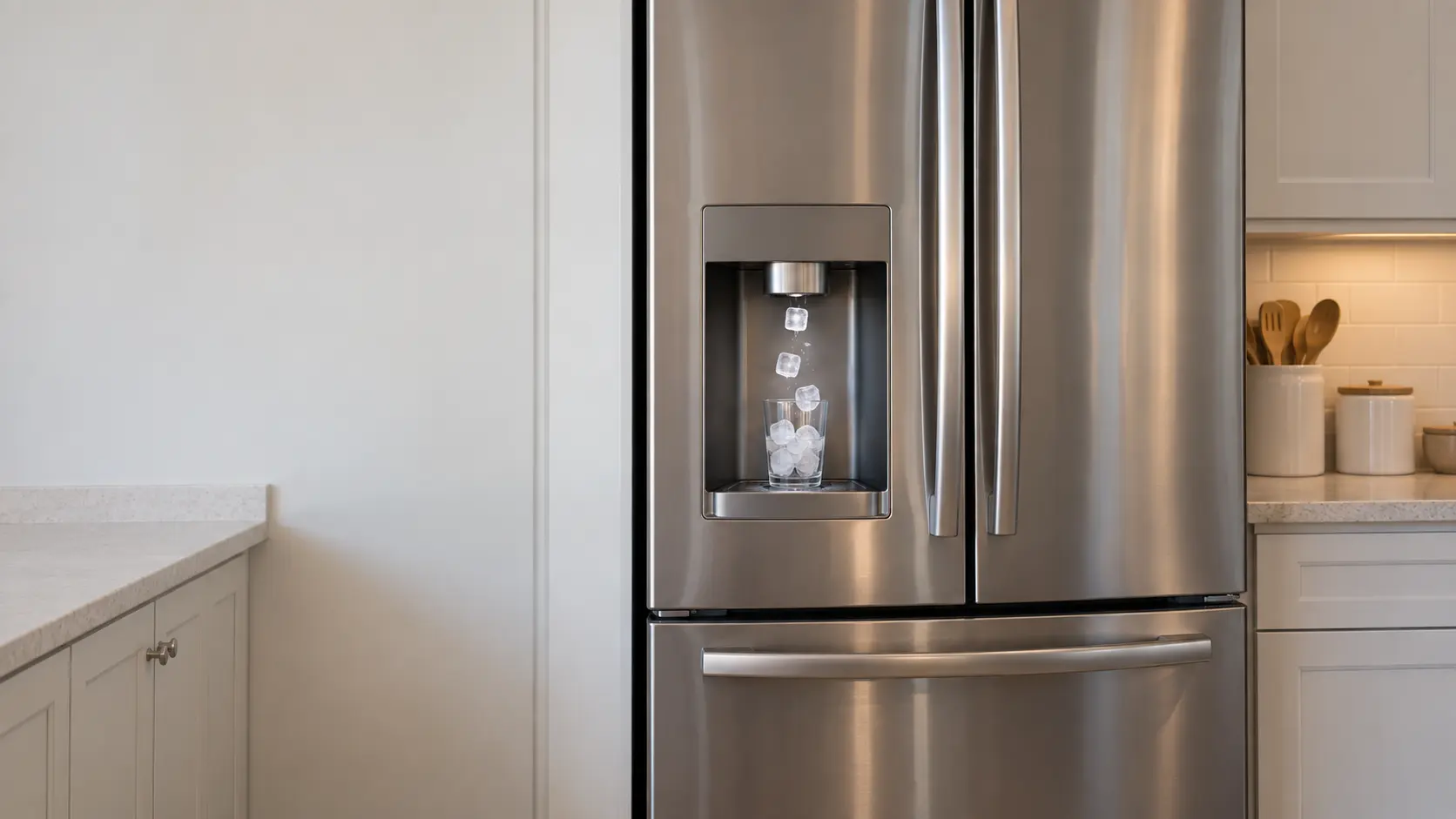
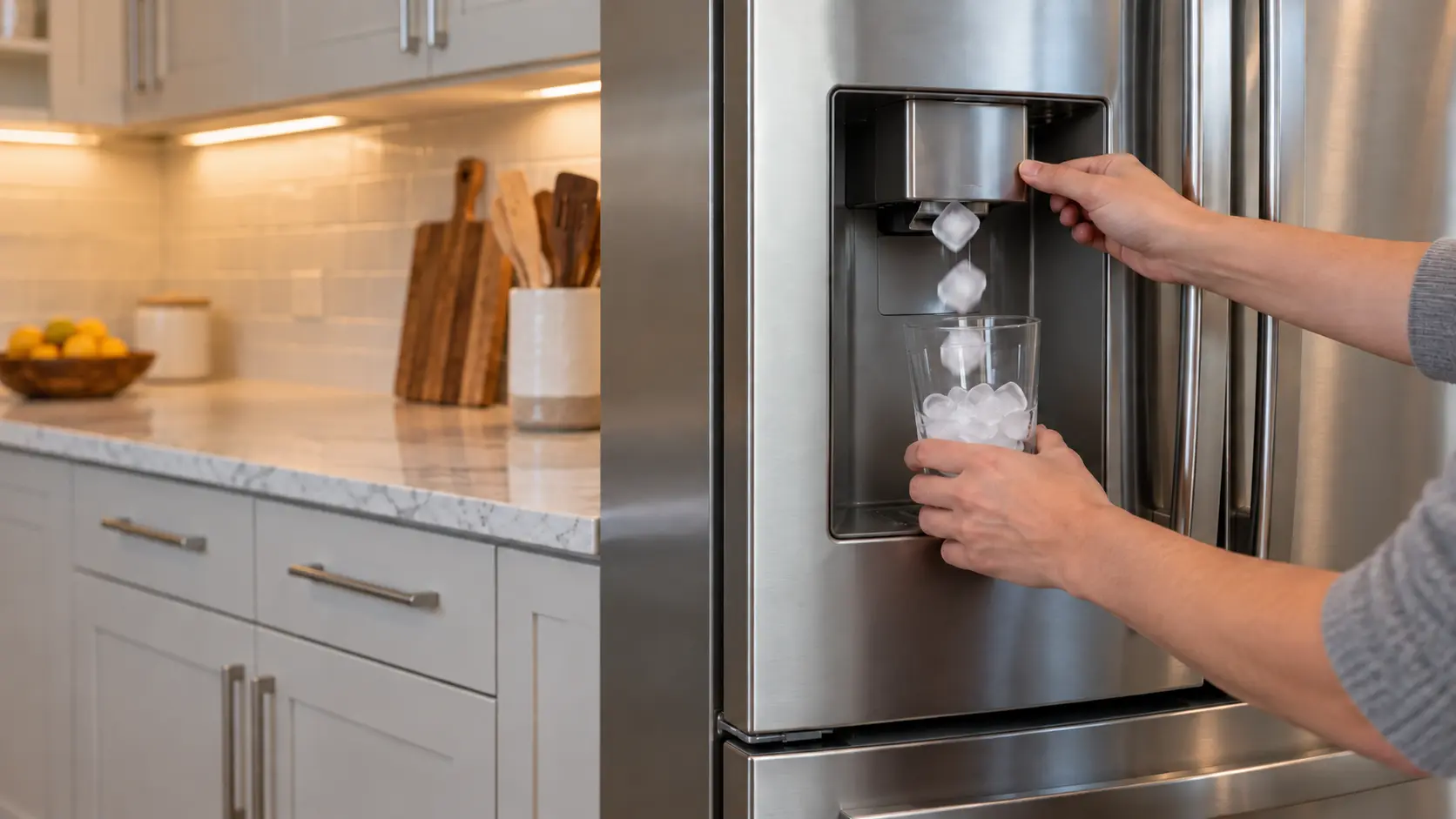
The ice maker that feeds the dispenser on the outside of a door: tucked into an insulated box in the left door of a French door model, or at the top of the freezer side of a side-by-side, with a chute and an auger carrying cubes to your glass.
Mon–Sat, 8am–8pm
- 4 things that fail on it
- 17 makes build it
- 6 problems it shows
Book a visit
Three short steps, about a minute.
or call (844) 773-0701
Loading appointment form…
The appointment form couldn’t load. Please try again.
Is yours
a door?
If you press a glass against a paddle on the door and cubes tumble out, you own a door ice maker. On a French door model it lives in an insulated compartment built into the left door, cooled by air ducted up from the freezer drawer below; on a side-by-side it sits at the top of the freezer section, right behind the dispenser. Either way the path is long for such a small part. Water leaves a shutoff valve under the sink or in the wall, runs through a thin line to the back of the cabinet, passes the filter and the inlet valve, climbs a fill tube into the mold, freezes, drops into a bin, and is pushed forward by an auger into a chute with a flap at its end. A problem anywhere on that route shows up at the paddle, which is why the visit starts by following the water rather than by swapping the ice maker.
 What fails on a door ice maker
How to tell
The door has a recessed dispenser with a paddle or push button, and a setting on the panel above it for cubed or crushed ice.
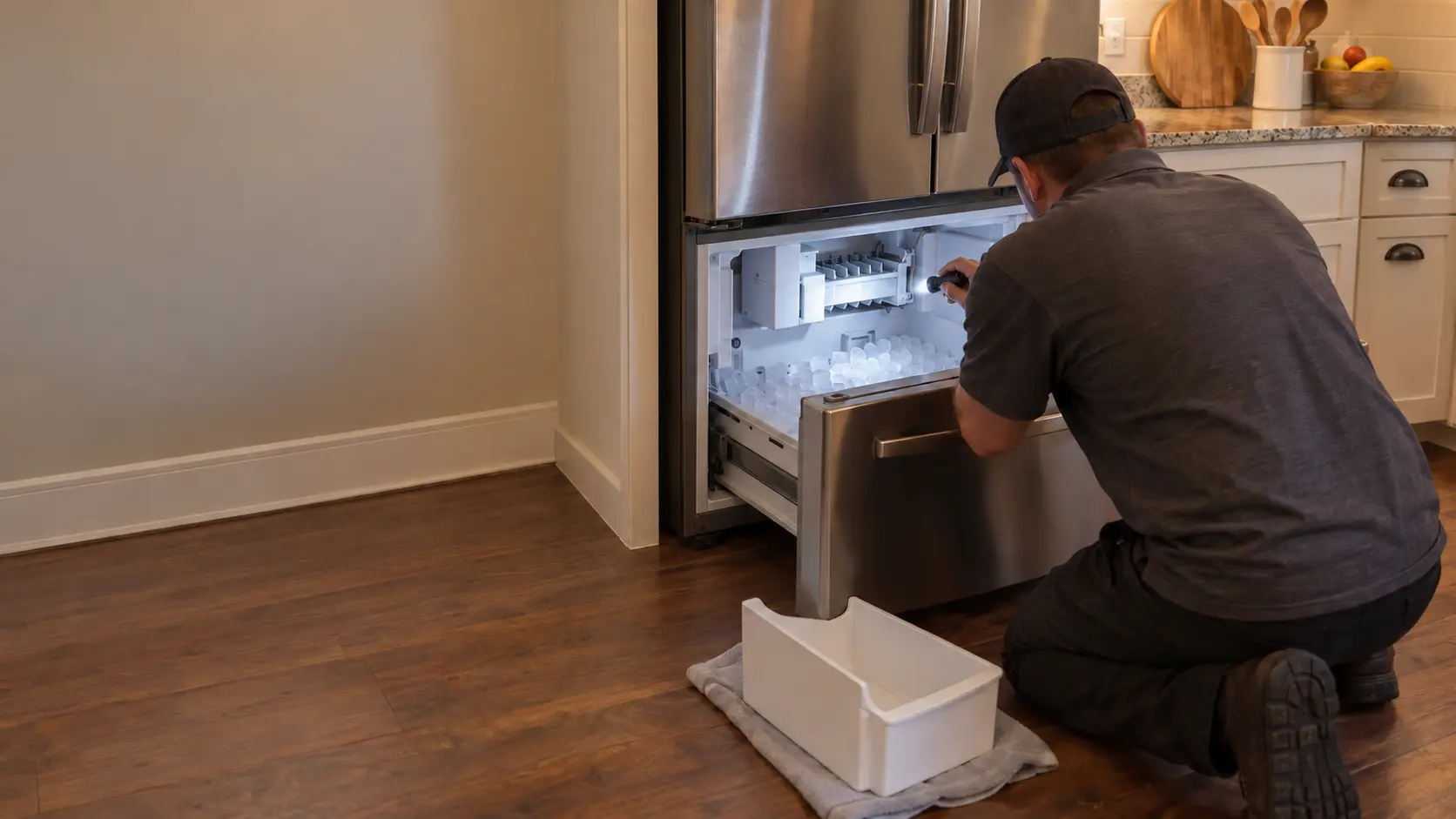
On a French door model, the inside of the left door has a latched cover over a boxy compartment; opening it shows an ice bin that lifts out forward.
On a side-by-side, the ice bin sits on the top shelf of the freezer side, lined up with the chute that runs through the door.
A thin plastic or copper water line enters the back of the cabinet near the floor, and the filter sits in the upper ceiling of the fresh food side, in the base grille or behind a door in the lower left corner.
Not yours?Freezer ice makerUndercounter ice makerCountertop ice maker
What fails
on this design.
On a door ice maker: ice that fuses into one block, a fill tube packed with ice, a compartment that runs warm, the chute flap and the auger motor.
The problems it showsIce that fuses into one block
When the dispenser is used rarely, or the compartment cover does not close tight, cubes partly melt and refreeze into a solid lump the auger cannot turn. The motor hums, the paddle does nothing, and the bin has to be thawed and emptied.
A fill tube packed with ice
On French door models the fill tube passes through a cold spot on its way into the door, and a valve that drips a little after each fill builds a plug there. The ice maker cycles on schedule but no water reaches the mold.
A compartment that runs warm
The door compartment relies on a small fan and a duct from the freezer. Frost in the duct, a worn seal around the compartment or a slow fan leaves the cubes wet, small or stuck together.
The chute flap and the auger motor
A flap that no longer closes lets warm, humid air into the chute and ice forms at the outlet, while an auger motor near the end of its life turns slowly or not at all. Both are reached from inside the door or the freezer.
Getting at it,
and whether to.
Most of the work on a door ice maker happens with the cabinet in place: the bin lifts out, the compartment cover opens, and the ice maker itself comes out on a few screws and one plug.
What repairs costOn the visit
- The inlet valve and the lower end of the water line are at the back, near the floor, so the cabinet is rolled forward on a protected floor with the water shut off first.
- A fill tube frozen inside a French door is thawed gently with warm air from inside the compartment; a heat gun or a knife point can crack the plastic and the tube.
- Keep the area in front of the cabinet clear, and empty the bin into a cooler before the visit so no ice melts onto the floor while the compartment is open.
Repair or replace
A door ice maker is almost always worth putting right, because the cabinet it lives in is the expensive part and it keeps working either way. A module, an inlet valve, a fill tube heater, an auger motor or a compartment seal is a small fraction of what a new cabinet costs, and none of them means moving the whole appliance out of its cabinetry. The case for a new appliance comes from elsewhere: a cabinet that no longer keeps food cold, a sealed system that failed, or a dispenser board that is no longer made for an older model.
Book a visit for a door ice makerThe problems
it shows.
On a door ice maker, most often ice dispenser not working.
All problems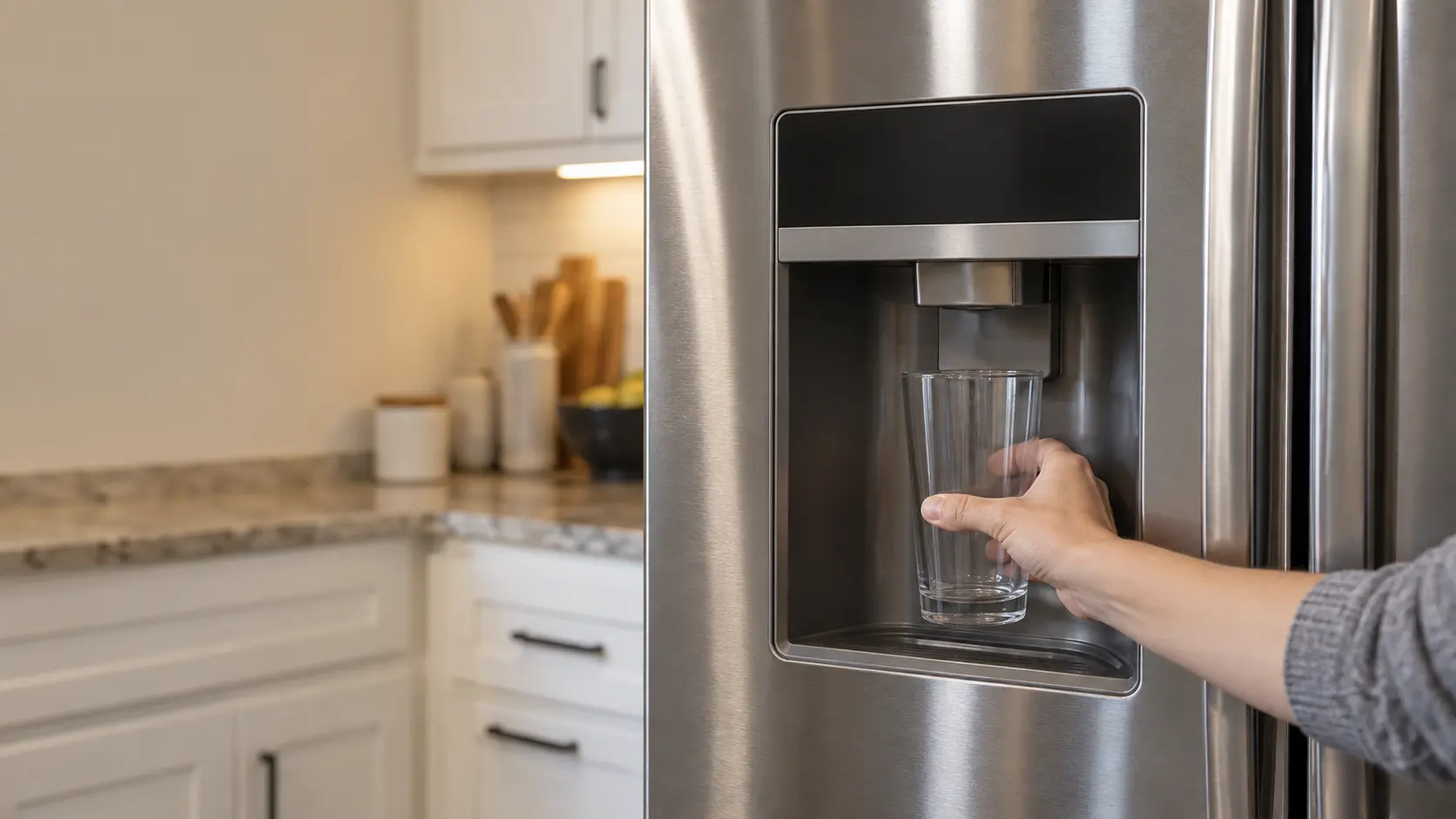
Ice Dispenser Not Working
6 causes, cheapest first
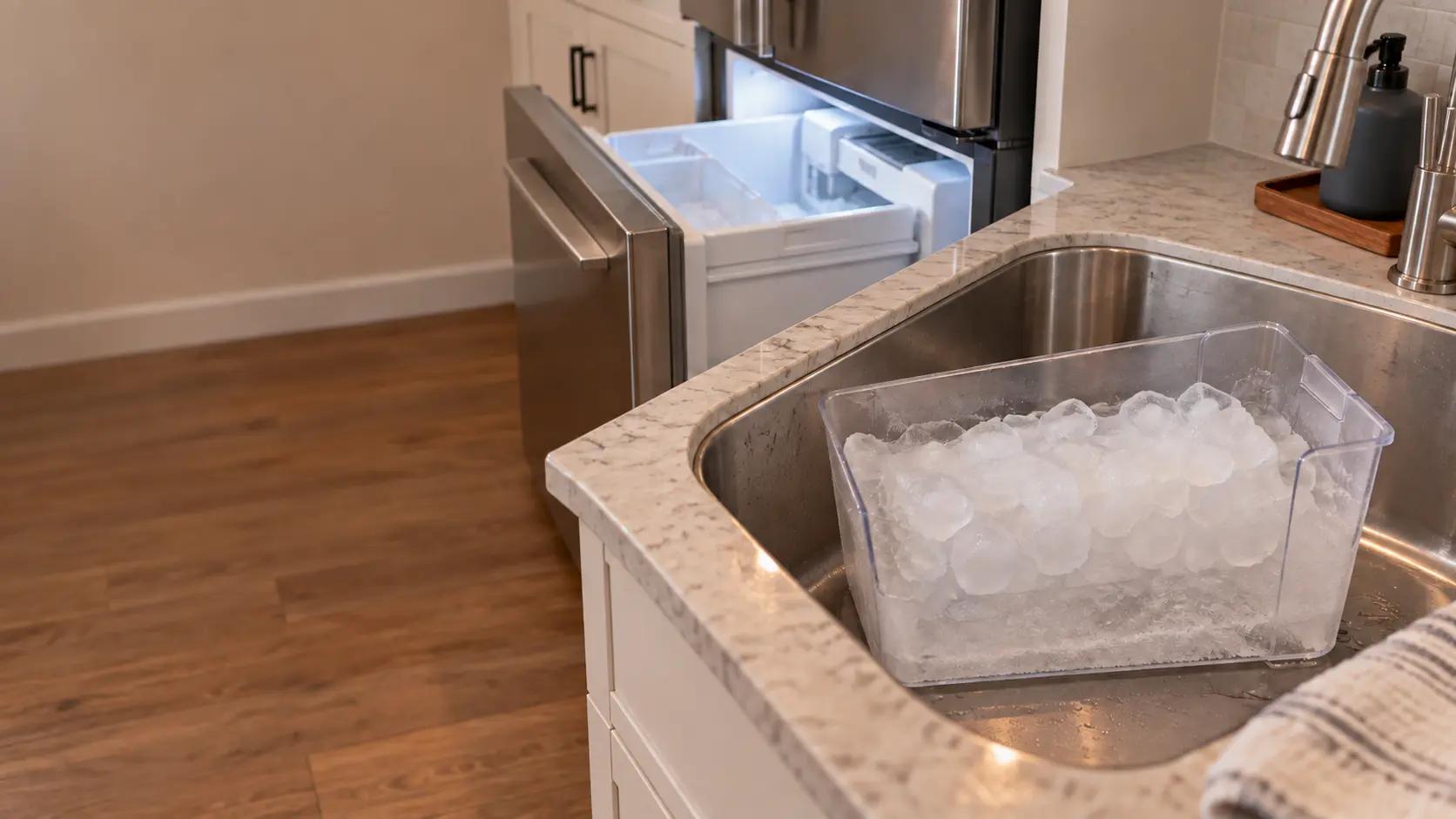
Ice Clumped or Frozen in the Bin
5 causes, cheapest first
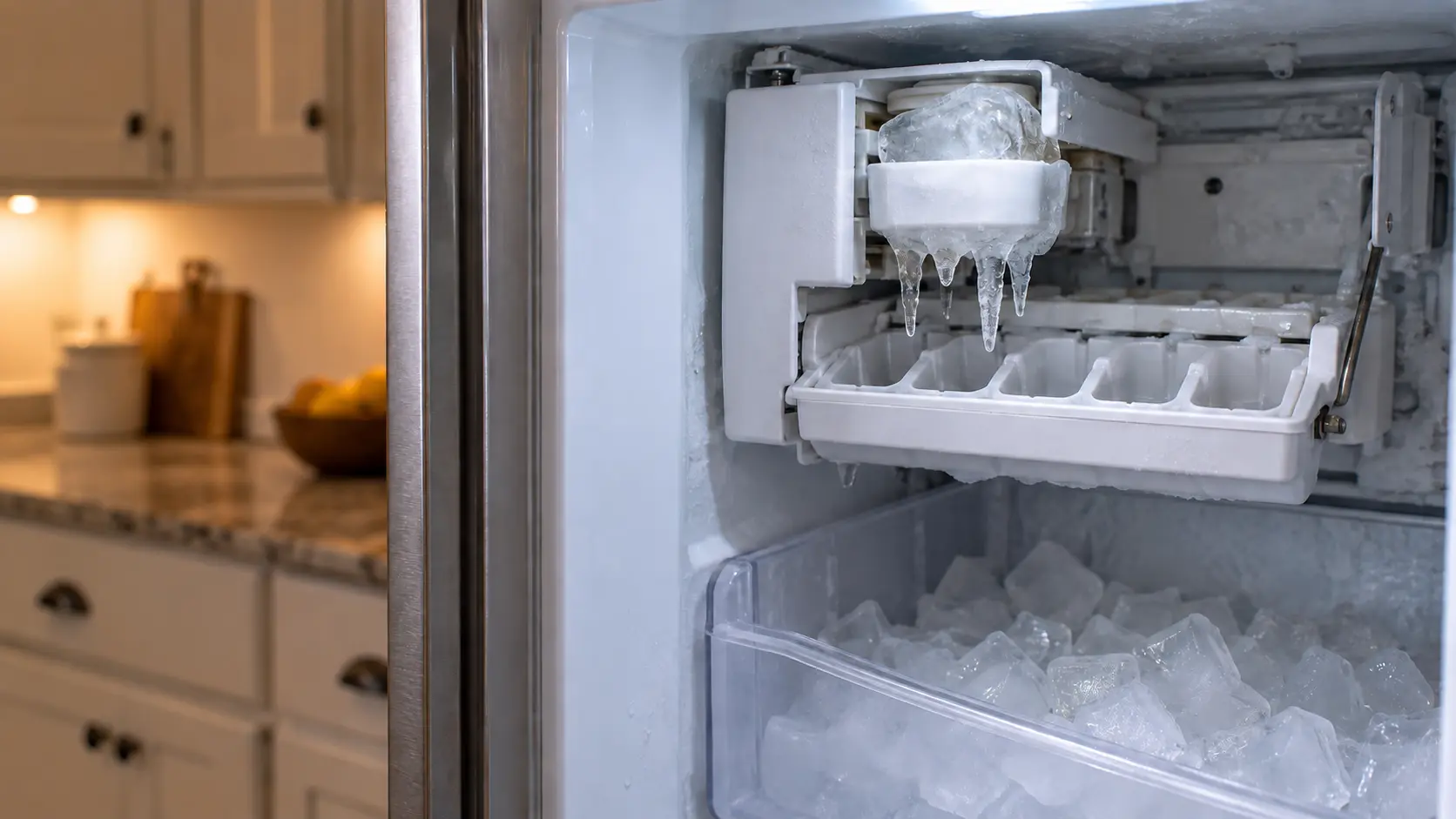
Ice Maker Fill Tube Frozen
5 causes, cheapest first
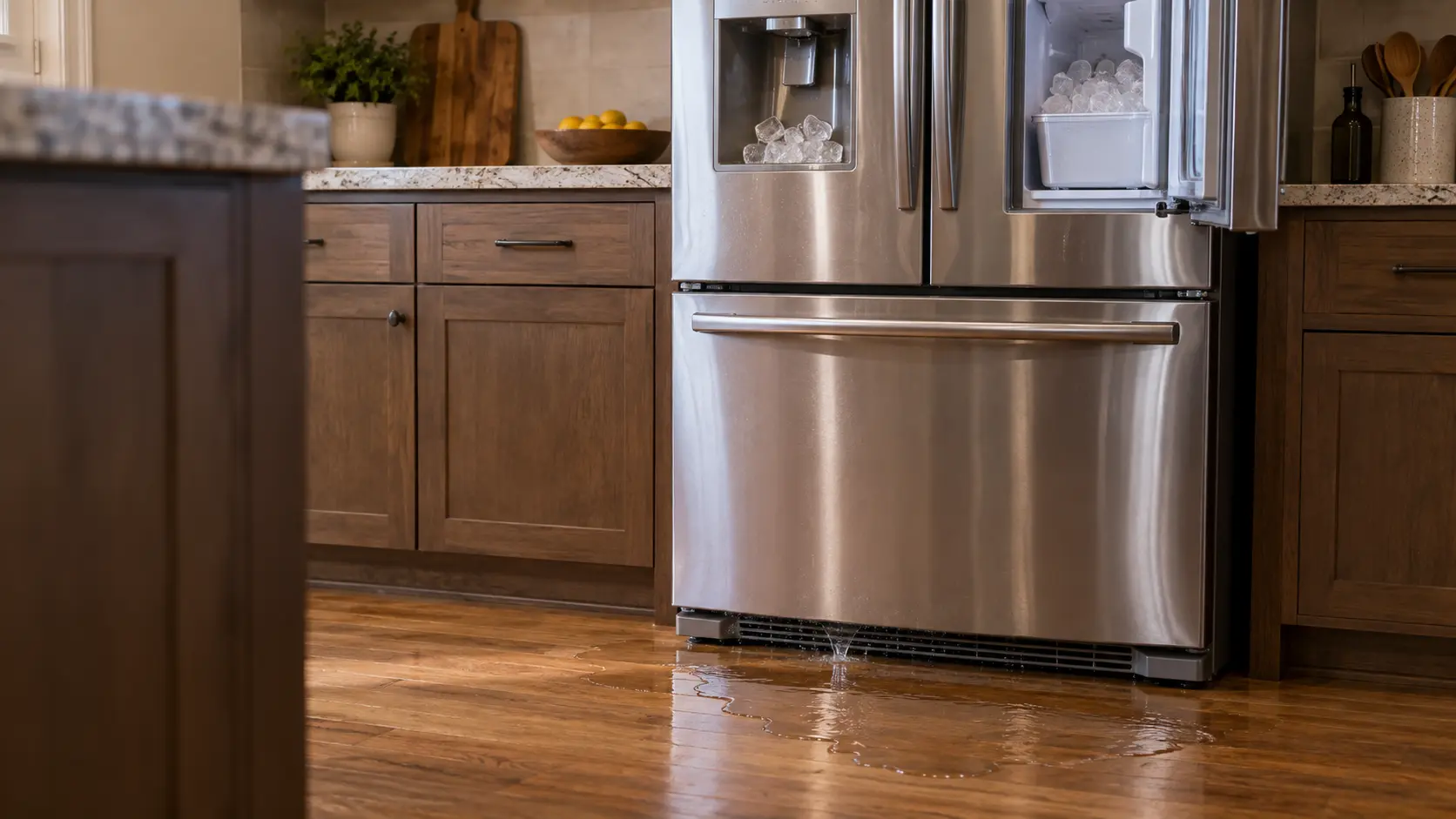
Ice Maker Leaking on the Floor
6 causes, cheapest first
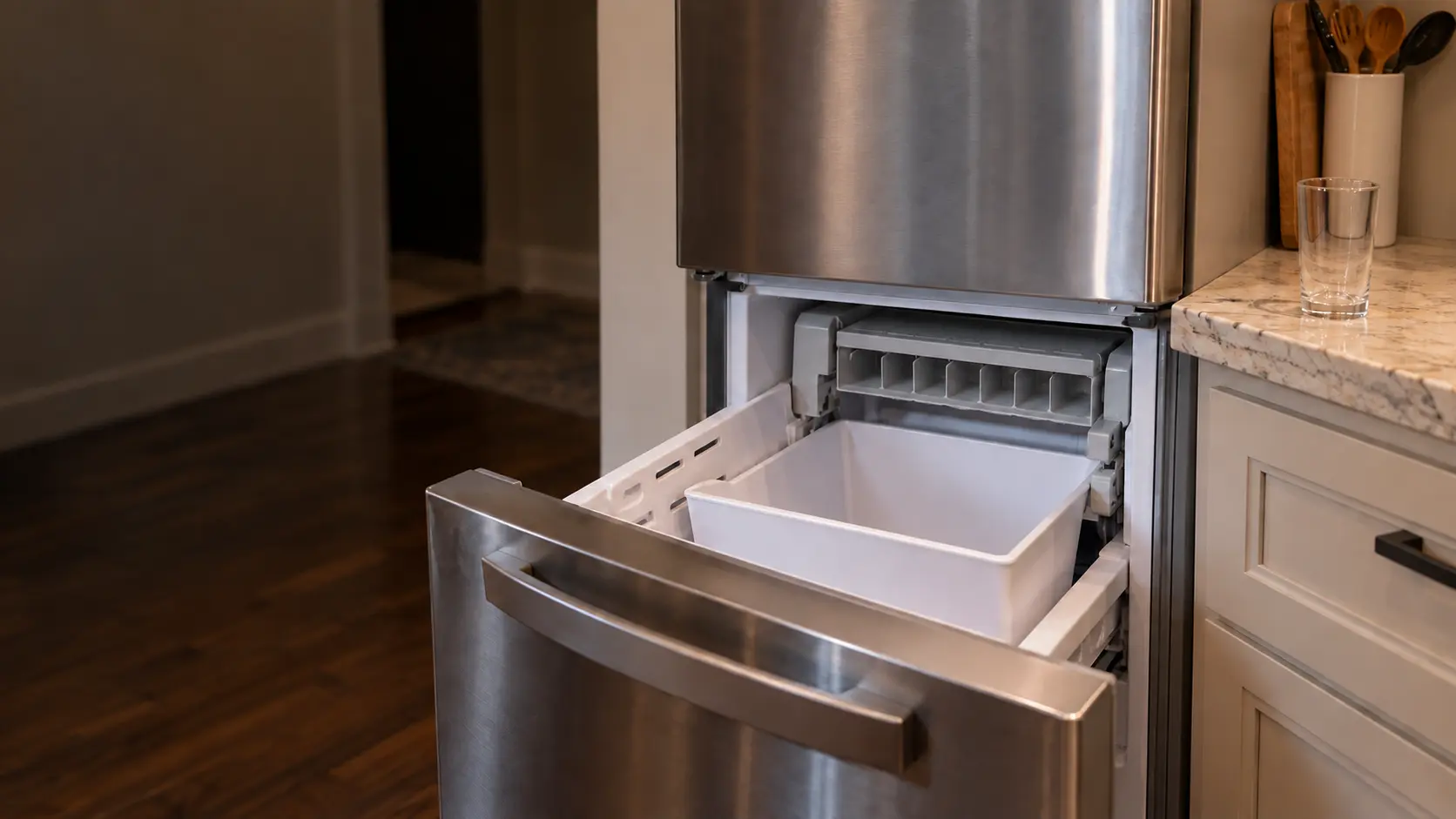
No Ice Coming From the Ice Maker
7 causes, cheapest first
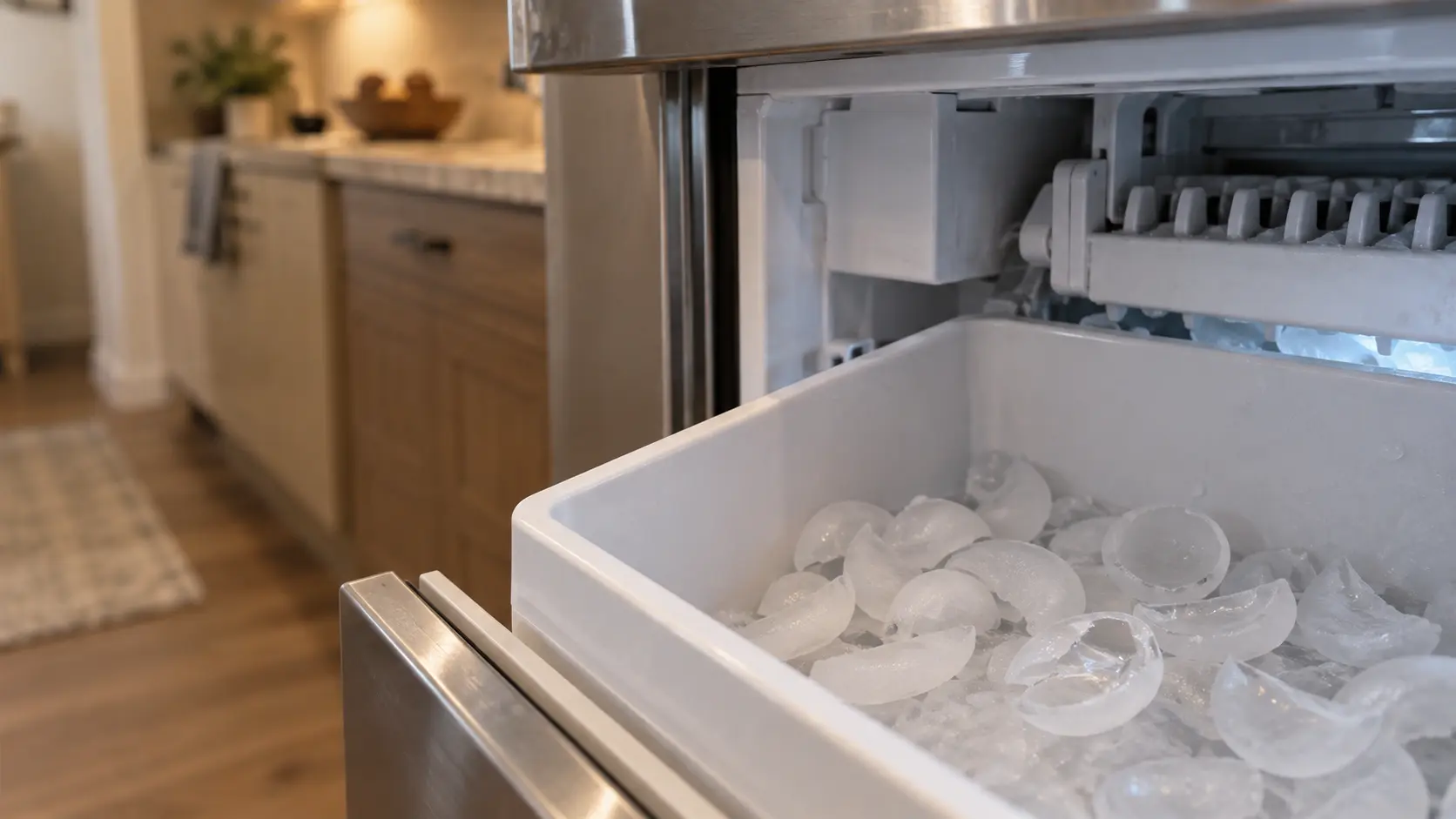
Ice Maker Making Small or Hollow Cubes
6 causes, cheapest first
Who builds
a door.
17 of the makes on this site build a door ice maker. Each mark opens that make's own page.
All 27 brandsDoor ice maker repair,
where we come out.
9 metros, each with its own page.
All service areasTampa BayFL · 31 areas
Miami / South FloridaFL · 47 areas
New York MetroNY · 75 areas
HoustonTX · 36 areas
ChicagoIL · 50 areas
Los AngelesCA · 95 areas
San DiegoCA · 31 areas

Questions about
door ice makers.
Why does my French door model make plenty of water at the dispenser but no ice?
Is it normal for the door compartment to have a little frost inside?
Can I leave the ice maker on when we go away for a few weeks?
The dispenser makes a grinding sound but nothing comes out. What is happening?
Back to your everyday
Is it a door ice maker?
Say so when you book — it changes what the technician brings and how the visit is planned.