
Undercounter Ice Maker Overflowing
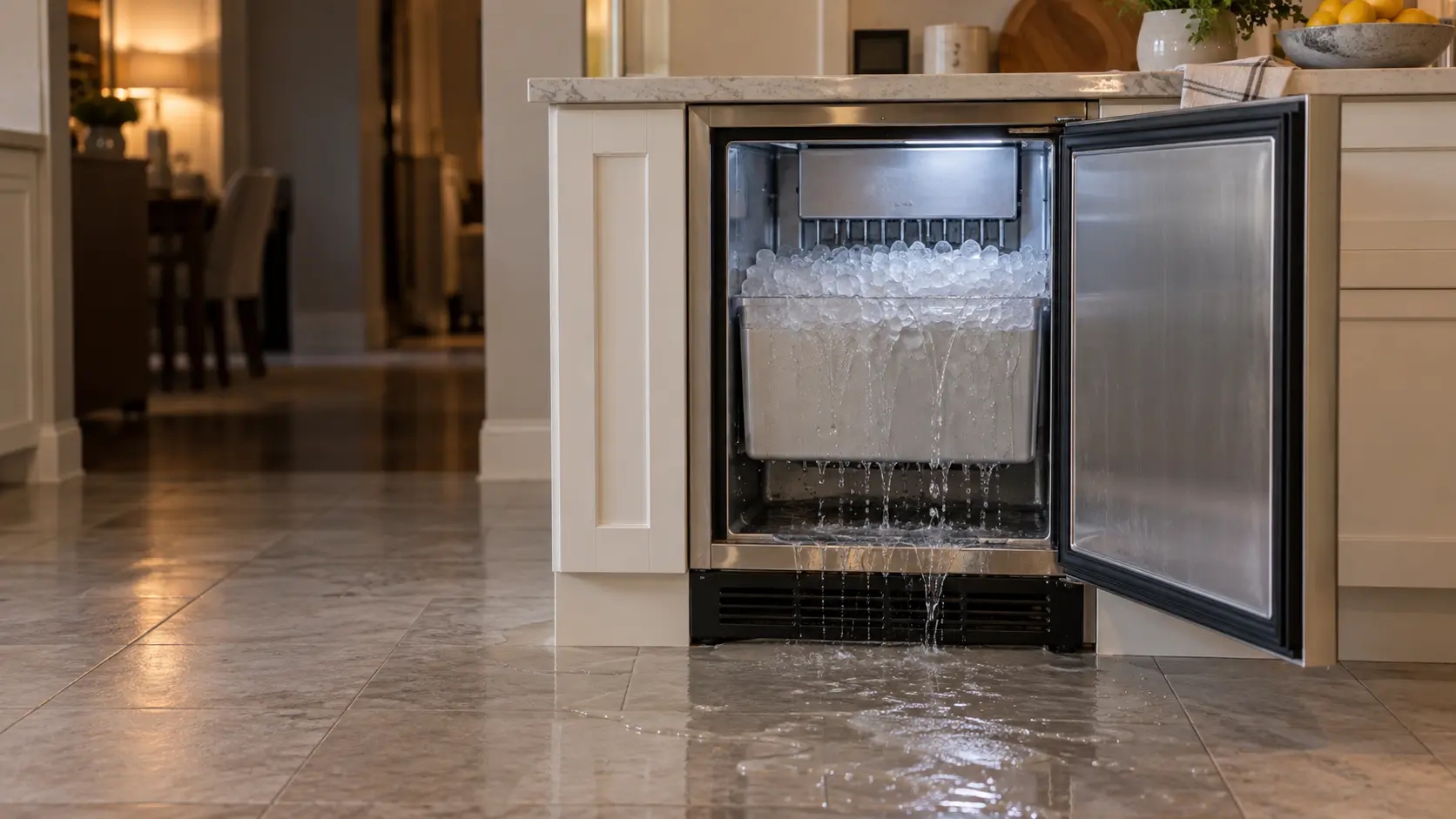
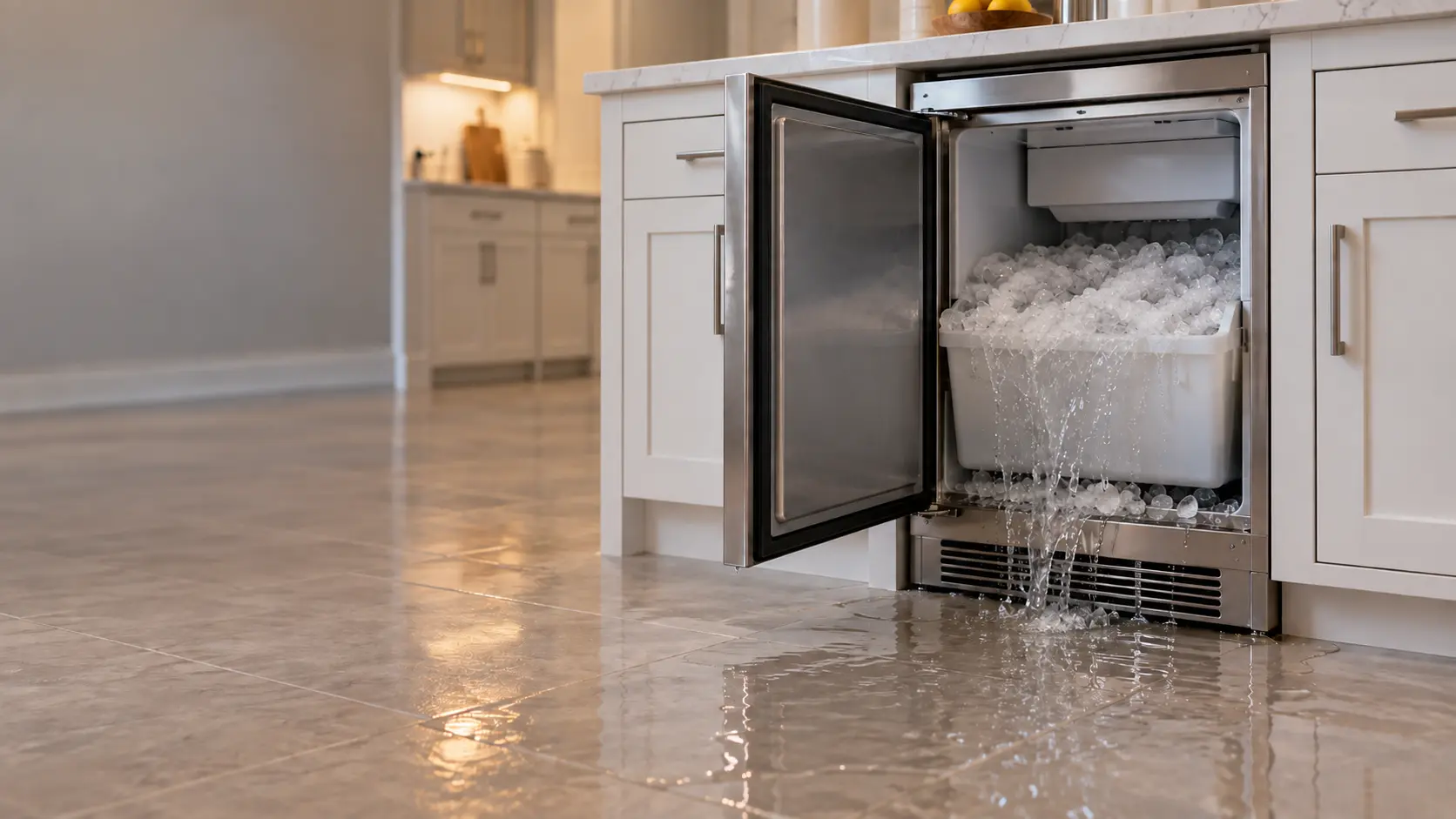
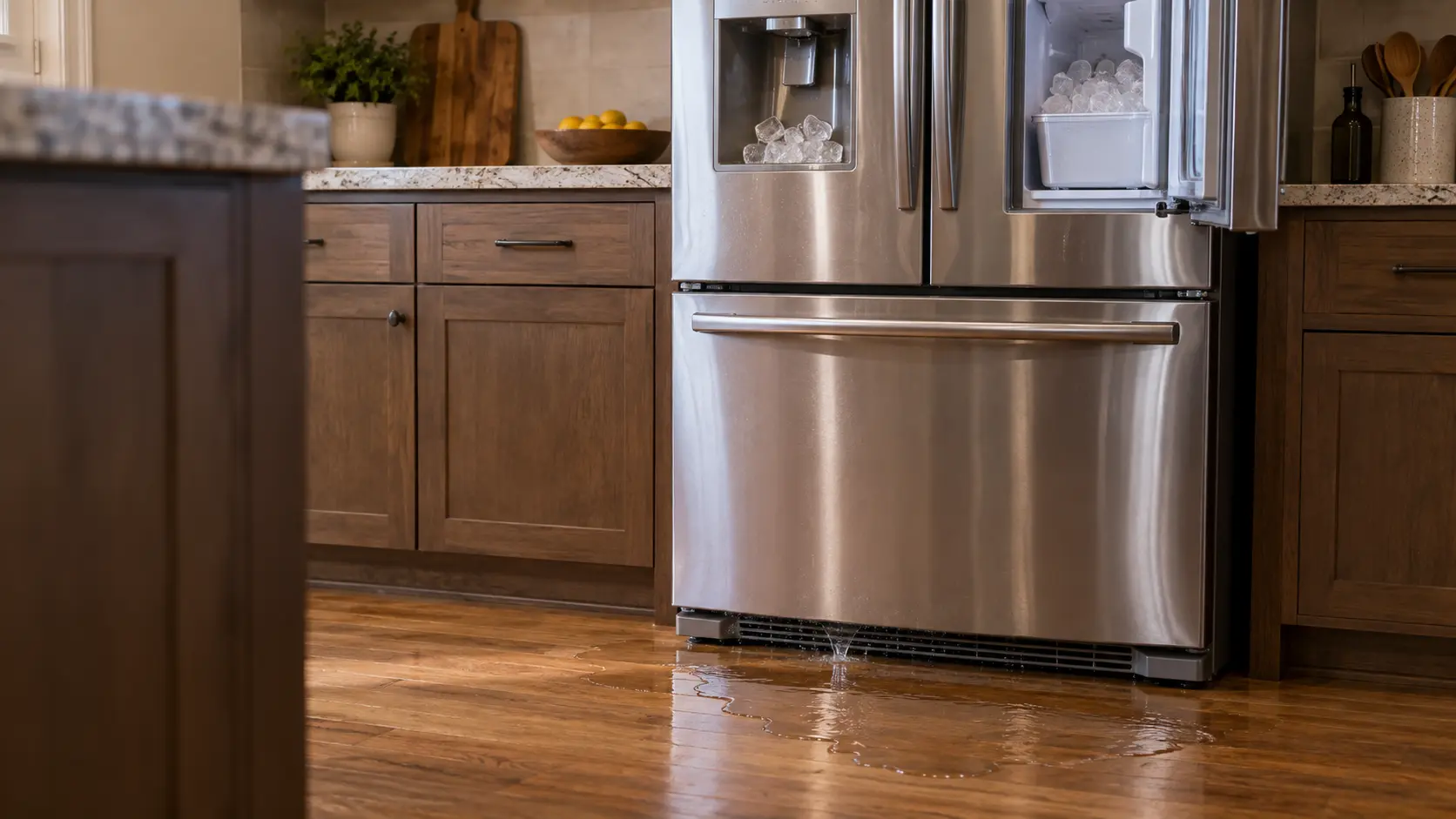
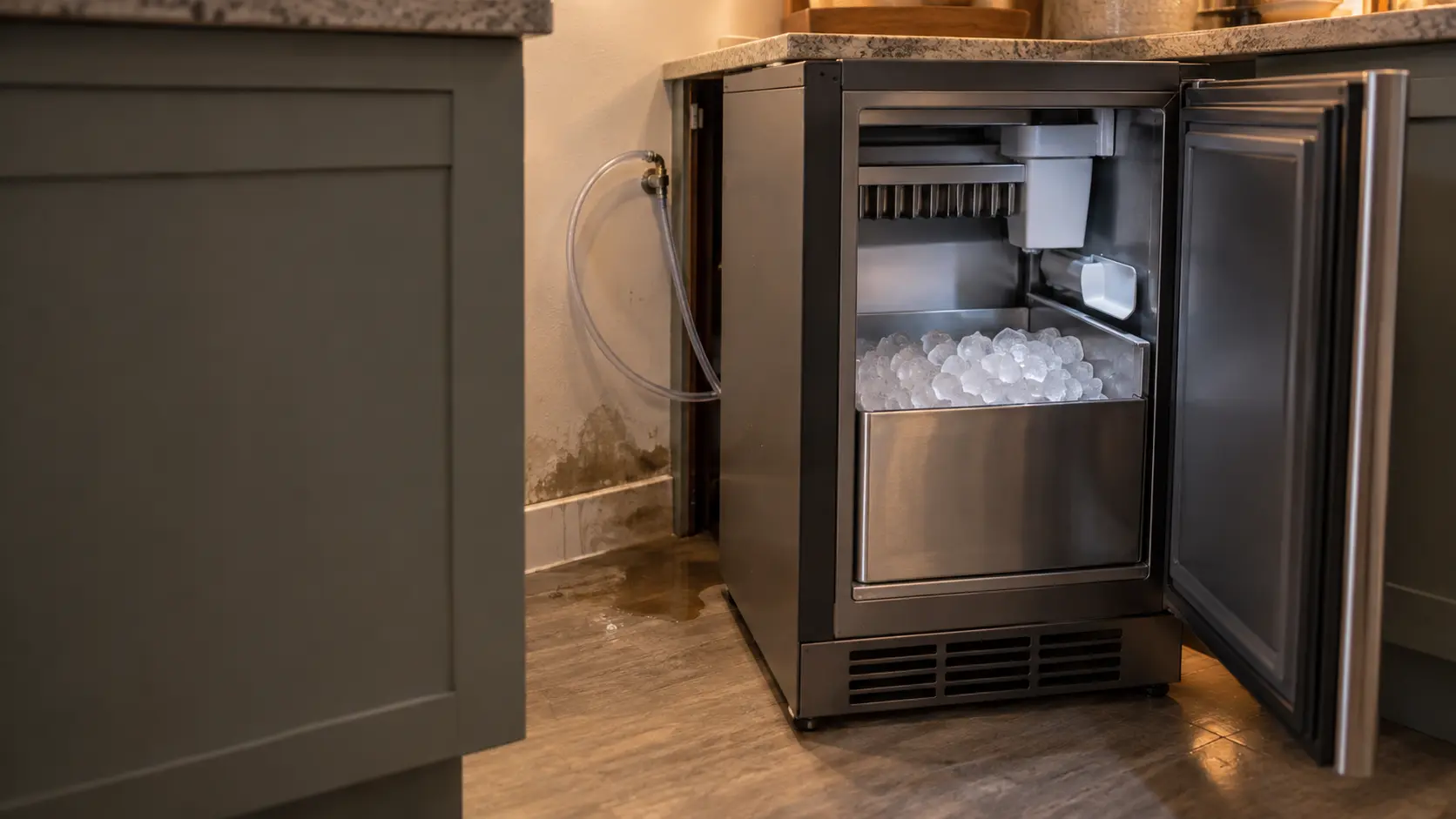
An undercounter ice maker overflowing pushes water out from under its door or kickplate, floods the bin with slush, or leaves the cabinet beside it wet.
Mon–Sat, 8am–8pm
- Water on the floor or near power
- 5 questions that narrow it
- 6 causes, cheapest first
Book a visit
Three short steps, about a minute.
or call (844) 773-0701
Loading appointment form…
The appointment form couldn’t load. Please try again.
Stay clear of any outlet in the water, then close the water valve
Overflowing water soaks the cabinet bases and floor within hours and can reach the outlet the unit uses. Close the supply valve right away, stay clear of any wet outlet and use the breaker only from a dry panel. Leave the unit off until the drain and the valve have been checked.
What it
usually means.
A built-in ice maker under the counter works with more water than any other kind. It fills a trough, pumps that water over a chilled plate or grid until ice forms, drops the ice into an uncooled bin and then sends the leftover water down the drain along with whatever melts in the bin. A float or a level sensor decides when the trough is full. If the inlet valve does not close, the float sticks or the drain cannot take the water away, the trough keeps filling and the water has nowhere to go but out through the front. Because these units sit under a counter and beside cabinets, water that escapes finds the cabinet bases and the flooring fast, often near the outlet that powers the unit.
 The 6 causes, cheapest first
Answer these first
Does water run out while the unit is filling, or does it seep steadily even between cycles?
Is the bin full of water or slush rather than loose ice?
Does the unit drain by gravity to a floor drain, or does it have a small drain pump?
Has the unit been cleaned or descaled recently, and were all the parts put back?
Is the cabinet beside the unit, where the water and power usually come in, wet inside?
Check these
before you book.
Undercounter ice maker overflowing: 5 checks, and none of them costs anything.
Shut the water supply valve for the unit, usually inside the cabinet next to it or under the nearest sink.
If the water has reached the outlet or the cord in the neighboring cabinet, keep your hands away and leave the plug in place.
Turn the unit's breaker off only if you can reach the panel on dry ground and it is nowhere near the water; if not, wait for us.
Also worth checking
- Once it is safe, empty the bin into the sink and note whether it held loose ice, slush or standing water.
- Tell us whether the unit drains to a floor drain or has a pump, and when it was last cleaned.
The causes,
cheapest first.
6 things undercounter ice maker overflowing turns out to be, from parts reassembled wrong after cleaning to level sensor or control misreading.
The cost guide-
01 no repair
Parts reassembled wrong after cleaning
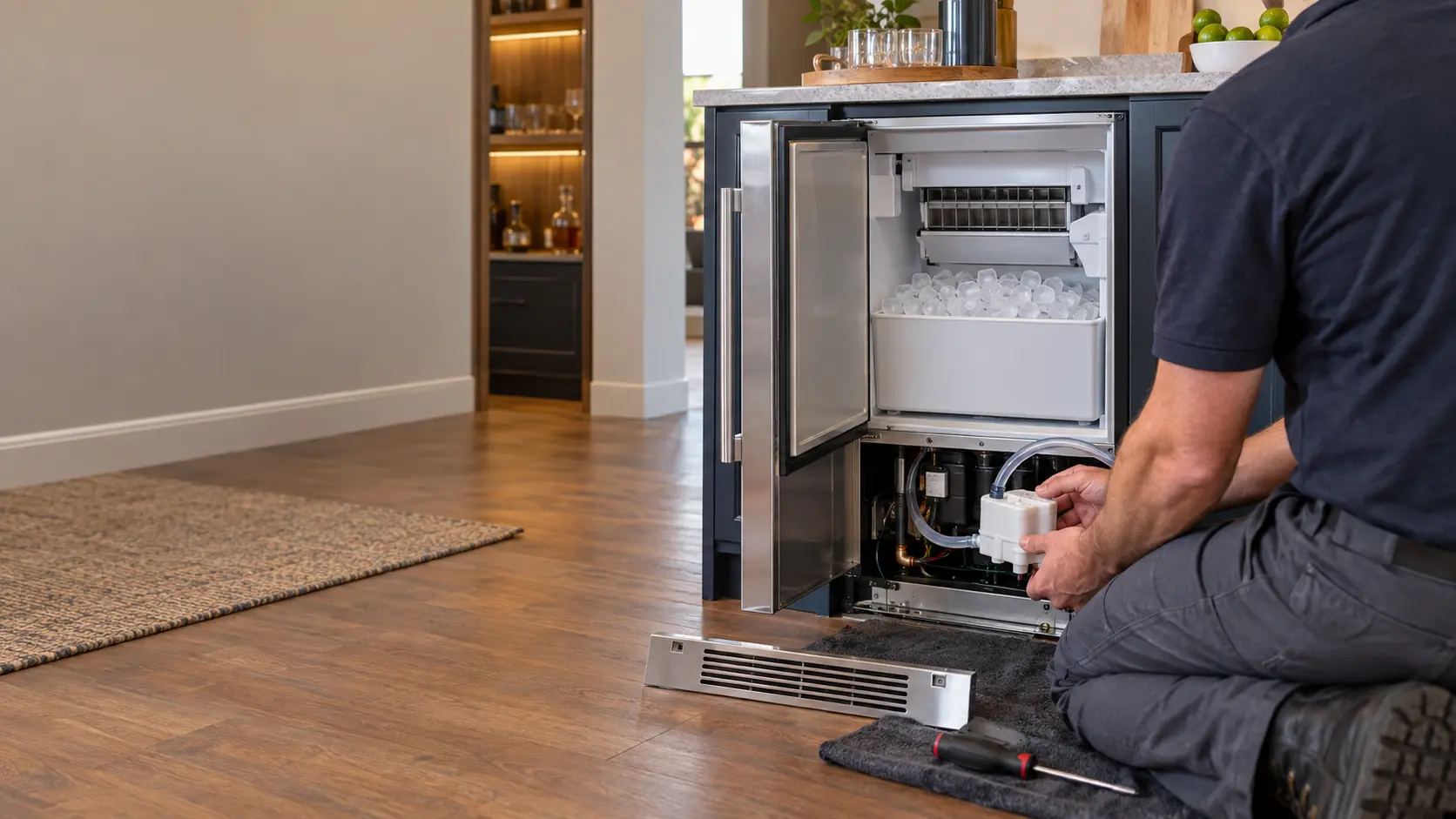
A water distributor, trough or drain cap left out of place after a cleaning cycle sends water past the trough instead of back into it. The manual shows how each piece seats.
-
02 low
Drain line blocked or kinked
Slime and scale build up in the drain hose and the standpipe, and a hose pinched when the unit was slid in stops the flow. The water that should leave backs up and spills from the front.
-
03 low
Float stuck with scale
The float that tells the unit its trough is full can stick in place when scale builds around it. The control keeps the valve open and the trough overflows.
-
04 low to moderate
Inlet valve not closing
Grit or scale under the valve seat lets water trickle in even when the control has closed it. The trickle is slow, but it never stops.
-
05 moderate
Drain pump stopped
Units installed without a floor drain lift their water with a small pump. When the pump fails or its own float switch sticks, the reservoir fills to the brim.
-
06 moderate
Level sensor or control misreading
Some units read the water level electronically. A sensor coated with scale or a control that misreads it can hold the valve open.
What else
it could be.
Most often confused with undercounter ice maker not draining, then ice maker leaking on the floor.
All problemsCodes that come with it
drn ErrTrue Residential · Drain and pumpE11U-Line · Water supply and fillP1U-Line · Drain and pumpEr16U-Line · Drain and pumpEr16Viking · Drain and pump
Also related
The makes
it happens on.
27 makes on this site; undercounter ice maker overflowing can show up on any of them. Each mark opens that make's own page.
All 27 brandsUndercounter Ice Maker Overflowing,
where we come out.
9 metros, each with its own page.
All service areasTampa BayFL · 31 areas
Miami / South FloridaFL · 47 areas
New York MetroNY · 75 areas
HoustonTX · 36 areas
ChicagoIL · 50 areas
Los AngelesCA · 95 areas
San DiegoCA · 31 areas

Questions about
undercounter ice maker overflowing.
Why does my undercounter unit need a drain at all?
It overflowed right after I ran the cleaning cycle. Did I break it?
Can hard water make an undercounter unit overflow?
The unit is quiet now. Is it safe to turn the water back on?
Back to your everyday
Still seeing undercounter ice maker overflowing?
Book with what you checked above — 5 answers save the technician the first part of the visit.