
Countertop Ice Maker Repair
A portable nugget or bullet ice maker that sits on the counter and plugs into an ordinary outlet, fed by a reservoir you fill by hand rather than a water line, with an auger or tray, a small cooling system and a drain plug.
Mon–Sat, 8am–8pm
- 4 things that fail on it
- 3 makes build it
- 6 problems it shows
Book a visit
Three short steps, about a minute.
or call (844) 773-0701
Loading appointment form…
The appointment form couldn’t load. Please try again.
Is yours
a countertop?
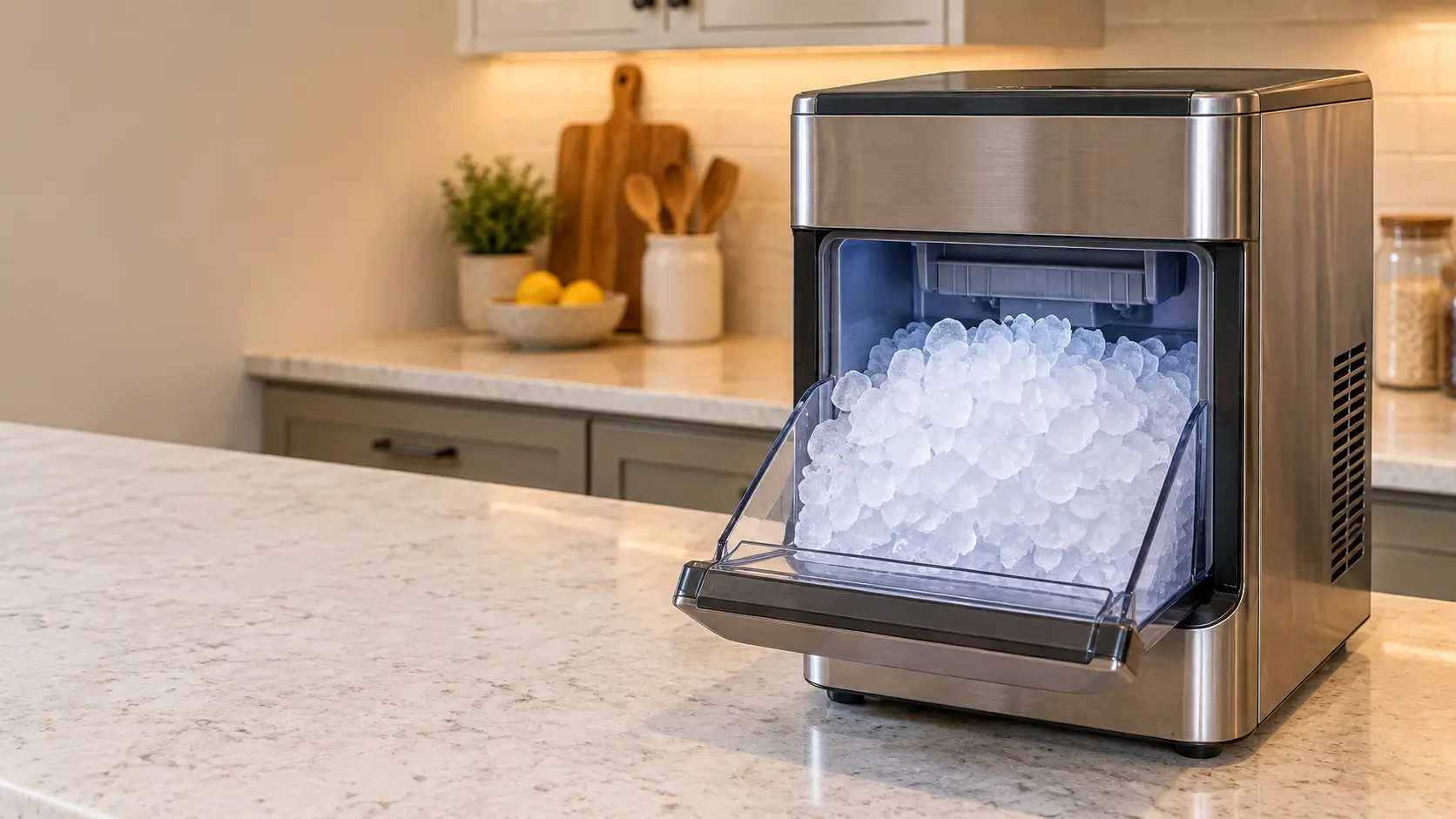
A countertop ice maker has no water line and no drain line: you pour water into a reservoir, it freezes that water on a small cold surface, and the ice falls into a bin you open from the top or the front. Nugget models, of which the GE Profile Opal is the best known, freeze water inside a chilled cylinder and turn an auger to push soft pellets up and out; bullet models dip metal fingers into a tray and drop hollow cylinders into a basket. Either way, the machine recirculates the same water many times, so whatever is in it, minerals, dust or a film from standing water, ends up on the freezing parts. Keeping a countertop ice maker going is mostly about water: the right kind in the reservoir, a regular cleaning cycle, a drain plug that seals, and room around it to breathe.
 What fails on a countertop ice maker
How to tell
It is small enough to lift, sits on the counter with a cord to a wall outlet, and has no hose running into a wall or cabinet.
The reservoir is a removable tank on the side, or a water well under the ice basket that you fill up to a line.
A light or icon on the top panel shows when it needs water, when the bin is full and when a clean cycle is running.
On the back or the underside there are vents for the small cooling system and a drain plug or cap for emptying the water.
Not yours?Door ice makerFreezer ice makerUndercounter ice maker
What fails
on this design.
On a countertop ice maker: scale on the freezing parts, a pump or sensor that reads no water, a drain plug that seeps, too little air around it.
The problems it showsScale on the freezing parts
Tap water with minerals leaves a crust in the cylinder or on the fingers, and a nugget model will squeal, slow down and finally stop making ice. A descaling cycle with the cleaner the maker names clears most of it.
A pump or sensor that reads no water
The small pump that lifts water from the reservoir clogs with sediment, and the water level sensor can be fooled by film or scale. The light for adding water stays on even with a full tank.
A drain plug that seeps
The plug at the bottom takes wear every time it is pulled to drain the machine. A cracked plug or a missing seal lets water creep out under the base and onto the counter.
Too little air around it
The fan and condenser need space on the sides or back. Pushed against a wall, under a cabinet or next to a coffee setup that gives off heat, the ice maker runs constantly and makes little.
Getting at it,
and whether to.
A countertop unit is worked on where it sits, with the reservoir drained and the machine unplugged, then moved to a clear stretch of counter or a table on a towel.
What repairs costOn the visit
- Descaling and a pump or sensor check are done with the covers on or off depending on the model, and take less time than a full ice cycle.
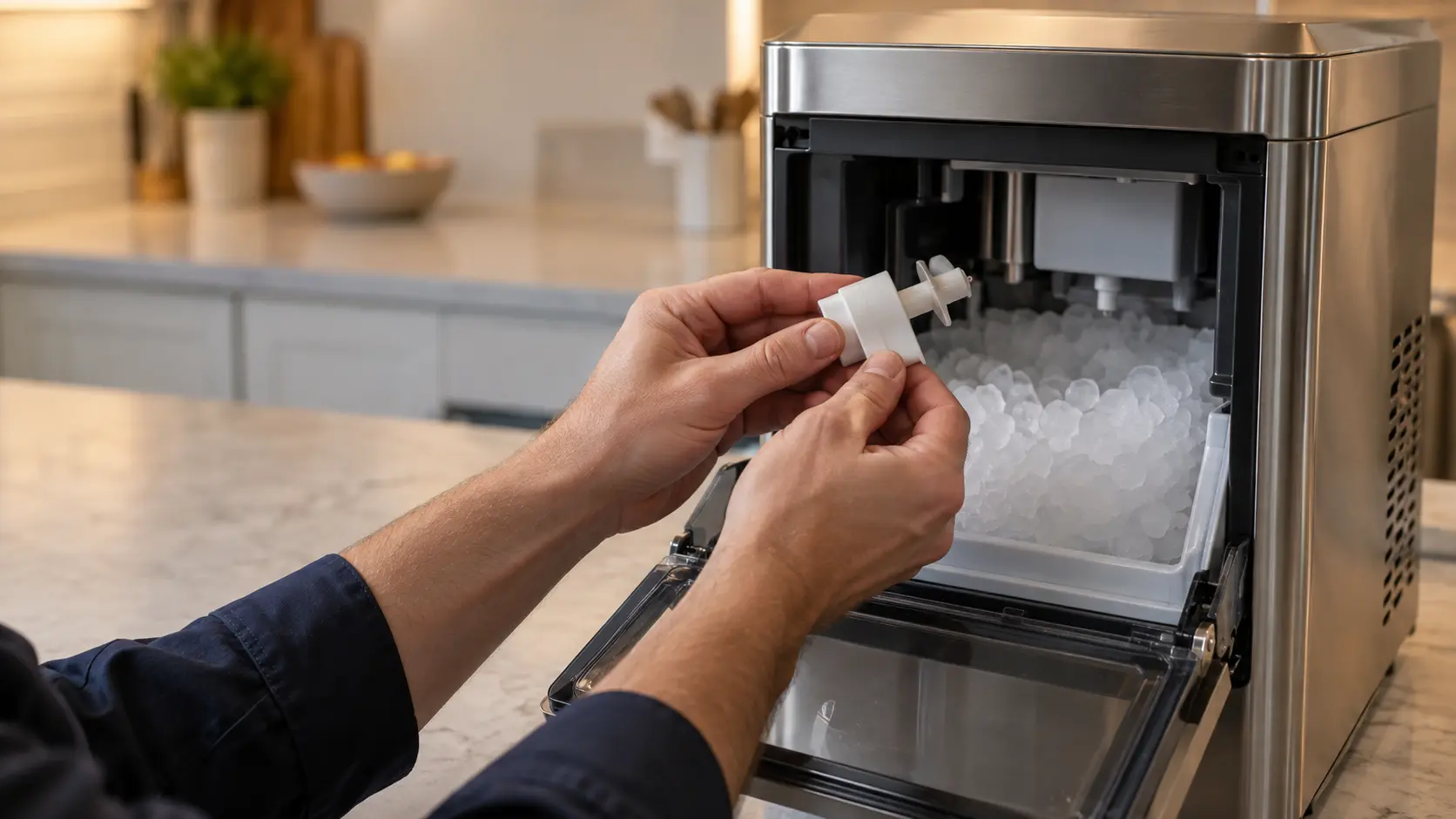
- Many repairs on these units come down to cleaning, a plug or a small pump; the sealed cooling system inside is rarely worth opening on a machine this size.
- Have the reservoir empty and the drain plug out before the visit, and keep the unit near an outlet that is not shared with a kettle or a heater.
Repair or replace
Countertop ice makers are simpler and cheaper than any other kind on this site, so the math is honest and quick. Cleaning, descaling, a drain plug, a pump or a sensor are worth doing, and a nugget unit that is simply scaled up usually comes back to life after a proper cleaning. When the cooling system has lost its charge or the motor that turns the auger has failed, a new unit is often the better buy, and the technician will tell you so on the spot.
Book a visit for a countertop ice makerThe problems
it shows.
On a countertop ice maker, most often nugget ice maker not making nugget ice.
All problems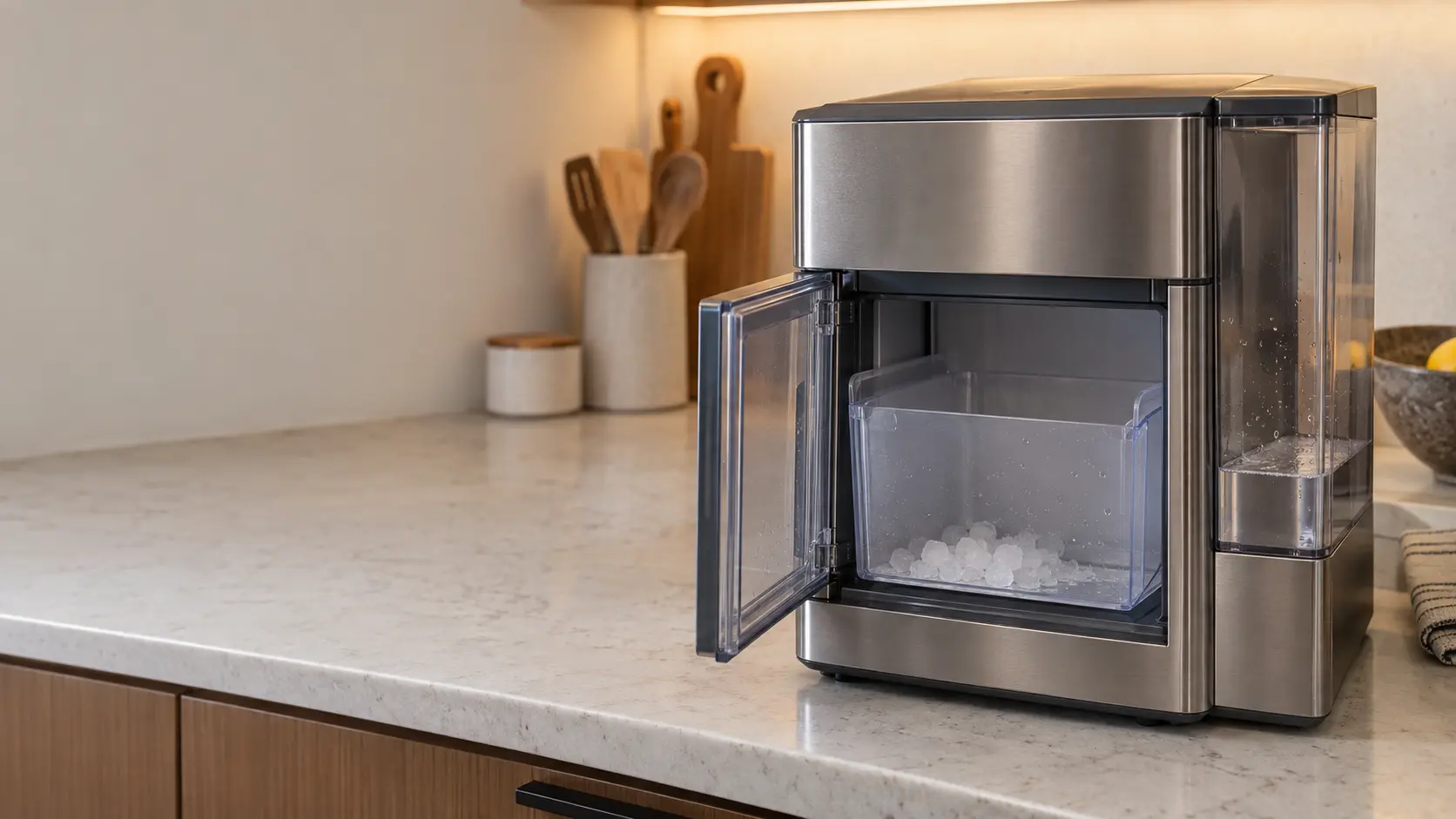
Nugget Ice Maker Not Making Nugget Ice
6 causes, cheapest first
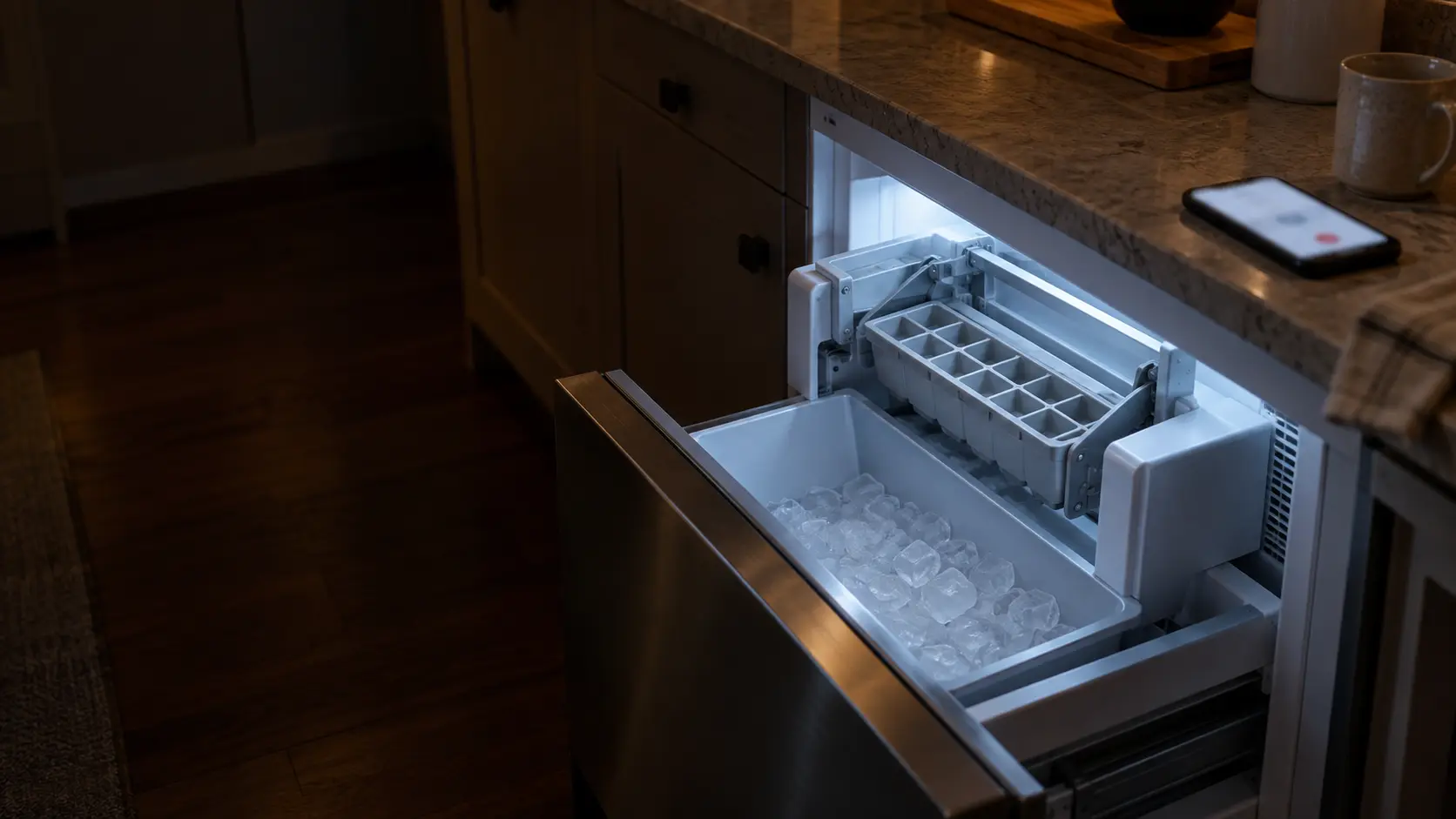
Ice Maker Making Noise
6 causes, cheapest first
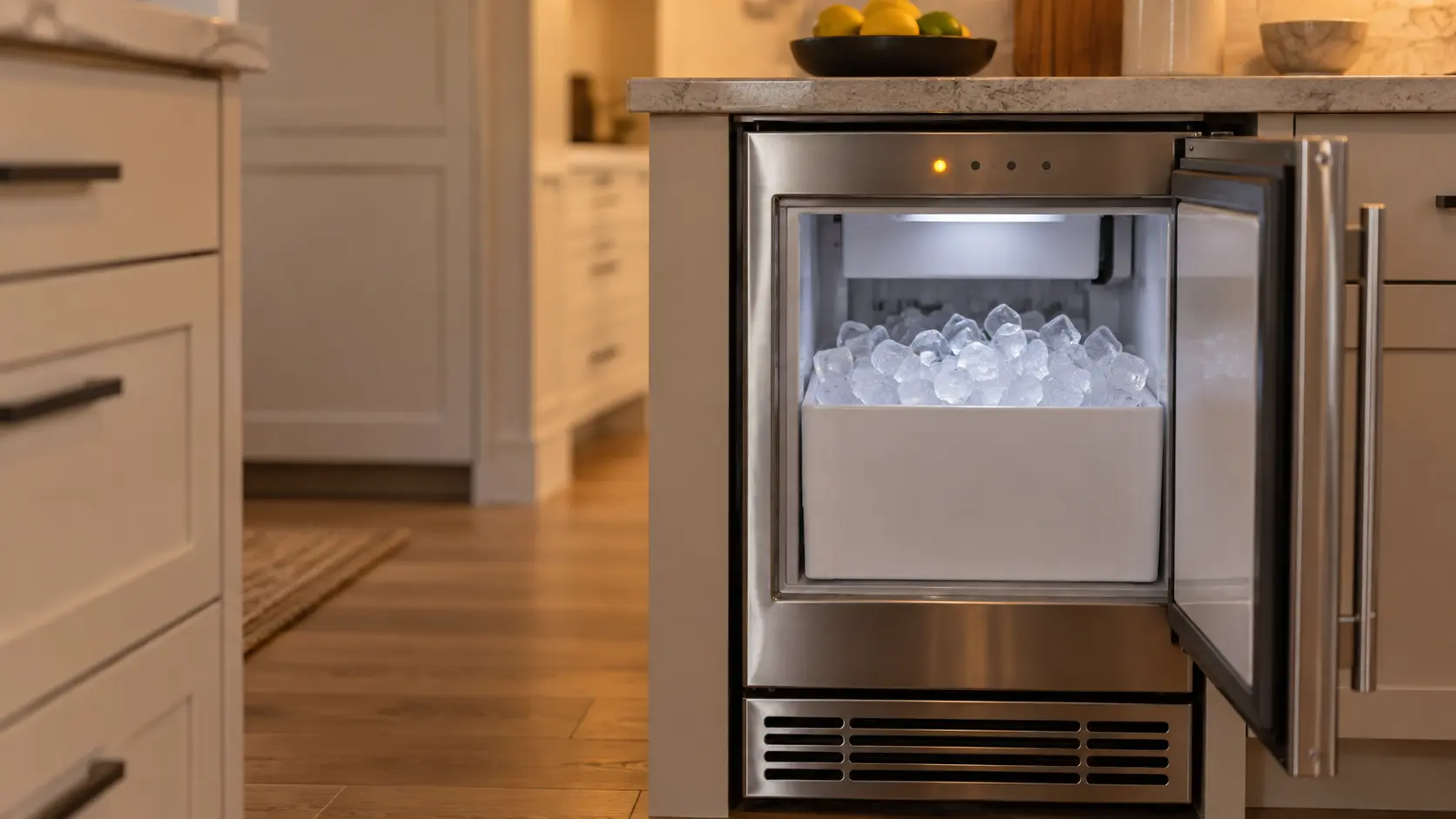
Ice Maker Light Flashing
6 causes, cheapest first
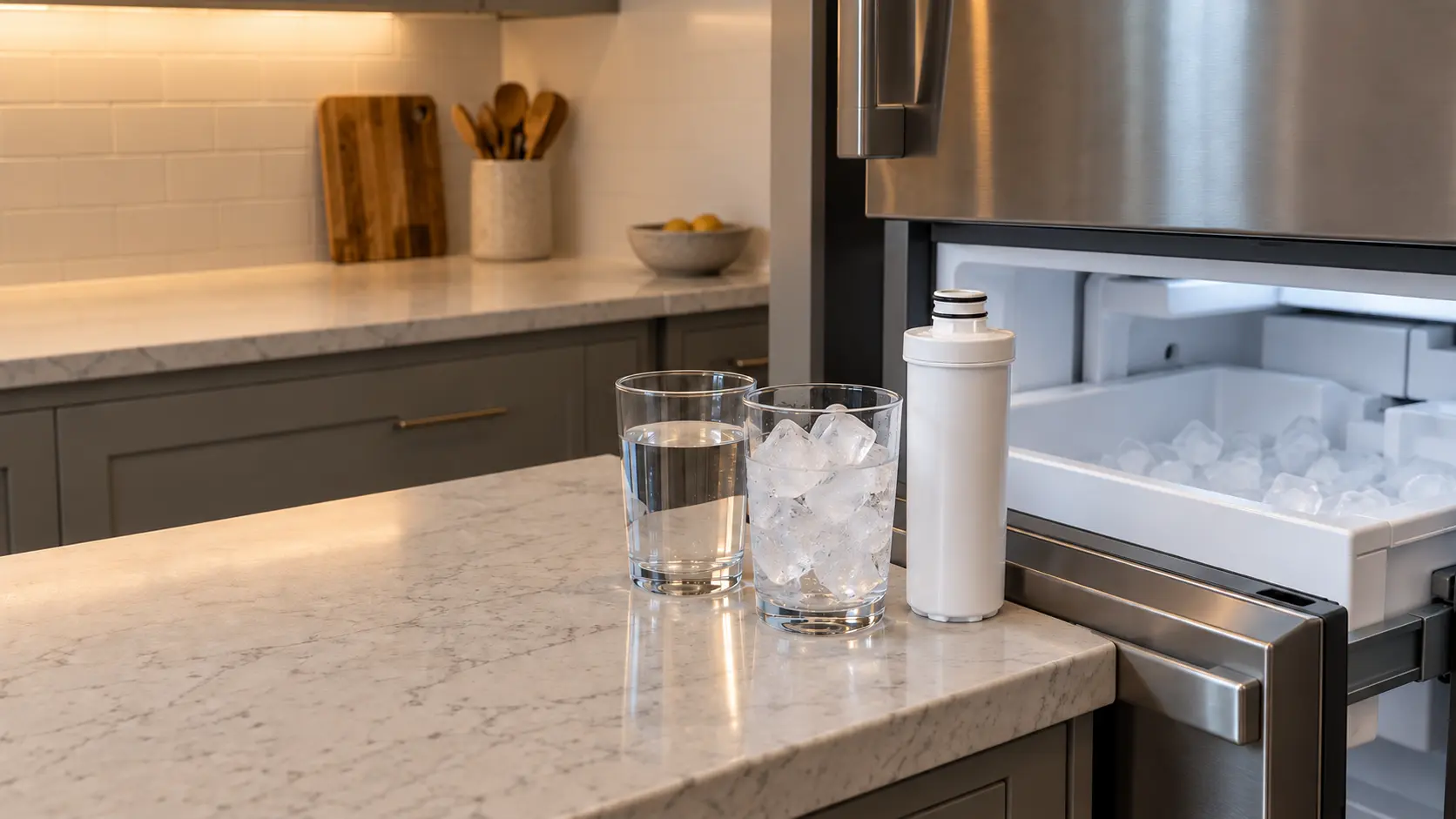
Ice Tastes or Smells Bad
5 causes, cheapest first
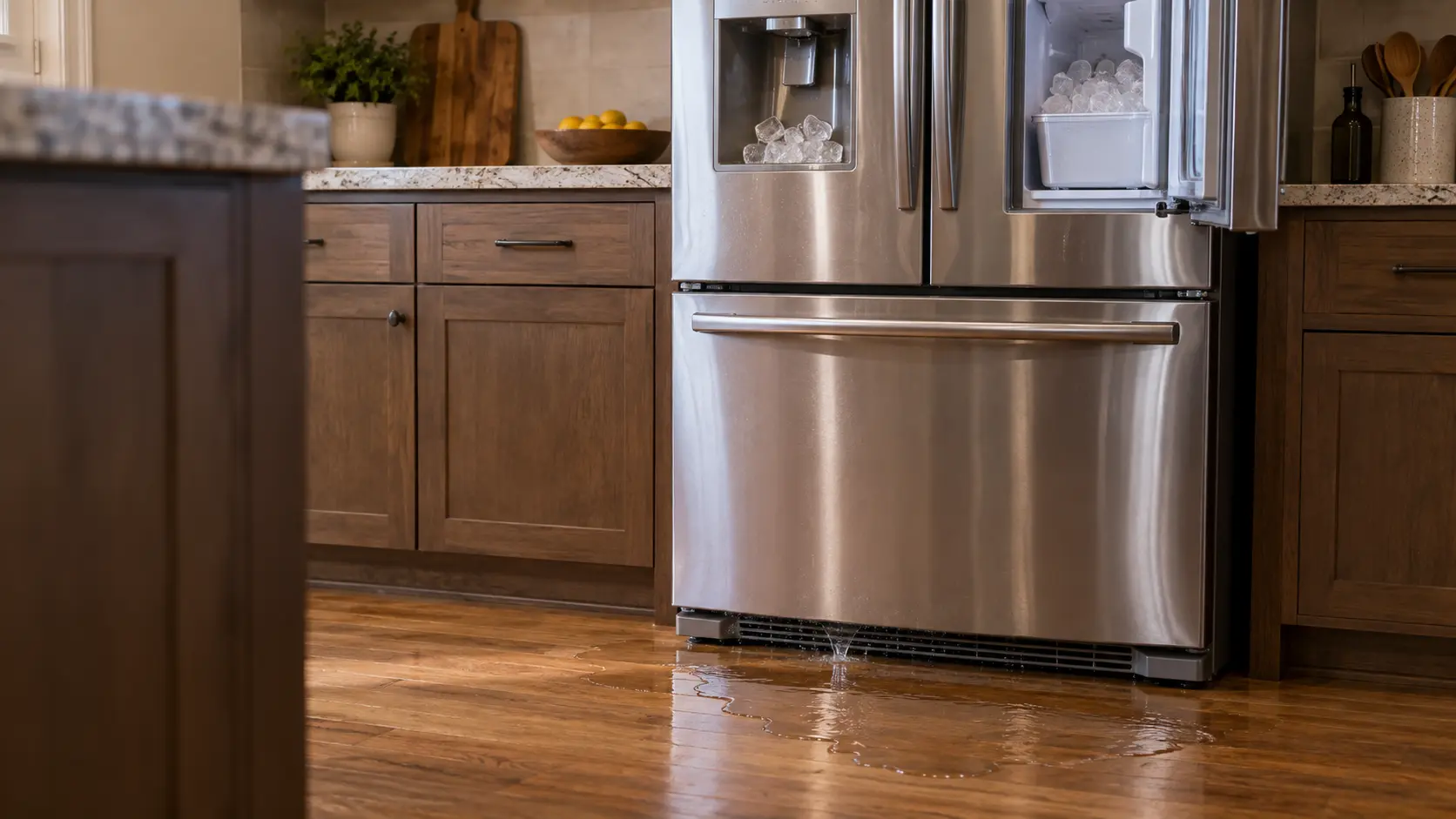
Ice Maker Leaking on the Floor
6 causes, cheapest first
Cloudy or Discolored Ice
6 causes, cheapest first
Who builds
a countertop.
3 of the makes on this site build a countertop ice maker. Each mark opens that make's own page.
All 27 brandsCountertop ice maker repair,
where we come out.
9 metros, each with its own page.
All service areasTampa BayFL · 31 areas
Miami / South FloridaFL · 47 areas
New York MetroNY · 75 areas
HoustonTX · 36 areas
ChicagoIL · 50 areas
Los AngelesCA · 95 areas
San DiegoCA · 31 areas

Questions about
countertop ice makers.
What kind of water should go into a nugget ice maker on the counter?
Why does my nugget ice maker squeak or squeal while it runs?
How often should the reservoir be drained and cleaned?
Is it safe to leave a countertop ice maker running when nobody is home?
Back to your everyday
Is it a countertop ice maker?
Say so when you book — it changes what the technician brings and how the visit is planned.