
Ice Maker Diagnostic Visit
A visit that traces the water from the supply valve to the bin and back out through the drain, and names the one part that stopped the ice before anything is ordered.
Mon–Sat, 8am–8pm
- Price before any work
- 5 steps on the visit
- 6 problems it answers
Book a visit
Three short steps, about a minute.
or call (844) 773-0701
Loading appointment form…
The appointment form couldn’t load. Please try again.
What the ice maker diagnostic visit
involves.
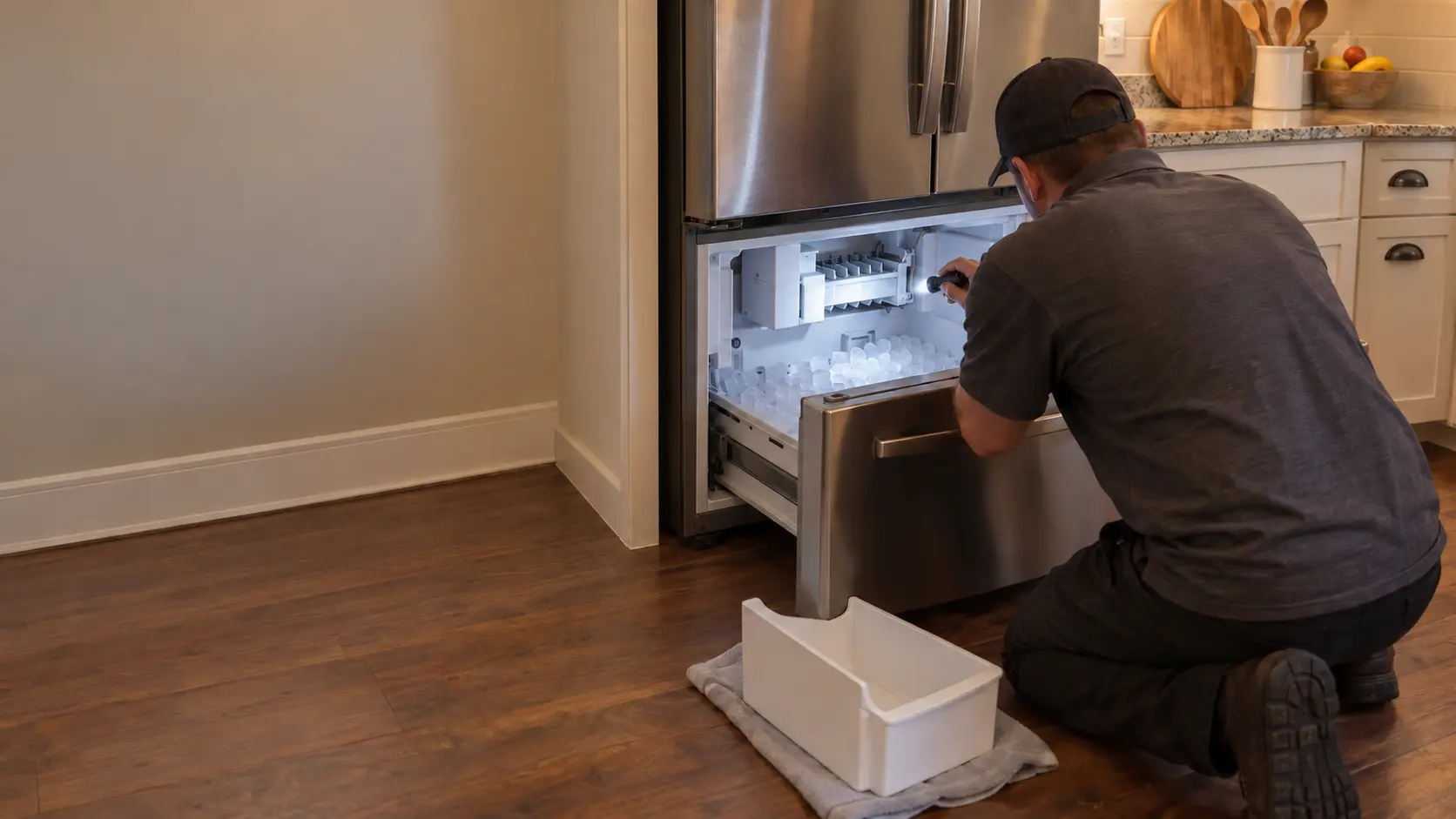
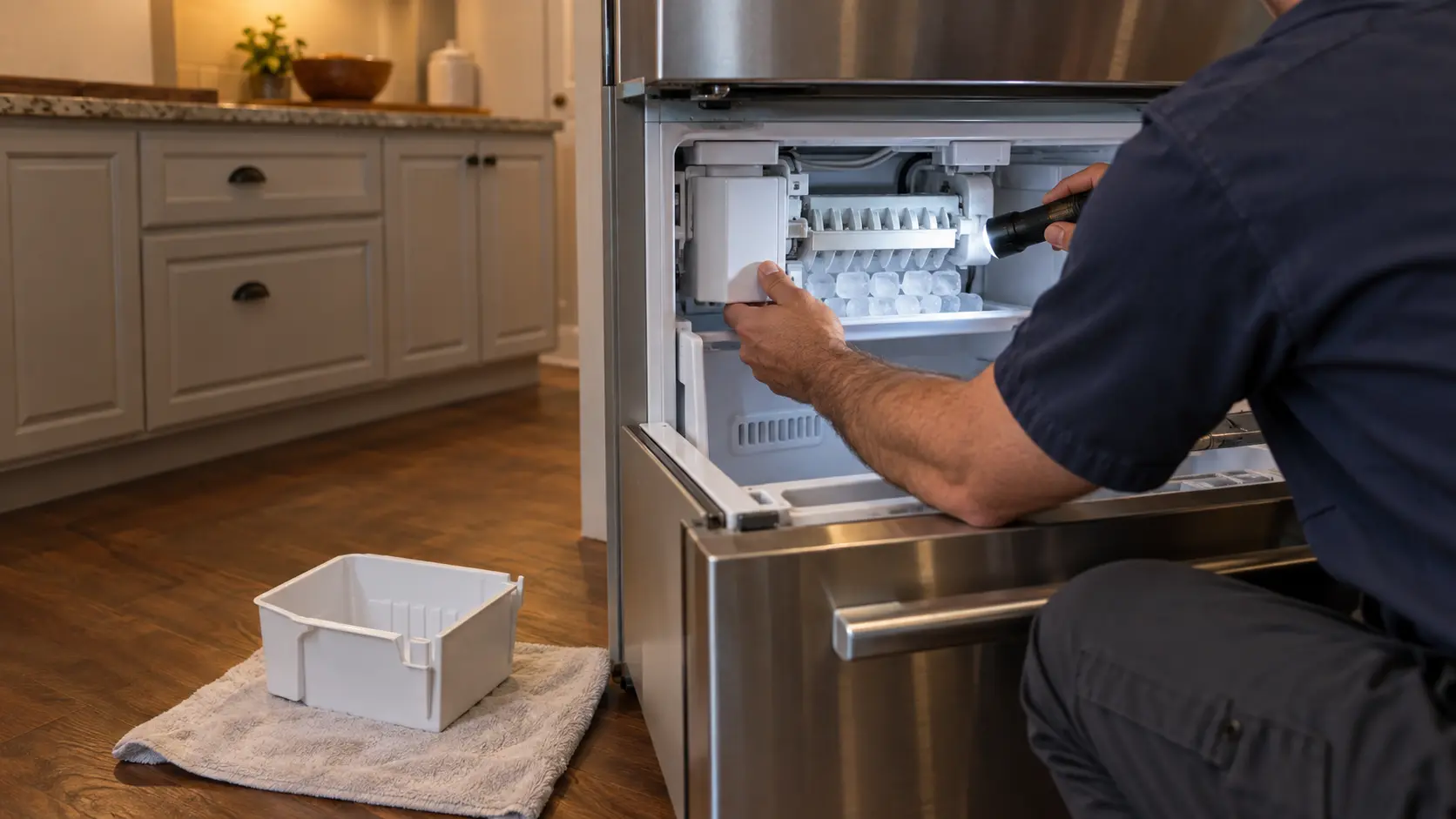
An ice maker diagnostic visit follows the water in the order it travels. The technician starts at the supply valve behind the cabinet or under the sink and checks that it is open and that pressure reaches the appliance, then looks at the filter, the inlet valve and the fill tube. Next comes the ice maker itself: is it switched on, does the bin arm or light beam think the bin is full, does the mold or tray get cold enough, and does it harvest when forced to. On an undercounter or countertop model the drain, the pump and the level of scale are part of the same pass. Only after that are covers opened and parts measured with a meter, so the answer rests on a reading. You end the visit knowing what failed, what the repair takes and its price, or hearing honestly that a new unit is the better choice.
How the visit goesWhat it costsYour ice maker is priced after it has been tested
The scale on this page shows where ice maker jobs usually land, not what yours will cost.
Answers 6 problemsNo Ice Coming From the Ice Maker
Ice Maker Error Code · Ice Maker Light Flashing · Ice Maker Making Noise · Ice Maker Making Small or Hollow Cubes · Ice Dispenser Not Working
Comes up most onDoor ice maker
Freezer ice maker · Undercounter ice maker · Countertop ice maker
Codes that lead hereEr IF · IF · 40E · hi PSI
Kenmore 795 French door showing Er IF.
Diagnostic visit,
step by step.
Leave you with the failed part named, the work explained and a price, or a plain word that the ice maker is not worth the repair.
Ask what you have noticed and look at the ice, the bin and the dispenser or door as they are before anything is touched.
Check the supply valve, the line behind the cabinet, the filter and the water pressure reaching the inlet valve.
Force a test cycle, watch the fill and the harvest, and check the bin sensor, the fill tube and the temperature where the ice forms.
On a built-in or countertop unit, check the drain path, the pump and the scale on the plate, cylinder or fingers.
Leave you with the failed part named, the work explained and a price, or a plain word that the ice maker is not worth the repair.
The problems
it answers.
6 of them, from no ice coming from the ice maker to ice dispenser not working.
All problems
No Ice Coming From the Ice Maker
7 causes, cheapest first
Before you call
Tell us this when you book
- Whether the ice maker is in a door, inside the freezer compartment, under a counter, or on the counter
- What the ice looks like now: none, small, hollow, cloudy, clumped or too much
- Whether there is water where it should not be, and where you see it
- The model number, from the label inside the compartment, behind the kickplate or on the back of a countertop unit
It also answers
A price before
any work.
The scale on this page shows where ice maker jobs usually land, not what yours will cost. A bin with no ice could mean a closed valve, a clogged filter, a frozen tube, a bin sensor or a module, and over the phone they all sound the same. So the water is traced and the parts are measured first, the price is set once the failed part is known, and nothing is fitted until you have said yes.
Read the full cost guideWhere it
comes up most.
Most bookings: Door ice maker, Freezer ice maker, Undercounter ice maker, Countertop ice maker.
All ice maker typesCodes that lead here
Er IFKenmore · Fans and airflowIFLG · Fans and airflow40ESamsung · Fans and airflowhi PSITrue Residential · Fans and airflow
Often the same visit
The makes
we see it on.
27 makes on this site, and the ice maker diagnostic visit on any of them. Each mark opens that make's own page.
All 27 brandsDiagnostic visit,
where we come out.
The kitchen, the climate and the building all change how the ice maker diagnostic visit goes. These notes are about that, metro by metro.
All service areasTampa BayFL · 31 areas
A Tampa Bay diagnostic starts at the water: the pressure at the inlet valve, the age of the filter and the scale on the mold, because the area's blended, mineral-bearing supply explains a slow ice maker more often than a failed module does.
OrlandoFL · 30 areas
Guests in an Orlando vacation house report an ice maker problem while the owner is far away, so the visit records what the unit actually does, fill time, cube size, bin level, and sends those findings to the owner or manager before anything is replaced.
Miami / South FloridaFL · 47 areas
Once a South Florida hurricane has passed, the visit tells an ice maker that merely lost power and refroze its bin from an undercounter unit whose pump and wiring sat in rising water, and that one stays unplugged with its supply shut while its insides are inspected.
New York MetroNY · 75 areas
In a New York apartment the diagnostic is usually arranged through the super, who can shut the line if a valve must come out, and it checks the fill, the harvest and the dispenser together so the owner or the landlord gets one clear answer.
HoustonTX · 36 areas
Houston families often call after a storm outage when the ice never came back, and the diagnostic sorts a melted, refrozen bin and a tripped ice switch from a valve or control that the returning power actually damaged.
ChicagoIL · 50 areas
Buyers of Chicagoland bungalows often inherit a freezer ice maker nobody has switched on in years, and the diagnostic answers whether its valve, mold and supply are sound before the family starts counting on it, and what it would take if they are not.
Los AngelesCA · 95 areas
Los Angeles water is so mineral-heavy that the diagnostic reads the scale first: how much has built up on the mold or the freezing plate, and whether a clogged valve screen, not a dead motor, explains the thin harvest the owner reported.
San DiegoCA · 31 areas
Navy and Marine families rotate through San Diego rentals on short tours, so an ice maker there is unhooked and reconnected again and again, and the diagnostic follows the water from the stop valve to the bin to find what the last move disturbed.
San Francisco Bay AreaCA · 74 areas
With soft water across much of the Bay Area, scale is seldom the answer, so the diagnostic looks sooner at the supply valve, the filter, the fill tube's temperature and the control, and says plainly whether the ice maker is worth repairing.

Questions about
the ice maker diagnostic visit.
Should I empty the ice bin before the technician arrives?
How do I find the water shutoff for my ice maker?
The ice maker started working again on its own. Is the visit still worth it?
Does the visit fee come off the bill if I go ahead with the repair?
Back to your everyday
Ready to book the ice maker diagnostic visit?
Have these to hand: whether the ice maker is in a door, inside the freezer compartment, under a counter, or on the counter, what the ice looks like now: none, small, hollow, cloudy, clumped or too much, whether there is water where it should not be, and where you see it, the model number, from the label inside the compartment, behind the kickplate or on the back of a countertop unit.