Where the fill tube runs, and why it freezes
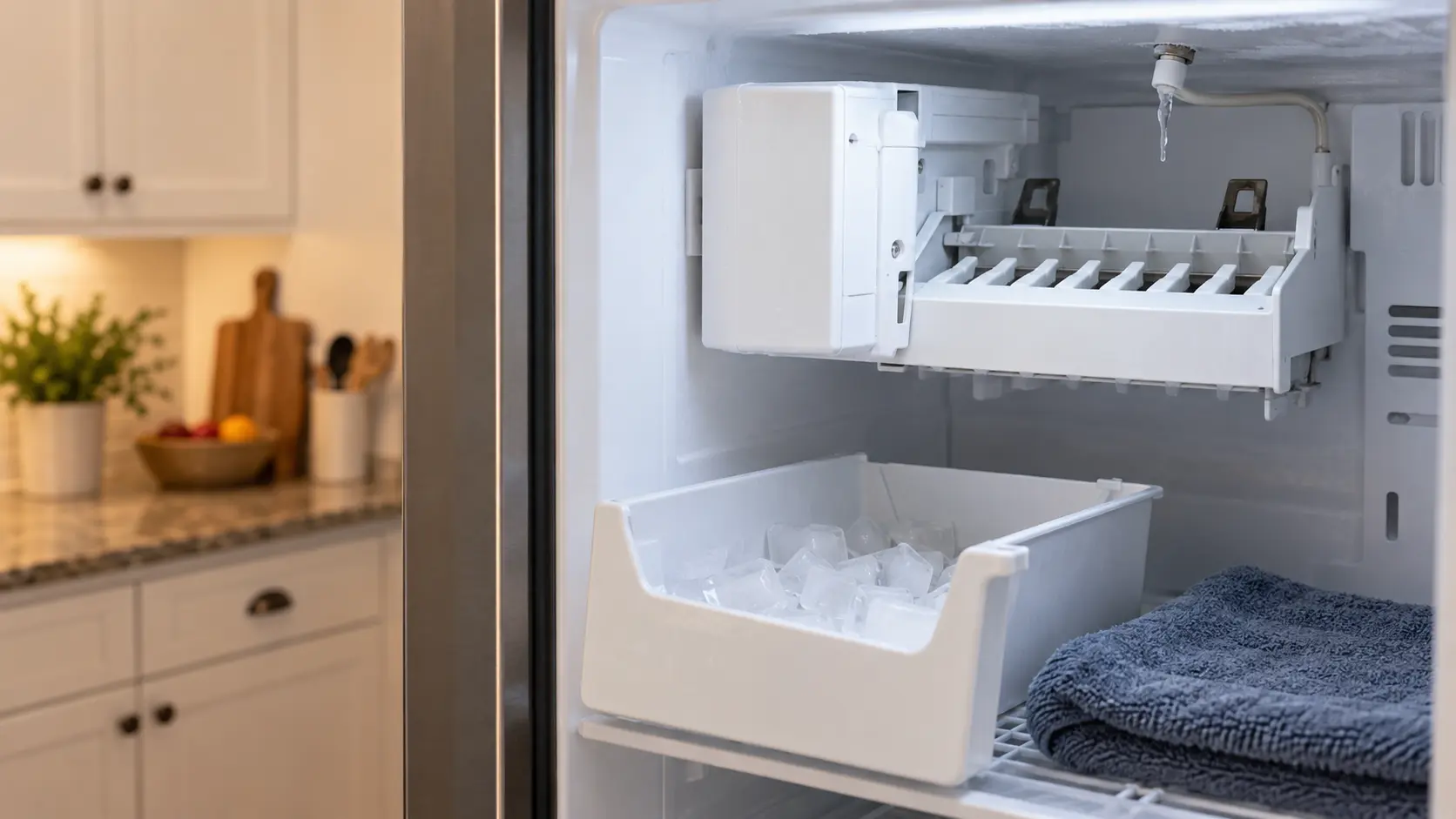
Water leaves the inlet valve at the back of the unit, travels through a plastic line, and enters the ice compartment through a short tube that ends over a small cup at one end of the mold. A normal fill pushes several ounces through in seconds and the tube drains empty. A frozen fill tube almost always starts with water that did not drain: a trickle, a drip or a splash that froze where the tube meets the cold.
Some ice makers have a small heater wrapped around the end of the tube to stop this. When that heater fails, the tube can freeze again within days of every thaw.
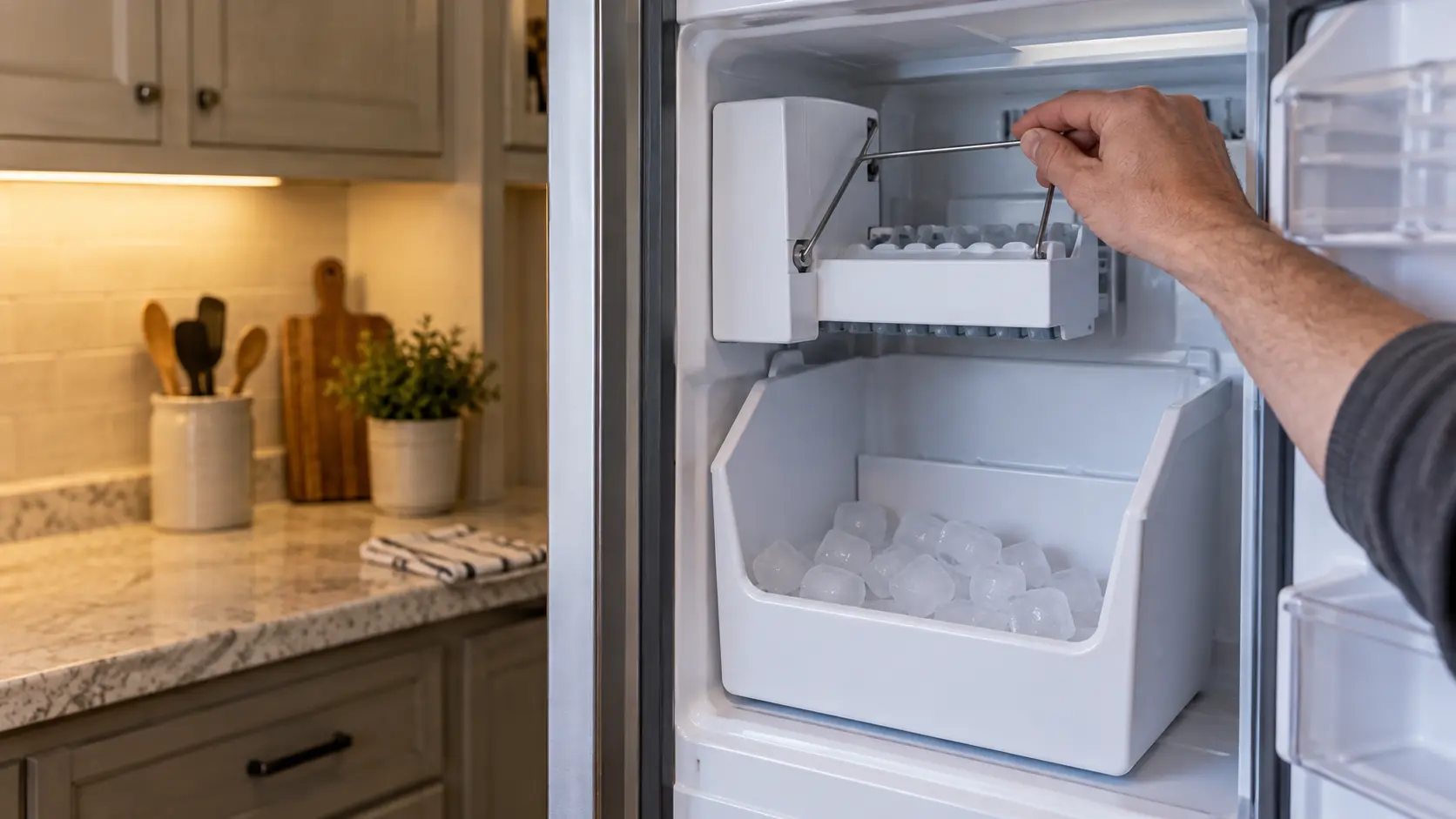
On a freezer ice maker
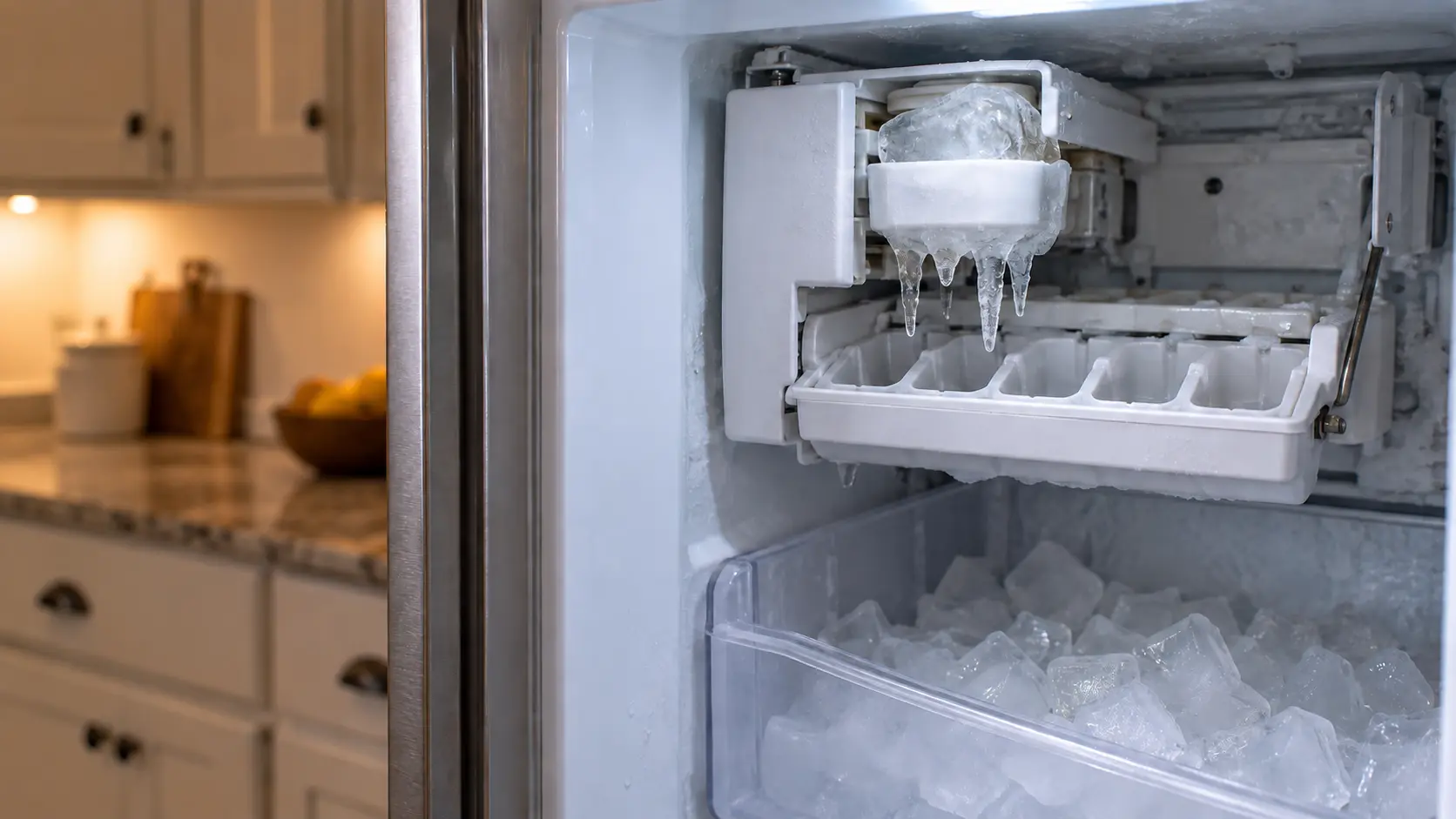
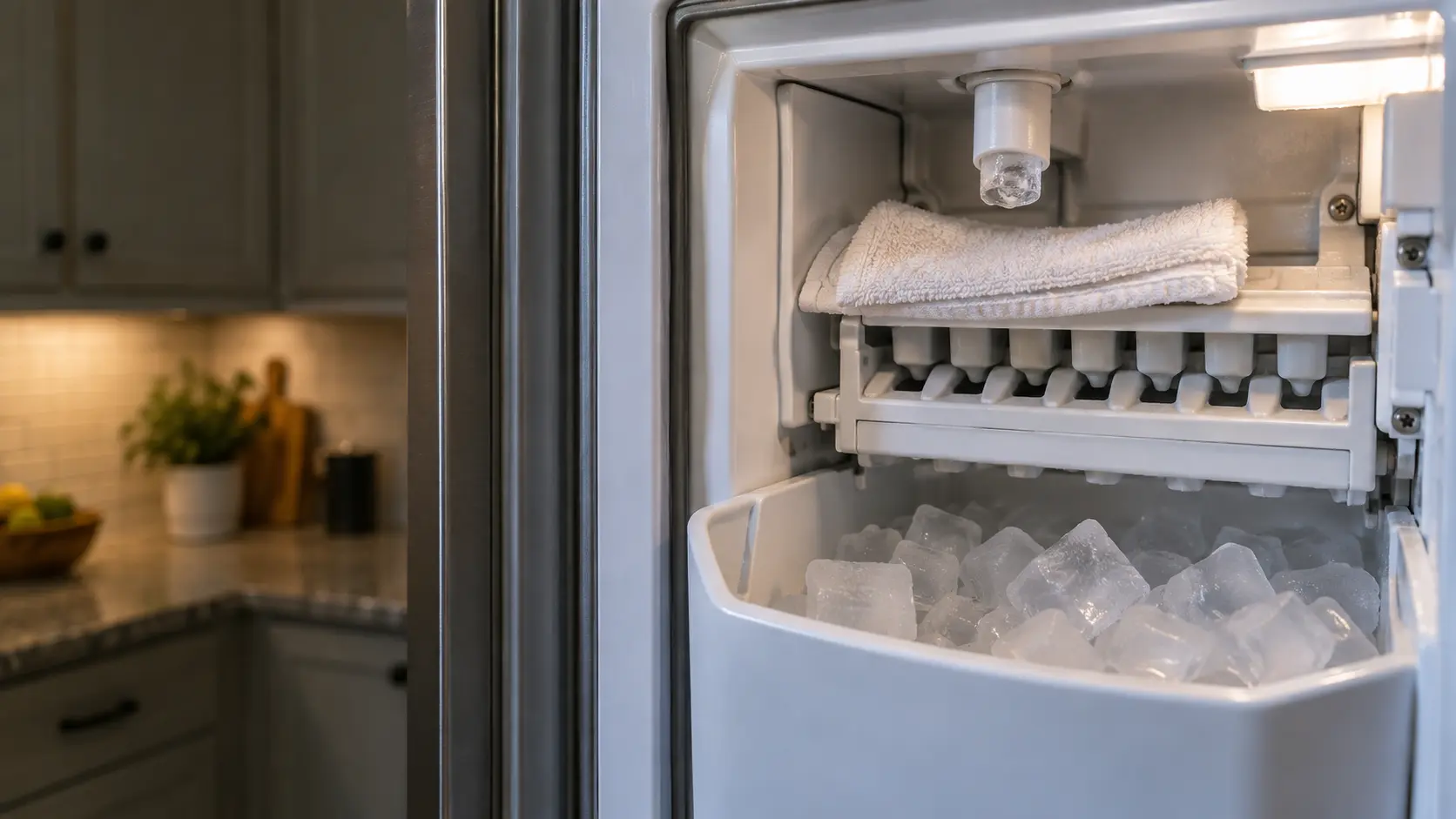
The tube comes through the back wall of the freezer just above the ice maker, usually behind the housing, and you can often see the end of it and the fill cup by looking up from below with a flashlight. An ice plug here is often visible as a white bulge or an icicle hanging from the tube.
On a door ice maker
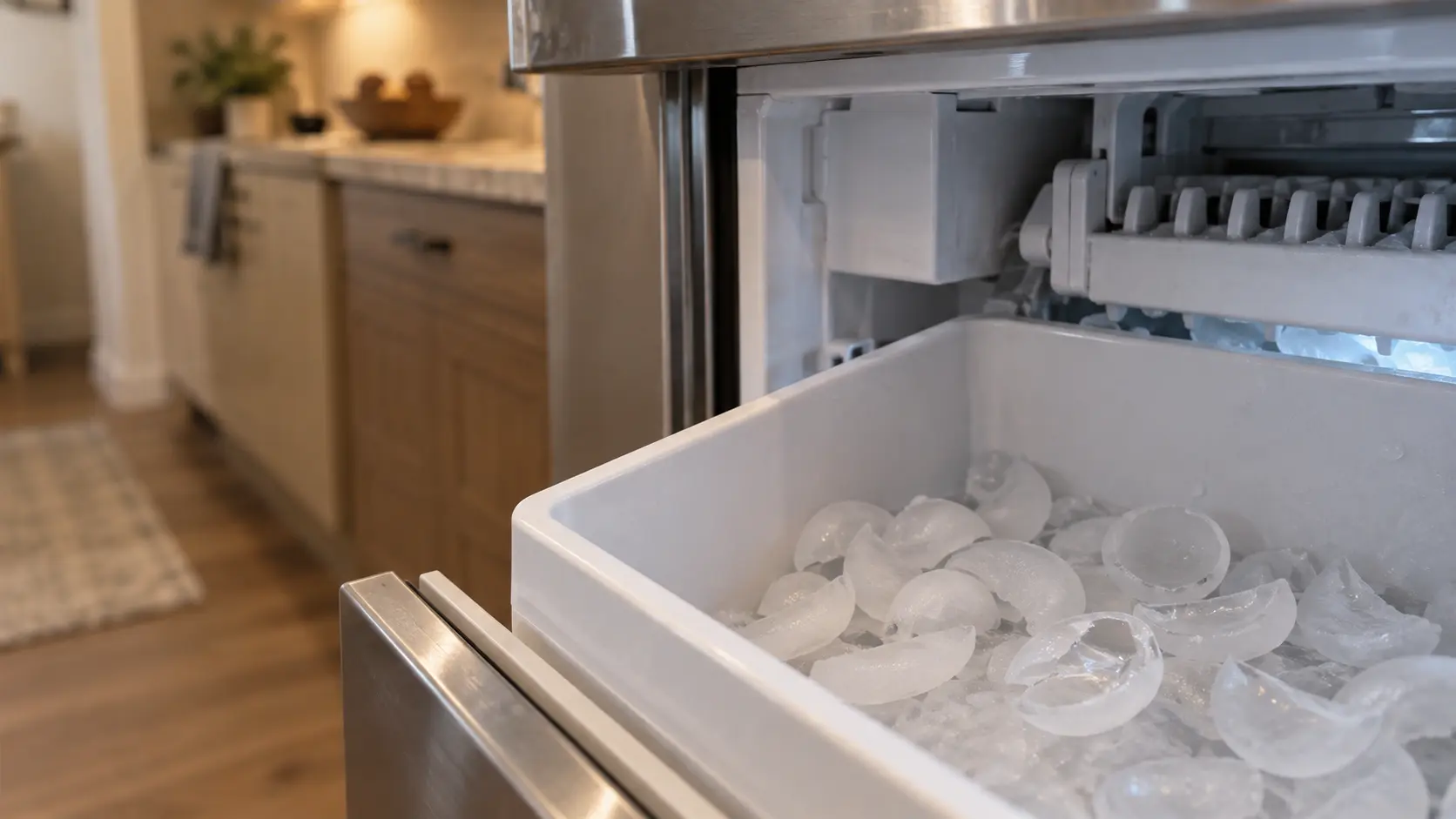
In a French door or side-by-side door, the line runs up through the door hinge and into the insulated ice box, so most of the tube is hidden behind covers. This ice box is sealed off from the fresh-food air, and Samsung notes that warm air getting past a poor seal or an open dispenser flap causes frost inside it, which can close the tube along with everything else.
Undercounter and countertop models
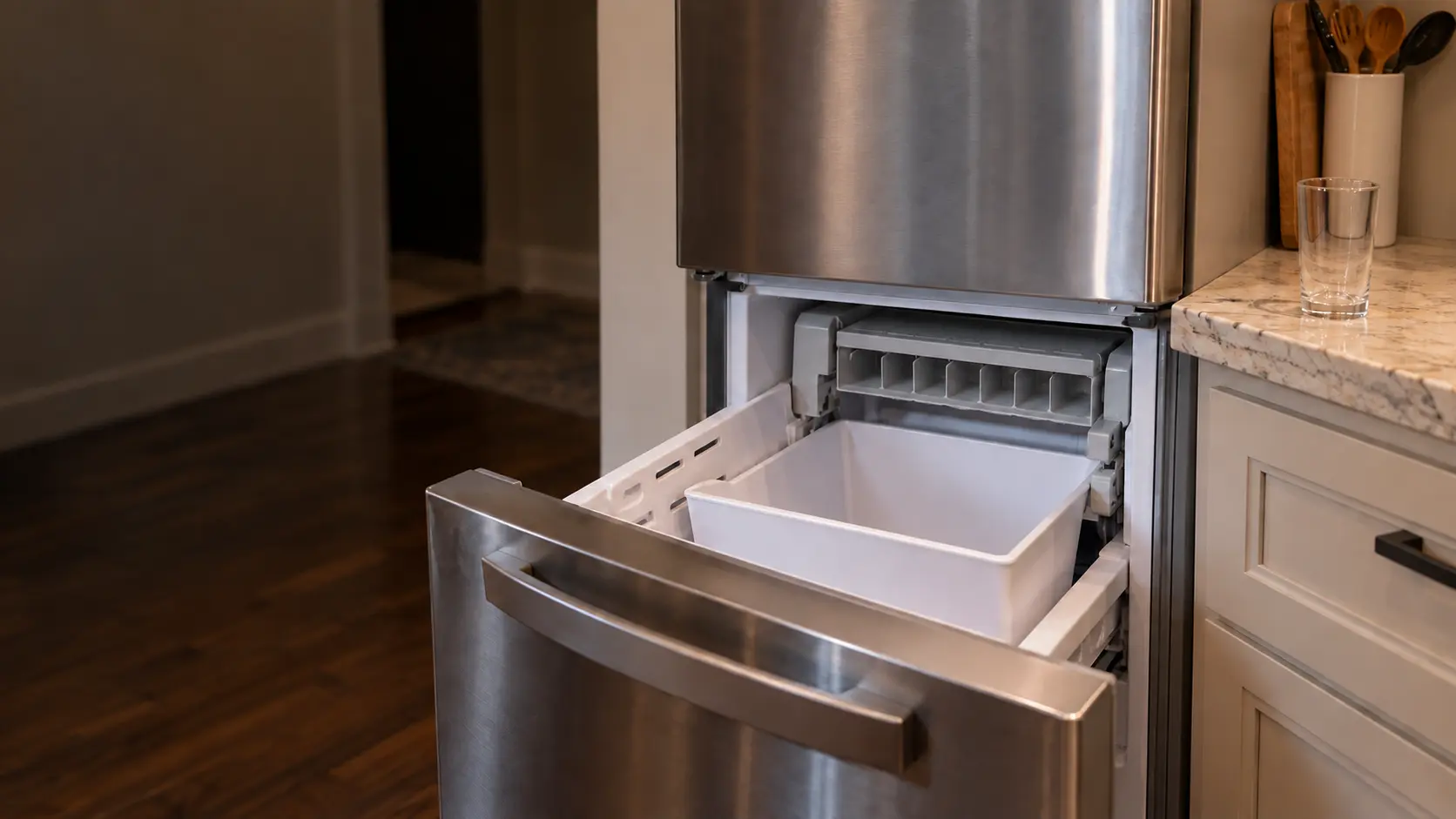
Undercounter clear-ice models fill a water trough that stays above freezing and pump it over a chilled plate, so a frozen tube is rare; the same symptoms there usually come from the water valve, the float or scale. Countertop nugget ice makers have no fill tube at all, only a reservoir you top up by hand.
Signs the tube is blocked, not the valve
A frozen tube and a dead inlet valve both leave the mold dry, and the fixes are completely different. These signs point to ice in the tube; GE notes that confirming it for certain means removing the ice maker, which is a technician's job.
- During a test cycle the valve at the back hums for several seconds, but no water reaches the mold.
- There is an ice bulge, an icicle or a frosted lump at the fill cup or around the end of the tube.
- On a unit with a water dispenser, water still comes out at the door, so the house supply and the valve are working.
- The last few harvests before it stopped were small or hollow, which suggests a slow flow that was freezing as it went.
- The mold sometimes holds a thin glaze of ice rather than being completely dry.
Source: GE Appliances — Icemaker does not fill with water — The fill tube can freeze so that no water reaches the icemaker; the icemaker must be removed to verify, and a service technician should check it

The one thaw that adds no heat
Samsung's frost guidance says heavy frost calls for a full defrost of the compartment, and its ice maker page warns against defrosting the ice maker on its own. Letting the whole compartment warm up slowly with the power off does both: the tube thaws at the same pace as everything around it, and no plastic part is heated faster than its neighbors.
Plan it for a morning when you are home. Move frozen food into coolers with ice or into another freezer, empty and wash the bin, and lay thick towels on the shelves and the floor in front. Unplug the unit, or switch off its breaker from a dry panel, and leave the doors open. Check every hour or so and change the towels as they get wet. When the fill cup and the tube end are clear and dry, wipe the compartment dry, close up, restore power and let it cool fully before trusting the ice maker again.
- Coolers or another freezer ready before the power goes off.
- Towels on the shelves and the floor, and a shallow pan under the ice maker.
- Power off at the plug or a dry breaker panel, not just the panel's ice-off button.
- Doors left open, room air only, no heater aimed inside.
Source: Samsung — Ice maker is not working — Do not attempt to defrost the ice maker itself; it has an automatic defrost function, and service is needed if that fails; Samsung — Frost forms in the freezer, refrigerator or ice bucket — Warm air past misaligned doors, seal gaps or a blocked dispenser flap causes frost; heavy frost needs a full defrost; do not use a hair dryer, it will damage the unit
Heat and tools to keep away from it
The shortcuts all have the same problem: heat or force applied to one small spot in a compartment full of plastic, foam and wiring. Samsung states that a hair dryer used to speed up defrosting will damage the unit. A heat gun is worse. Boiling water poured or squirted into the tube softens the tube, runs back toward the valve and ends up in the insulation or on the wiring harness below the ice maker.
Chipping at the fill cup with a screwdriver or a knife is how fill cups crack and wires get cut. The ice maker housing also hides a thermostat and a heater on the mold, and a blade in the wrong place damages both. If a gentle method has not cleared it after a full defrost, the tube needs a technician.
Source: Samsung — Frost forms in the freezer, refrigerator or ice bucket — Warm air past misaligned doors, seal gaps or a blocked dispenser flap causes frost; heavy frost needs a full defrost; do not use a hair dryer, it will damage the unit
Why it freezes again, and how to stop it
A tube that stays clear after one thaw was probably frozen by a one-time event, such as a power outage or a door left ajar overnight. A tube that freezes again within a week or two has a steady cause, and thawing it again only buys time.
Start with the flow, because a weak fill is the most common cause. A filter past its change date, a house valve left half open or a pinched line all turn a quick fill into a slow trickle that freezes in the tube. Next, check the seals: frost on the ice box or the bin means warm, moist air is getting in. After that come the parts only a technician can test: an inlet valve that seeps between fills and grows an icicle, and a tube heater that no longer warms.