What a technician means by the assembly
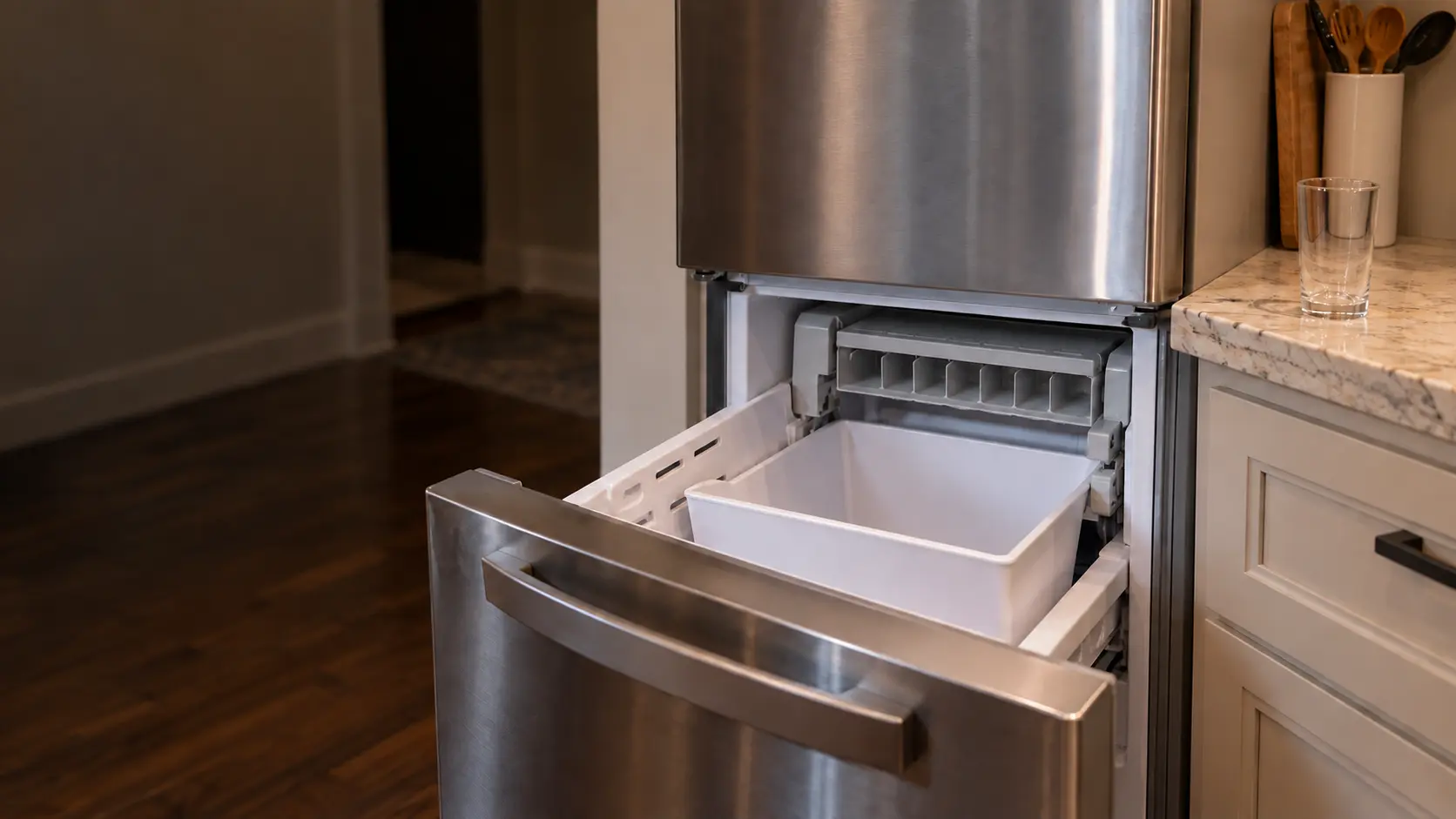
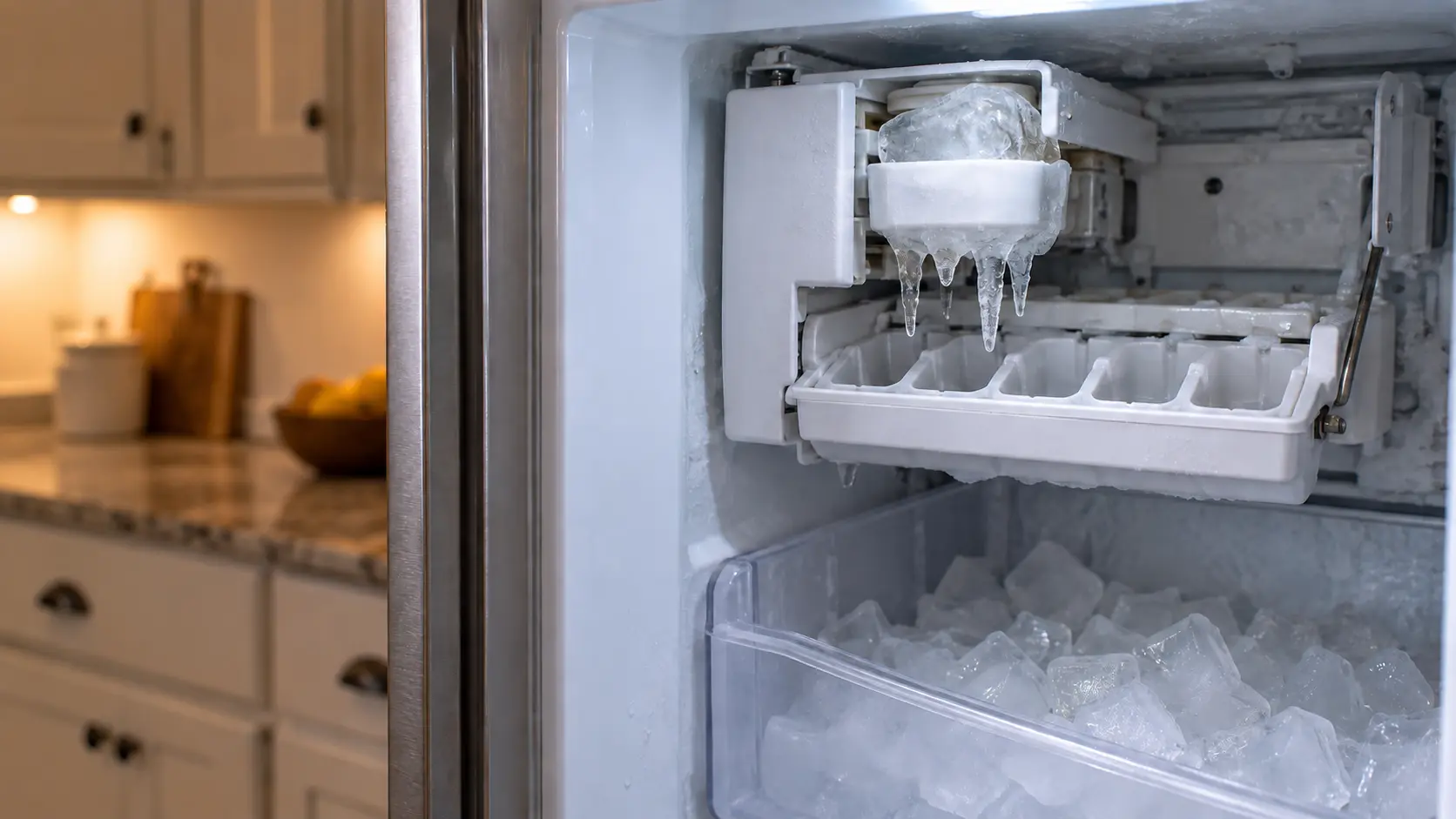
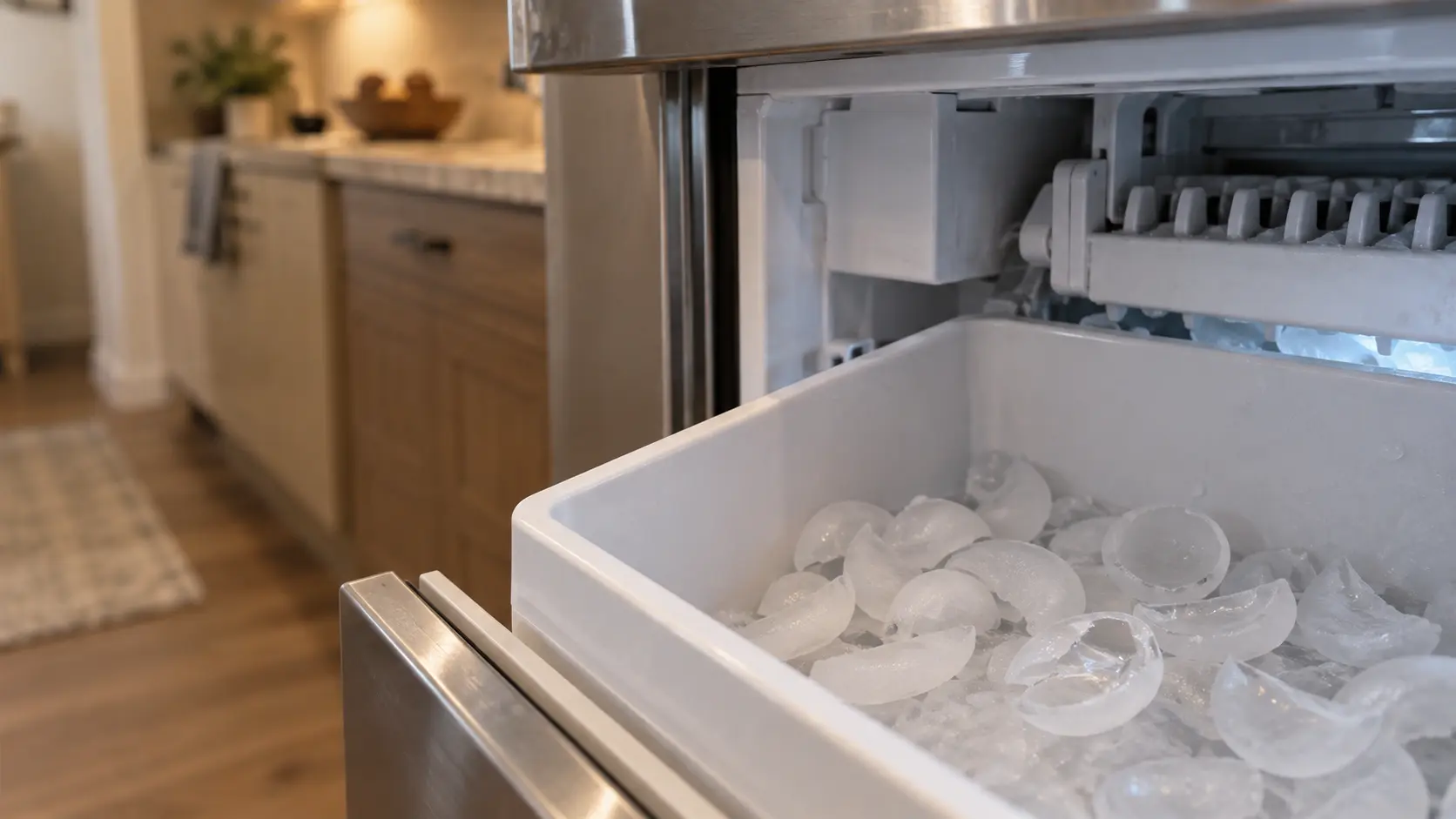
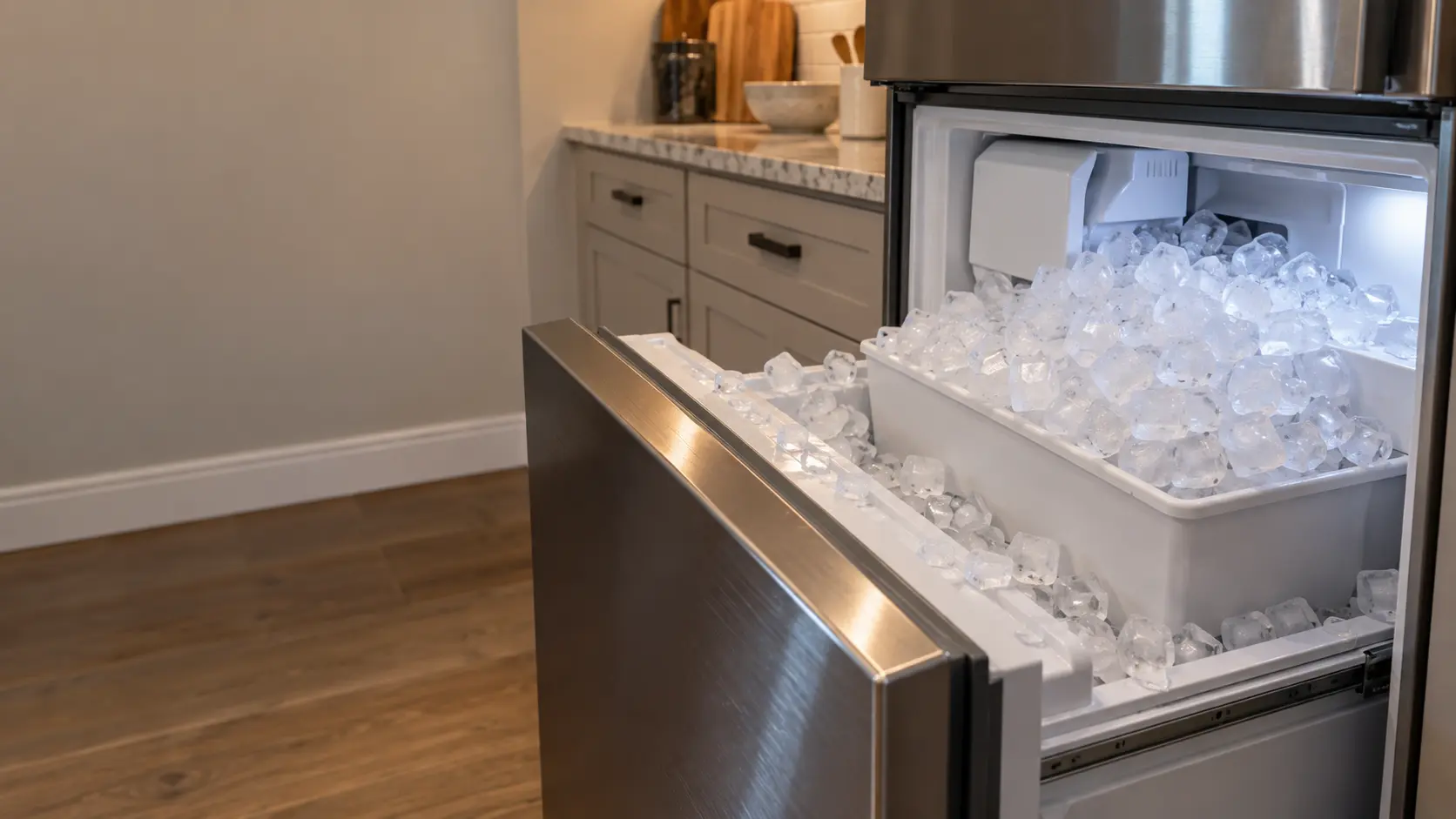
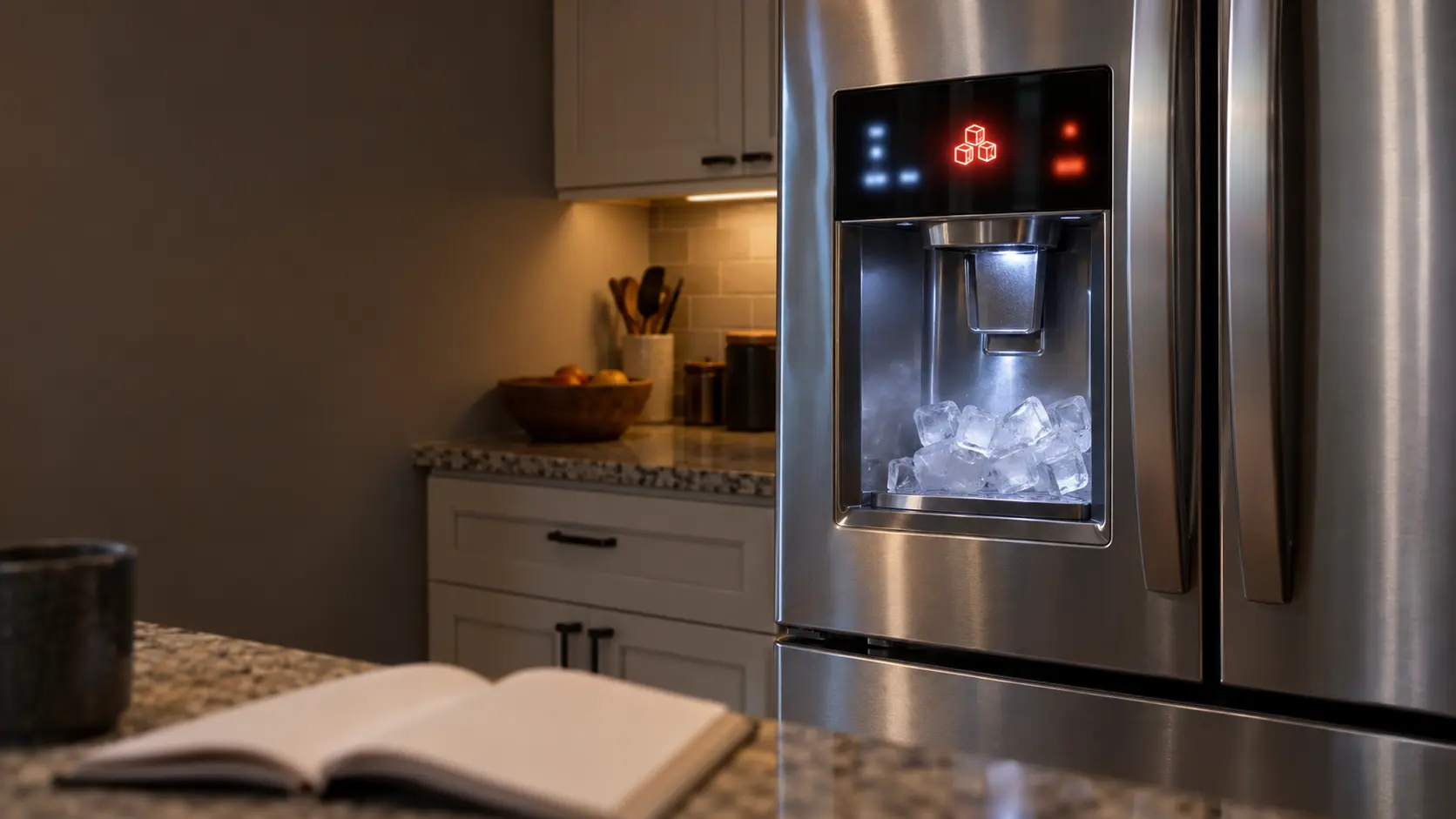
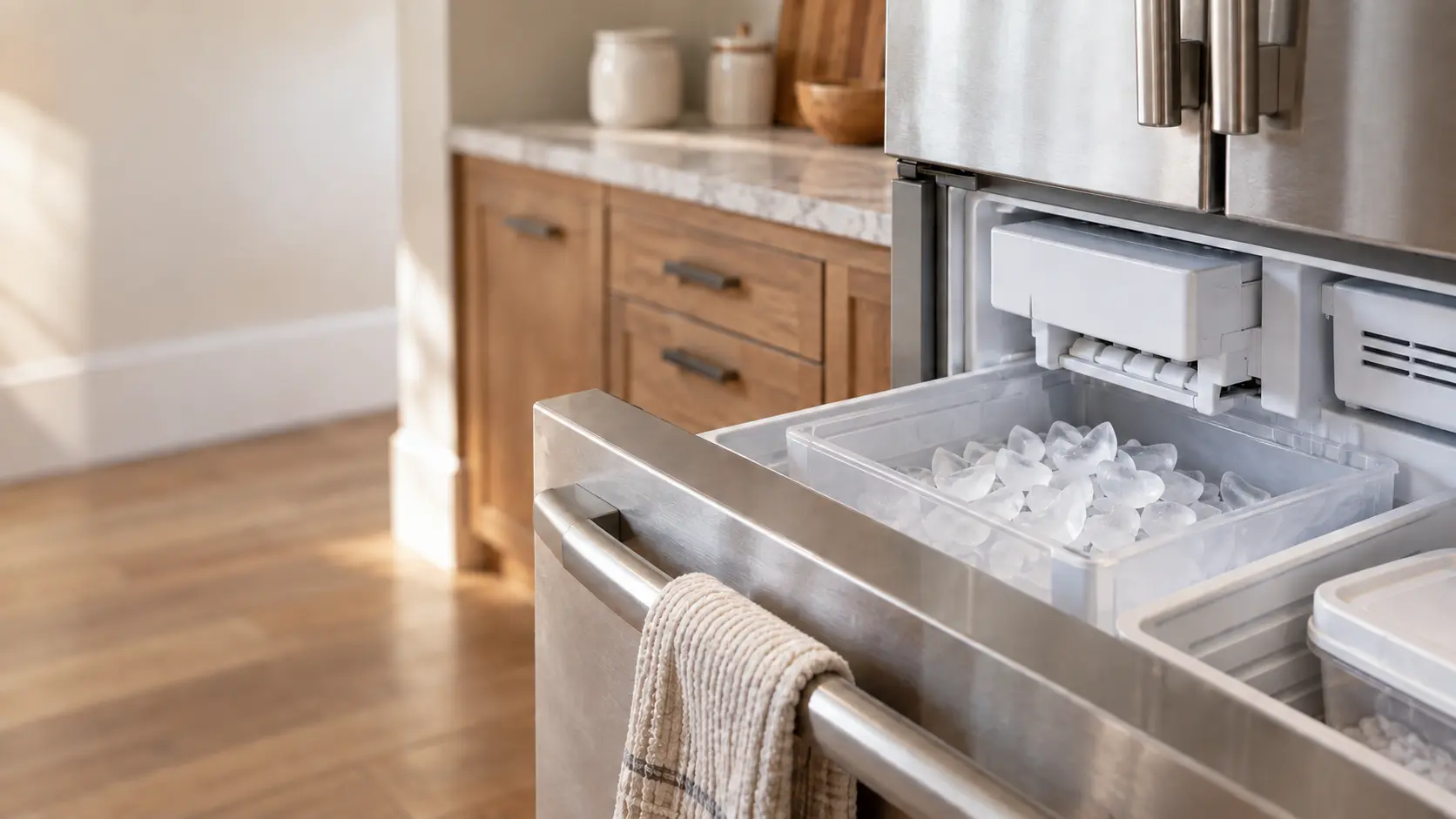
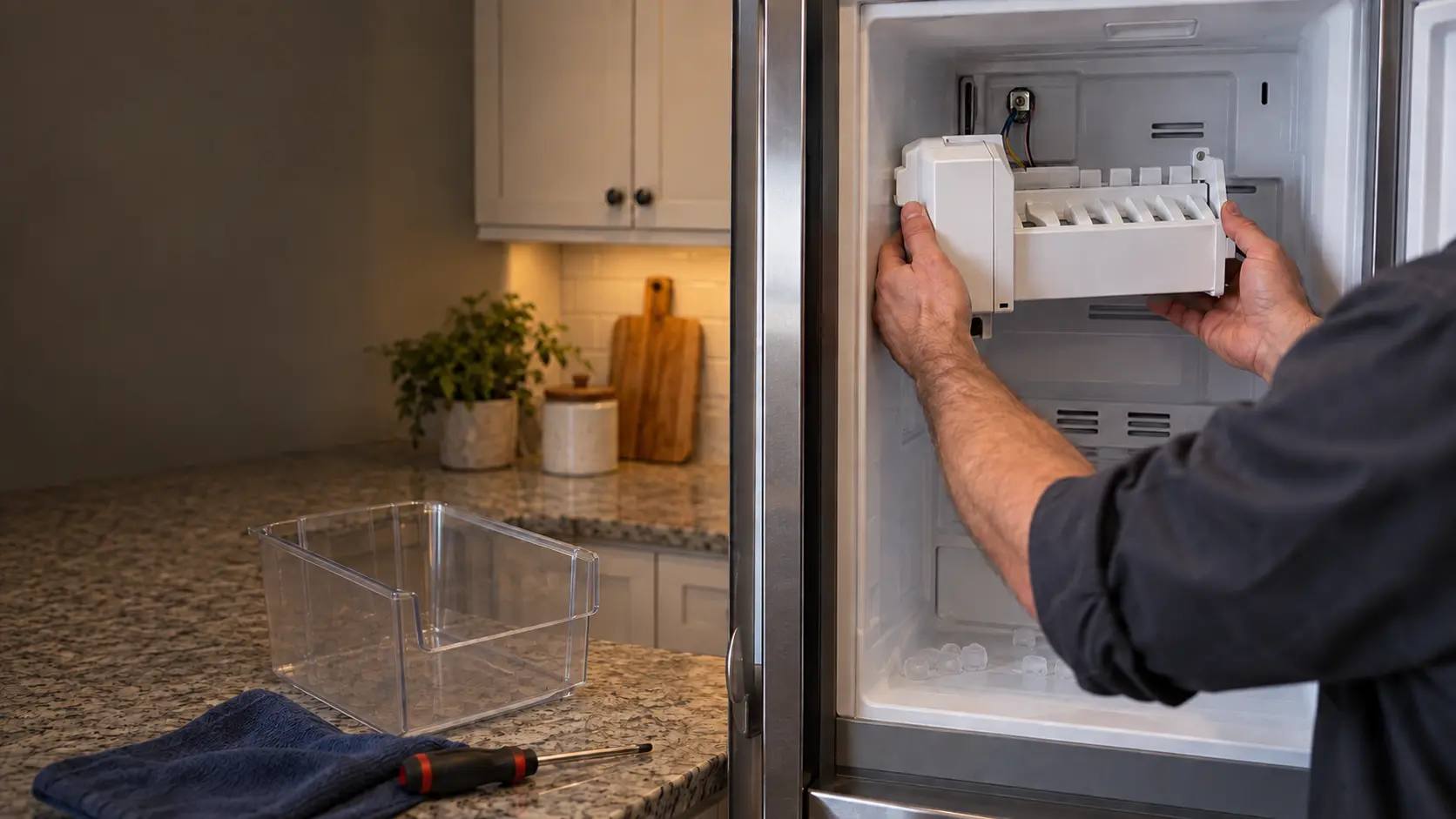
On a door ice maker or a freezer ice maker, the mold, the small heater that loosens the cubes, the drive motor, the temperature sensor and the arm or optical eye that reports a full bin are usually built into one housing with a single wiring plug. Makers sell that housing as a complete part, so a repair to any one piece inside it becomes, in practice, a new module.
Everything around the module is separate. The water inlet valve sits at the back of the cabinet, the fill tube passes through the cabinet wall, and the auger motor and the chute door belong to the dispensing system rather than to the ice maker itself. A sound diagnosis puts the problem clearly on one side of that line before any part is ordered.
Rule out the water before blaming the module
A module that receives no water makes no ice and looks lifeless, yet it may be perfectly healthy. The supply valve behind the cabinet or under the sink can be closed during unrelated plumbing work, the cartridge can be months past its date, or the tube that carries water into the freezer can be frozen shut.
- Is the supply valve fully open, and does the water dispenser pour at its usual rate?
- When was the filter last changed, and does the indicator agree with the calendar?
- Is there ice visible where the fill tube enters the back of the mold?
- Has the bin-full arm been left raised, or the ice setting switched off on the panel?
- Is frozen food rock hard, and is frost gathering where it normally never does?
A tired filter
Whirlpool names small cubes, reduced ice production and longer dispensing times as the signs of a clogged filter, and on many of its models the cartridge can be taken out so water bypasses it until a new one arrives. If ice returns once the filter is out or replaced, the module was never the issue.
A fill tube plugged with ice
Low supply pressure, a valve that drips after it closes, or a freezer door left ajar can let a plug of ice build inside the tube that feeds the mold. The module then cycles on an empty mold. Thawing the tube is the repair, although the reason it froze still needs finding, or it will freeze again within weeks.
A freezer compartment running warm
The module waits for its own sensor to read cold enough before it harvests. A freezer running warm because of a blocked air vent or a frosted coil slows ice making to a trickle, and a brand-new assembly fitted into that freezer would behave exactly the same way.
Source: Whirlpool Product Help — When to change the water filter — A clogged filter causes small ice cubes, reduced ice production and longer dispensing times; removing it lets water bypass filtration temporarily

Signs the module itself has stopped
Once water is confirmed to reach the mold, a handful of observations point at the assembly. A mold full of solid ice that never empties means the harvest step is not happening, and the heater, the motor and the control are all inside the housing. Cubes dumped half-frozen, or a mold that overfills and spills into the bin, suggest a sensor inside the module is reading wrongly.
Physical damage settles the question on its own. A cracked mold, a snapped ejector or a gear that clicks without moving anything cannot be economically repaired on a sealed unit, and nobody should be paid to try.
- The mold stays full of frozen cubes for hours and nothing moves.
- The motor hums or ticks, but the ejector or the tray never turns.
- Water arrives, the arm is down and the setting is on, yet the unit never cycles.
- The mold or its housing is cracked, warped or scorched.
Undercounter and countertop units follow different rules
An undercounter clear or nugget unit is not built around a single module. Its water pump, inlet valve, distribution tube, evaporator, sensors, drain pump and control board are separate parts, and replacing the one that failed is the normal course. Heavy scale changes the picture: U-Line sells a refresh kit that replaces many interior components on units coated in lime scale, which shows how much a skipped cleaning schedule can cost.
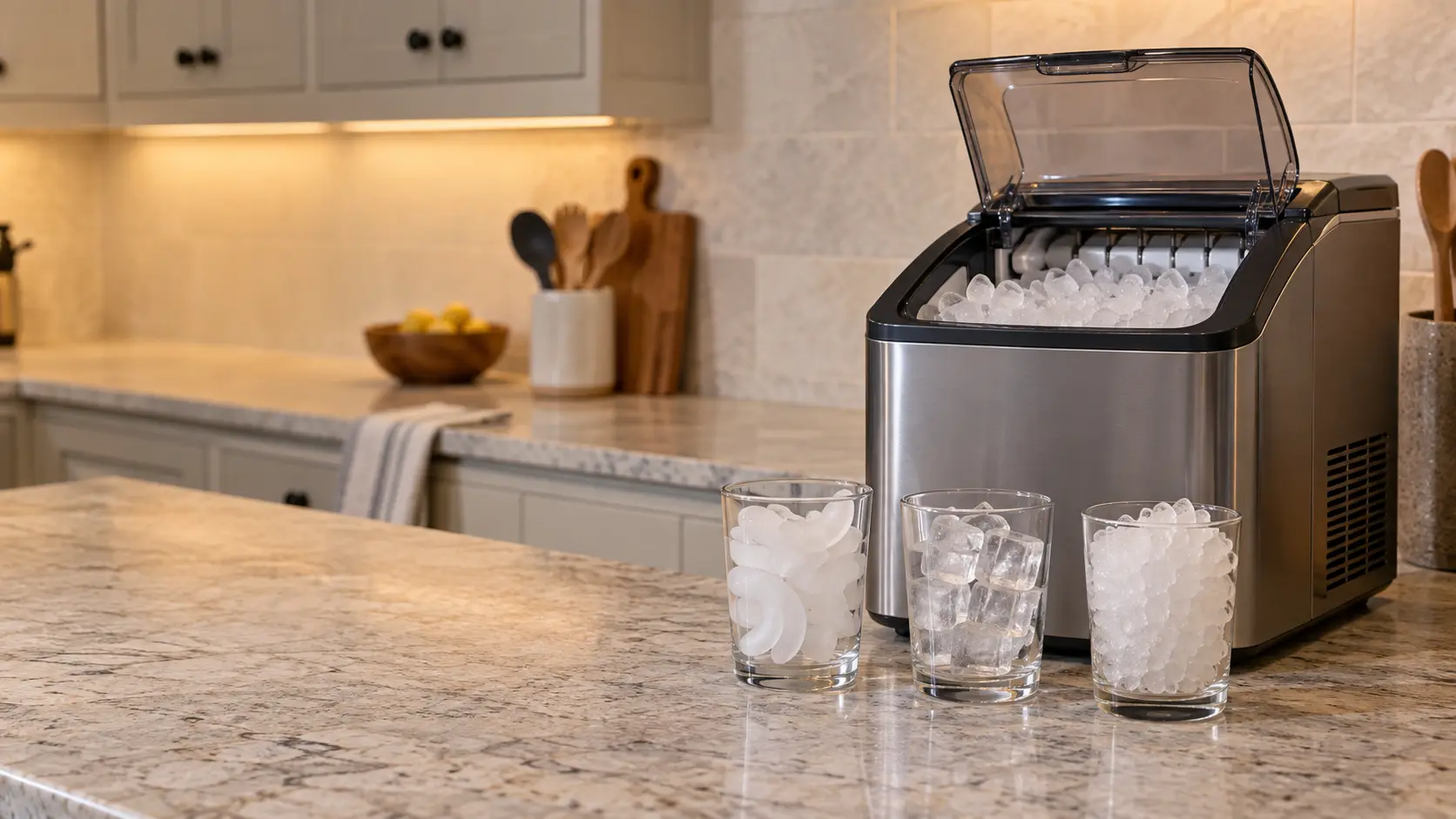
A countertop nugget model is closer to a small kitchen gadget than to a built-in appliance. When its auger motor, compressor or board stops, parts and labor together usually come close to the price of a new unit, and replacing the whole thing is the common answer.
Source: U-Line — Clear ice maker user guide and service manual (U-CLR1215B) — A refresh kit replaces many interior components on units excessively coated in lime scale
Weighing a new module against the rest of the appliance
When the diagnosis says to replace the ice maker assembly, that is one of the more modest repairs an ice maker can need, well below anything that involves the sealed cooling system. It stops making sense when the cabinet around it has problems of its own: a freezer that struggles to hold temperature, a dispenser that leaks into the door, or a model old enough that its parts list is thinning out.
Before paying for any work, look the model up on the Consumer Product Safety Commission's recall list. If it appears there, the maker's remedy comes first, and a paid repair should wait until you know what that remedy covers.
Source: CPSC — Recalls — The Consumer Product Safety Commission publishes product recalls that owners can search by product and brand