Start with the bin and the arm, not the parts list
Every automatic ice maker stops when it believes the bin is full, and it judges that with a simple sensor that is easy to fool. Pull the bin, look at what sits under the mold, and look at the arm or paddle before you look at anything else. When an ice maker stopped making ice with no warning light and no noise, one of the three cases below is the usual answer.
Ice heaped up under the mold
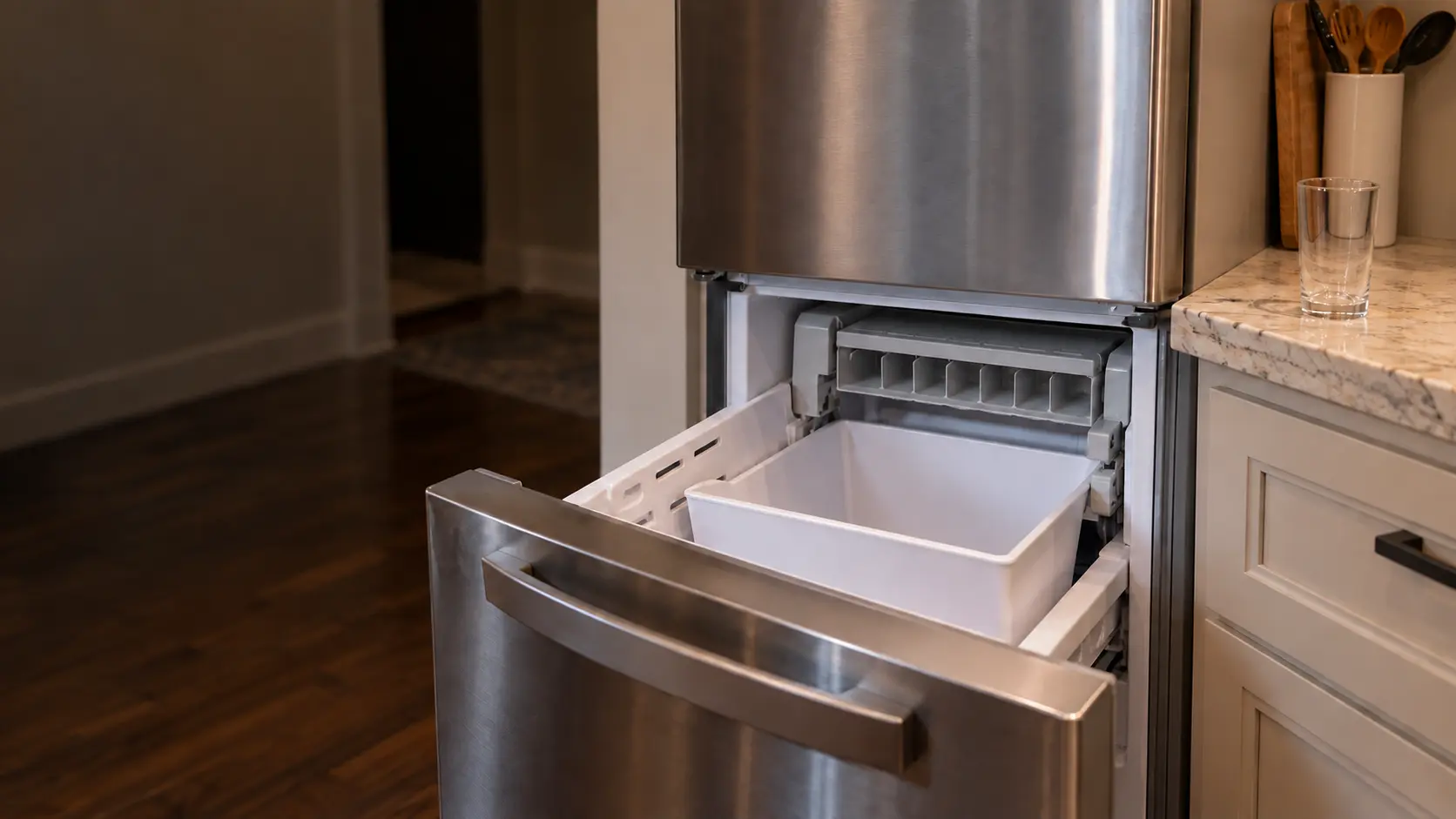
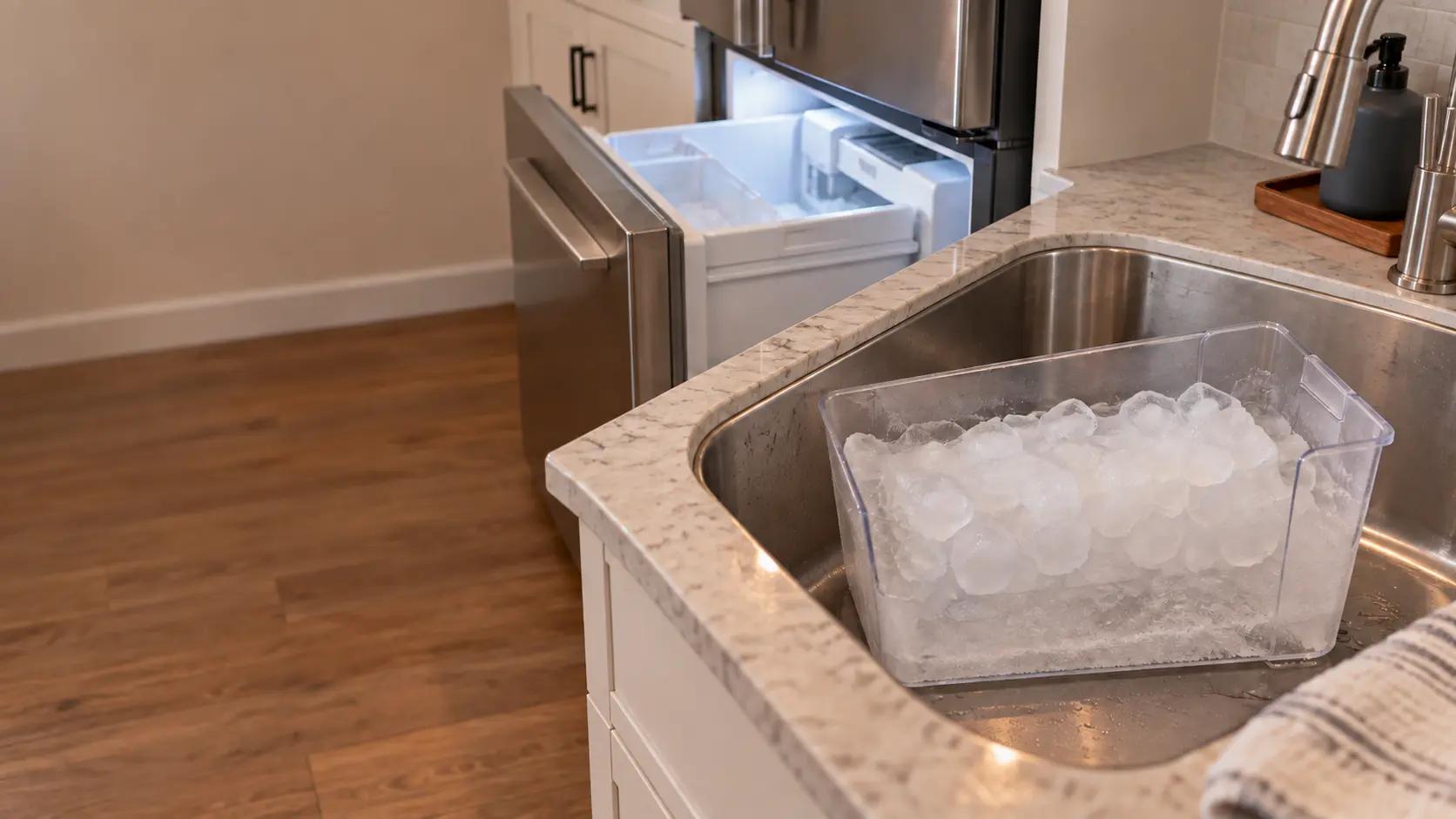
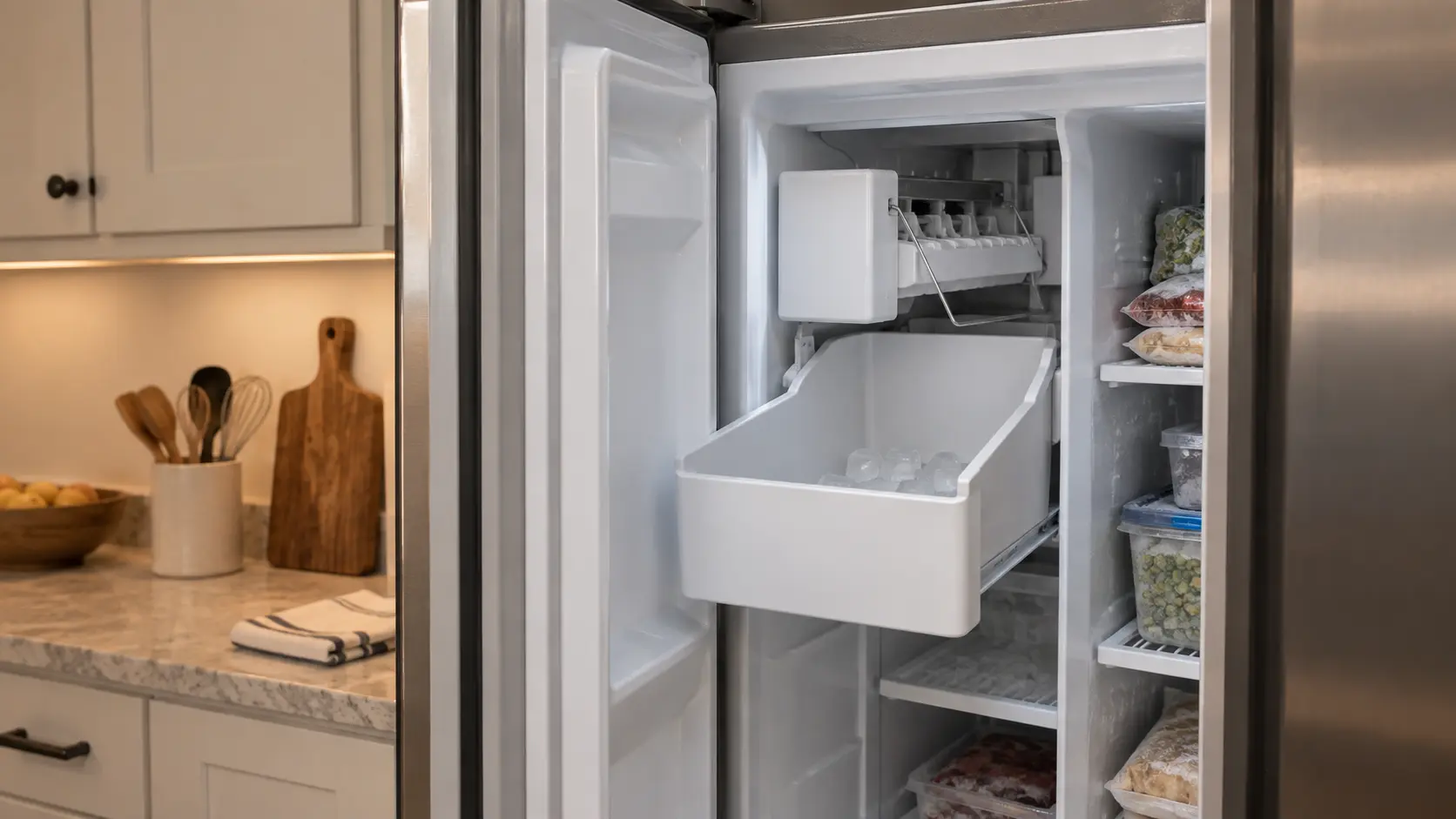
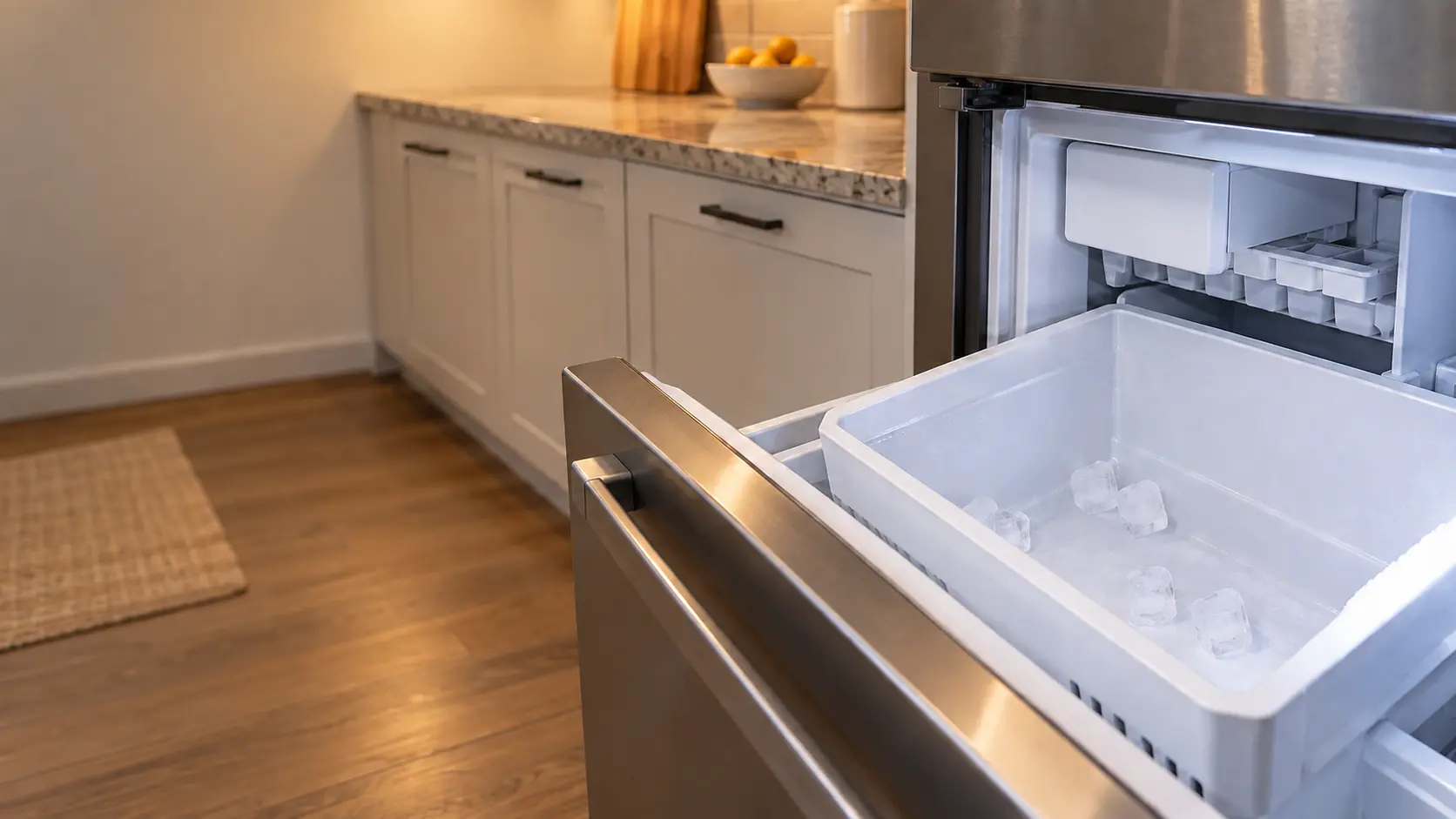
Cubes drop into the same corner of the bin every cycle. If nobody takes ice for a few days, that corner fills to the top while the rest stays half empty, and the sensor reads it as a full bin. Samsung notes its bucket holds about 2 pounds and tells owners to push the pile forward or bag the extra ice in the freezer so the maker can keep going.
A wire arm raised or a paddle pushed back
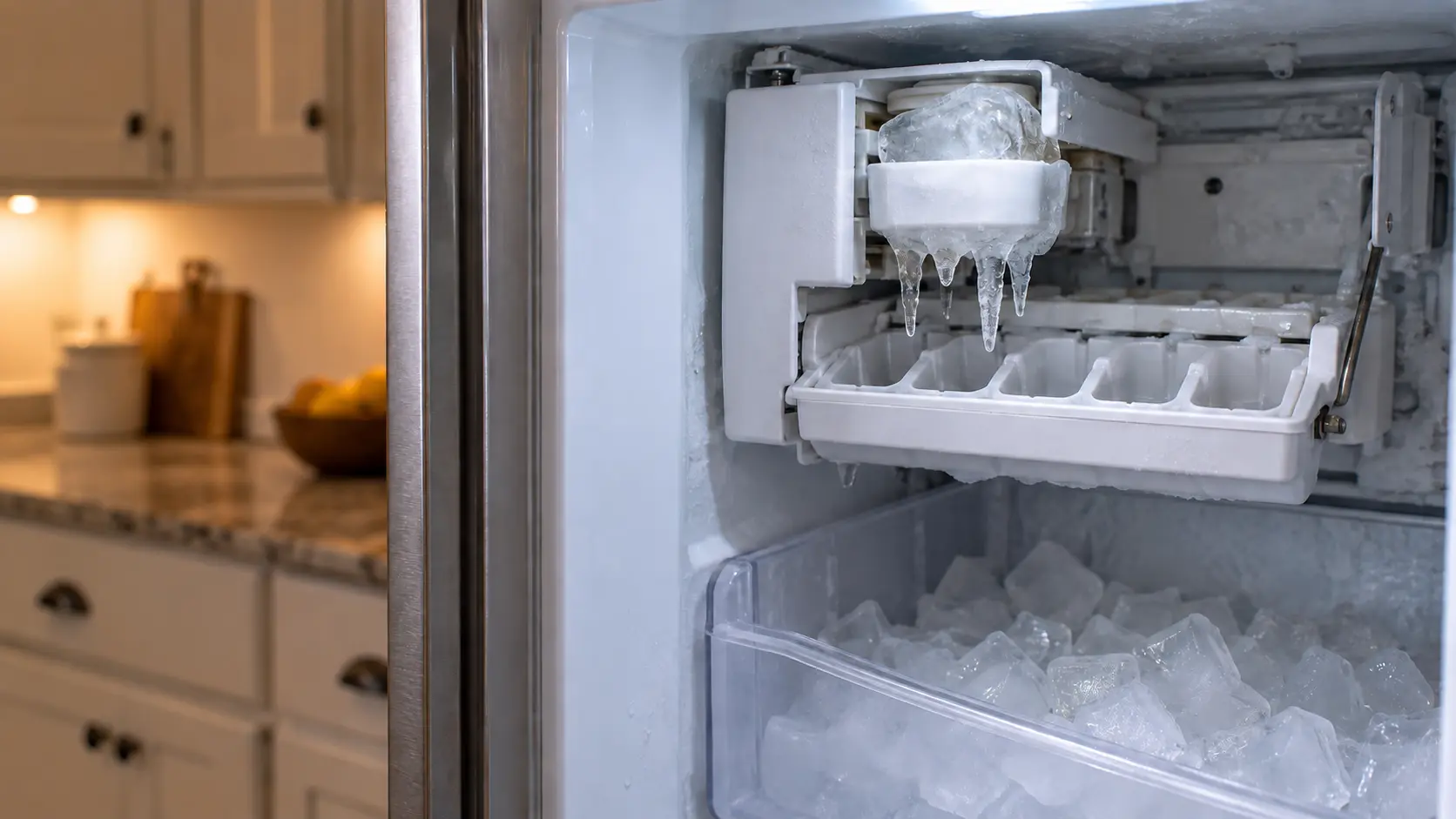
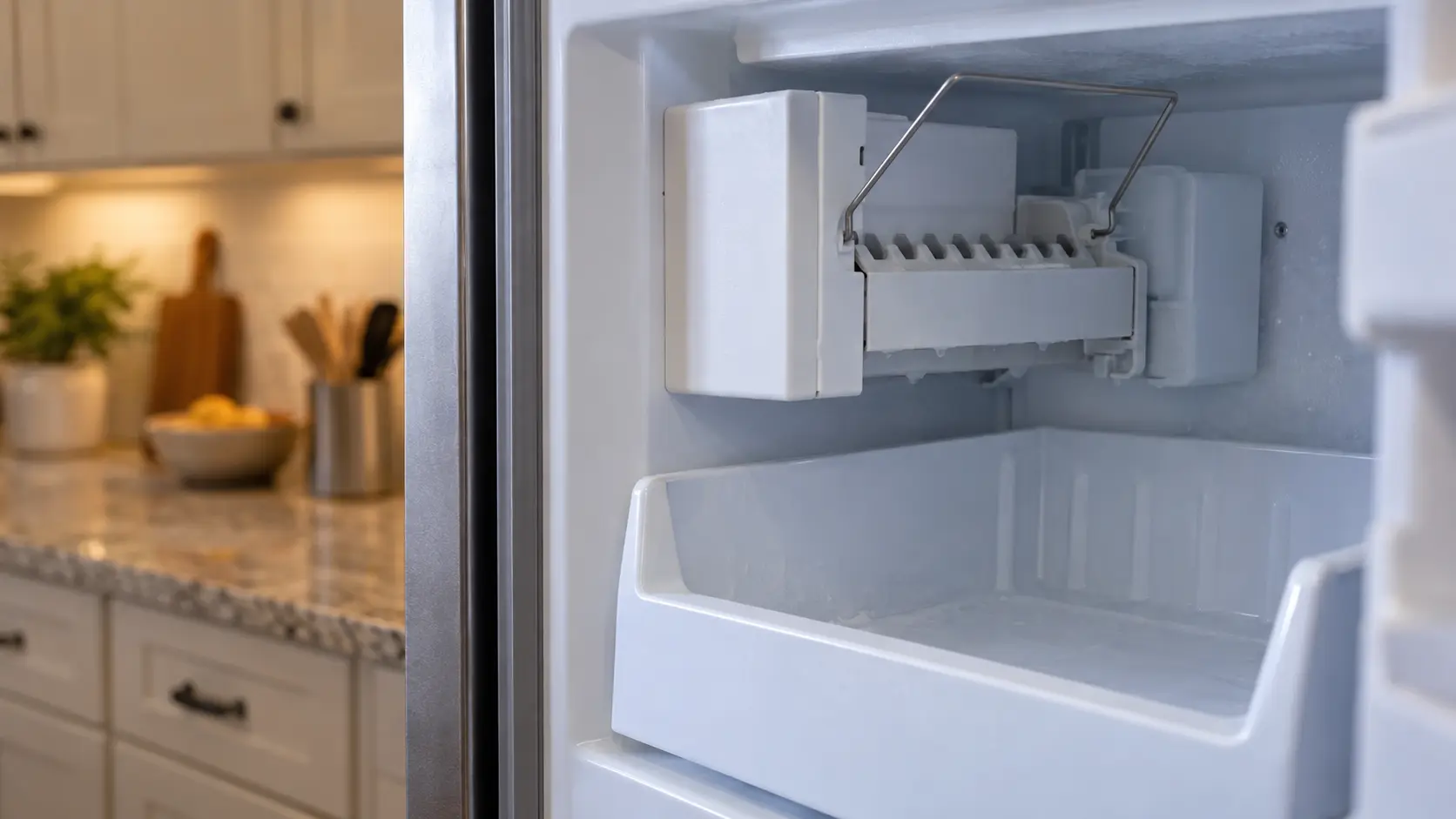
Older freezer ice makers use a metal bail arm that hangs down beside the mold, and newer ones use a flat plastic paddle underneath it. GE lists an arm in the up position or a paddle held back as a paused ice maker, not a broken one. A bag of frozen vegetables leaning on the arm, or a bin pushed in crooked, does the same thing.
The scoop left in the bucket
Samsung warns that anything other than ice in the bucket, including the ice scoop, can make the ice maker decide the bucket is full. On a door ice maker, where the bucket is small and the sensor looks straight down into it, a scoop lying across the top is enough to stop production.
Switched off without anyone noticing
Whirlpool puts it bluntly: a common reason an ice maker makes no ice is that someone turned it off. Wiping down a touch panel, closing a door on a rocker switch, or a child pressing buttons can all do it. The switch is not always where you would expect, and on some models the icon means the opposite of what you would guess.
Samsung's panels show an Ice Off icon that lights when production is off, while some of its top-freezer models use an Ice On icon that must stay lit. Sabbath mode on many brands also shuts off the ice maker and the dispenser together, so a panel stuck in Sabbath mode can look like two separate problems.
- Touch panel on the door: look for an ice-off, ice-on or lock symbol and read it against the manual.
- Freezer ice maker with a wire arm: the arm lowered is on; lifted and clicked up is off.
- Freezer ice maker with a small rocker switch on its front or underside: check which way it is set.
- Undercounter model: the ice or power switch is often behind the lower kick panel or inside the door.
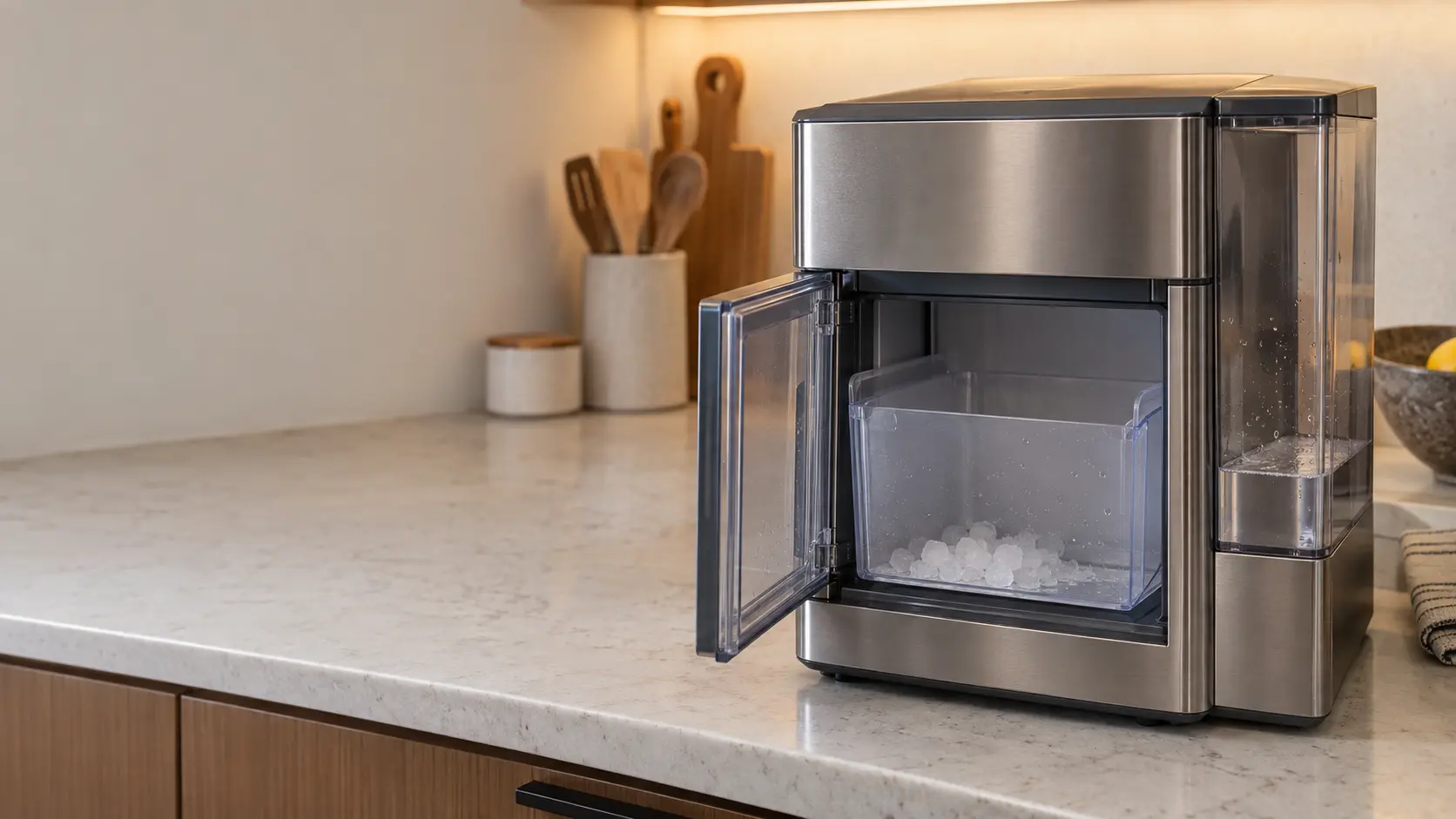
- Countertop nugget model: a cleaning mode set by a switch on the back stops ice until it is moved back.
Source: Samsung — Ice maker is not working — Freezer must be at 0°F or less; bucket holds 2 pounds and piled ice stops production; items in the bucket read as full; Ice Off / Ice On icons; bucket must be fully seated; 3 hours to resume, 24 hours to normal; Whirlpool — Not making ice, side-by-side refrigerator — A common reason is that the ice maker was accidentally turned off; allow at least 24 hours between temperature adjustments
Cold enough to start a cycle
An ice maker does not freeze water just because it is in a freezer. It waits until the mold itself is well below freezing, and GE's figure is 16°F before a cycle begins. With the freezer set a few notches warm to save energy, or with a door that does not quite close, the mold can hover above that line for days with no ice and no error shown.
Set the freezer to 0°F, keep the doors shut and give it time. Whirlpool advises waiting at least 24 hours between control changes, and GE adds that a freezer kept three-quarters full holds its temperature better than an empty one, because the frozen food buffers every door opening.
When the ice maker lives in the fresh-food door
On French door and some side-by-side models the ice maker sits in its own insulated box on the fresh-food side, cooled by air or a coolant line from the freezer. Samsung says that box has to be sealed, with the bucket fully seated and locked, or the air inside stays too warm. Frost on the bucket or around the box usually means warm air is getting in, and that has to be fixed before the ice maker will work again.
Source: GE Appliances — Icemaker not producing ice — Recommended freezer setting 0°F; the icemaker must reach 16°F before a cycle begins; keep the freezer 3/4 or more full; Whirlpool — Not making ice, side-by-side refrigerator — A common reason is that the ice maker was accidentally turned off; allow at least 24 hours between temperature adjustments
Water that never arrives
If the mold is cold and empty, the ice maker is probably asking for water and not getting it. Most fill valves on these ice makers open for a fixed number of seconds rather than until the mold is full, so GE points out that a slow supply can leave the mold with too little water, or none. The causes, roughly from most to least likely, are these.
A mold holding a thin sheet of ice that never ejects points to a slow supply. A mold that is bone dry after hours at 0°F points to no supply at all: a closed valve, a kinked line or a frozen fill tube.
- The house shut-off valve, partly or fully closed after other plumbing work.
- A filter past its six-month change, or a new one not turned fully into its locked position.
- A supply line kinked when the unit was pushed back against the wall.
- A fill tube frozen solid where it enters the ice maker.
- The inlet valve on the back of the unit, which needs a technician to test.
Source: GE Appliances — Icemaker does not fill with water — Icemakers fill on a timer, so a partly clogged filter may not fill them; the fill tube can freeze; allow 24–48 hours of cooling after installation
What the same empty bin means on each kind
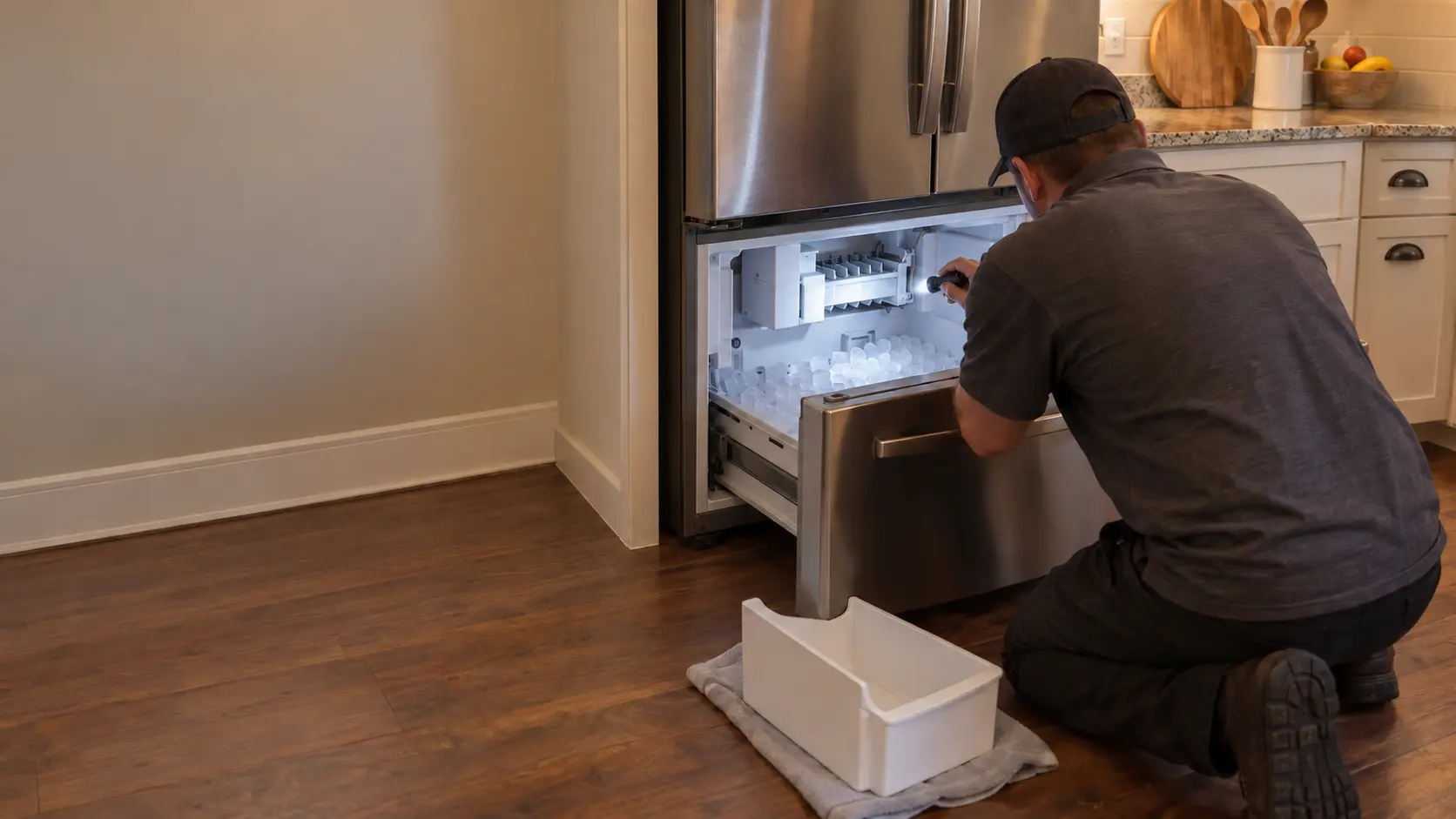
On a freezer ice maker the checks above cover almost every case, and when they are all fine the ice maker assembly itself is often the part that has failed. A door ice maker adds its own seal, its own fan or coolant path and a test button, so there are more places to look. An undercounter ice maker making clear ice depends on a clean water plate and a working drain, so scale or a blocked drain can stop it even with plenty of water coming in.
Countertop nugget ice makers have no water line; they pump from a reservoir. GE's Opal models show what they are doing, such as flushing, cleaning, defrosting or asking for water, and GE's own reset is to unplug the unit for 3 to 4 hours. On that kind, an empty bin is often just a mode, not a broken part.
Source: GE Appliances — Opal ice maker not making ice — The Opal shows flushing, cleaning, defrosting and add-water states; reset by unplugging for 3 to 4 hours