Read the cube before you touch anything
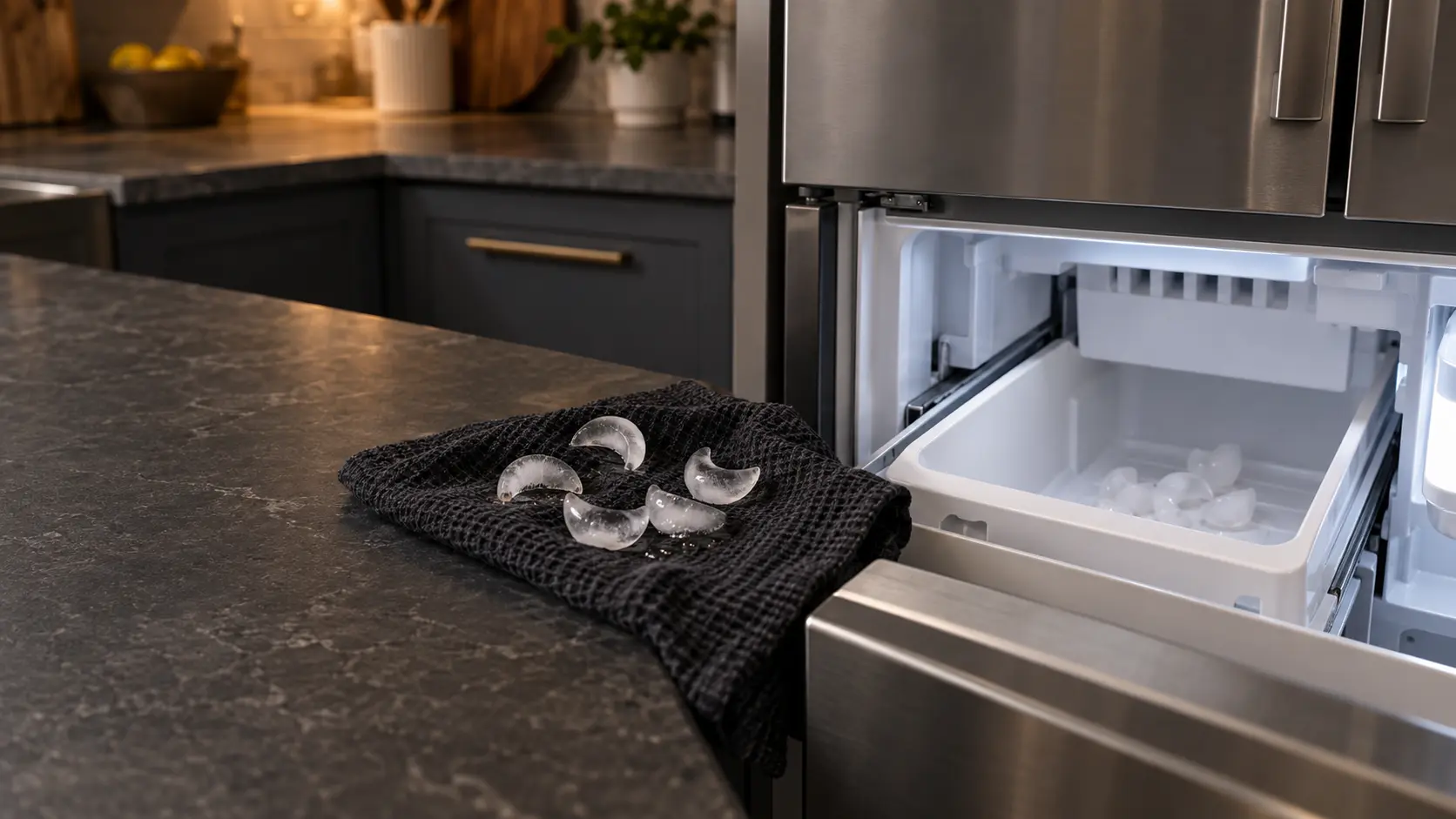
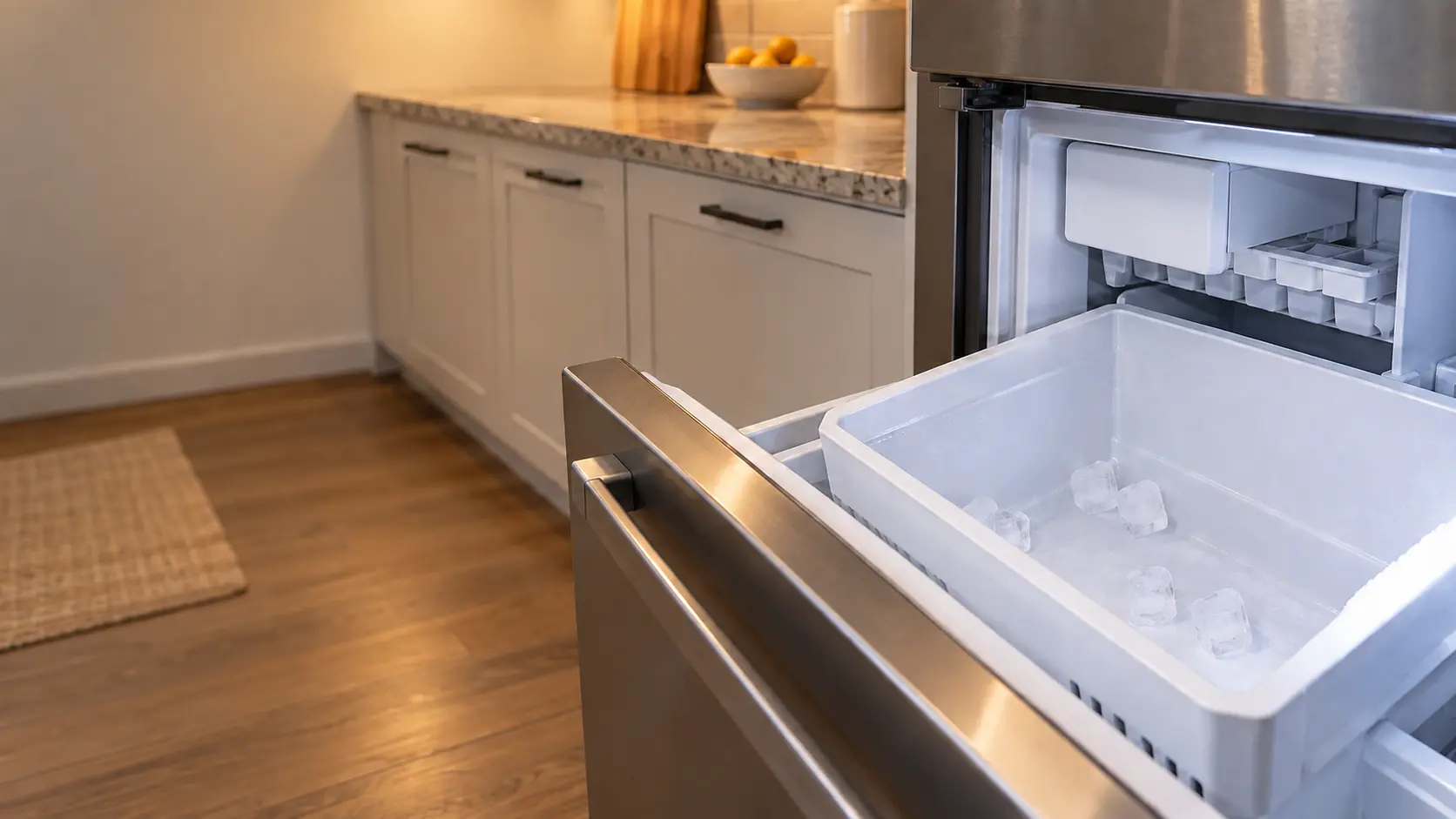
Tip a handful of fresh ice onto a towel and look at it closely. The shape tells you whether the mold is short of water, unevenly filled or being emptied too early, and each of those points to a different check. Take small or hollow ice cubes from the top of the bin, since the older ones underneath will have shrunk or fused together.
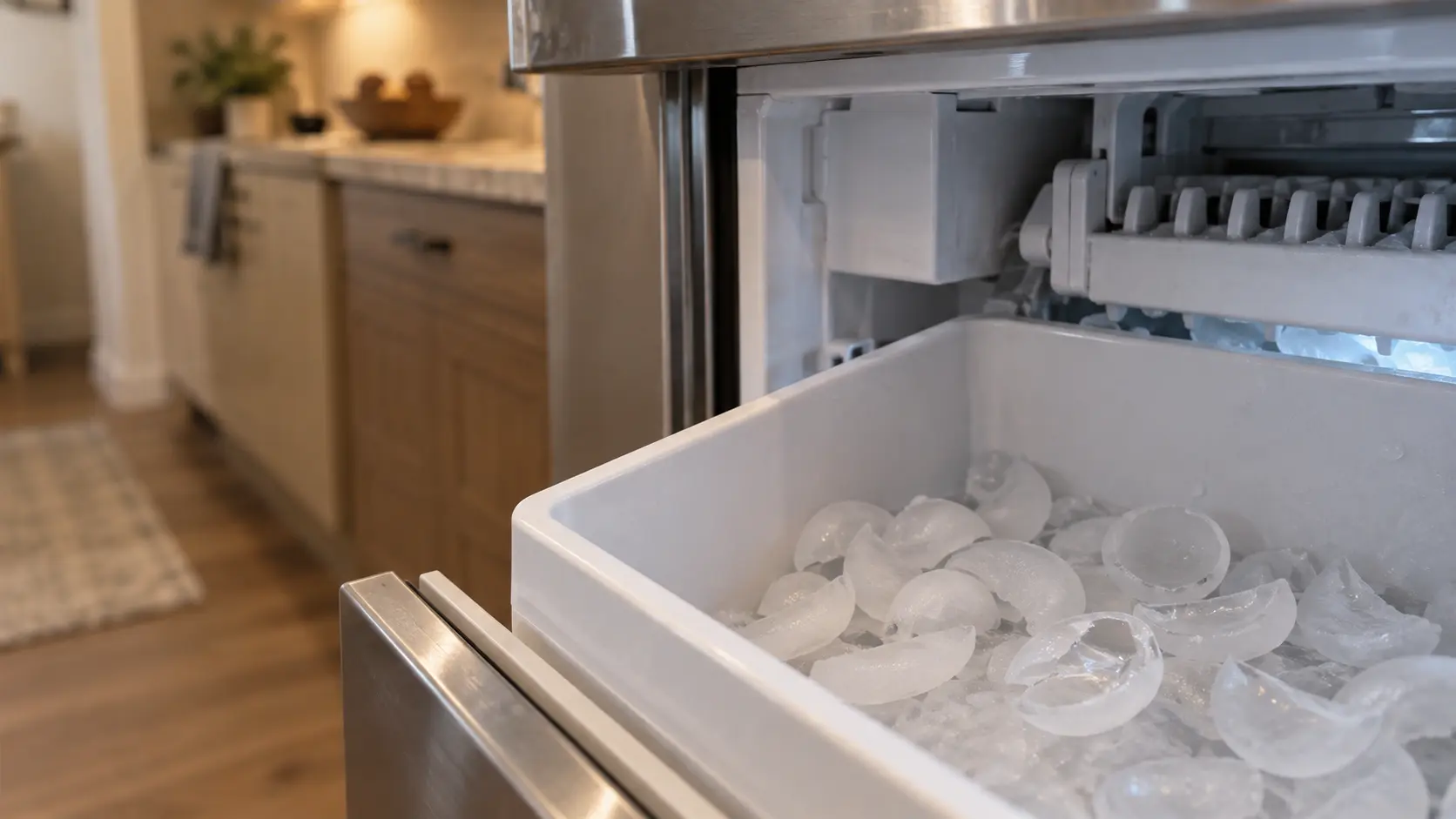
Shells with a hollow center
Water in the mold freezes from the outside in, against the cold metal, so the middle is the last part to freeze. A cube that comes out as a shell with a hollow or a thin skin across the top was ejected, or given too little water, before the middle had a chance to freeze. Whirlpool and GE both link hollow cubes to restricted water flow.
A row of crescents in mixed sizes
Mold cavities are connected by small notches, and water poured in at one end spreads along the row. If the unit leans, the low end fills fully and the high end comes out stunted. Samsung lists leveling the unit among its fixes for weak ice production, and a phone level laid on the freezer shelf is enough to check it.
Chips and fragments in the bin
Samsung says small or shattered cubes in the bucket come from low water pressure. Fragments can also come from cubes breaking up as they fall, but if most of the bin looks like crushed ice and you never selected crushed, treat it as a water supply problem first.
Why weak pressure turns into small ice
Almost every ice maker built into a household unit fills its mold by opening an inlet valve for a set number of seconds. It does not measure how much water arrived. Good pressure fills the mold in that time; weak pressure leaves it partly full, and the ice maker freezes and ejects whatever it received. That is why the cubes shrink slowly over months as a filter clogs, instead of stopping all at once.
The makers do not agree on the minimum pressure, which is itself useful to know. A supply that one brand accepts may be too weak for another brand's valve, and a house with pressure near the low end has little margin once a filter starts to clog.
- GE: 40 to 120 psi on models with a water filter, 20 to 120 psi on models without one.
- Whirlpool: 30 to 120 psi, with 40 to 80 psi described as optimal.
- Samsung: at least 20 psi, confirmed by the cup test at the dispenser.
Source: GE Appliances — Required PSI water pressure — Refrigerators need 20–120 psi without a filter and 40–120 psi with one; normal household pressure is about 40–45 psi; Whirlpool — Ensuring correct water pressure — 30–120 psi, optimal 40–80 psi; low pressure gives hollow, small or irregular cubes; reverse osmosis systems can reduce pressure; Samsung — Ice maker is not working — Minimum 20 psi; 6 ounces in under 10 seconds; repeat without the filter; filters rated about 300 gallons or six months; small or shattered cubes come from low pressure; level the unit

Measuring the flow with a cup and a clock
On a unit with a water dispenser, the dispenser runs on the same supply as the ice maker, so it is a free flow gauge. GE's test is 20 seconds into a measuring cup: less than 8 ounces means the flow is probably inadequate. Samsung's version asks for 6 ounces, three-quarters of a cup, in under 10 seconds. Run a glass or two first so the reading is not thrown off by air in the line.
If the flow is weak, Samsung's next step is to take the filter out, or fit the bypass plug where the model has one, and repeat the test. A strong flow without the filter means the filter is the restriction. A weak flow with or without it means the supply to the unit is weak.
When there is no dispenser to measure
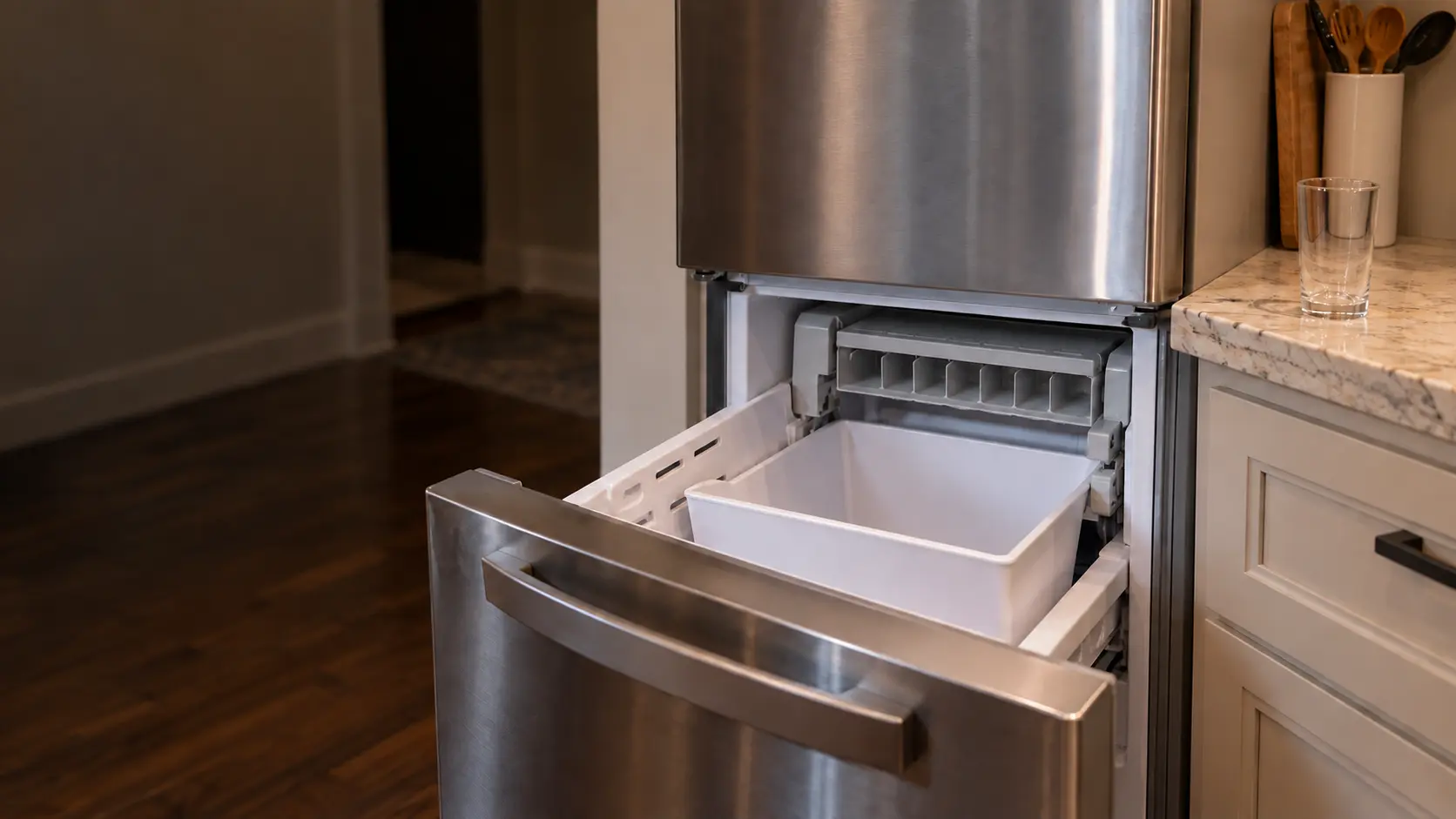
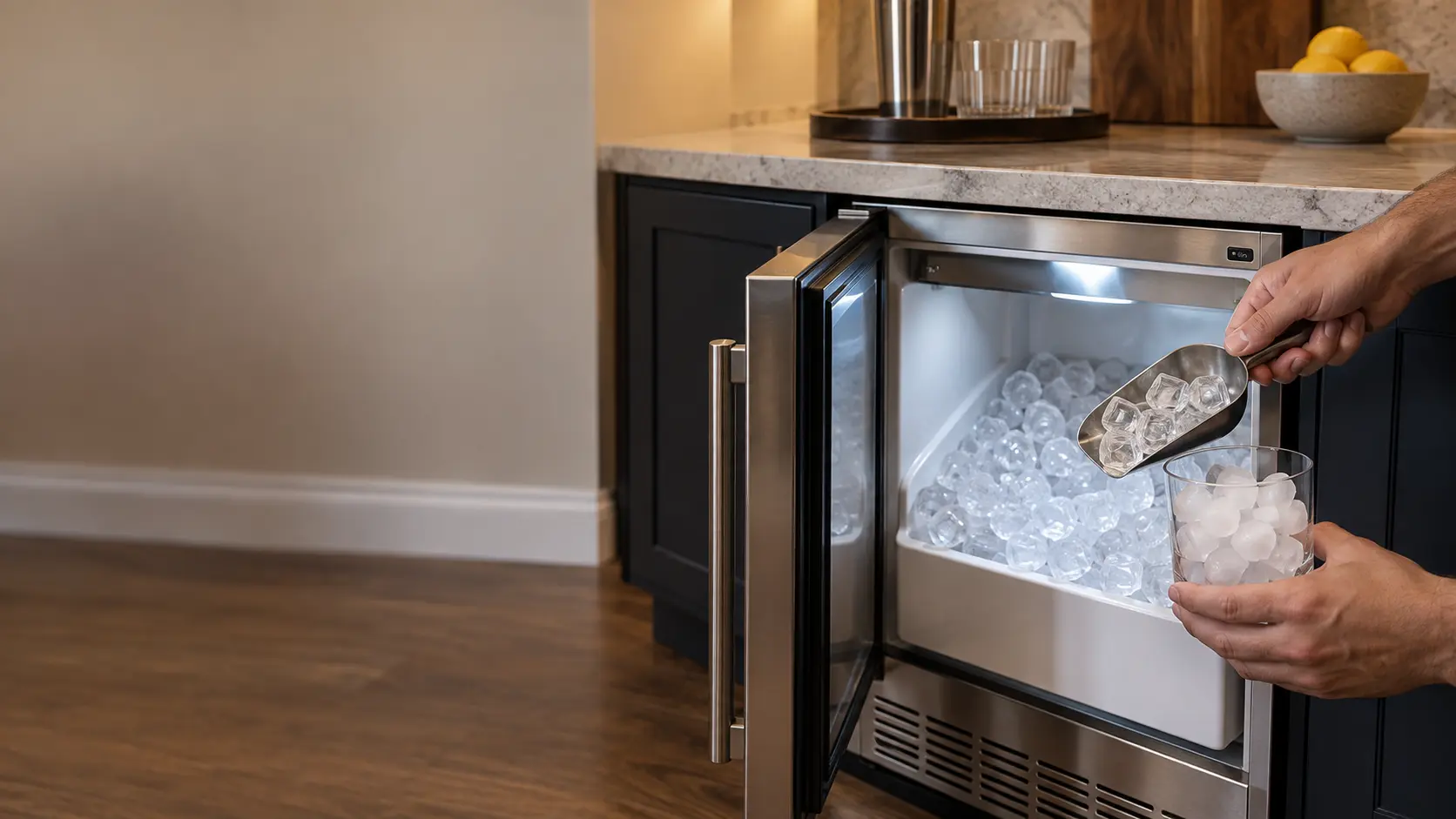
Freezer ice makers without a door dispenser and most undercounter ice makers give you no tap to time. Use the ice itself as the gauge: change or bypass the filter where the manual allows, empty the bin, and compare the next two or three harvests. Cubes that come back to full size point to the filter; cubes that stay thin point further back along the line.
Source: GE Appliances — Dispenser water flow test — Dispense for 20 seconds into a measuring cup; less than 8 ounces means the flow is probably inadequate; Samsung — Ice maker is not working — Minimum 20 psi; 6 ounces in under 10 seconds; repeat without the filter; filters rated about 300 gallons or six months; small or shattered cubes come from low pressure; level the unit
What starves the line between the wall and the mold
Once you know the flow is weak, work back from the unit toward the house plumbing. Most of these checks take a few minutes, and the first two account for most of the cases we see.
- An old filter, or a new one not turned fully into its locked position; Whirlpool notes that a poorly seated filter can reduce flow as badly as a clogged one.
- The house shut-off valve left partly closed after other plumbing work.
- A self-piercing saddle valve on the cold pipe; GE says its opening is too small and gives small, slow and hollow cubes as the result.
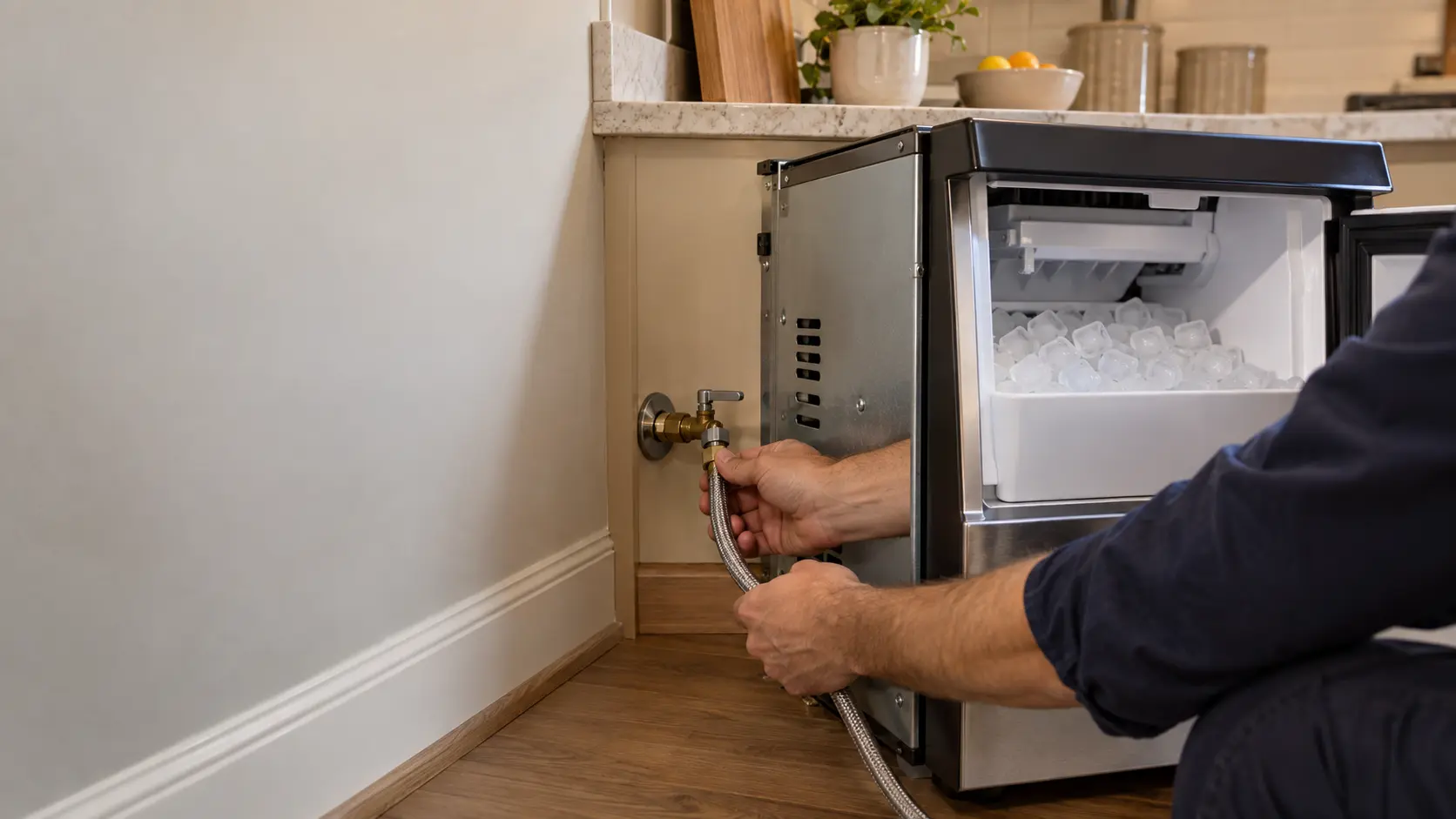
- A supply line kinked behind the unit, most often after it was moved for cleaning.
- A reverse osmosis system upstream, which Whirlpool and Samsung both say can lower the pressure reaching the ice maker.
- Sediment from new construction nearby, which GE says can clog filters sooner than their rated life.
Source: GE Appliances — Self-tapping water valve — Saddle valves are not recommended; restricted flow gives small, slow and hollow cubes; GE Appliances — Icemaker not producing ice — Sediment from new construction can clog filters more often than recommended; Whirlpool — Ensuring correct water pressure — 30–120 psi, optimal 40–80 psi; low pressure gives hollow, small or irregular cubes; reverse osmosis systems can reduce pressure; Whirlpool — Ice cubes are thin or hollow — Low pressure and an improperly installed or clogged filter reduce flow and give small or hollow cubes
When the flow is good and the cubes are still thin
A strong cup test and a fresh filter rule out most of the supply side. What is left is inside the unit: an inlet valve that opens weakly even with good pressure, a fill tube narrowed by ice so only a trickle gets through, or a control that ejects the ice too early. All three need a technician to test the part itself.
Undercounter clear-ice models are a different case. They build ice as a sheet on a chilled plate while water runs over it, and scale on that plate or a partly blocked water distributor makes the slab thin and uneven even with perfect supply pressure. Descaling is usually the fix there, and some models also have a thickness setting described in the owner's manual.