Why the date matters more than the taste
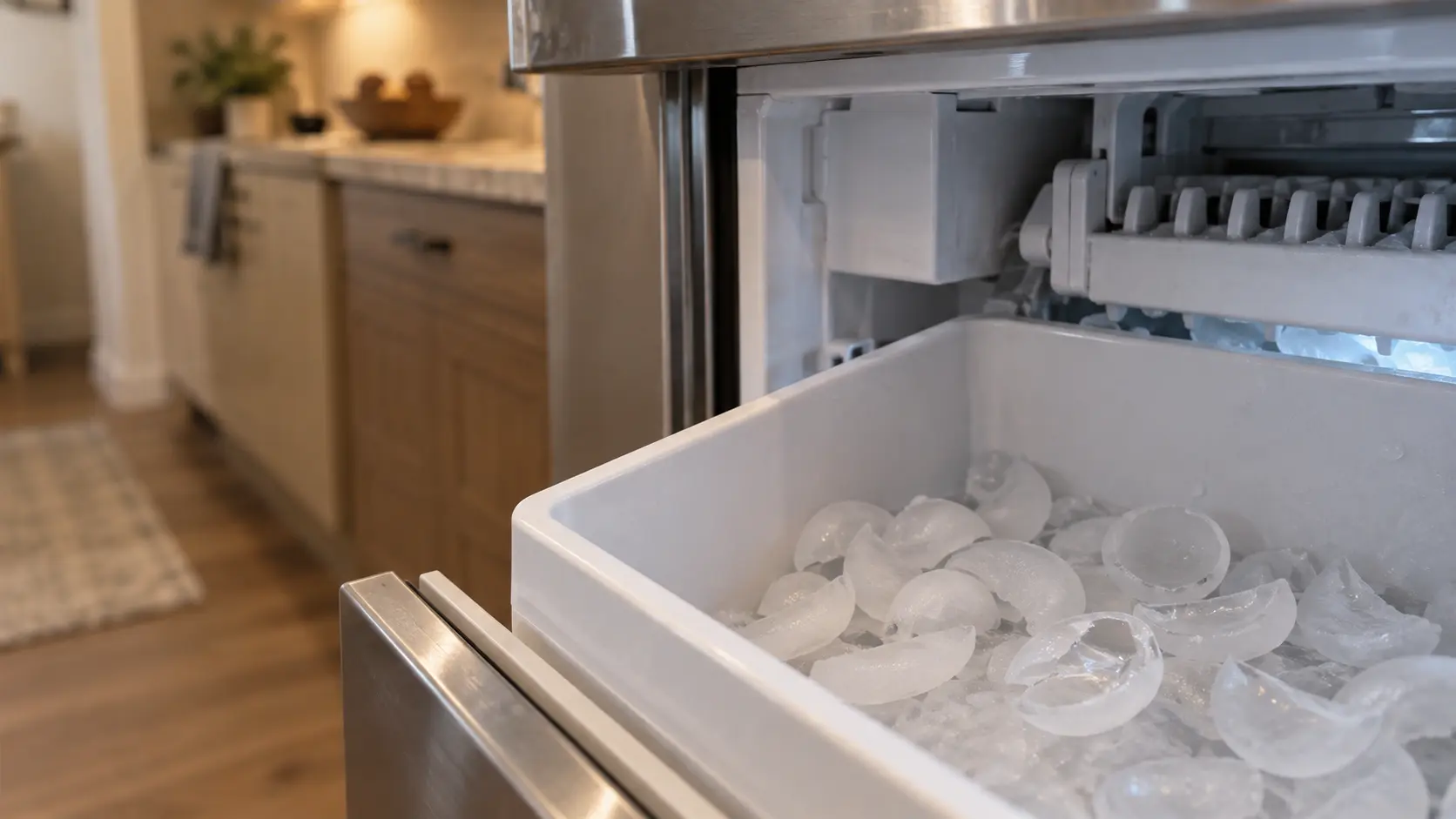
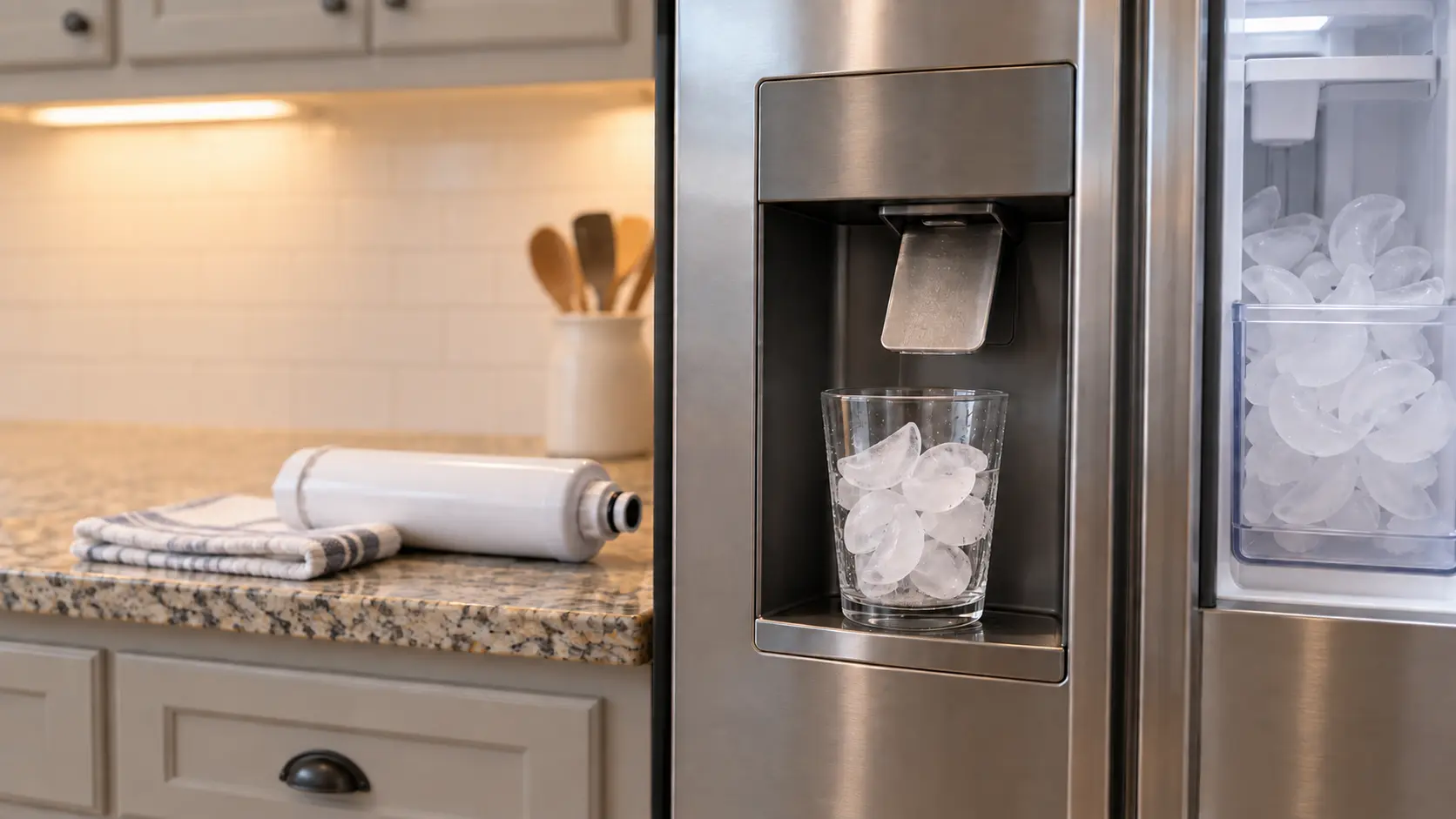
Most owners change an ice maker water filter when the water starts tasting off, and by then it is late. As the filter loads with sediment its flow drops, and an ice maker notices that before a person does. When the inlet valve opens for its usual fill, a slower stream simply delivers less water to the mold.
Whirlpool describes the result plainly: small cubes, reduced ice production and longer dispensing times. The EPA's guidance on home filters reaches the same place from the health side, telling owners to follow the manufacturer's replacement schedule because carbon filters have a limited useful life.
Where six months comes from
GE, Whirlpool, Frigidaire and Samsung all give six months as the default. GE adds a volume, about 170 to 200 gallons, which a large household that drinks from the dispenser can reach well before the half year. Sandy or heavily treated water shortens the life as well, so treat the calendar as the latest date rather than the goal.
What the indicator light is really counting
On many models the filter light counts elapsed time or dispenser use rather than testing the water. It resets when you tell it to, whether or not a new cartridge went in, and it cannot see a filter that clogged early. Use it as a reminder, and let the size of the cubes be the second opinion.
Source: Whirlpool Product Help — When to change the water filter — Replace every 6 months or when the indicator comes on; a clogged filter causes small cubes, reduced ice production and longer dispensing times; GE Appliances — Refrigerator: replacing the water filter — Replace every six months or after about 170–200 gallons; dispense 1–2 gallons to purge air, and the first ounces may sputter; RPWFE cartridges sit in the top left of the fresh-food compartment or in the left door; Frigidaire — How often should I change my water filter? — Change the filter every six months; use the same filter model; replace it before reinstalling a unit that has not been used for an extended period; Samsung US — How to replace the water filter — Replace every six months; after installation dispense several gallons of water to clear impurities and air; EPA — Water Health Series: Filtration Facts — Carbon filters have a specified shelf life and should be replaced per the manufacturer's instructions; look for independent certification to ANSI/NSF standards
Where the cartridge sits on each kind of ice maker
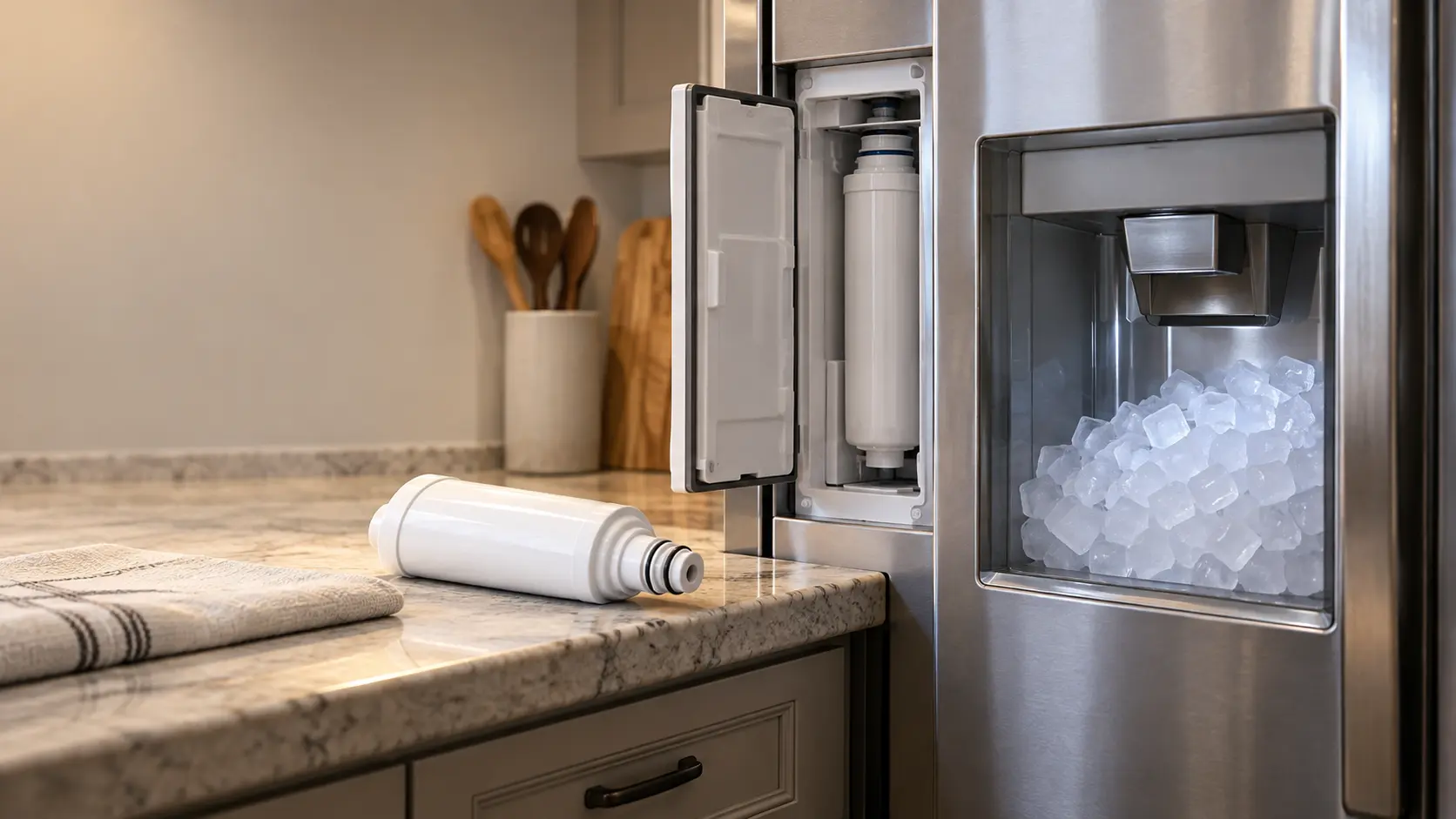
The location follows the design of the cabinet, and knowing it in advance saves a search with a flashlight. GE, for example, puts the cartridge on some of its French door models in the top left corner of the fresh-food compartment or inside the left door.
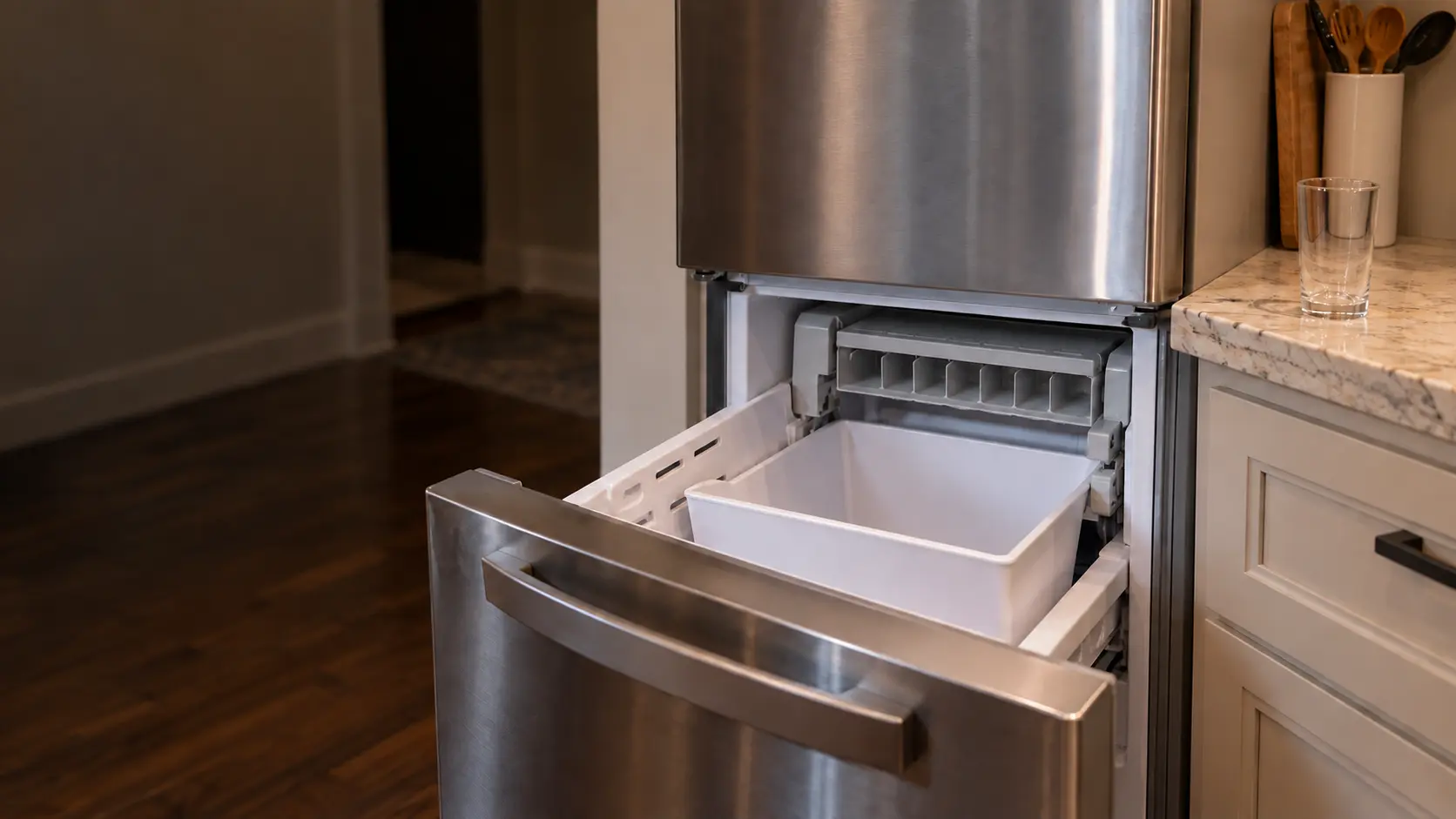
- French door models: usually inside the fresh-food compartment, in an upper corner or in a door, behind a flip-down cover.
- Side-by-side models: often behind the base grille at the front, or high on the fresh-food side.
- Freezer ice makers without a dispenser: sometimes no cartridge at all, or an inline one on the supply tube behind the cabinet or under the sink.
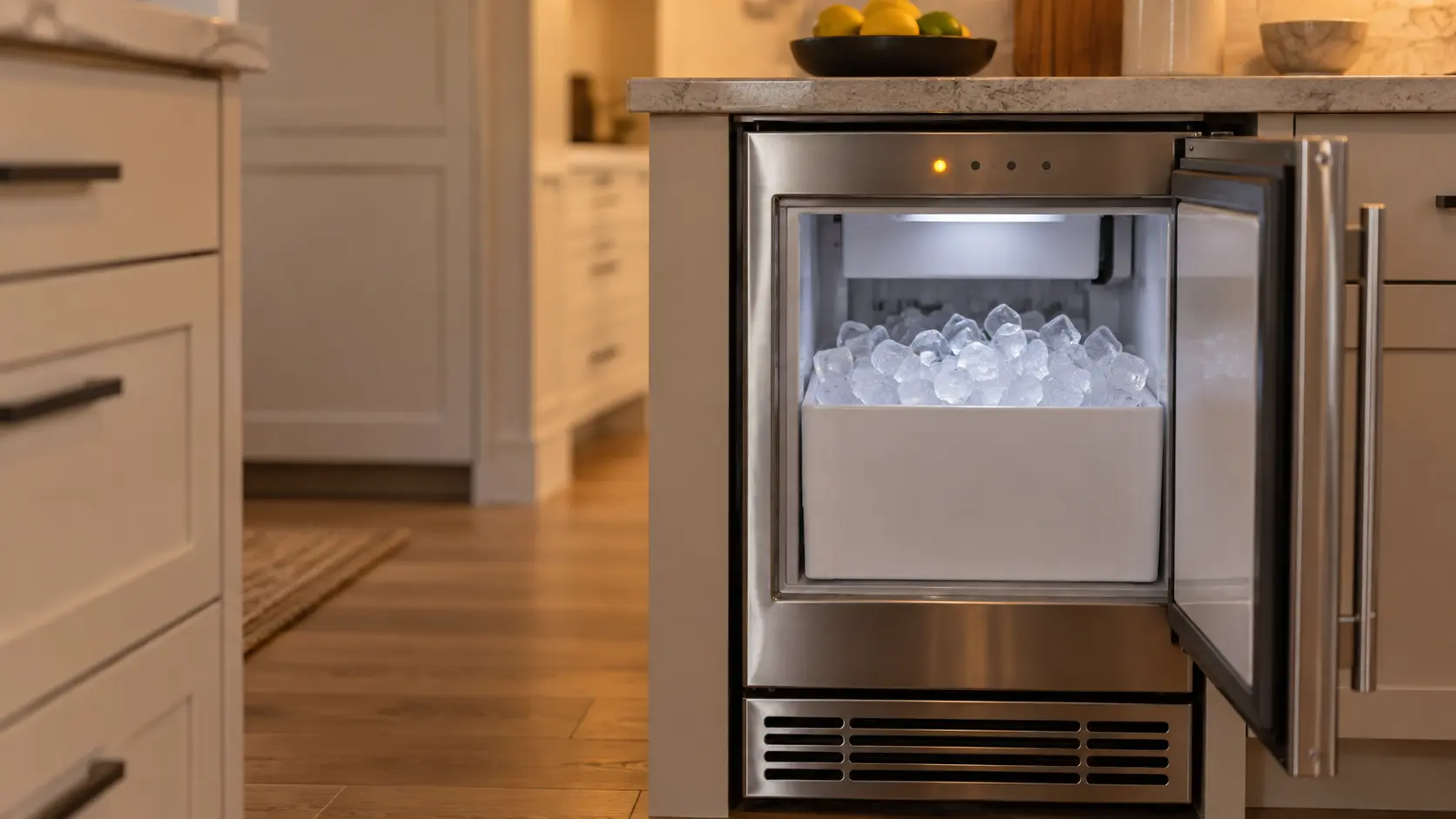
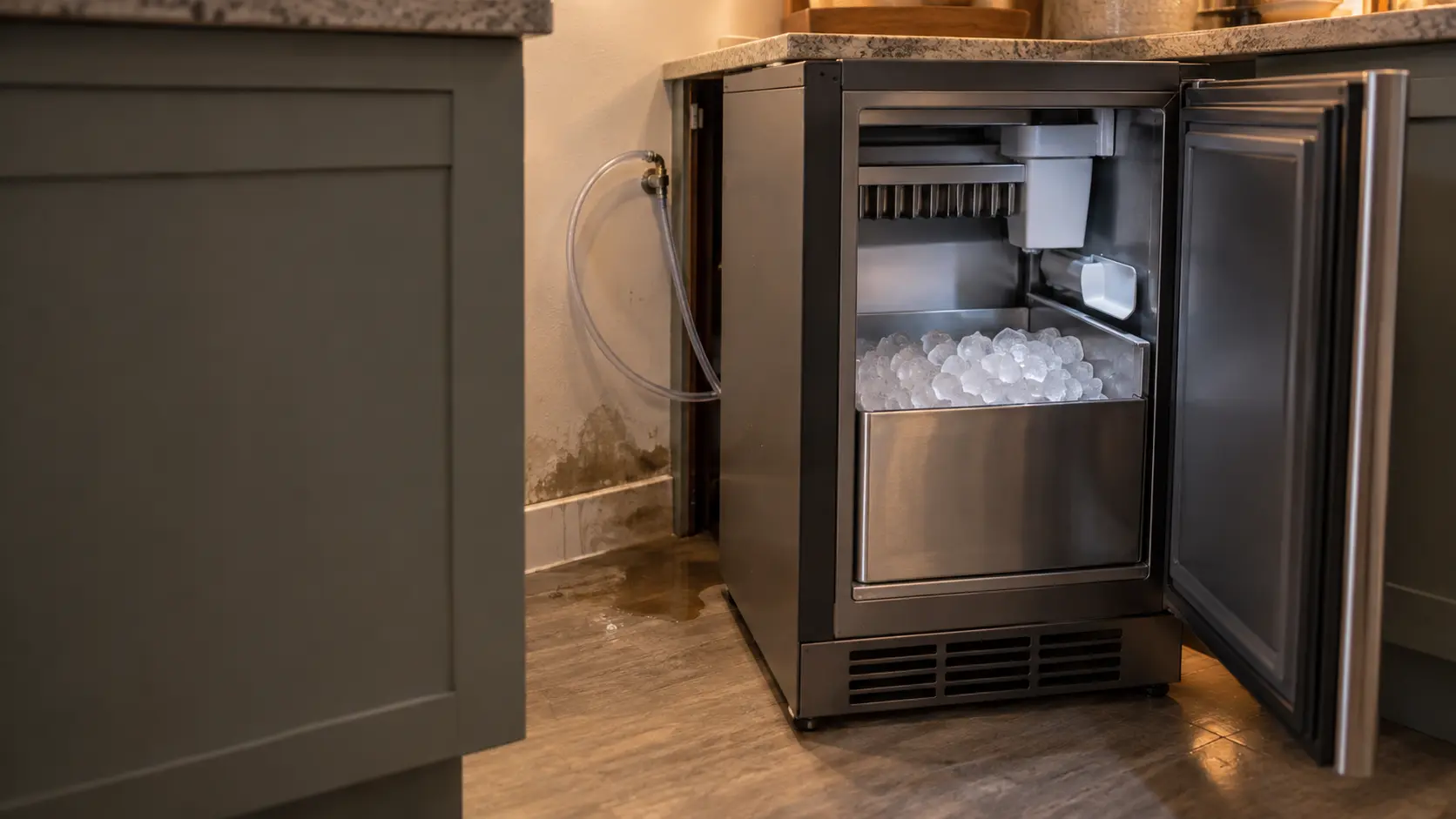
- Undercounter clear and nugget units: an inline cartridge on the supply line, if the installer fitted one.
- Countertop nugget models: no line to filter; the water you pour in is the water that freezes.
Source: GE Appliances — Refrigerator: replacing the water filter — Replace every six months or after about 170–200 gallons; dispense 1–2 gallons to purge air, and the first ounces may sputter; RPWFE cartridges sit in the top left of the fresh-food compartment or in the left door
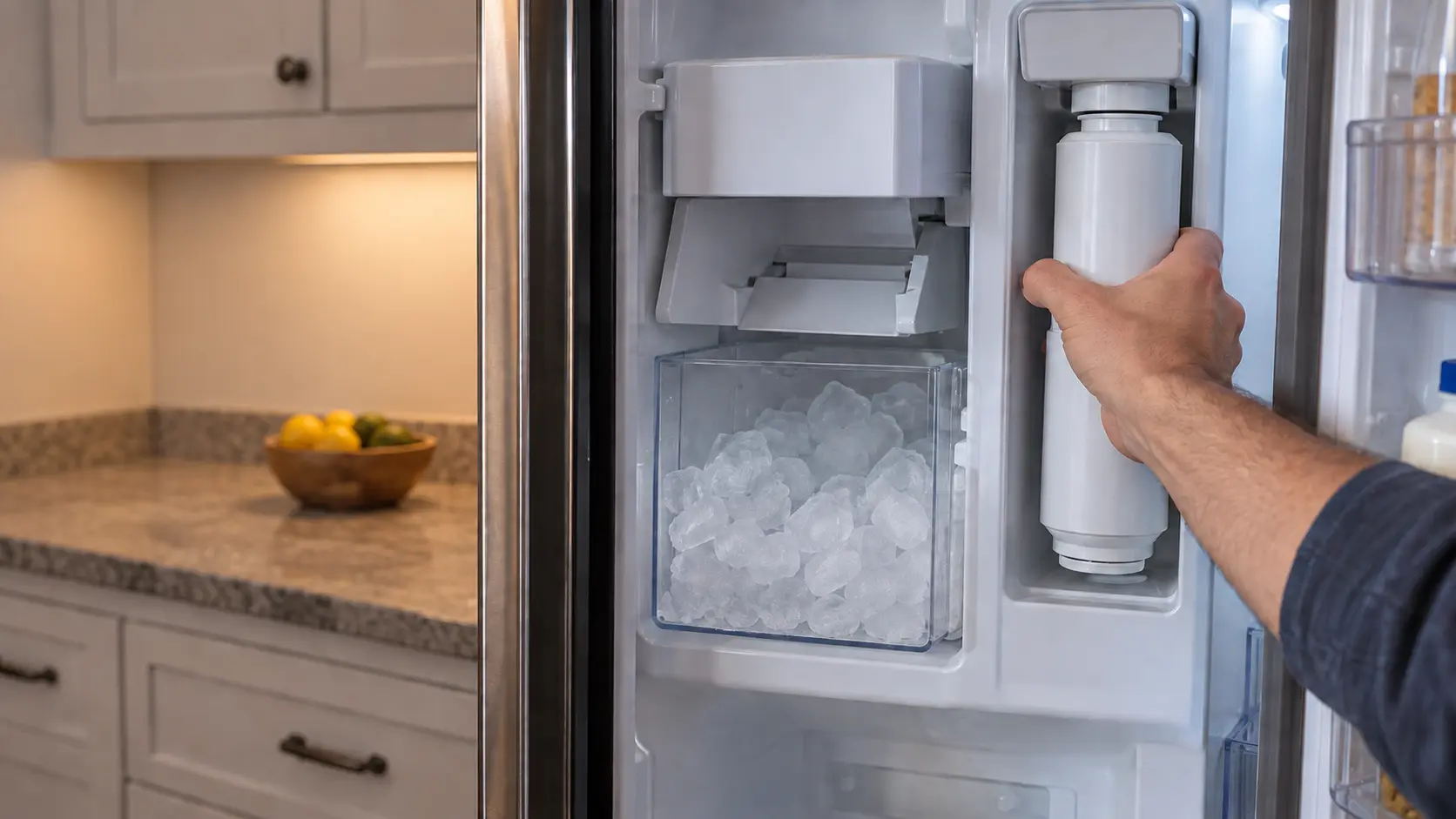
Swapping the cartridge without a puddle
The steps below cover the common push-in and twist-in cartridges. Keep a towel under the housing, since a little water always escapes when the old cartridge comes out, and take the protective caps off the new one before you try to seat it.
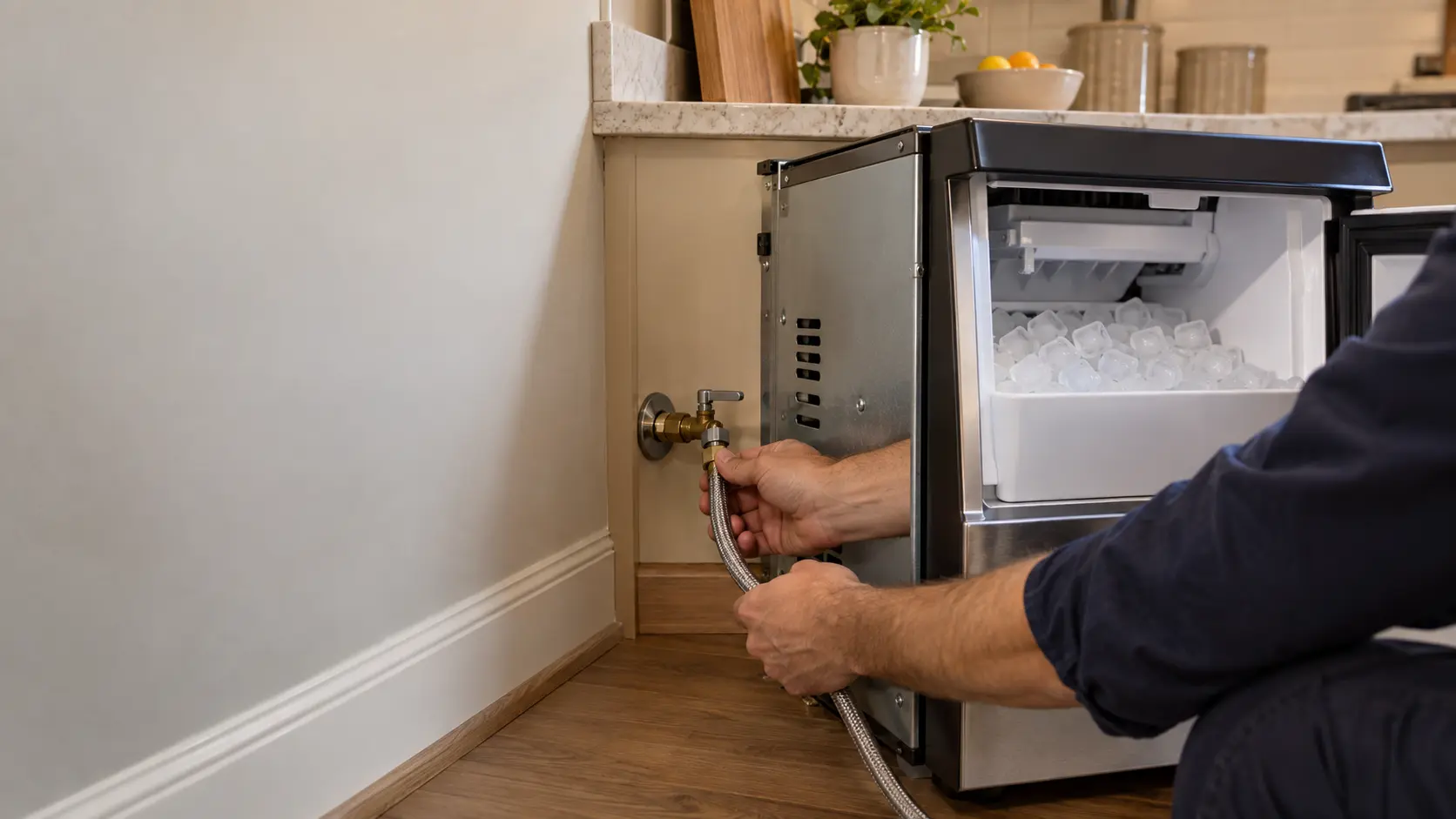
Inline cartridges behind the cabinet
An inline cartridge on the supply tube has no bypass and no indicator. Close the supply valve first, release the fittings at both ends and note the arrow on the housing, which shows the direction of flow toward the ice maker. A fitting that is only hand-tight on this line is a classic source of the slow drip behind a cabinet that nobody sees for months.
The first hour after a new cartridge
A new cartridge is full of air and a little loose carbon dust. GE tells owners to dispense about one to two gallons to purge the air and warns that the first few ounces may sputter, while Samsung's instructions ask for several gallons. Until that air is gone, the ice maker may take in short fills and produce a batch of small or broken cubes.
Throw away the first bin of ice after the change. It was partly made with water from the old cartridge and the air-filled new one, and it is the batch most likely to taste faintly of carbon.
- Sputtering at the dispenser for a minute or so: expected.
- A gray tint in the first glass: carbon fines, so keep flushing.
- Water weeping around the housing: cartridge not fully seated or not turned to its stop.
- No water at all: cartridge not locked in, or the supply valve still closed.
Source: GE Appliances — Refrigerator: replacing the water filter — Replace every six months or after about 170–200 gallons; dispense 1–2 gallons to purge air, and the first ounces may sputter; RPWFE cartridges sit in the top left of the fresh-food compartment or in the left door; Samsung US — How to replace the water filter — Replace every six months; after installation dispense several gallons of water to clear impurities and air
Genuine, compatible and what the label should prove
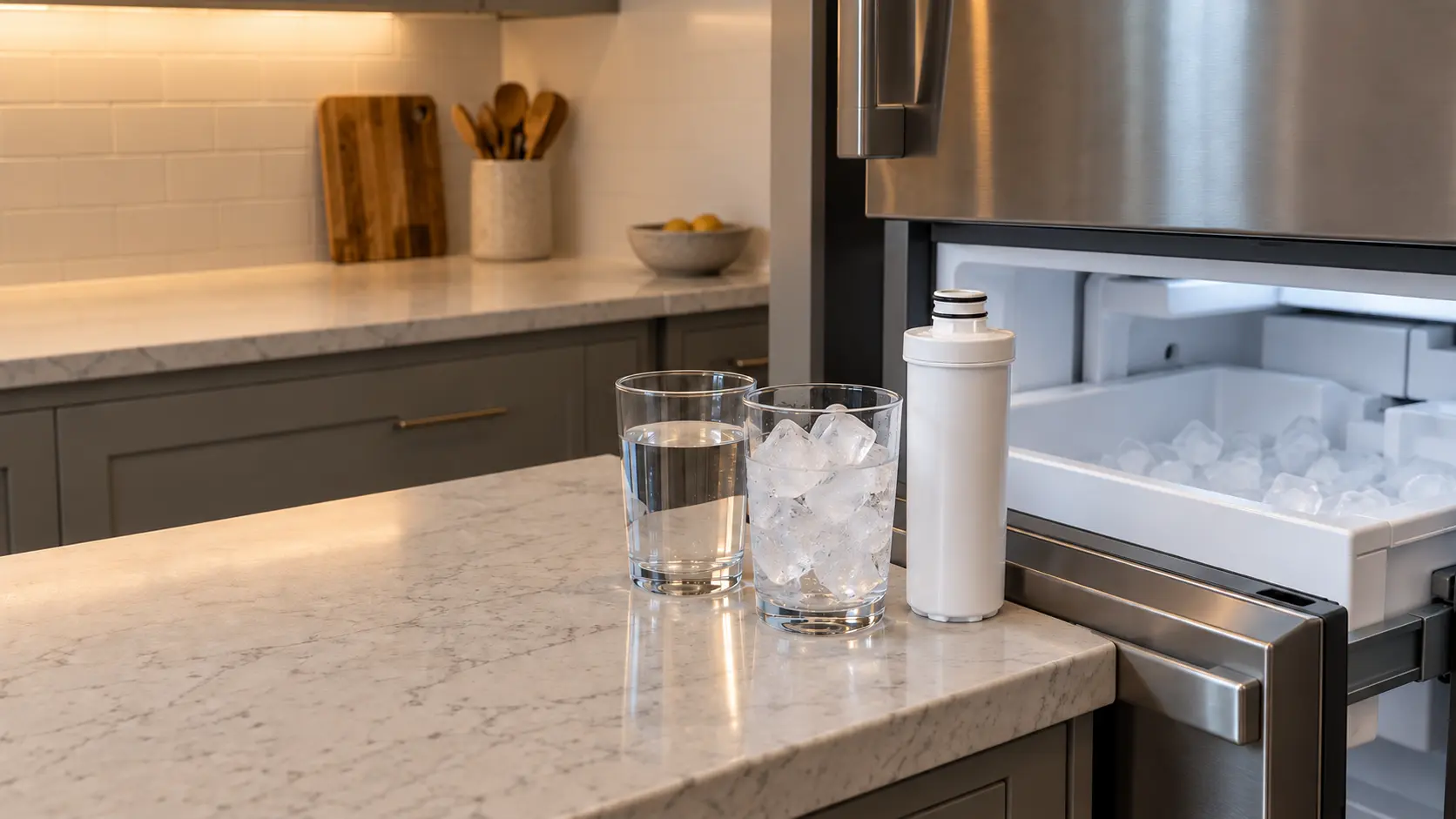
Buy the cartridge your model number lists, because the housings differ in shape and in where the seals sit. Frigidaire notes that the replacement must be the same filter model already fitted, and it recommends a fresh cartridge whenever a unit has stood unused for a long stretch, such as after a move.
Whatever the name on the box, check what it has been independently certified to reduce. The EPA advises looking for certification by an organization accredited to the ANSI/NSF standards, and asking the maker for proof of its claims when a product carries none. A bargain cartridge with no certification may fit perfectly and still pass whatever the original was chosen to catch.
Source: Frigidaire — How often should I change my water filter? — Change the filter every six months; use the same filter model; replace it before reinstalling a unit that has not been used for an extended period; EPA — Water Health Series: Filtration Facts — Carbon filters have a specified shelf life and should be replaced per the manufacturer's instructions; look for independent certification to ANSI/NSF standards