Why a closed bin still gets dirty
A freezer is not sealed off from the rest of the kitchen. Every door opening swaps air, and the cold surface of ice readily takes on odors from open containers nearby. GE's advice for keeping ice tasting clean starts there: cover or close food containers and wipe up spills promptly.
Old ice adds to the problem. Cubes that sit for weeks slowly lose moisture to the dry air, fuse together and trap crumbs carried in on hands and scoops. A bin that is never emptied always serves its oldest ice first, so regular ice bin cleaning is as much about turnover as about soap.
Door bins behind the dispenser
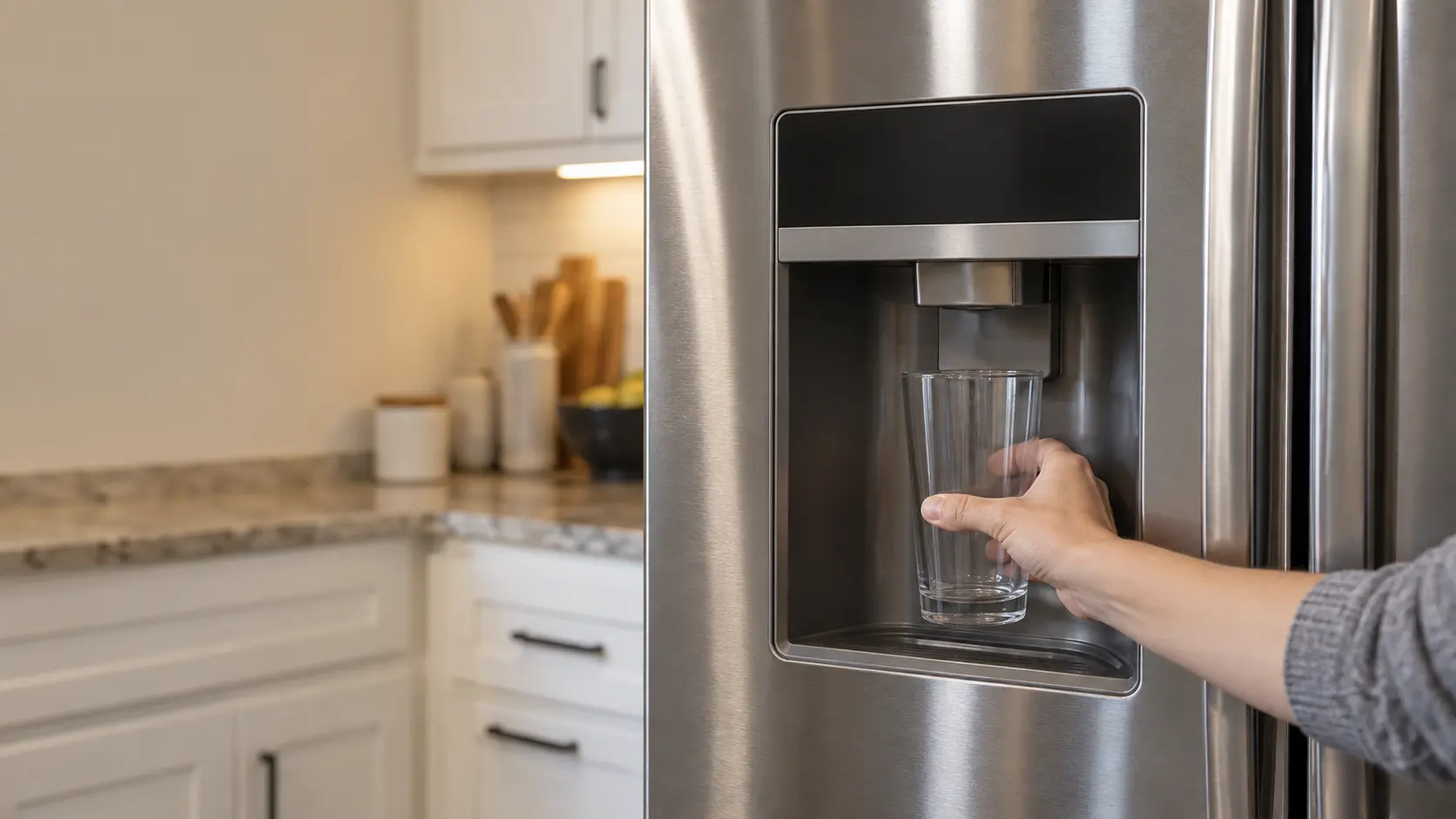
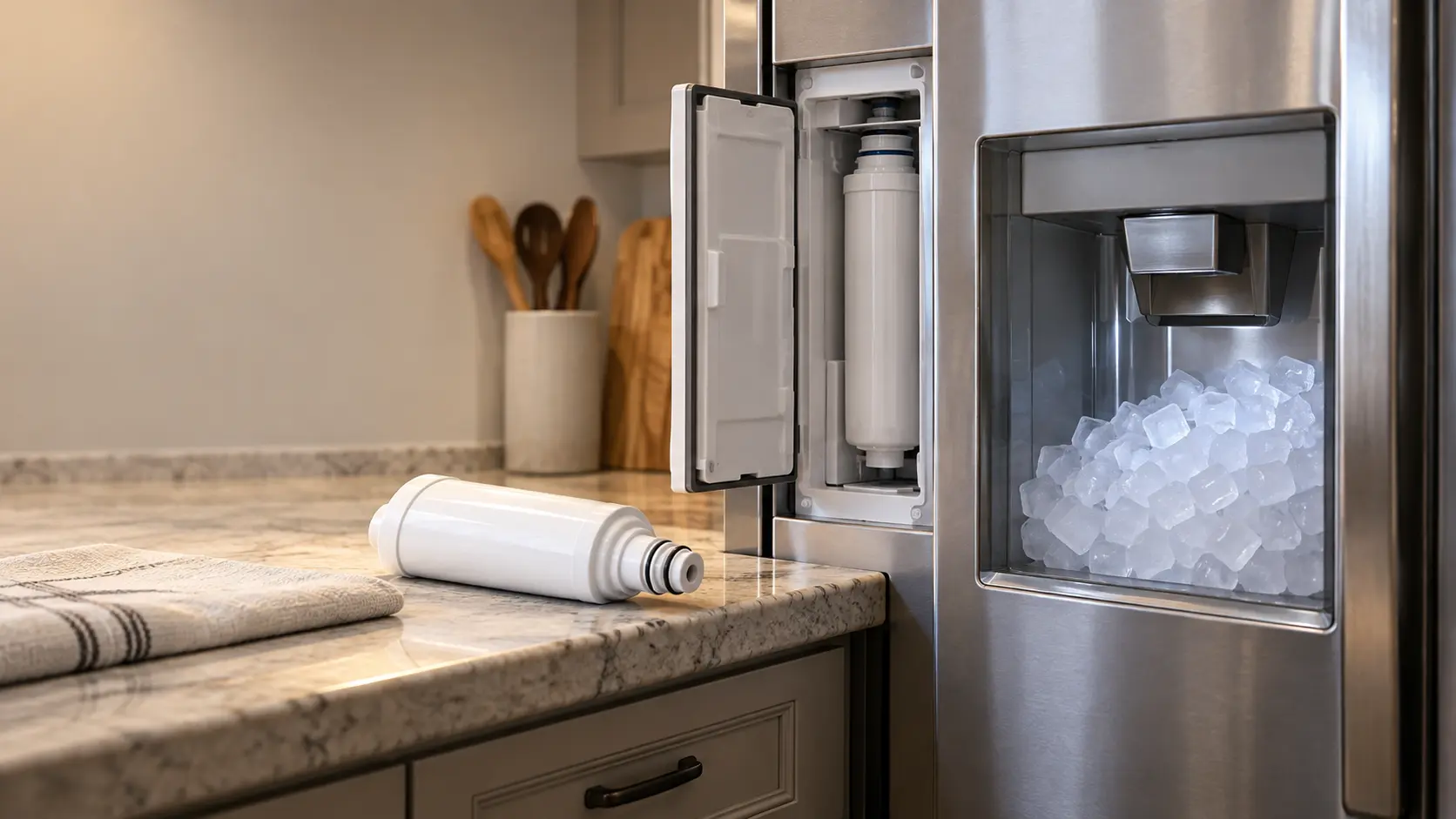
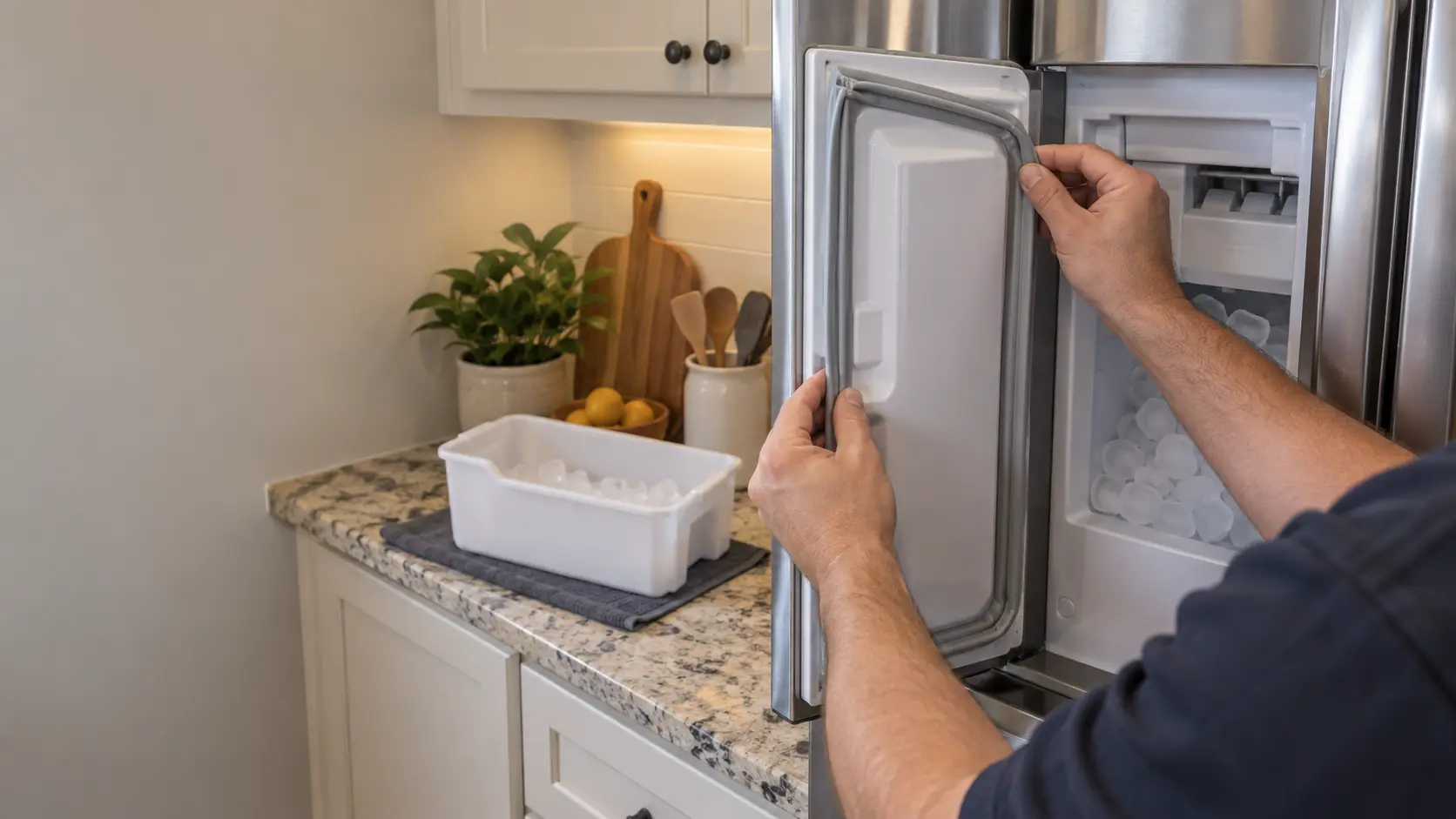
On a French door or side-by-side model the bin usually lifts out of the door or the top of the freezer after you press a release or tip up its front edge. It holds the auger that feeds the chute, so food bits, and sugar splashed from a glass pressed against the paddle, can reach the chute and gum up the flap that closes it.
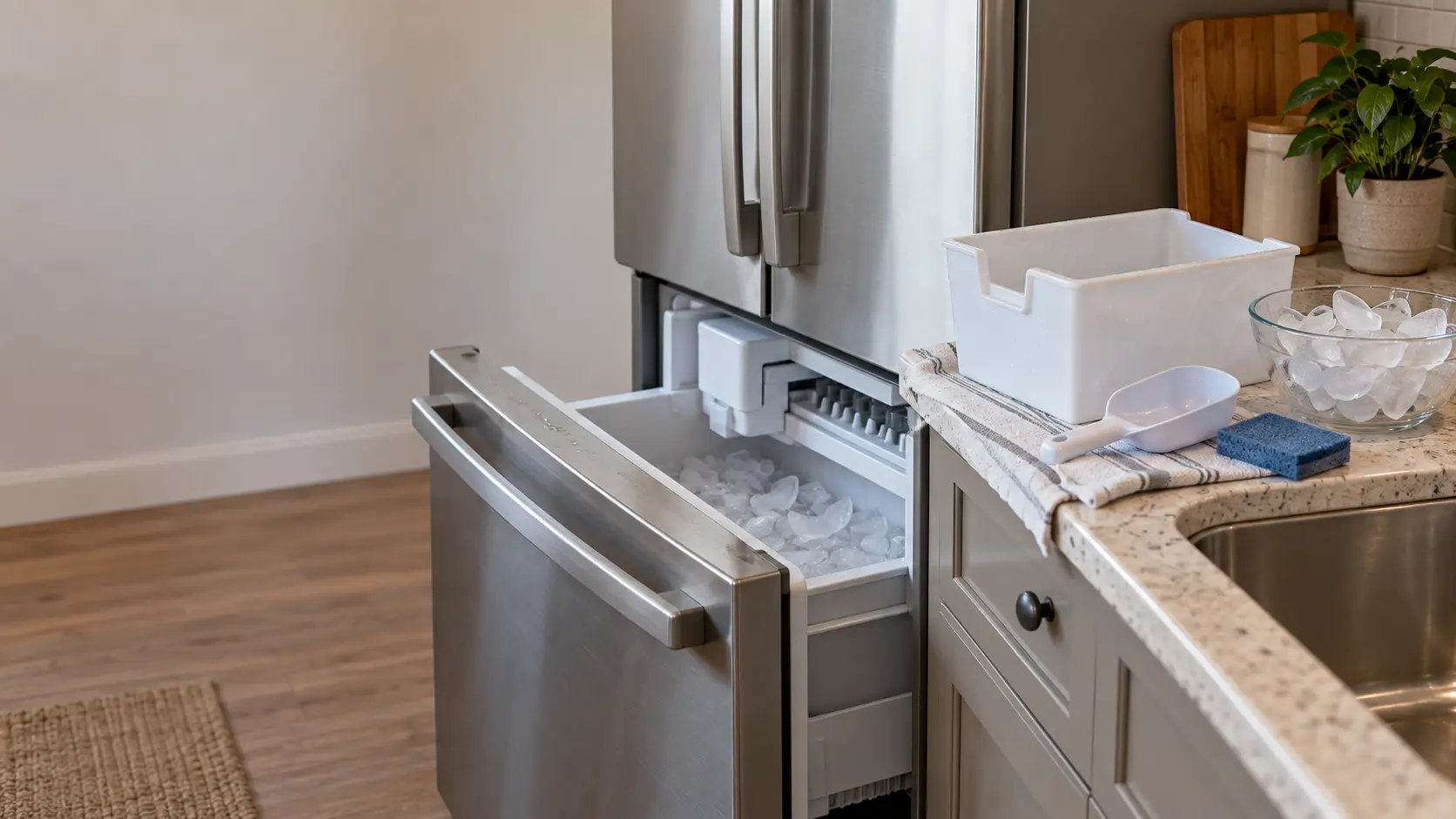
Freezer drawer and shelf bins
A bin under a freezer ice maker is usually a plain tray that slides out. It is easy to reach and just as easy to forget, and it tends to collect frost crystals and stray crumbs along its back edge, right under the ice maker where nobody looks.
Countertop baskets and reservoirs
A countertop nugget model keeps its ice in an insulated basket above a water reservoir. The basket is not a freezer, so the ice in it slowly melts, and both the basket and the reservoir are part of the water's path. That is why GE's routine for its Opal sanitizes the whole water system rather than wiping the basket alone.
Source: GE Appliances Pressroom — Tips for ice maker cleaning and maintenance — Cover food containers and clean spills to keep odors from the ice; soak dispenser tray deposits in undiluted vinegar, usually up to 30 minutes; GE Appliances — Opal ice maker cleaning and descaling — Sanitize weekly with five cups of 100–120°F water and one teaspoon of household bleach; descale every 2–3 weeks depending on water hardness
Washing a door or freezer bin the right way
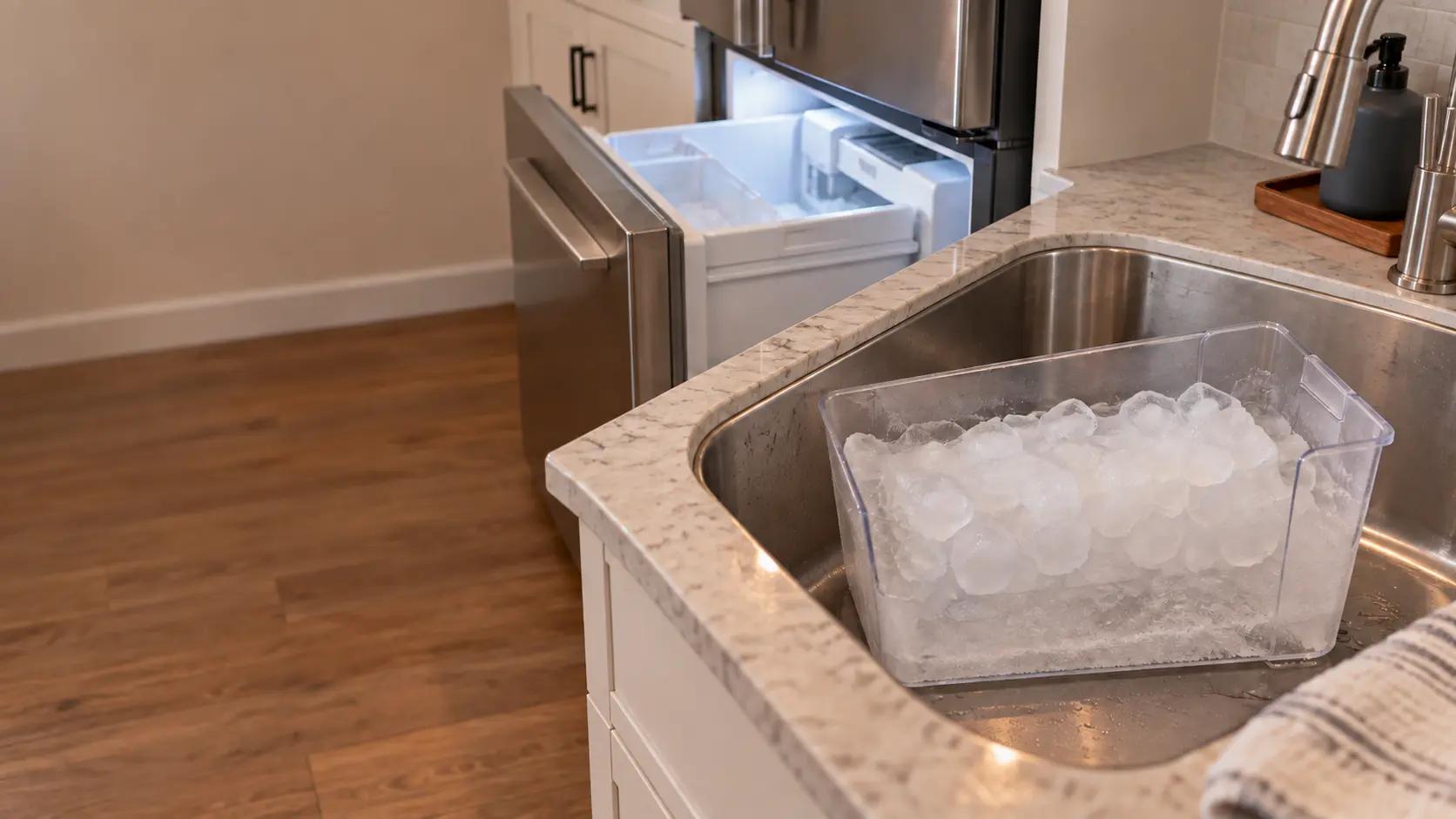
Whirlpool's routine for its own ice makers is a sound default for any make: switch the ice maker off, wait a few minutes so any harvest in progress drops into the bin, then empty it and wash the bin, scoop and scoop holder with mild soap and warm water. Whirlpool warns against the dishwasher, because its plastic parts cannot withstand temperatures above 145°F.
Dry the bin completely before it goes back. A wet bin freezes to its rails and the first new cubes freeze to its floor, which is how clumps begin. If a crust has built up in the dispenser tray below the chute, GE suggests soaking it with undiluted vinegar until the deposit loosens, usually within 30 minutes.
- Switch the ice maker off, or raise its bin-full arm, before pulling the bin.
- Tip the old ice into the sink rather than into a bag to reuse; start fresh.
- Hand-wash the bin, the scoop and any auger or paddle that comes out with it.
- Wipe the chute with mild soap and water on a soft cloth.
- Dry every piece and refit it before switching the ice maker back on.
Source: GE Appliances Pressroom — Tips for ice maker cleaning and maintenance — Cover food containers and clean spills to keep odors from the ice; soak dispenser tray deposits in undiluted vinegar, usually up to 30 minutes; Whirlpool Product Help — Cleaning the ice maker — Turn the ice maker off, remove the ice, wash bin, scoop and holder with mild soap and warm water; plastic parts cannot withstand temperatures above 145°F in a dishwasher

When soap and water are not enough
After an outage that let the bin thaw, a leak of raw meat juice in the freezer, or a boil-water notice in your area, a soap wash alone falls short. Undercounter makers show the next step: U-Line's cleaning instructions finish with 1 tablespoon of household bleach in 1 gallon of warm water over the storage area, rinsed off afterward. For its countertop Opal, GE recommends a weekly sanitizing run with five cups of hot water at 100 to 120°F and one teaspoon of household bleach.
Keep bleach solution away from a door or freezer ice maker's mold unless the manual calls for it, and rinse the bin thoroughly before any ice goes back in. The aim is a clean surface, not a chlorine note in the next glass of water.
Source: U-Line — Clear ice maker user guide and service manual (U-CLR1215B) — Apply 1 tablespoon of bleach in 1 gallon of warm water to the storage area, then rinse thoroughly; GE Appliances — Opal ice maker cleaning and descaling — Sanitize weekly with five cups of 100–120°F water and one teaspoon of household bleach; descale every 2–3 weeks depending on water hardness
A schedule for each type
The door and freezer intervals below are our own house rules rather than factory numbers, and a busy household that dispenses a lot of ice can stretch them, because its ice turns over on its own. The bin that sits full and untouched for a month is the one that needs attention.
- Door ice maker bins: wash every three months, and whenever the ice picks up a freezer taste.
- Freezer ice maker trays: empty and wash every three months, and toss ice that has sat for weeks.
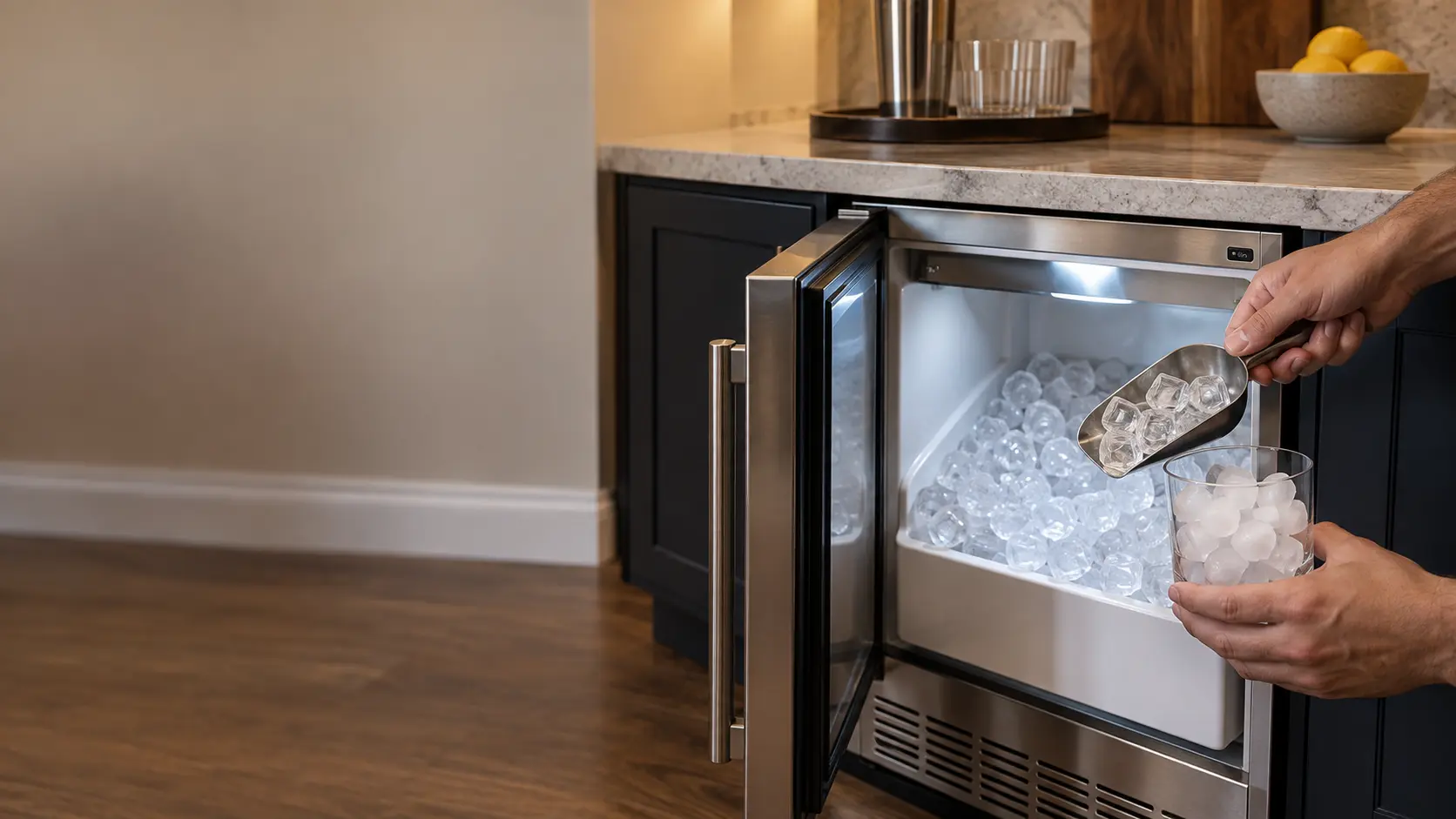
- Undercounter clear and nugget bins: wash and sanitize at every clean cycle.
- Countertop nugget models: sanitize weekly and descale every two to three weeks on hard water, as GE sets out for the Opal.
Source: GE Appliances — Opal ice maker cleaning and descaling — Sanitize weekly with five cups of 100–120°F water and one teaspoon of household bleach; descale every 2–3 weeks depending on water hardness
Clumps, odors and what they tell you
A solid block of ice in the bin is a symptom rather than a cleaning job. It forms when cubes partly melt and refreeze: a freezer that warms during long door openings, a chute flap that does not close, or a power outage. Break it up with a plastic utensil rather than a metal pick near the auger, and look for the cause if the block keeps coming back.
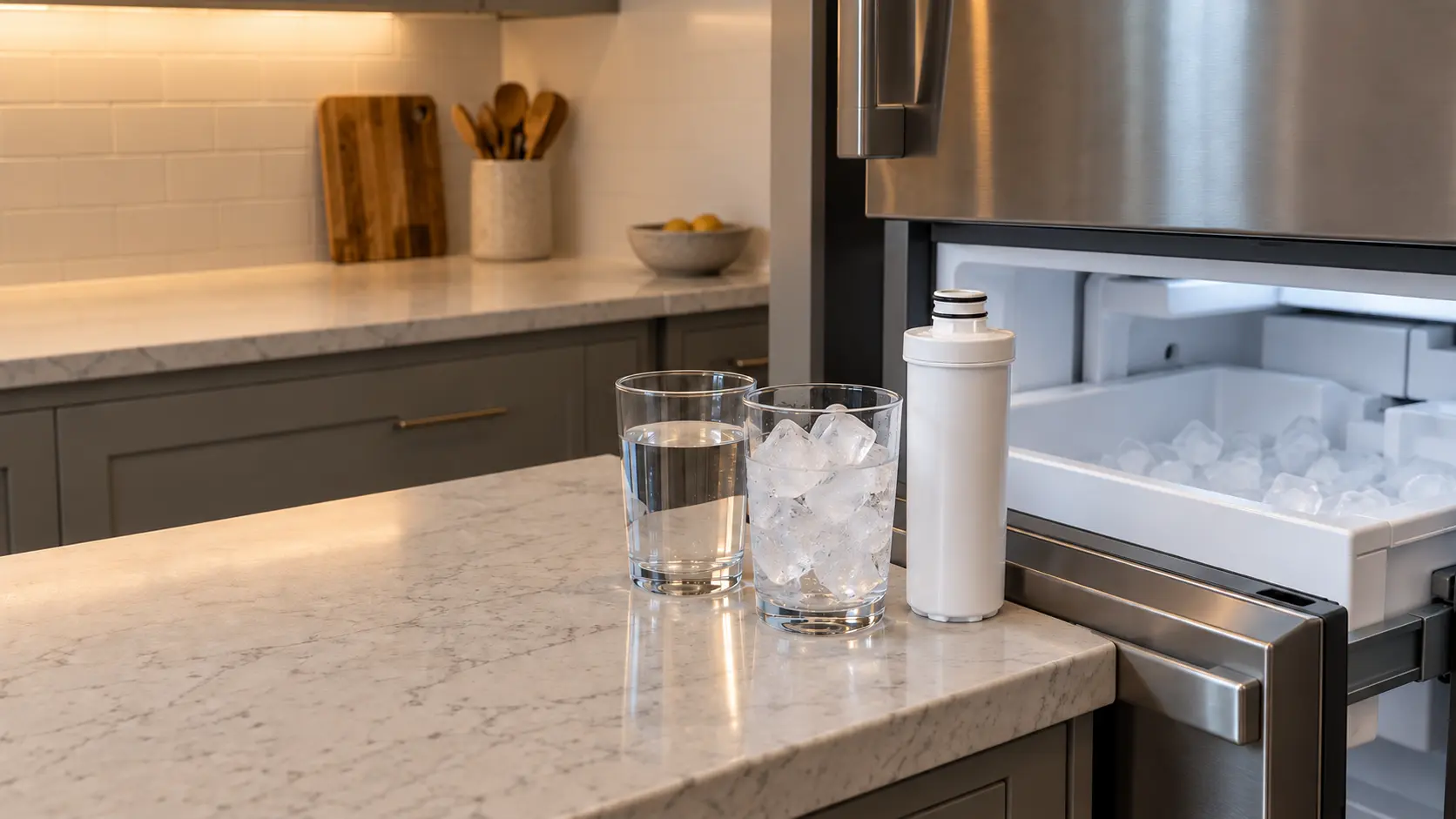
A smell that survives a thorough wash is coming from somewhere else: the water filter, the supply line or food elsewhere in the freezer. Replace the cartridge, discard all stored ice and wipe down the freezer shelves before blaming the bin a second time.