Why the first cubes take most of a day
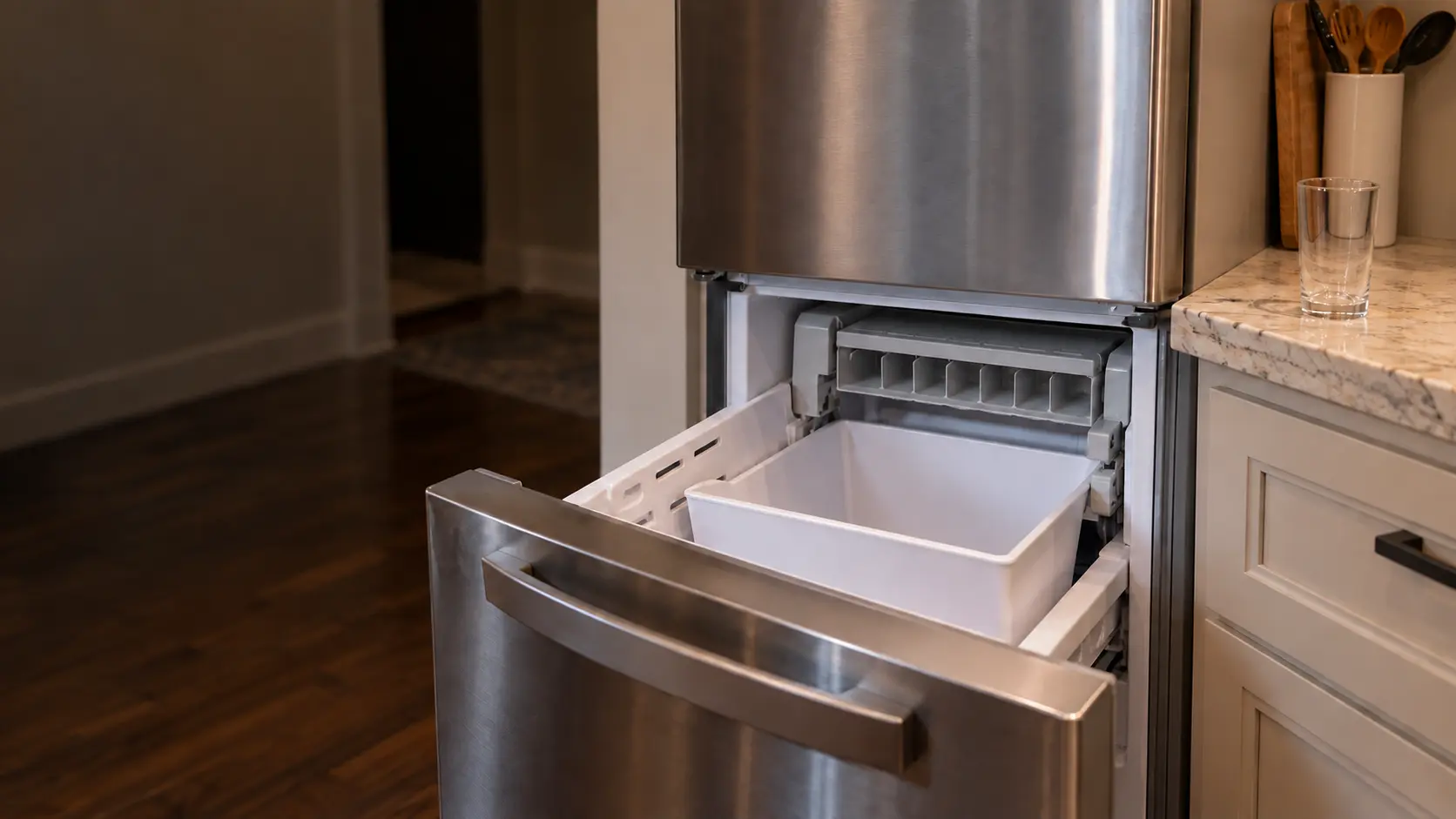
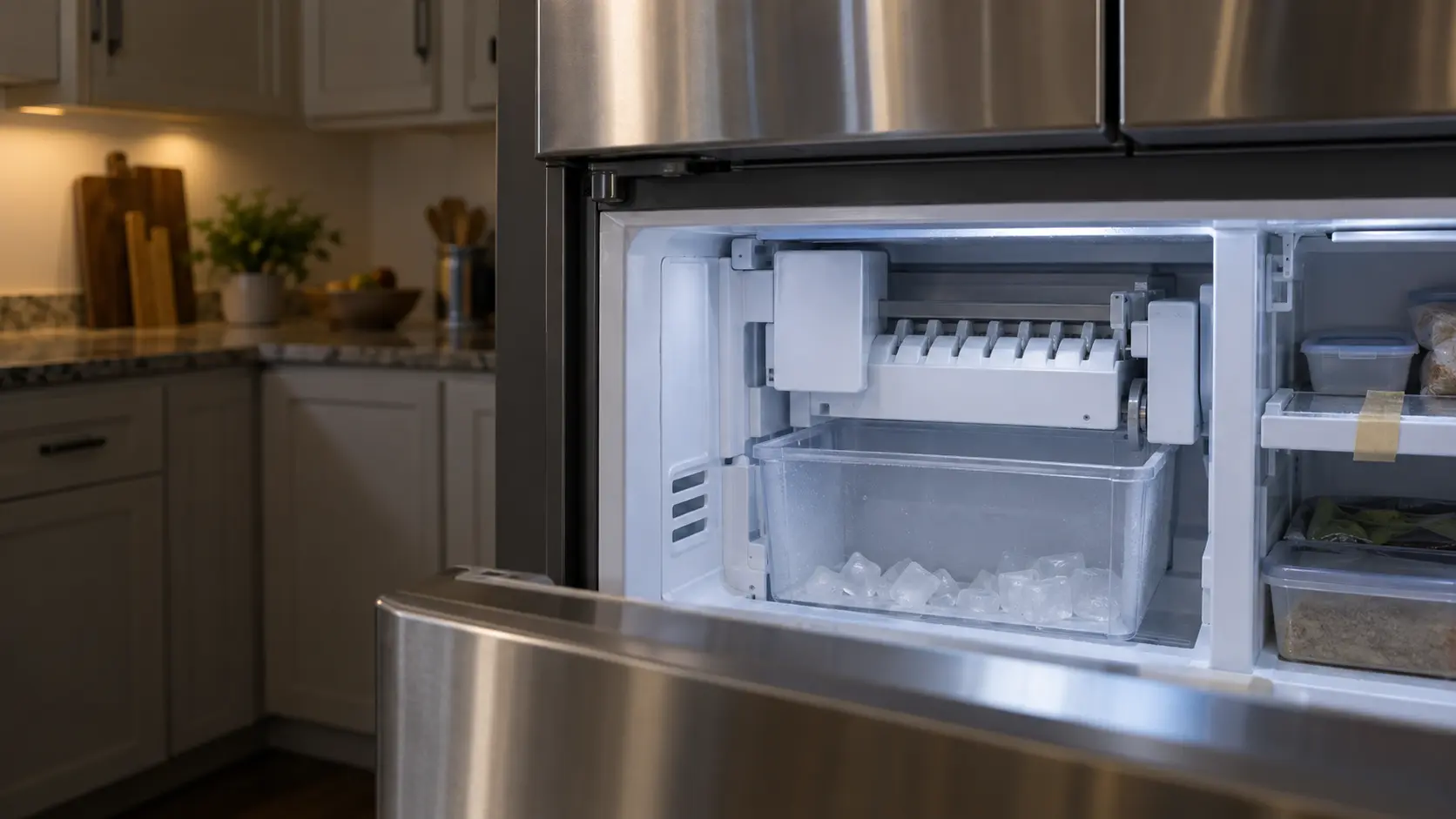
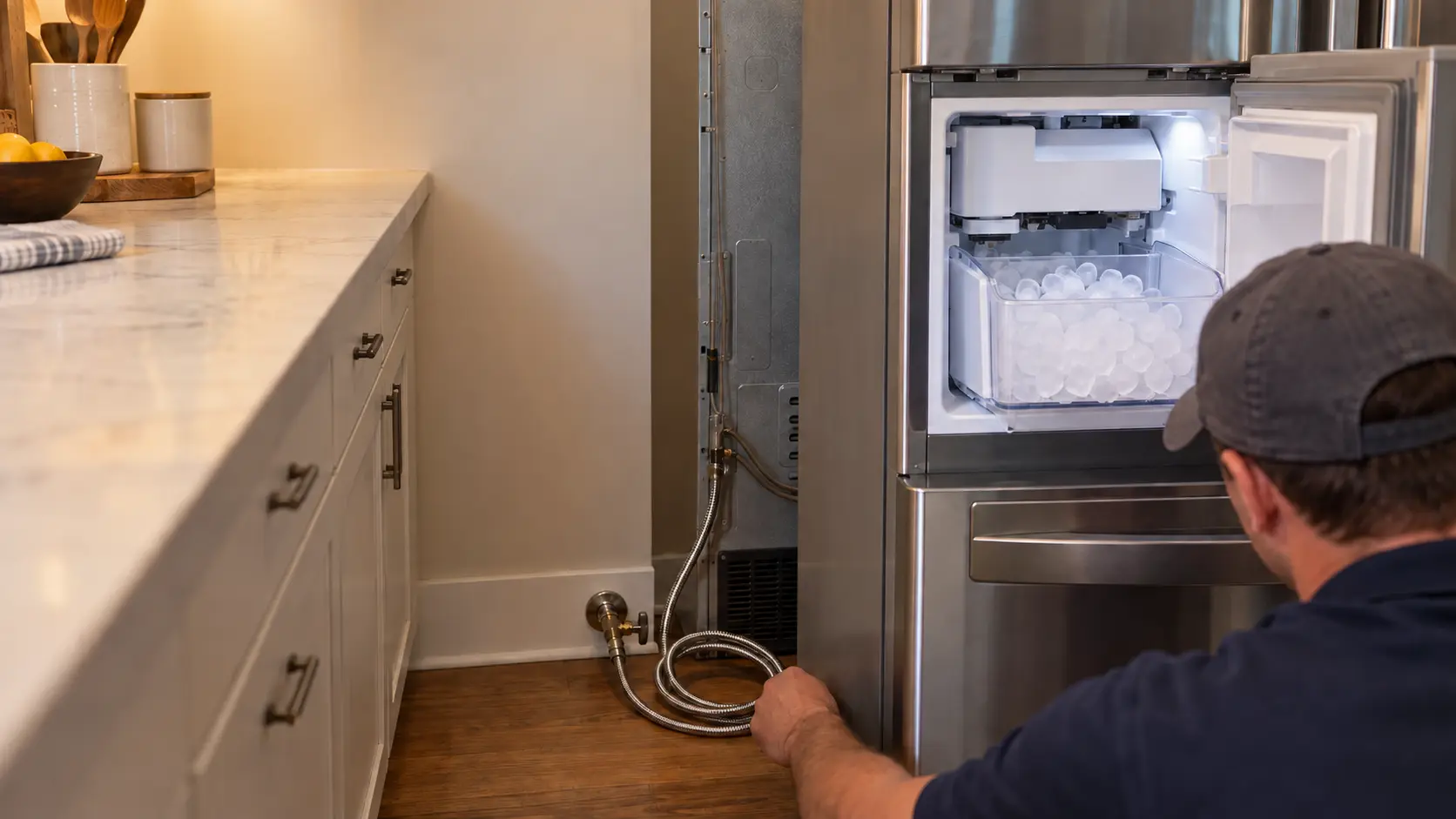
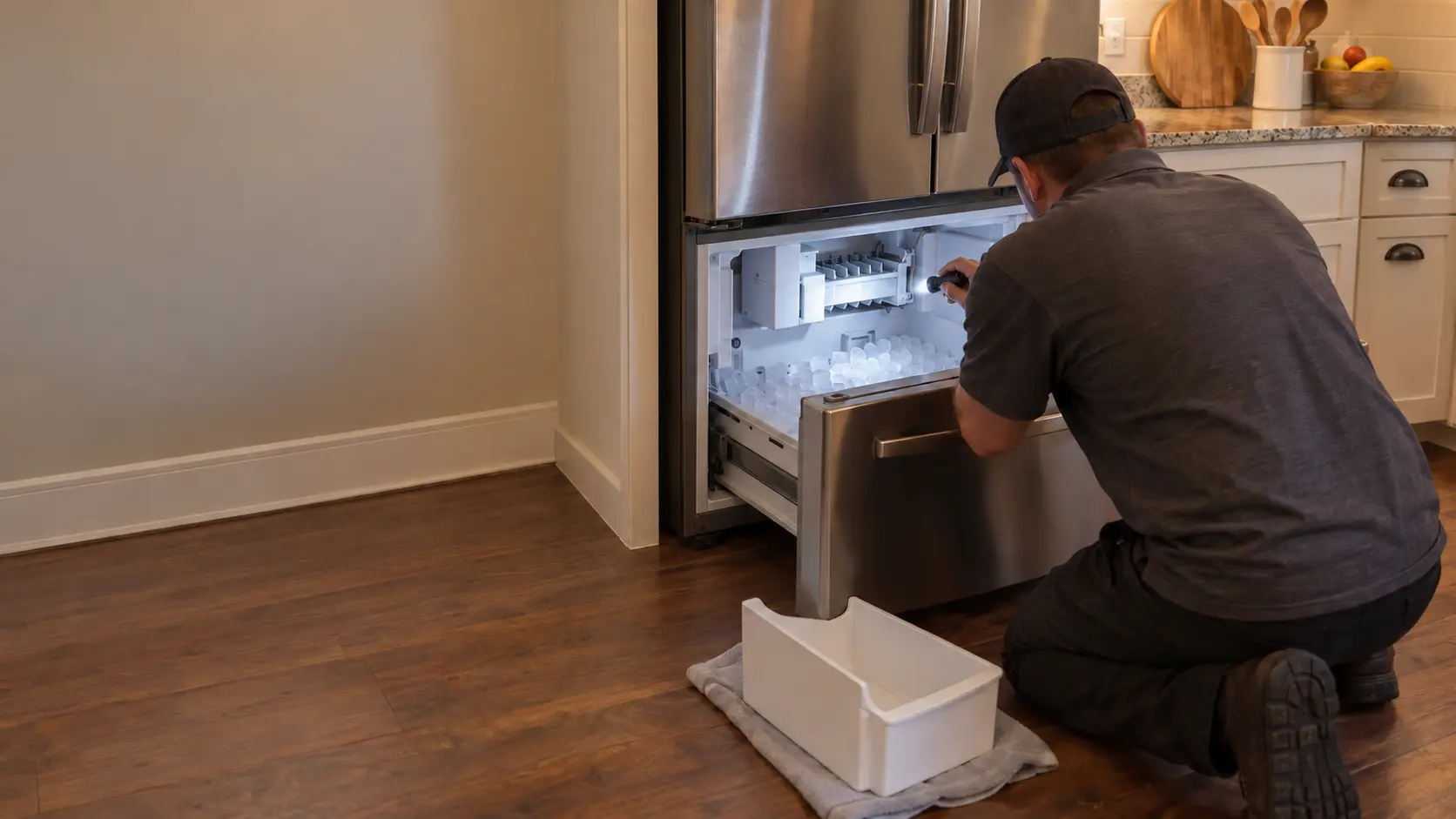
A new unit arrives at room temperature, and so does its ice maker. The freezer has to pull itself down first, and the mold in a door or freezer ice maker will not accept water until its own sensor reads cold enough. GE's owner's manual gives 15°F as the point where the ice maker fills and says a newly installed unit may take 12 to 24 hours to begin making ice. A door ice maker sits in its own insulated compartment and waits for cold air to reach it from the freezer before its mold gets there.
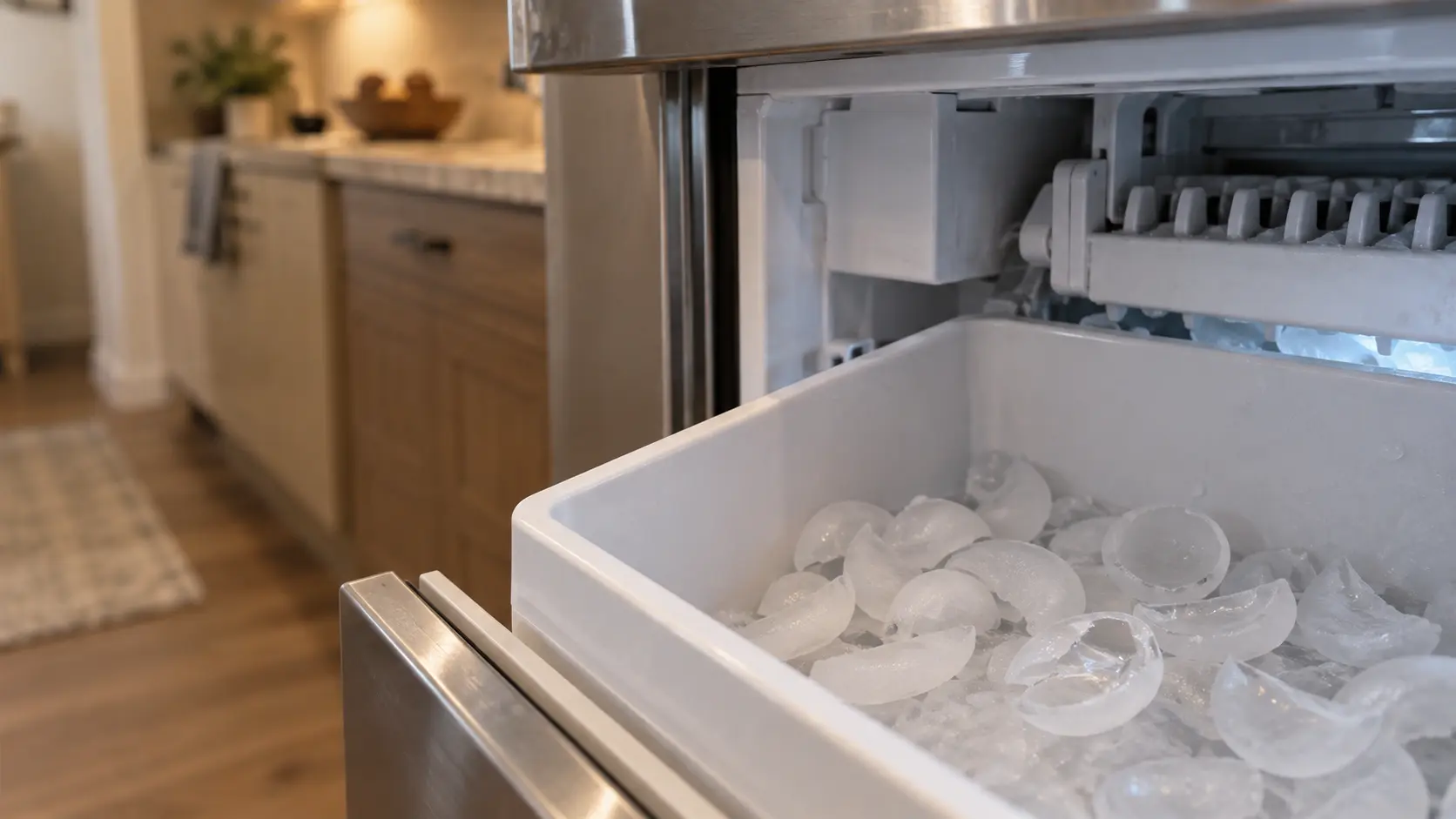
Once it starts, output is modest. GE's manual describes a freezer ice maker that makes seven cubes a cycle, roughly 100 to 130 cubes in 24 hours depending on the freezer temperature, the room and how often the doors are opened. Filling an empty bin can take a couple of days, and that is normal.
| Type | First ice | What sets the pace |
|---|---|---|
| Freezer ice maker | Within 12 to 24 hours | The freezer cooling down and the mold reaching 15°F |
| Door ice maker | Within the same 12 to 24 hours | Cold air reaching the separate door compartment |
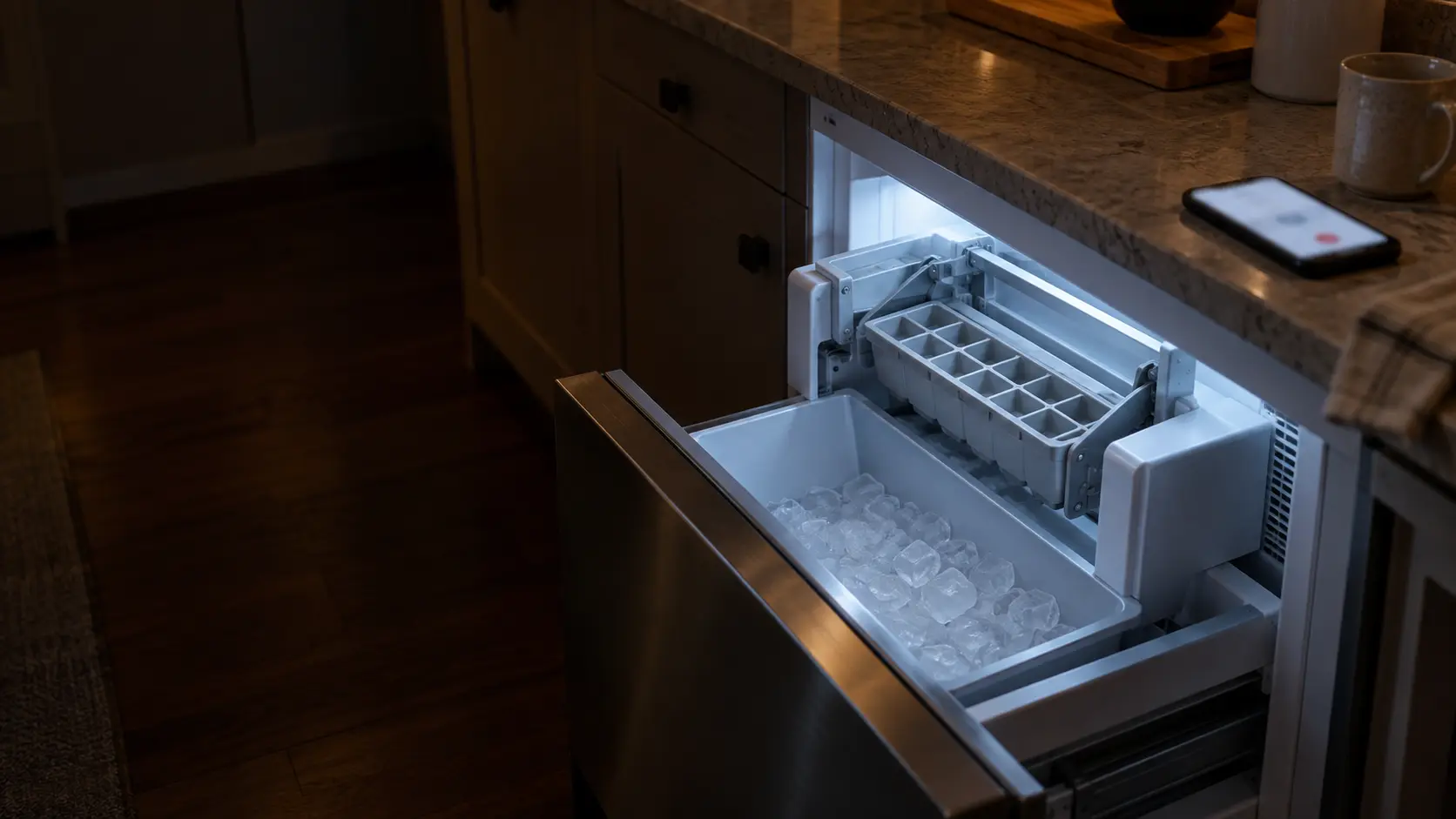
| Undercounter nugget unit | Within its first hours | Its own refrigeration system; the first two or three hours of ice are discarded |
| Countertop nugget unit | Within minutes | Water in the reservoir and a level surface |
Source: GE Appliances — Side by Side Owner's Manual and Installation Instructions (49-60198) — A new unit may take 12 to 24 hours to begin making ice; the ice maker fills when it cools to 15°F; seven cubes a cycle, about 100 to 130 in 24 hours; throw away the first few batches; discard the first six glassfuls of water; buzzing when it fills; repeated cycles on low pressure; keep the switch off until water is connected; nothing may block the feeler arm; the dispenser and ice maker will not operate without the filter or bypass plug; RO plus the built-in filter can make hollow cubes
Why the first batches go in the sink
A new line carries whatever the installation left in it: shavings from the valve, flux, sediment stirred up in the pipe and air. GE's manual tells owners to throw away the first few batches of ice to allow the water line to clear, and U-Line's nugget ice maker guide says to discard the ice made in the first two or three hours so any dirt or scale loosened from the line does not end up in a glass.
The dispenser needs the same treatment. GE asks for the first six glassfuls of water to be poured away to flush impurities from the line, which also pushes air out of a new filter and gives the ice maker a steadier fill.
A countertop nugget unit's first rinse
A countertop nugget ice maker skips the plumbing but not the rinse. GE's Opal manual asks for the machine to be rinsed with clean water for five minutes before first use, placed upright on a flat, level surface with its drip tray fitted, and filled with water that is safe to drink. It then begins producing ice within minutes and makes up to about 24 pounds a day.
Source: GE Appliances — Side by Side Owner's Manual and Installation Instructions (49-60198) — A new unit may take 12 to 24 hours to begin making ice; the ice maker fills when it cools to 15°F; seven cubes a cycle, about 100 to 130 in 24 hours; throw away the first few batches; discard the first six glassfuls of water; buzzing when it fills; repeated cycles on low pressure; keep the switch off until water is connected; nothing may block the feeler arm; the dispenser and ice maker will not operate without the filter or bypass plug; RO plus the built-in filter can make hollow cubes; U-Line — User Guide and Service Manual, UHNB115 nugget ice maker — Discard the ice produced in the first two or three hours; damage from ambient temperatures of 40°F or below is not covered; GE Appliances — Opal Nugget Ice Maker Owner's Manual (49-1000418) — Rinse with clean water for five minutes before first use; place upright on a flat, level surface; fill with potable water; begins producing ice within minutes; up to 24 pounds a day
Sounds that are normal in the first days
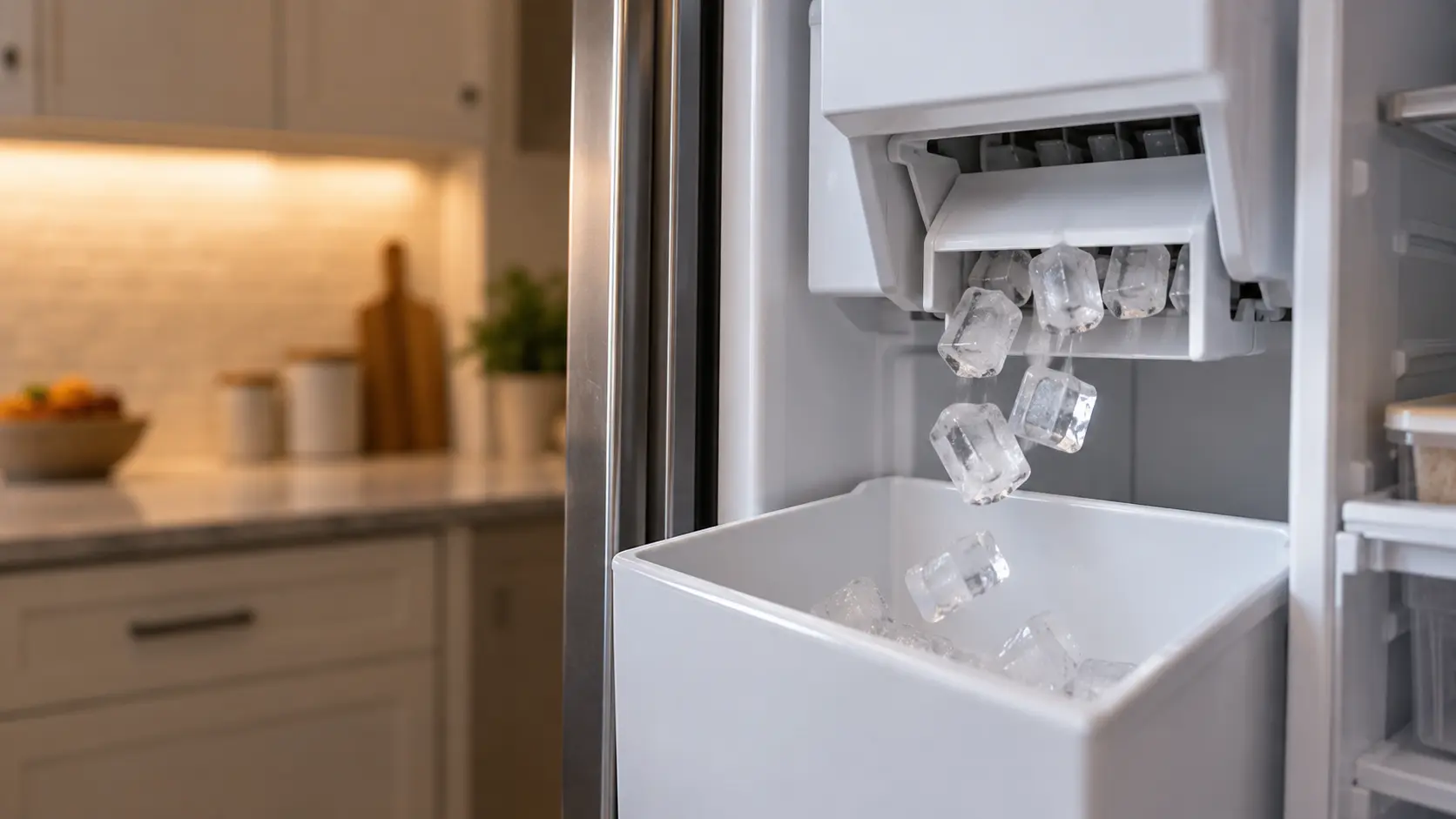
Owners who have never had a plumbed ice maker are often startled by it. GE's manual mentions a buzzing sound each time the ice maker fills, which is the inlet valve opening. The harvest that follows is a clatter of cubes dropping into the bin, and at night in a quiet kitchen it can sound like something breaking.
In homes with lower water pressure, GE notes you may hear the ice maker cycle several times to make a single batch. That is not a problem in itself, but it is a clue if the cubes also come out small.
- A short buzz or hum as the inlet valve lets water in.
- A trickle as the mold fills.
- A clunk and rattle as cubes drop into the bin.
- Gurgling on an undercounter unit as meltwater runs to its drain.
Source: GE Appliances — Side by Side Owner's Manual and Installation Instructions (49-60198) — A new unit may take 12 to 24 hours to begin making ice; the ice maker fills when it cools to 15°F; seven cubes a cycle, about 100 to 130 in 24 hours; throw away the first few batches; discard the first six glassfuls of water; buzzing when it fills; repeated cycles on low pressure; keep the switch off until water is connected; nothing may block the feeler arm; the dispenser and ice maker will not operate without the filter or bypass plug; RO plus the built-in filter can make hollow cubes
Setup details that stop the first ice
When a day has passed and the bin is still empty, the reason is more often something about the setup than a defective part. GE asks for the ice maker switch to stay off until the water is connected, and it is easy for it to stay off afterward. The feeler arm on many freezer ice makers must be down, with nothing in the bin pushing it up; GE's manual asks owners to make sure nothing interferes with the sweep of that arm.
On the water side, check that the supply valve is fully open, that the line did not kink when the unit was pushed back, and that a new filter is seated all the way.
- The ice maker switch or Ice On setting.
- The feeler arm or bin sensor, clear of obstructions.
- The supply valve fully open.
- No kink in the line behind the unit.
- The filter or bypass plug fully seated.
The filter, and the plug that replaces it
GE's manual says the dispenser and the ice maker will not operate without either the filter or its bypass plug in place. If the installers removed the filter for shipping, or the house is on reverse osmosis, one or the other has to be in place, and GE warns that running both RO and the built-in filter together can produce hollow cubes.
Where an undercounter unit was put
Built-in units care about the room they are in. U-Line warns that damage from ambient temperatures of 40°F or below is not covered, so an undercounter ice maker in an unheated bar or basement may struggle in its first winter.
Source: GE Appliances — Side by Side Owner's Manual and Installation Instructions (49-60198) — A new unit may take 12 to 24 hours to begin making ice; the ice maker fills when it cools to 15°F; seven cubes a cycle, about 100 to 130 in 24 hours; throw away the first few batches; discard the first six glassfuls of water; buzzing when it fills; repeated cycles on low pressure; keep the switch off until water is connected; nothing may block the feeler arm; the dispenser and ice maker will not operate without the filter or bypass plug; RO plus the built-in filter can make hollow cubes; U-Line — User Guide and Service Manual, UHNB115 nugget ice maker — Discard the ice produced in the first two or three hours; damage from ambient temperatures of 40°F or below is not covered