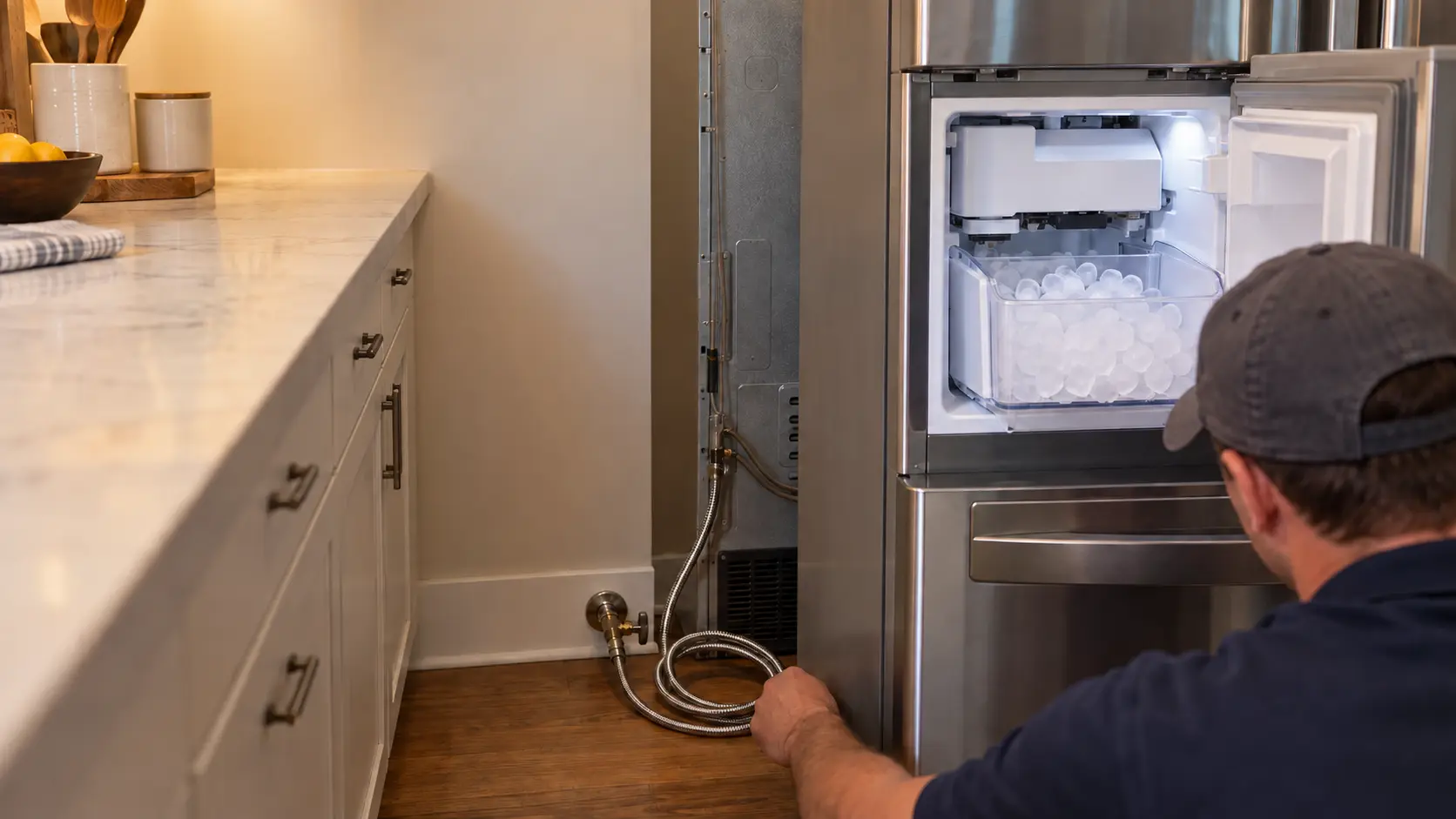
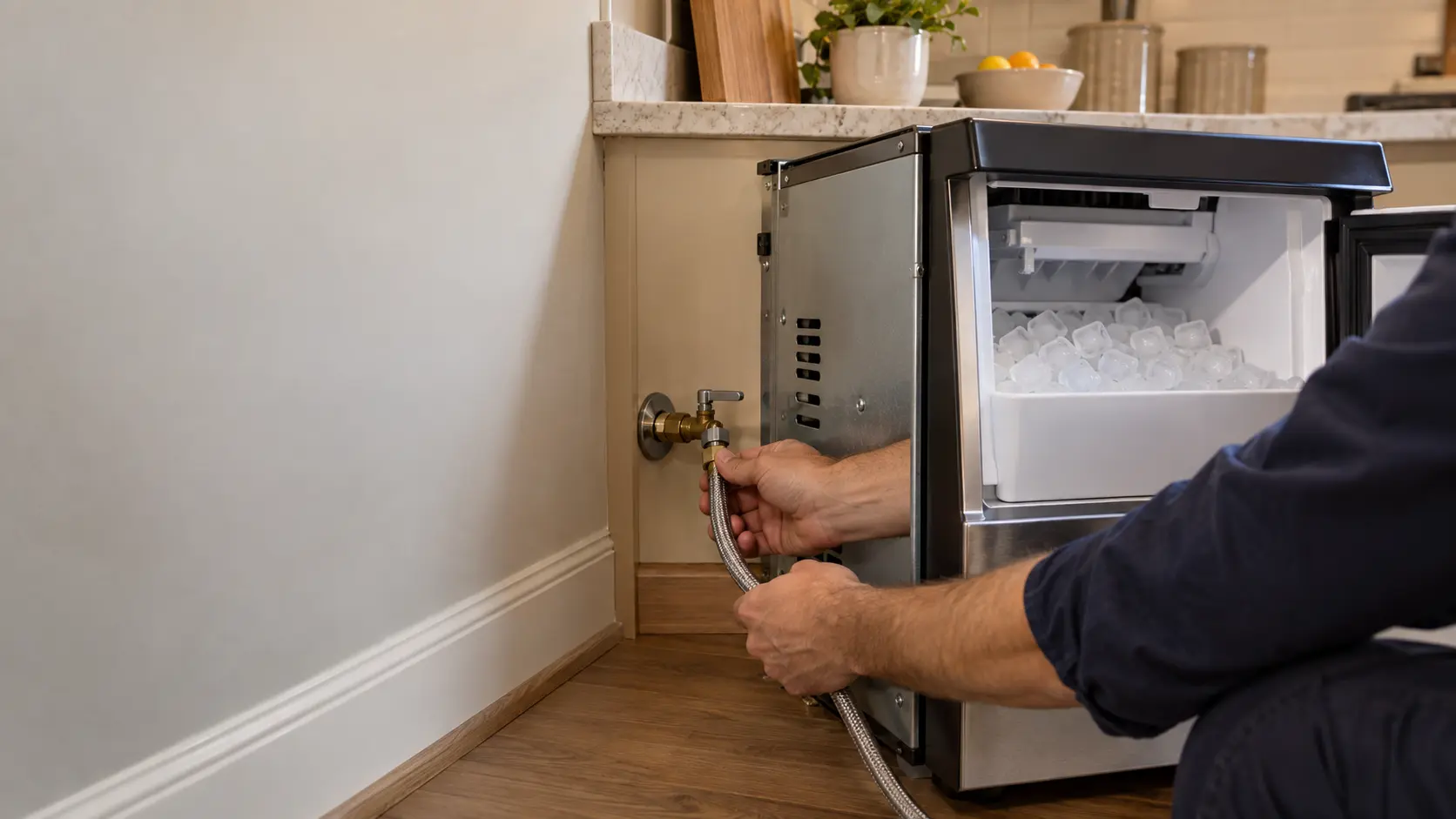
Why an unattended ice maker is a risk
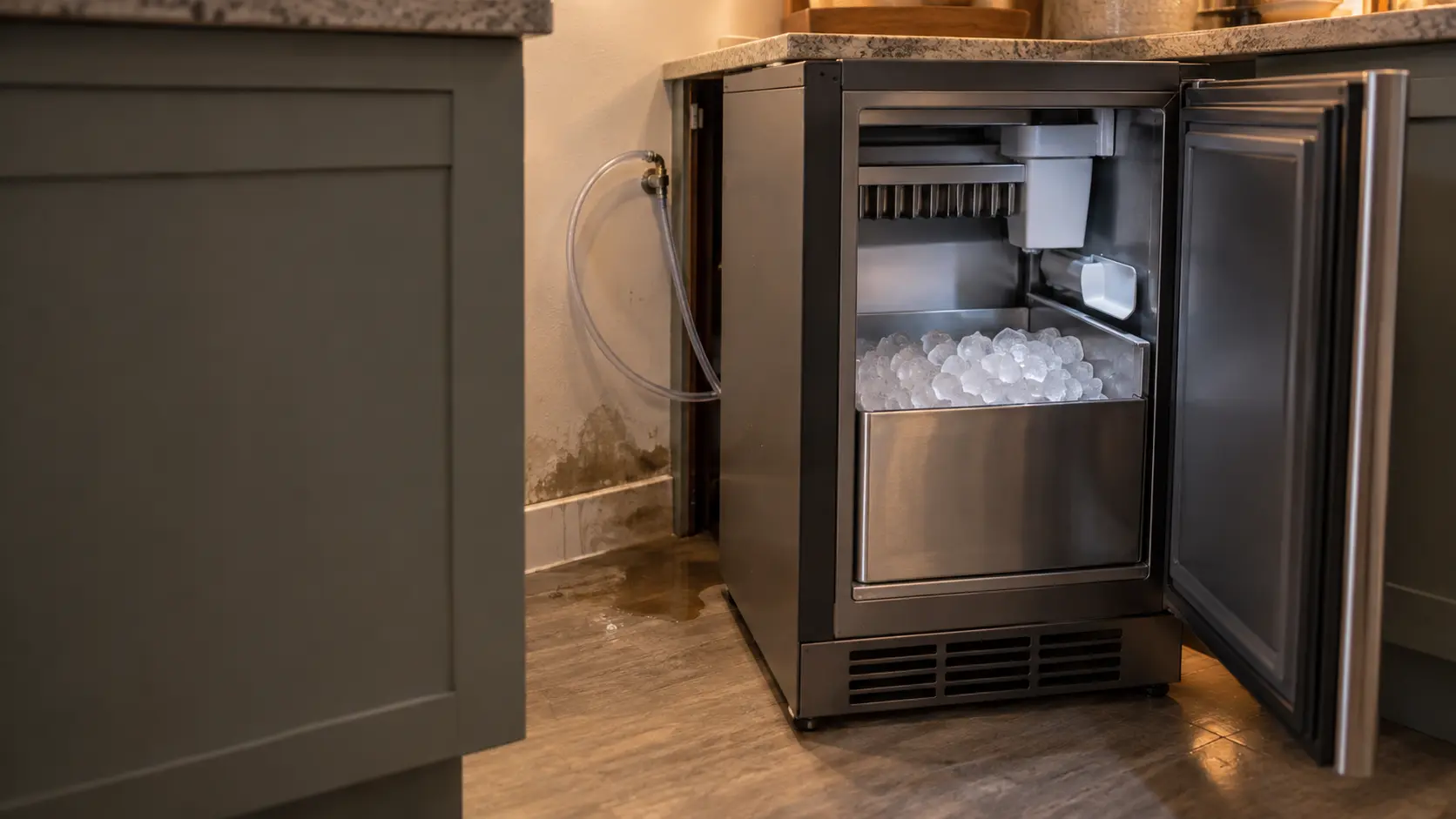
An ice maker in a vacation home fails the same way as one in a full-time house. The difference is time. When a supply line splits or an undercounter drain backs up in a lived-in kitchen, someone sees the puddle within hours. In a house that is visited once a month, the water runs until the next visit, through the floor and into whatever is below.
The ice itself suffers too. Cubes left in a bin for weeks shrink, cloud and take on the smell of the freezer, and a power outage while nobody is there can thaw and refreeze the whole load without leaving any sign except a solid block. Closing the ice maker down between visits avoids both problems.
- A supply line under pressure with nobody home to notice a drip.
- A bin of ice going stale or thawing unseen during an outage.
- Water trapped in the valve, fill tube, pump or reservoir when the house gets cold.
- Standing water in an undercounter unit's trough or a countertop reservoir.
Leaving for a few weeks with the heat on
If the house stays heated and the appliance stays running to keep the freezer cold, the job is simple. GE's owner's manual says that for long vacations or absences the ice maker should be switched off and the water supply to the unit shut off. Empty the bin first, into the sink, so the next visit starts with fresh cubes.
A door ice maker switched off keeps its compartment cold but makes nothing, and the dispenser will not refill it with water from a closed valve. On a freezer ice maker with a wire arm, lift the arm until it clicks into the up position; on units with a panel, use the Ice Off setting and confirm the indicator.
Closing the main as well
Many owners of second homes close the house's main water shutoff whenever they leave. That protects every line at once, including the ice maker's, and removes the question of whether a small valve under the sink really seals. The ice maker still needs to be switched off, so it is not left calling for water that cannot arrive.
Source: GE Appliances — Side by Side Owner's Manual and Installation Instructions (49-60198) — For long vacations or absences, set the ice maker switch off and shut off the water supply; if the temperature can drop below freezing, have a qualified servicer drain the water supply system; do not install ice maker tubing where temperatures fall below freezing

Closing up for a winter without heat
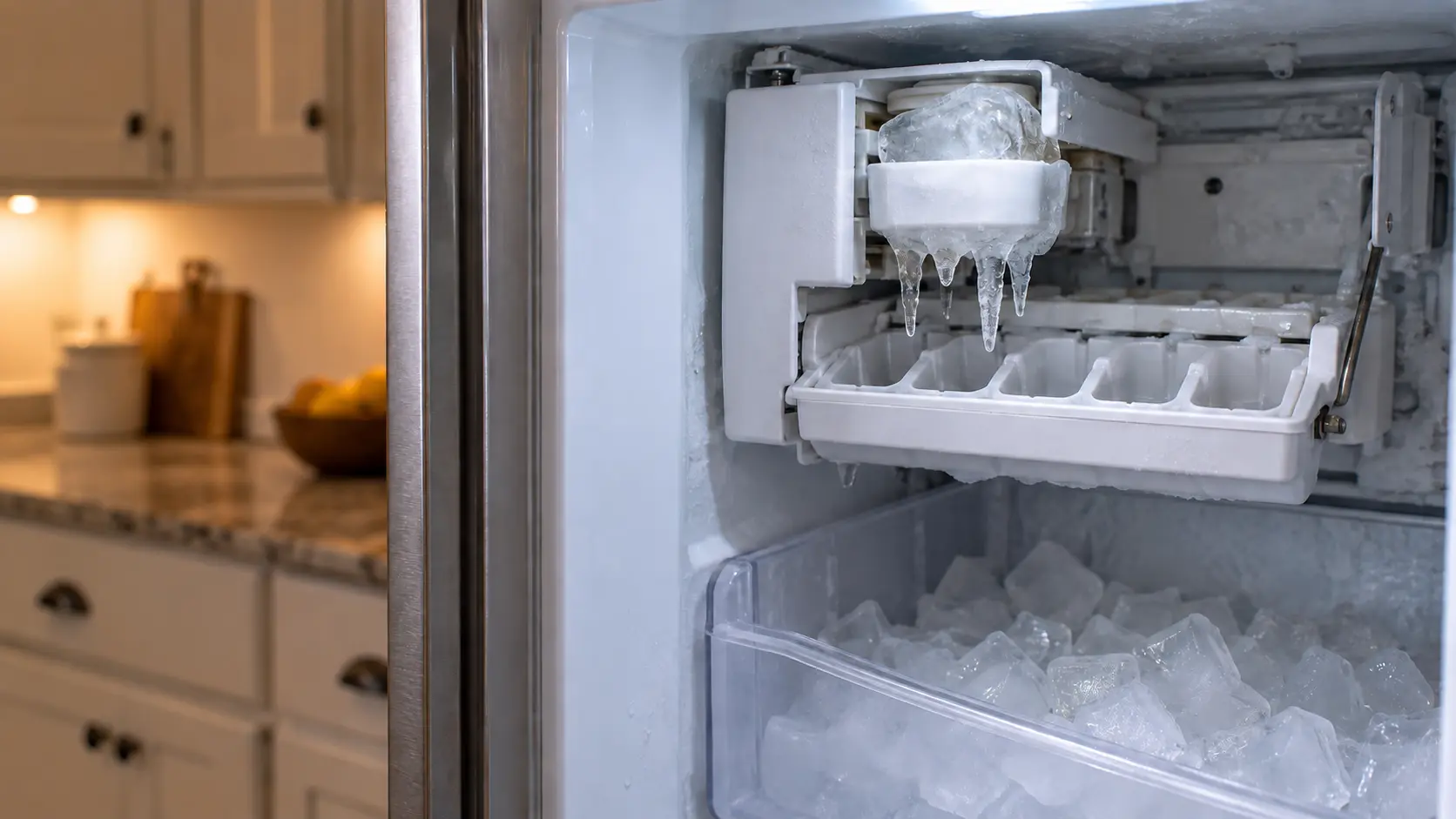
A house that may fall below freezing is a different job, because water left anywhere in the system can freeze, expand and crack a valve or a line. GE says ice maker tubing should never be run where temperatures fall below freezing, and its manual adds that where the temperature can drop below freezing, a qualified servicer should drain the water supply system on models that need it. That means the inlet valve, the lines inside the cabinet and the reservoir or filter housing, not just the supply tube behind the unit.
Plan it before the last visit of the season, not on the day you leave.
Undercounter clear-ice and nugget units
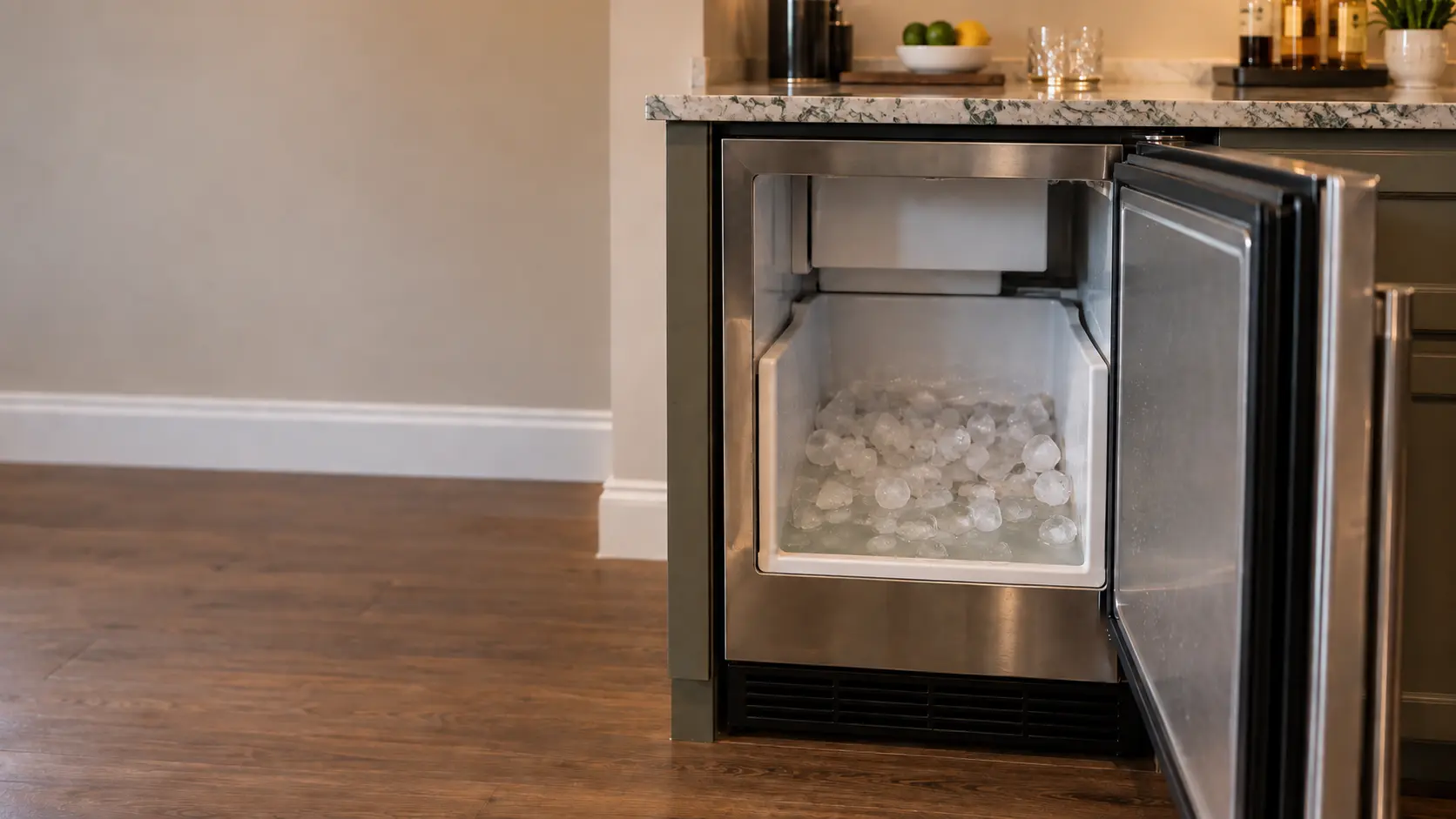
Built-in undercounter units have their own shutdown procedure. U-Line's guide lists it for extended non-use: remove the contents, unplug the unit and leave it unplugged, turn off the water supply, let any ice on the evaporator thaw, clean and dry the interior, disconnect the water and drain lines so all water is out of them, and leave the door open at least 2 inches. If the unit will be exposed to 40°F or less, those steps are required, and on clear-ice models the drain pump is removed and turned over to empty its reservoir. U-Line also says never to put antifreeze in the unit.
Countertop nugget ice makers
A countertop unit is the easiest to protect: drain it, dry it and put it away. GE's Opal manual recommends draining whenever the machine is stored, moved or turned off for more than a few days, such as a vacation. Leave the reservoir and bin open to air until they are completely dry before packing it.
Source: GE Appliances — Side by Side Owner's Manual and Installation Instructions (49-60198) — For long vacations or absences, set the ice maker switch off and shut off the water supply; if the temperature can drop below freezing, have a qualified servicer drain the water supply system; do not install ice maker tubing where temperatures fall below freezing; U-Line — User Guide and Service Manual, UHNB115 nugget ice maker — Extended non-use steps: remove contents, unplug, water off, thaw evaporator ice, clean and dry, disconnect and empty water and drain lines, door open at least 2 inches; required at 40°F or less, with clear-ice drain pumps removed and emptied; do not put anti-freeze in the unit; GE Appliances — Opal Nugget Ice Maker Owner's Manual (49-1000418) — Drain the Opal when it is put away or relocated, or turned off for more than a few days such as a vacation
Opening up the house again
Start with the house, not the ice maker. Open the main, then run the kitchen tap until the water comes out clear and cold; water that sat in pipes for weeks is flushed out of the house before it reaches the appliance. Then open the ice maker's supply valve slowly and look at the fitting behind the unit and the floor under it for a few minutes.
Switch the ice maker back on and treat the next batches as you would after an installation: they go in the sink. Filters in second homes often outlive their date on the calendar while sitting unused, so check the fitted date and change a cartridge that is overdue before the first batch you keep.
- Open the main and flush the kitchen tap.
- Open the ice maker's valve slowly and watch the fittings.
- Check the filter date and change it if it is due.
- Switch the ice maker on and discard the first batches.
- On an undercounter unit, reconnect the drain and confirm it drains before loading ice.
Protection between visits
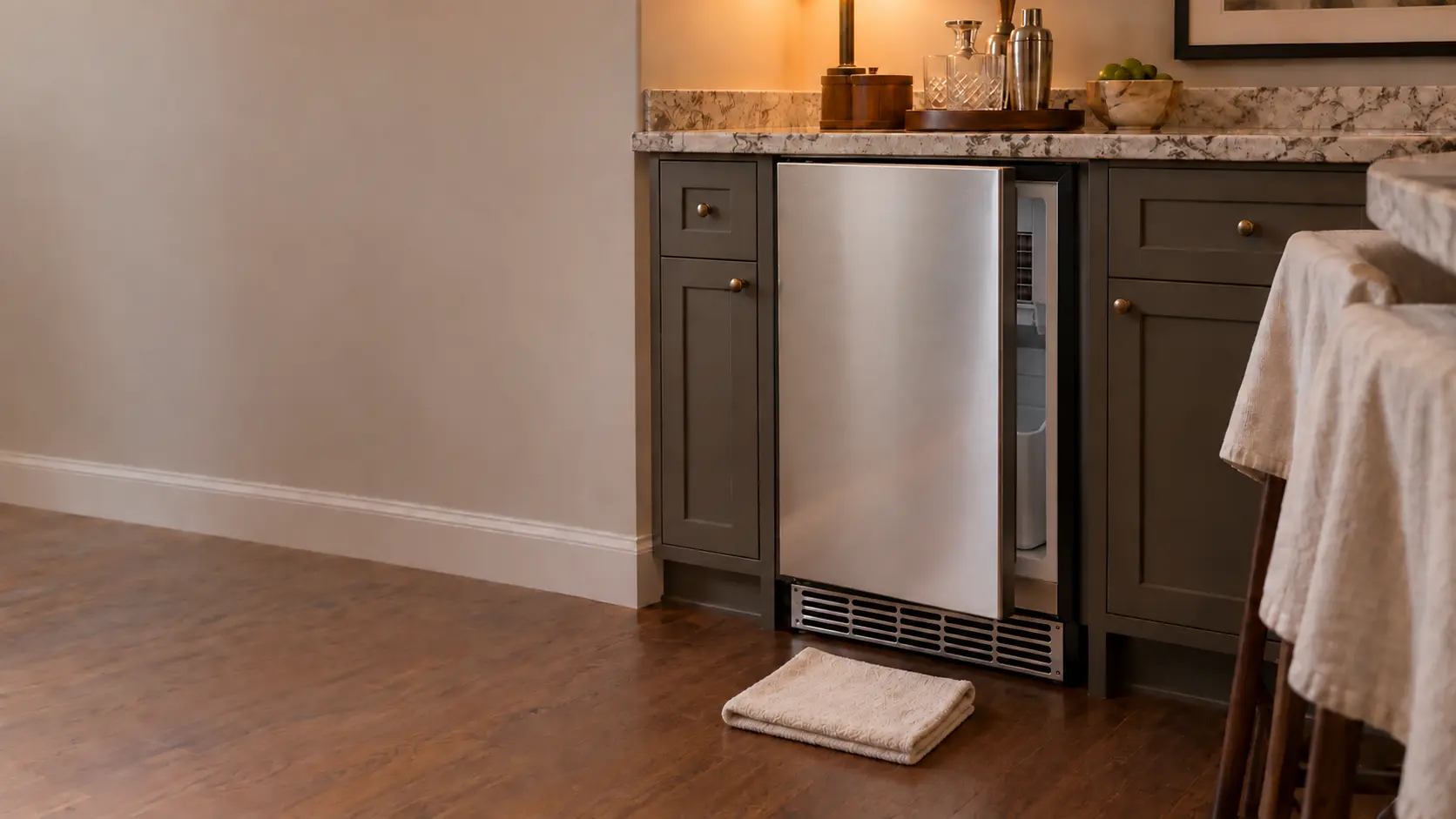
A few inexpensive precautions buy early warning. A battery water sensor on the floor beside the unit and one under the sink valve will sound, or alert a phone on a connected model, the moment water appears. A neighbor or property manager with a key and instructions to look behind the kitchen appliances on each visit is worth as much.
If the vacation home has an undercounter ice maker in an outdoor bar or a porch, remember that manufacturers write their temperature limits for indoor rooms. That installation needs the full winter shutdown well before the first frost, not after it.