Why the ice maker is on the notice at all
Utilities issue a boil water notice when the water in the mains may carry germs: after a main break, a loss of pressure or a failed test. Any appliance plumbed into that water inherits the problem, and an ice maker is the one that stores the result for weeks, which is why getting an ice maker after a boil water advisory back into safe use takes more steps than running the tap. Door, freezer and undercounter ice makers all draw from the same pipe as the kitchen tap.
Freezing does not make water safe. Cold slows germs down; it does not kill them, and a cube made on the morning of the main break can still be in the bin when the notice ends. That is why CDC's household questions for boil water advisories say plainly not to use ice from ice trays, ice dispensers or ice makers, and to throw out all ice made with tap water.
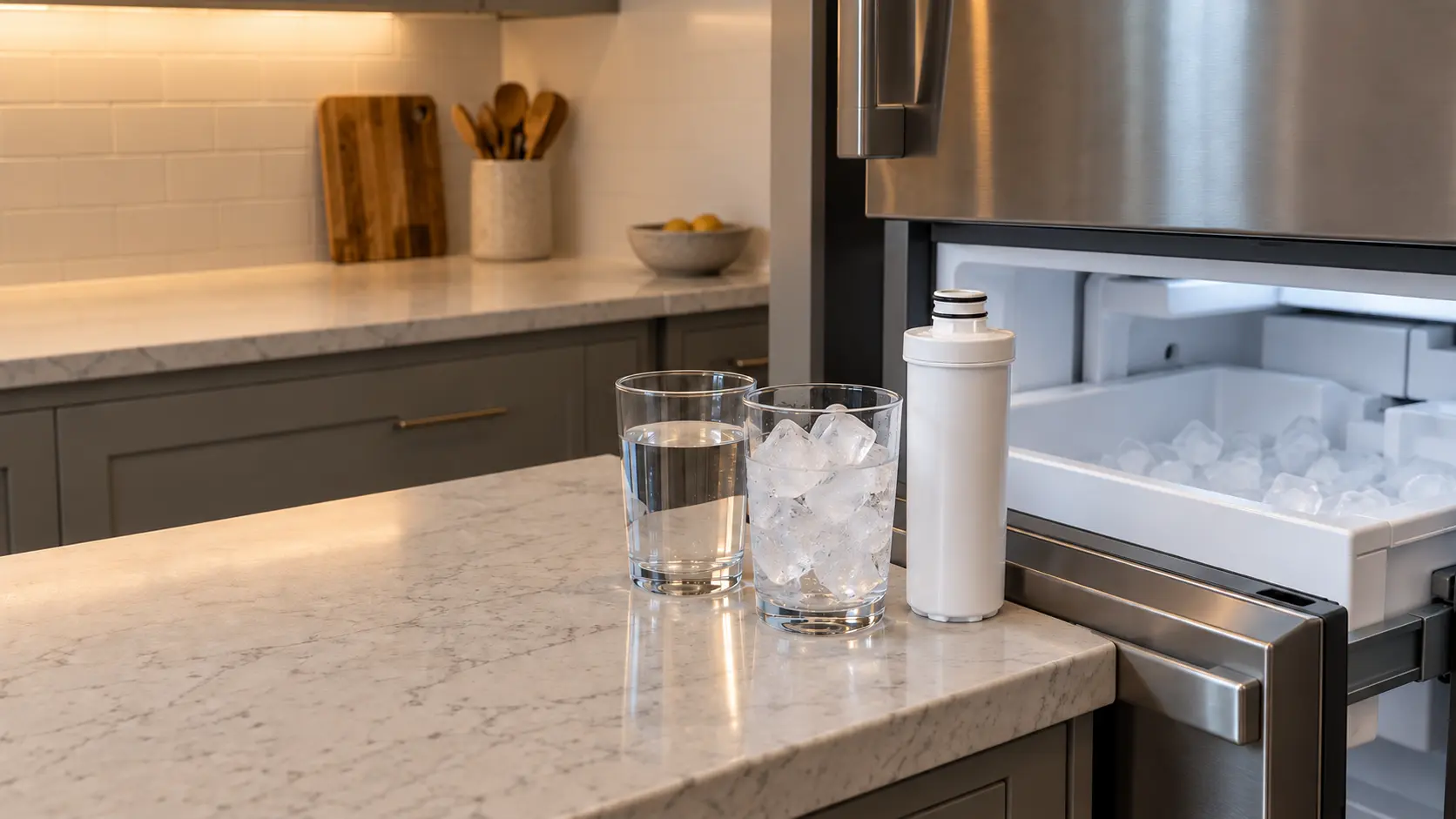
- A door ice maker and its water dispenser, which share one supply and usually one filter.
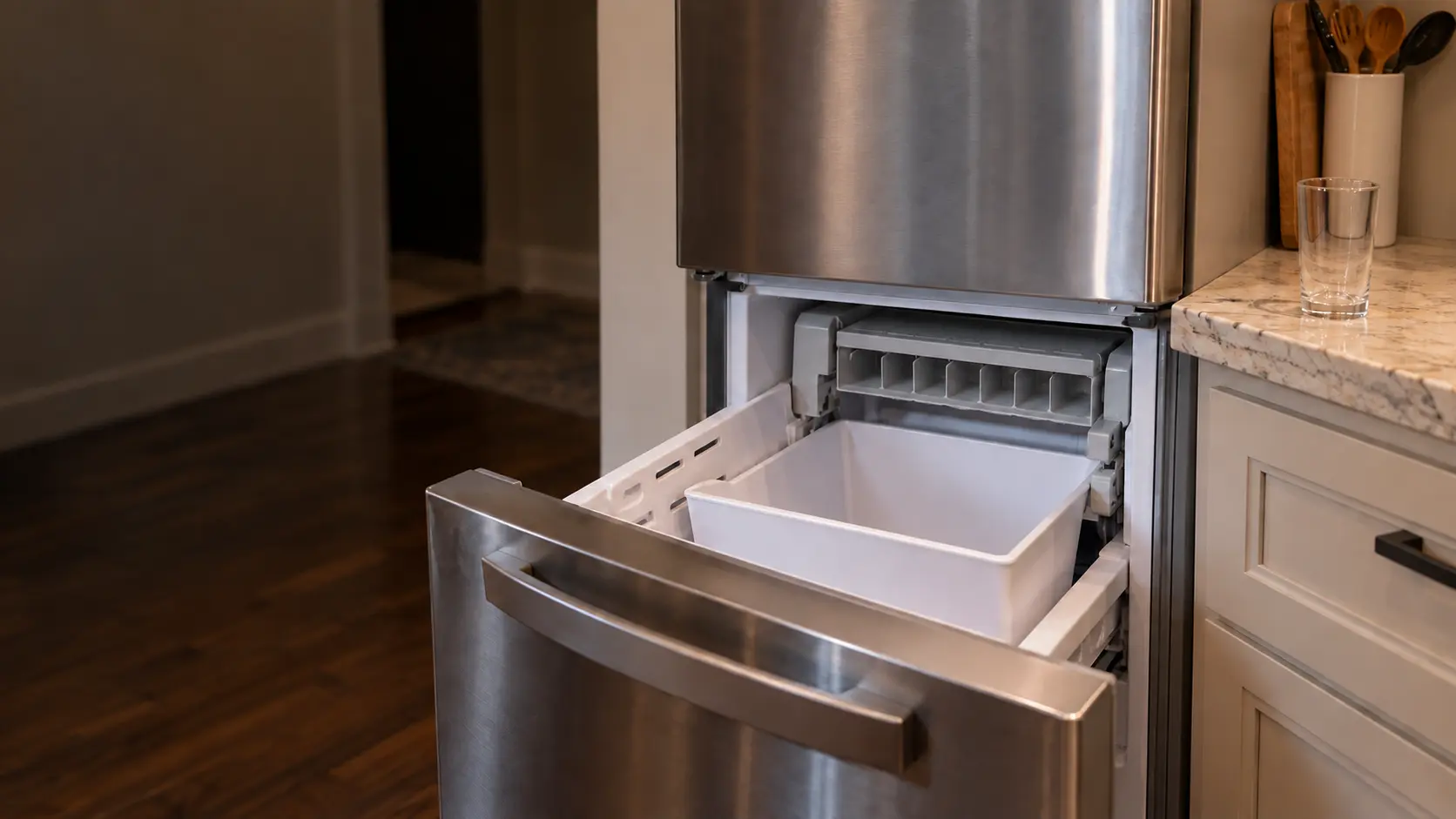
- A freezer ice maker, including any ice already sitting in the bin under it.
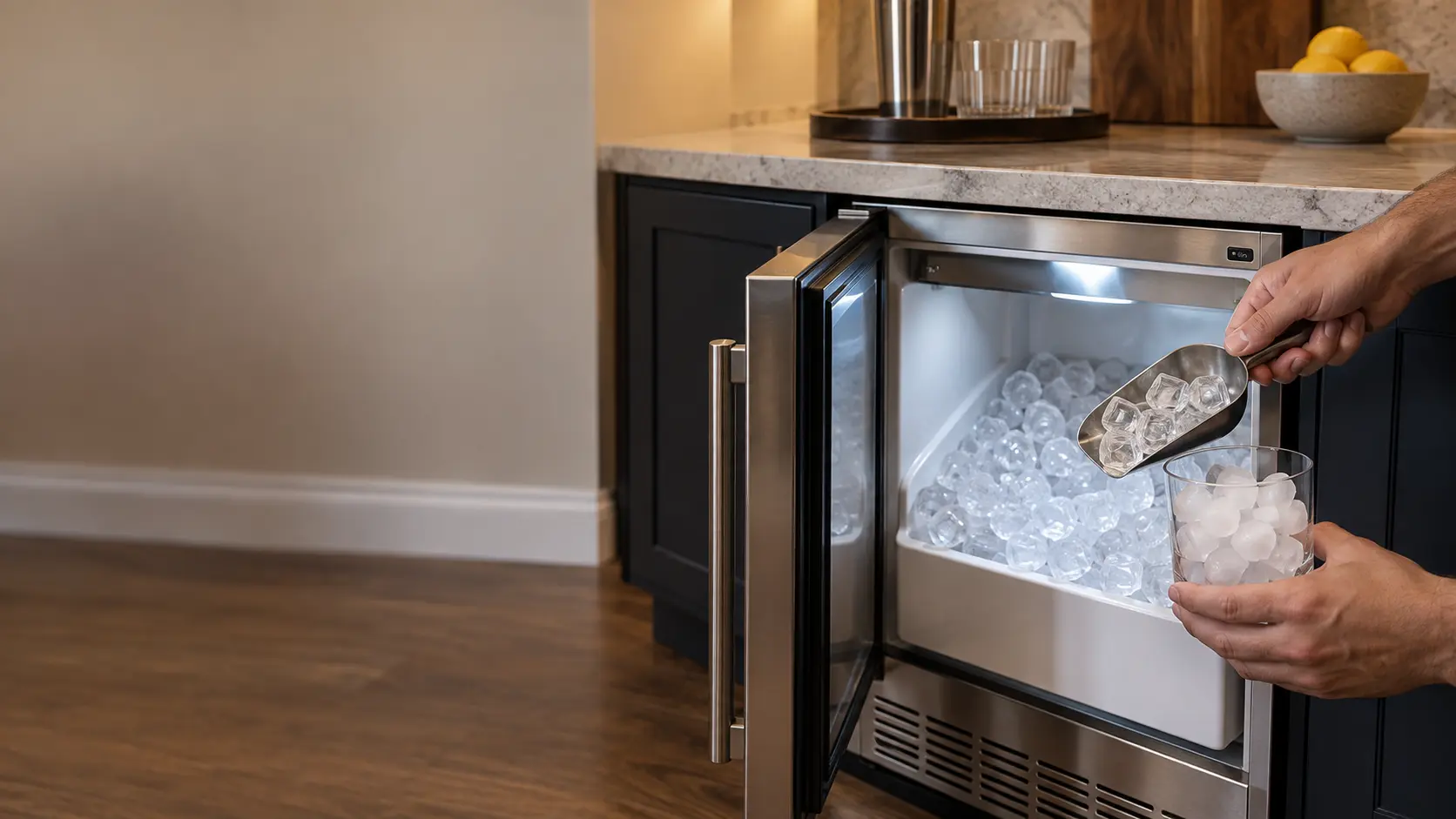
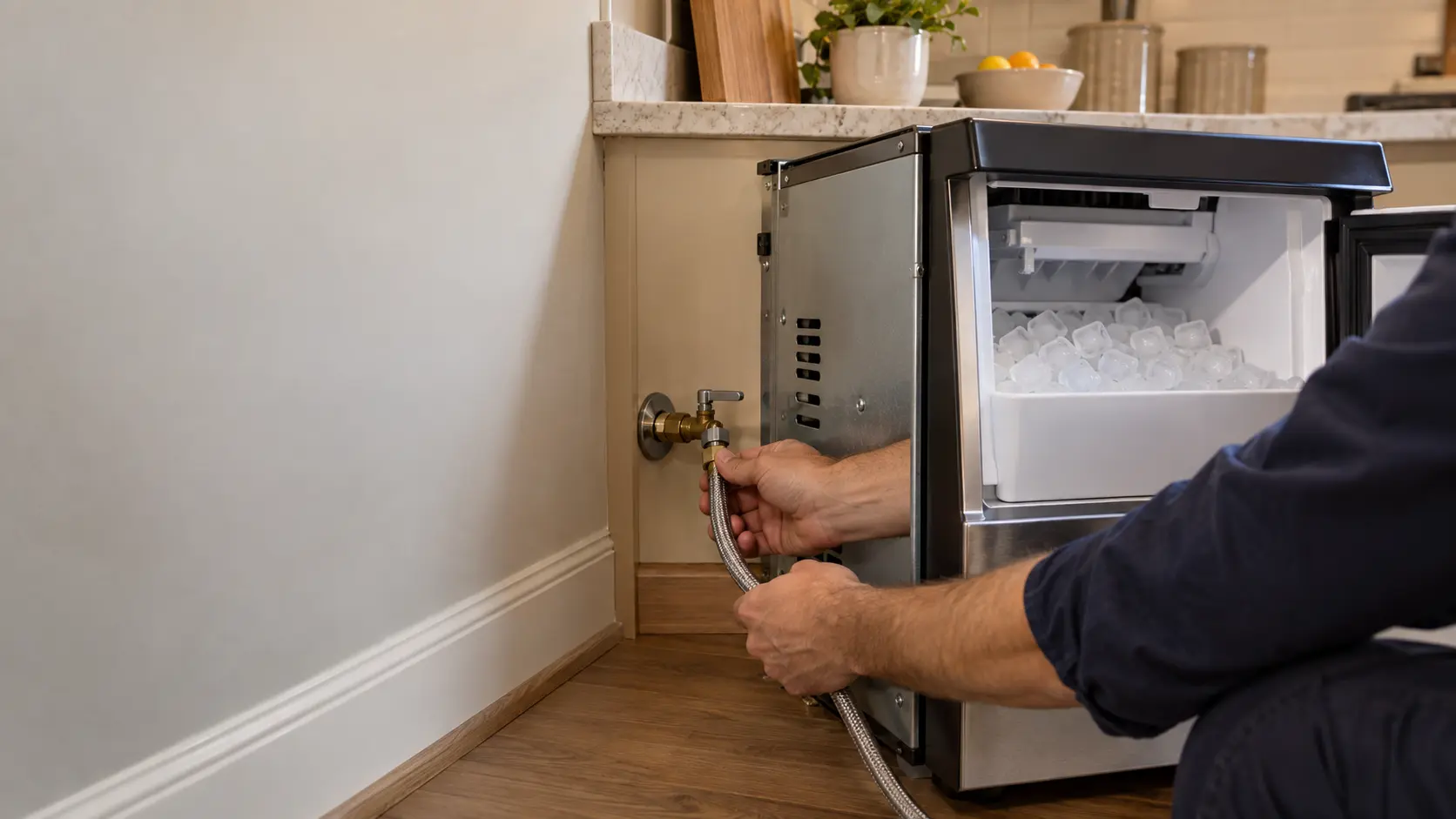
- An undercounter clear-ice or nugget unit plumbed to the house supply.
- Hand-filled trays, if they were filled from the tap before the notice.
Boil, do-not-drink and do-not-use are different notices
CDC describes three kinds of drinking water advisory. A boil notice means boiling makes the water safe. A do-not-drink notice usually means a chemical or toxin, which boiling will not remove, and a do-not-use notice means any contact with the water could be dangerous. The ice advice in this guide is the minimum for all three; under the stricter two, read the utility's own instructions before running any water through the machine.
Source: CDC — Drinking Water Advisory Communication Toolbox (2016) — Do not use ice from trays, dispensers or ice makers; throw out all ice made with tap water; household filters do not remove all germs; after an advisory flush faucets from the highest floor, flush the dispenser, throw away all ice, fill and discard one more container, clean it and replace the filter; flush, clean and sanitize machines with water connections; regenerate softeners and change whole-house cartridges; raised chlorine and discolored water; CDC — Drinking Water Advisories: An Overview — Boil water, do-not-drink and do-not-use advisories; do not use water or ice from appliances connected to the water line
What to do while the notice is in force
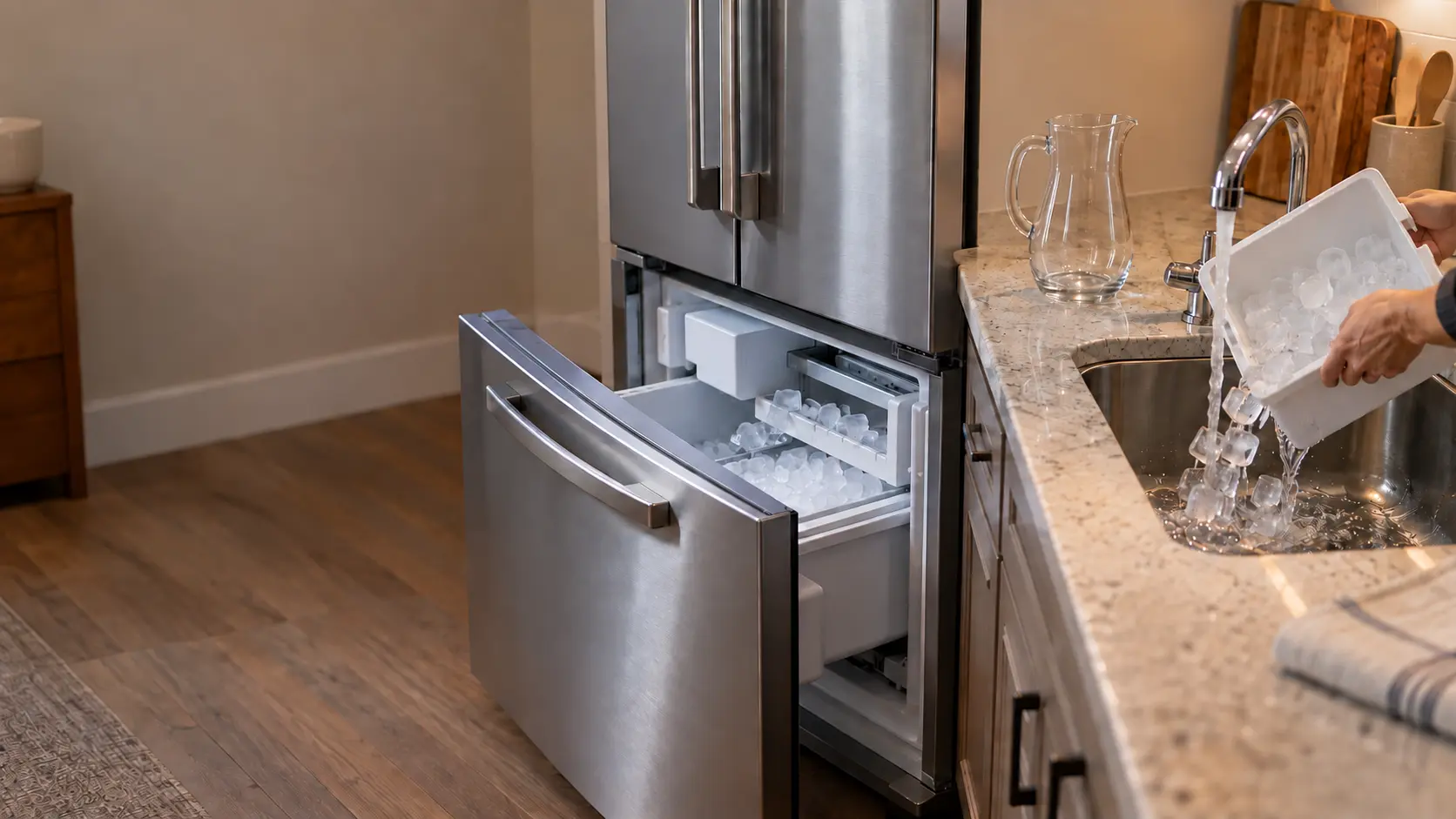
Turn the ice maker off first, before you empty anything, so it does not refill the bin you are clearing. On most door and freezer ice makers that is a switch or a wire arm raised until it clicks, or an Ice Off setting on the control panel.
Empty the bin into the sink, not into a cooler or a drinks bucket. If you need ice during the notice, make it in trays with water that has been brought to a full rolling boil for one minute and allowed to cool, or buy bagged ice. CDC's page on crypto at home adds that tap water still needs boiling even if it has passed through a home filter or a filter pitcher, which includes the cartridge inside the appliance.
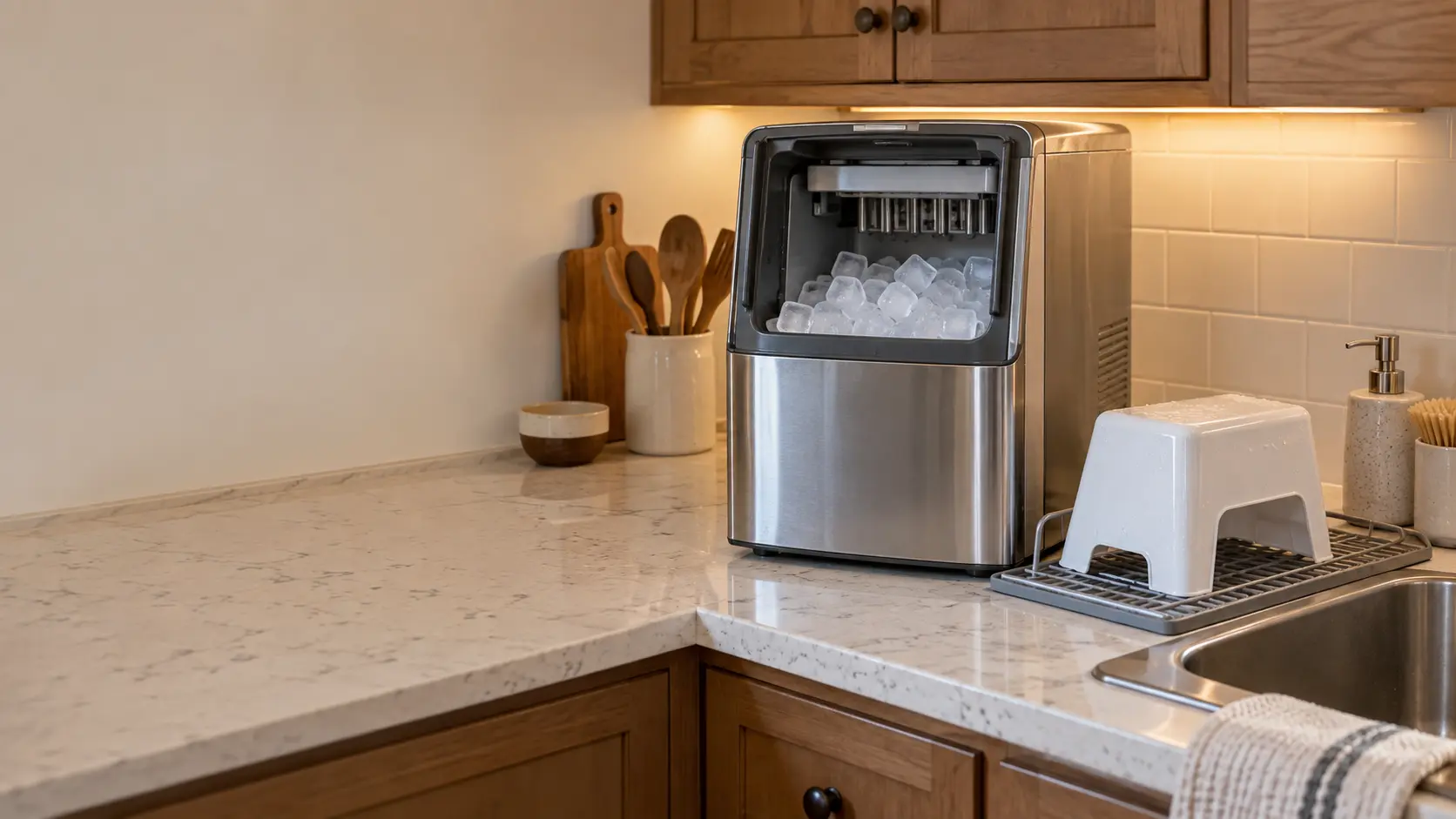
A countertop nugget maker during the notice
A countertop nugget ice maker has no line to the tap, so it is only as safe as the water poured into its reservoir. GE's owner's manual for the Opal asks for potable water, meaning water that is safe to drink, so fill it with bottled or boiled-and-cooled water for the duration. If it was topped up from the tap before the notice arrived, drain it, discard the nuggets and start over.
Source: CDC — Preventing Crypto at Home During a Boil Water Advisory — Bring water to a full rolling boil for 1 minute (3 minutes above 6,500 feet); boil tap water even if it is filtered; GE Appliances — Opal Nugget Ice Maker Owner's Manual (49-1000418) — Fill the reservoir with potable (safe to drink) water
Restarting the door and freezer ice maker once it is lifted
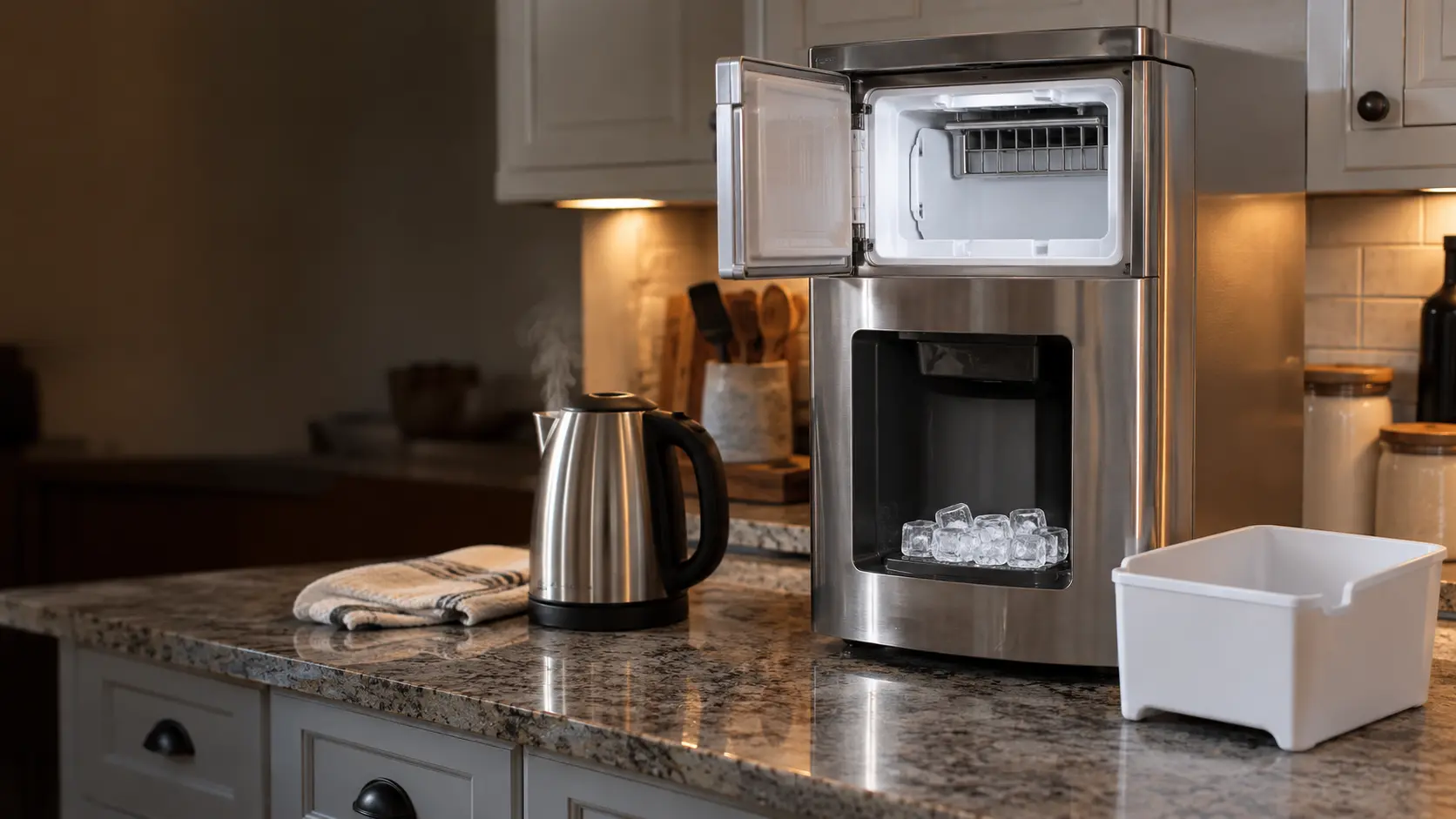
When the utility lifts the notice, flush the house before the appliance. CDC's after-advisory template has people run the cold and hot taps, starting at the highest faucet in the home and working down one floor at a time, for the number of minutes the local utility gives. Only then is the pipe feeding the ice maker carrying the cleared water.
CDC's own checklist for an ice maker and water dispenser connected to a filter then runs in five steps: flush the dispenser, throw away all ice, let the container fill completely one more time and throw that ice away too, clean the container, and replace the filter. The second full bin is the part people skip, and it is the one that clears water that was standing in the valve and fill tube when the notice began.
How long to run the dispenser
The CDC template leaves the number of minutes blank for the utility to fill in, because it depends on the local system. Use the figure in your utility's lifting notice. The new filter adds its own flush on top: GE's manual asks for about 3 minutes of dispensing, roughly one and a half gallons, after a fresh cartridge goes in, to clear the system and stop sputtering.
Source: CDC — Drinking Water Advisory Communication Toolbox (2016) — Do not use ice from trays, dispensers or ice makers; throw out all ice made with tap water; household filters do not remove all germs; after an advisory flush faucets from the highest floor, flush the dispenser, throw away all ice, fill and discard one more container, clean it and replace the filter; flush, clean and sanitize machines with water connections; regenerate softeners and change whole-house cartridges; raised chlorine and discolored water; GE Appliances — Side by Side Owner's Manual and Installation Instructions (49-60198) — Run water from the dispenser for 3 minutes (about one and a half gallons) after installing a new cartridge to clear the system and prevent sputtering
Undercounter clear-ice and nugget units after the notice
A built-in undercounter unit holds more water than a door ice maker: a reservoir, a pump, a water trough or an auger tube, and often a drain pump. The CDC toolbox tells businesses to flush, clean and sanitize every machine with a water connection according to its manufacturer's instructions, and the same logic applies to a residential unit in a home bar. U-Line's user guide for its nugget models describes the automatic cleaning cycle as something that removes scale and sanitizes the machine, which makes it the natural step after the second batch of ice goes down the drain.
On a unit with a separate in-line filter, change the cartridge before the cleaning cycle, not after, so the cycle rinses through a fresh one.
Softeners and whole-house filters come first
Anything upstream of the ice maker can hand contaminated water back to it. CDC's after-advisory questions say a water softener may need a regeneration cycle and a whole-house treatment unit needs new cartridges, following each unit's own manual. Do those before the ice maker's second batch, or the batch is made from water that went through the old cartridge.
Source: CDC — Drinking Water Advisory Communication Toolbox (2016) — Do not use ice from trays, dispensers or ice makers; throw out all ice made with tap water; household filters do not remove all germs; after an advisory flush faucets from the highest floor, flush the dispenser, throw away all ice, fill and discard one more container, clean it and replace the filter; flush, clean and sanitize machines with water connections; regenerate softeners and change whole-house cartridges; raised chlorine and discolored water; U-Line — User Guide and Service Manual, UHNB115 nugget ice maker — The cleaning cycle removes lime scale and mineral deposits and sanitizes the machine
When the ice still seems wrong after flushing
A strong chlorine smell in the first ice after a notice is common: CDC notes utilities often raise chlorine levels to disinfect the pipes, and the smell fades as normal water returns. Discolored water is different. CDC's advice is to run the taps until the water is clear, and cubes made during that time go straight in the sink.
If the ice maker fills slowly, spits air or makes hollow cubes after the new filter goes in, the cause is often air in the line or a cartridge not fully seated, which clears with more dispensing. If it does not make ice at all after a day, the notice was the timing, not the cause, and the machine needs checking like any other that has stopped.
- Chlorine smell that fades within a few batches: normal after a notice.
- Brown or cloudy water at the dispenser: keep flushing and discard the ice.
- Sputtering at the dispenser: air in the line from the new cartridge.
- No ice after 24 hours: a supply or ice maker problem to diagnose.
Source: CDC — Drinking Water Advisory Communication Toolbox (2016) — Do not use ice from trays, dispensers or ice makers; throw out all ice made with tap water; household filters do not remove all germs; after an advisory flush faucets from the highest floor, flush the dispenser, throw away all ice, fill and discard one more container, clean it and replace the filter; flush, clean and sanitize machines with water connections; regenerate softeners and change whole-house cartridges; raised chlorine and discolored water; GE Appliances — Side by Side Owner's Manual and Installation Instructions (49-60198) — Run water from the dispenser for 3 minutes (about one and a half gallons) after installing a new cartridge to clear the system and prevent sputtering