The first minute: the plug stays where it is
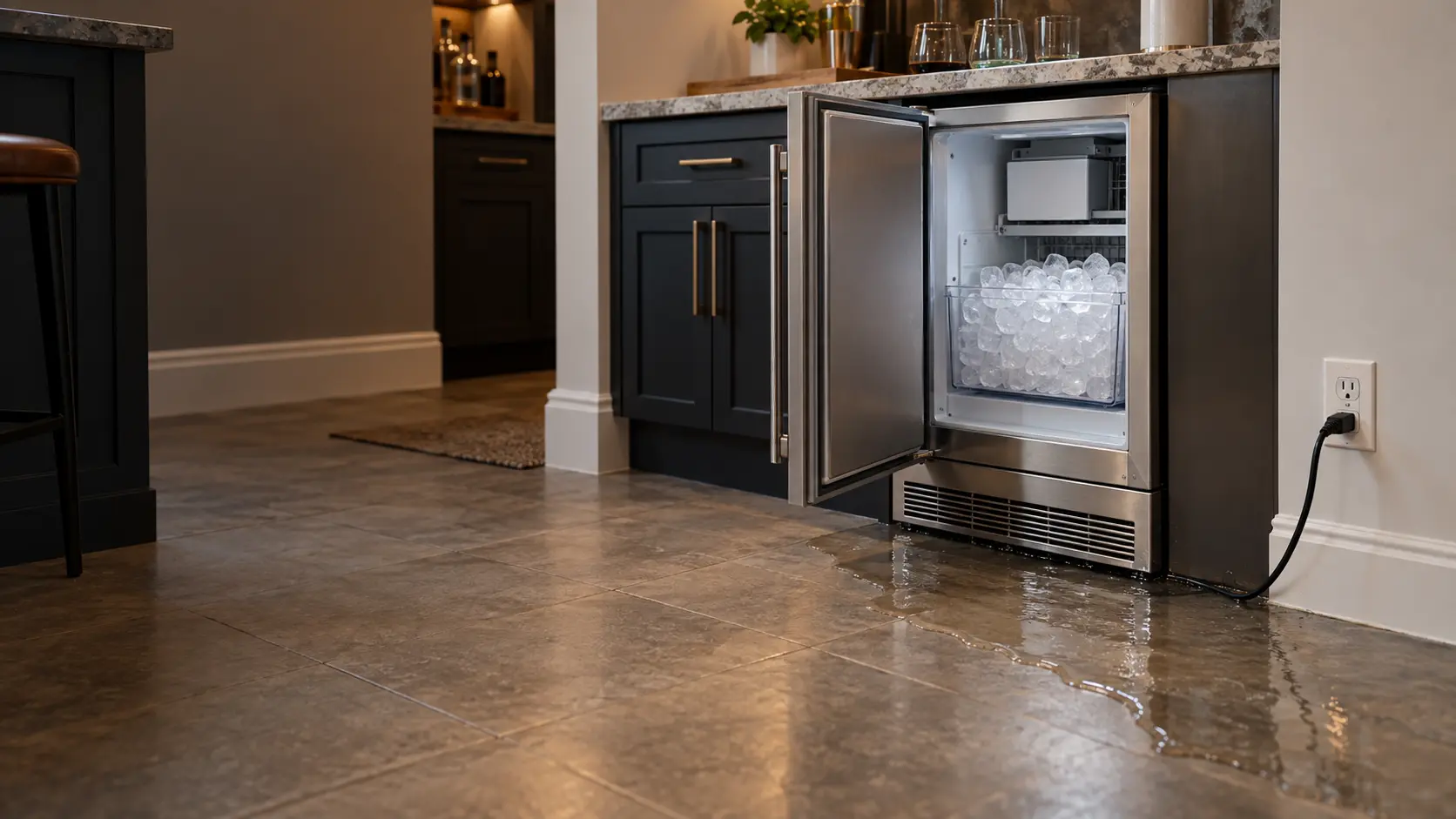
The instinct is to pull the cord out of the wall. Do not do it while the outlet, the cord or the floor under your feet is wet. Ready.gov's flood guidance says the same in one line: nothing electrical gets touched while it is wet or while you are standing in water. A plug pulled from a damp socket can arc, and a hand on a metal cabinet door while your feet are in a puddle closes the circuit through you.
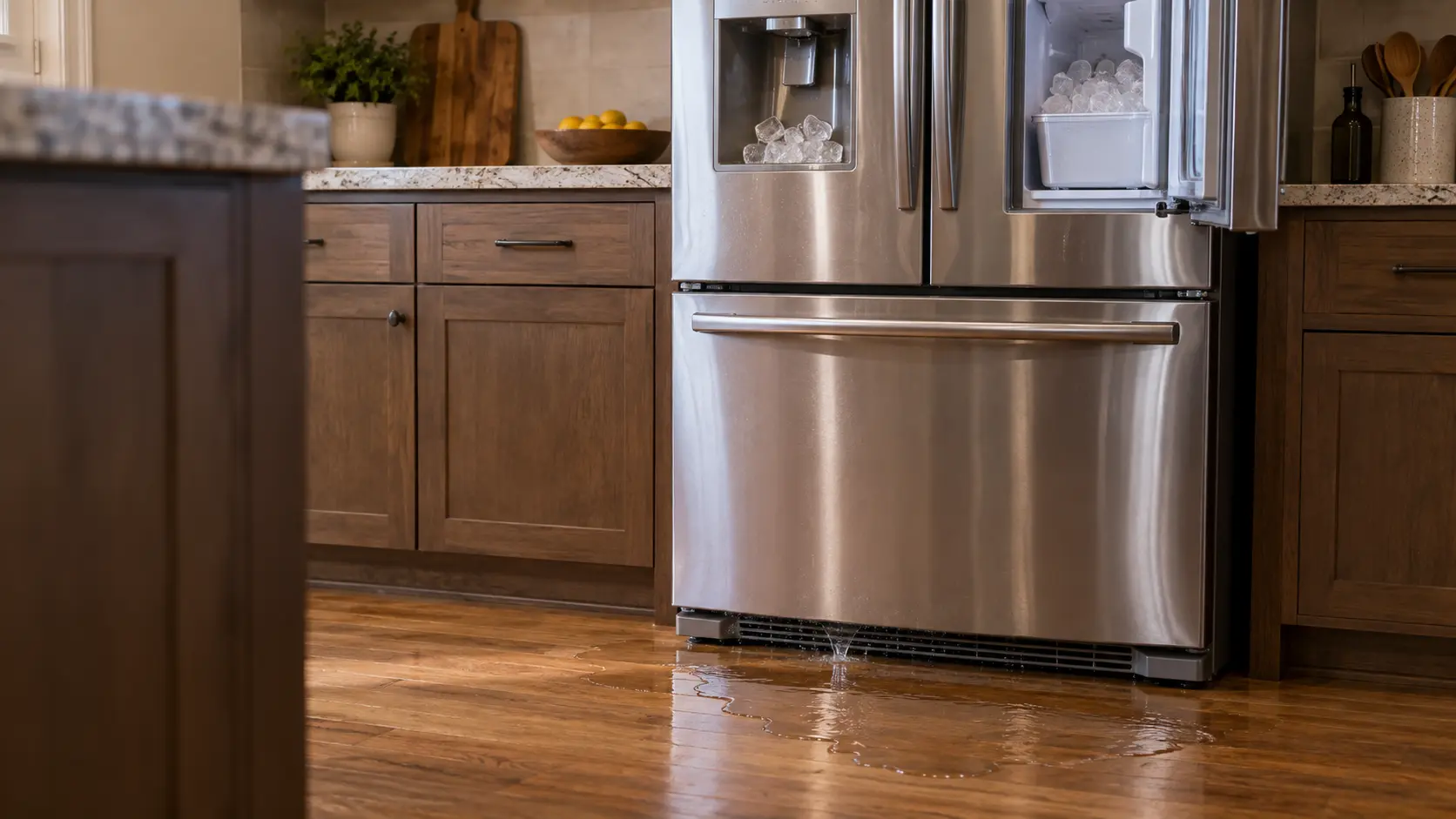
Instead, with an ice maker leaking near an outlet, look at where the water is going. On a hard floor it spreads fast and thin toward the lowest wall, and the outlet behind a French door model or under an undercounter unit is usually at baseboard height. If the water has not reached the outlet or the cord yet, you have time to stop the supply first.
- Keep children and pets out of the room.
- Do not step into the water to reach the plug or the valve.
- Do not unplug anything that is wet or sitting in water.
- Throw towels down only on the dry side of the spill to slow it.
Source: Ready.gov — Floods — Do not touch electrical equipment if it is wet or if you are standing in water; turn off the electricity to prevent electric shock if it is safe to do so
Stopping the water at the valve or the main
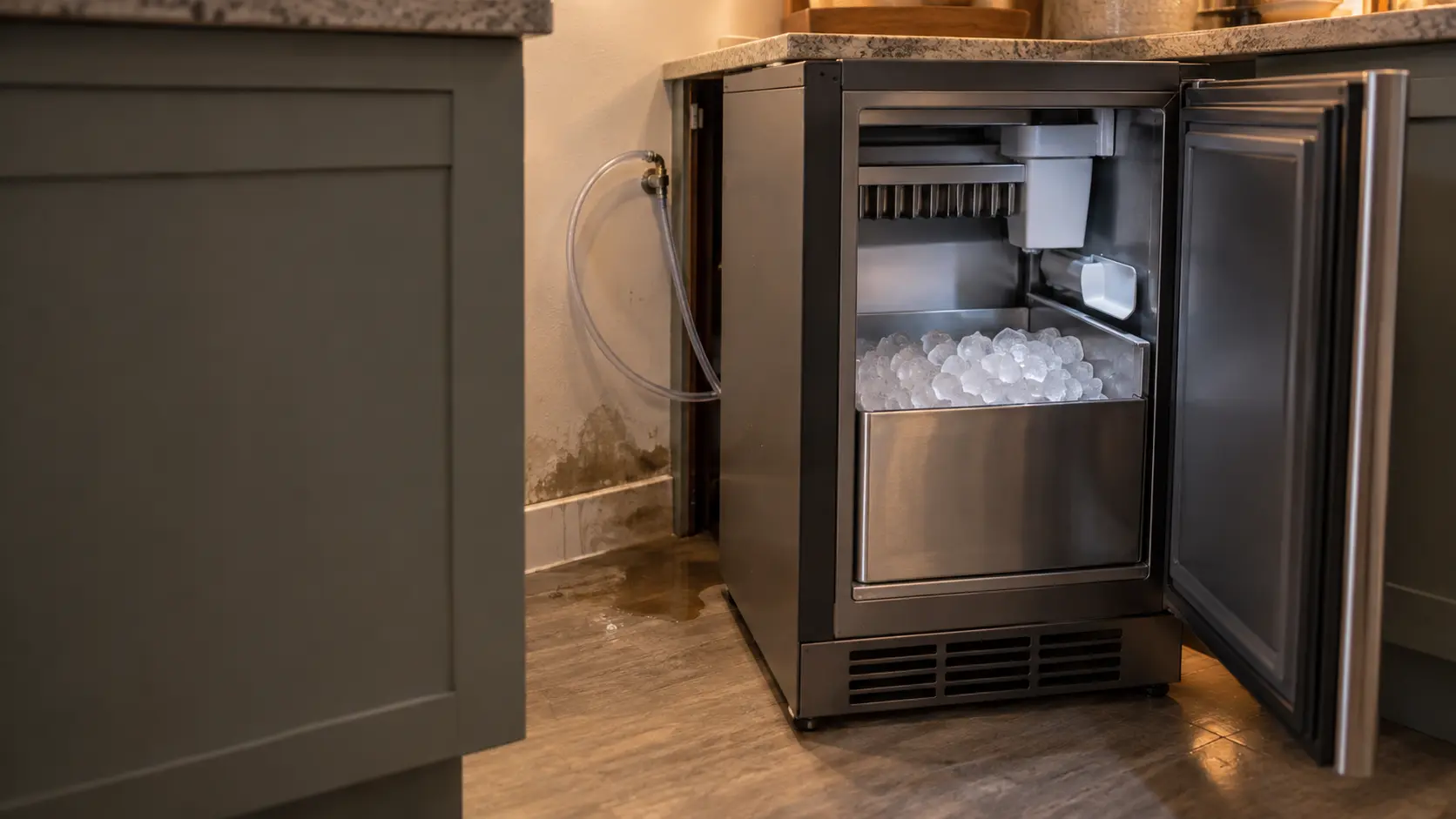
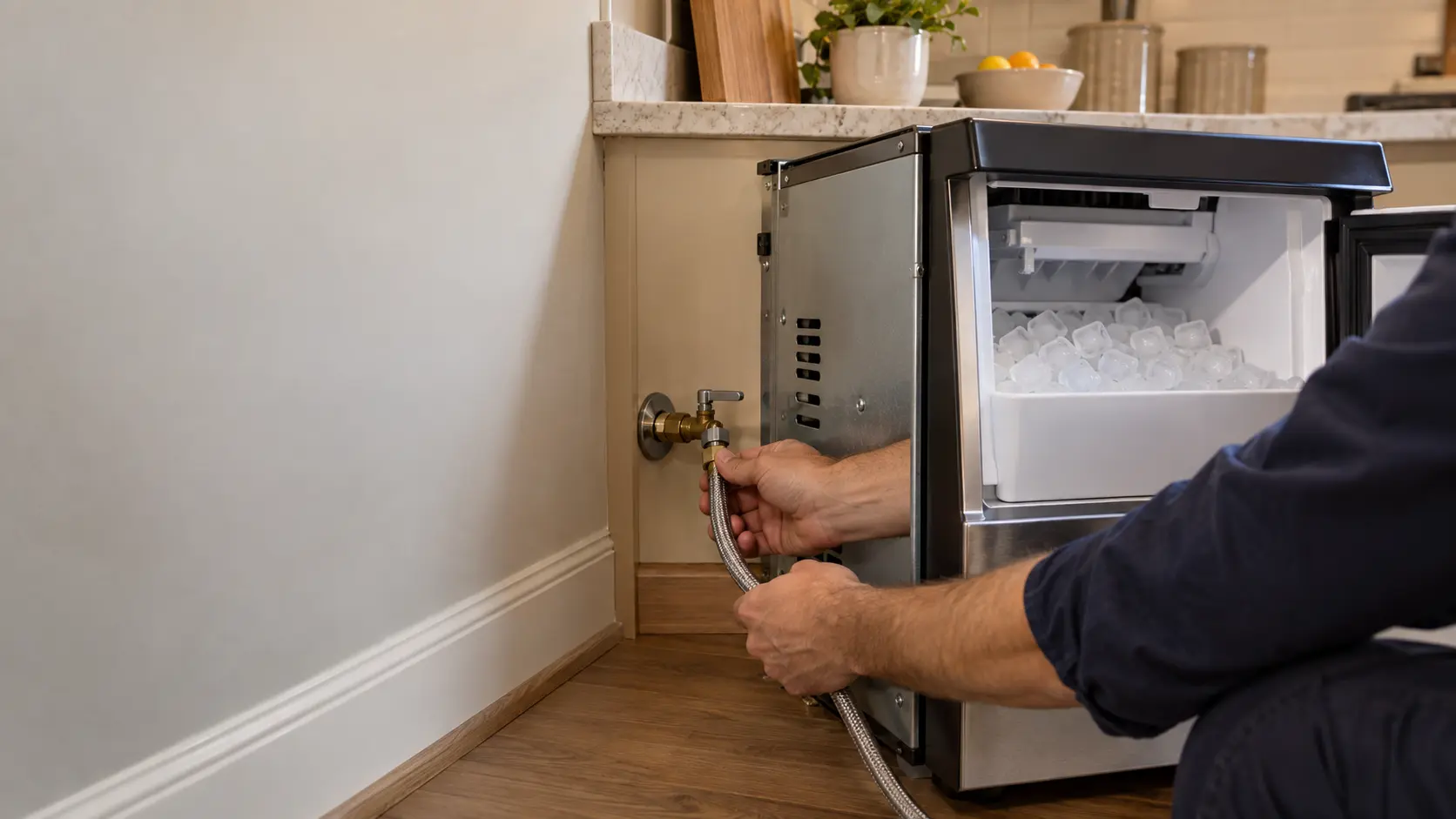
A plumbed ice maker is fed through its own shutoff valve, most often a small quarter-turn or multi-turn valve under the kitchen sink, on the wall behind the unit, or on a pipe in the basement directly below. Turning it clockwise until it stops ends the flow within seconds, because the line to the ice maker is under pressure the whole time it is open. If the valve is under the sink and the floor between you and the sink is dry, that is the fastest fix.
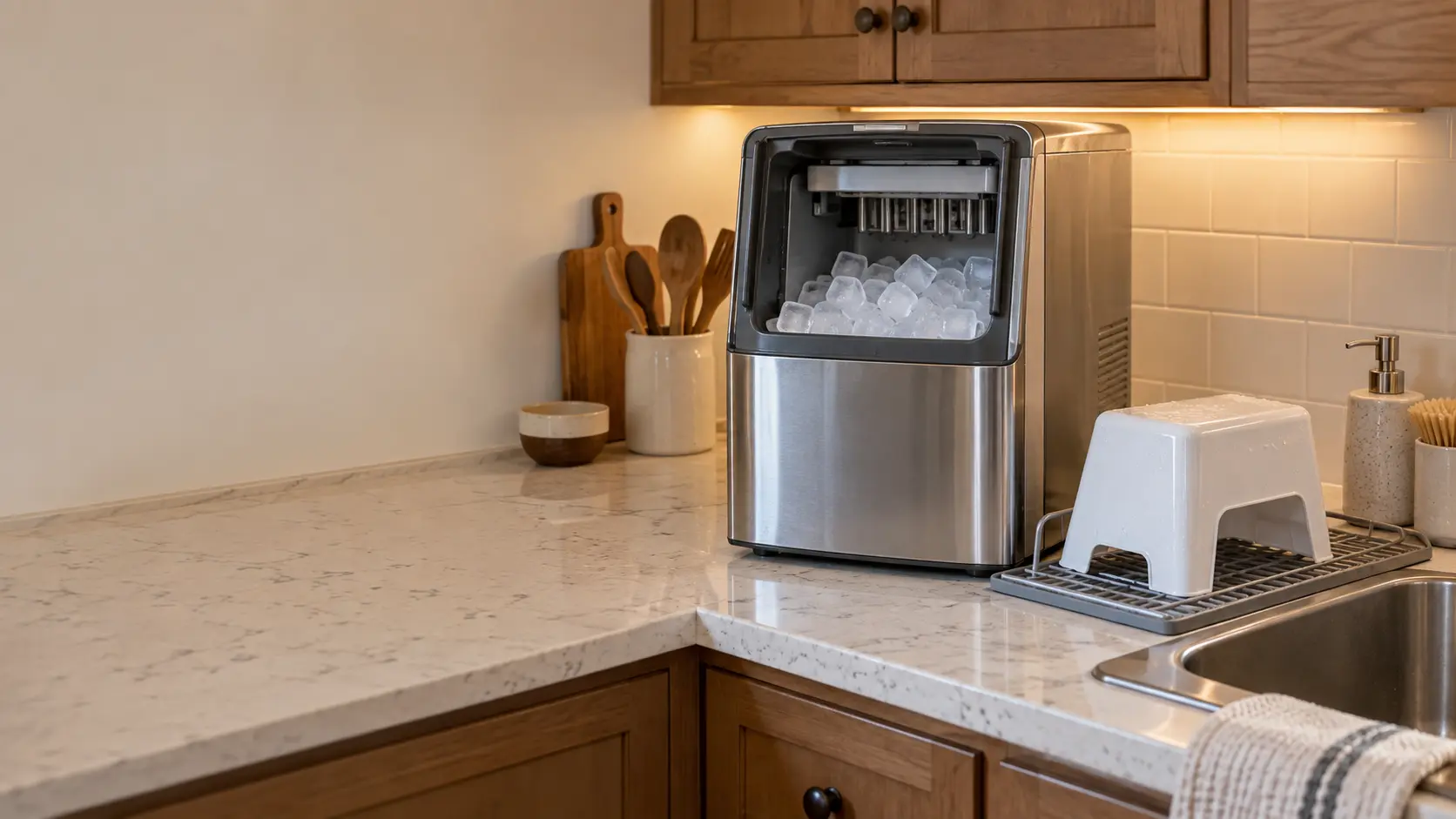
A countertop nugget ice maker has no supply line, so a leak from one is limited to what its reservoir and bin hold. Move it away from the outlet only after it is unplugged with dry hands on a dry counter.
When the valve is behind the wet outlet
Behind a door ice maker, the valve and the outlet often share the same patch of wall. Do not reach into that space. Close the main water shutoff for the house instead, which is usually where the service pipe enters, near the water heater or in a garage or crawlspace, then open a faucet on the lowest floor to take the pressure off the line.
Source: GE Appliances — Side by Side Owner's Manual and Installation Instructions (49-60198) — The water line is under pressure at all times; certain plastic lines crack or rupture with age and cause water damage

Switching off the circuit from a dry panel
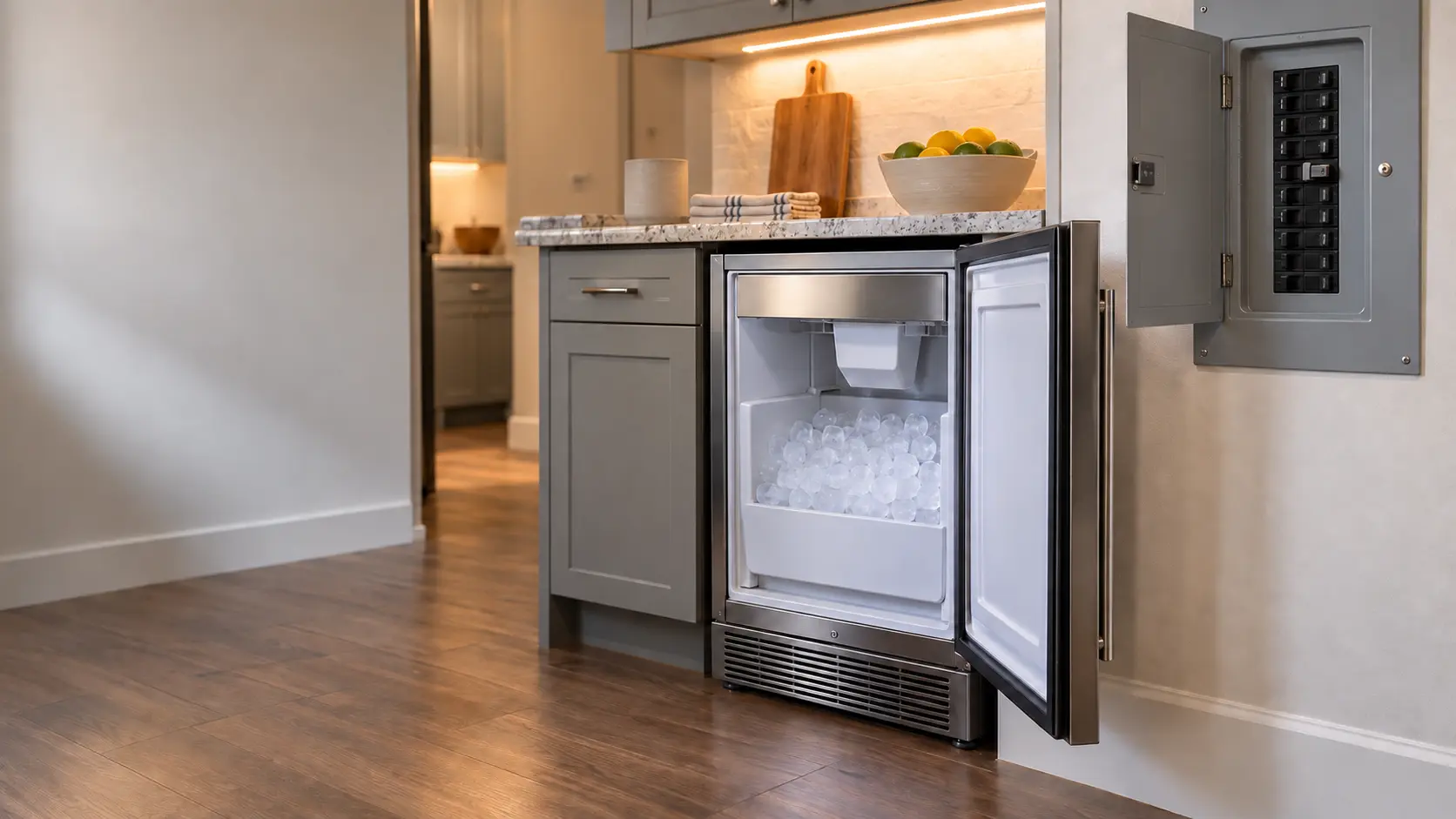
Once the water is stopped, the outlet is still live. Switch off its circuit at the electrical panel, but only if the panel is in a dry place and you can reach it standing on a dry floor with dry hands. Ready.gov does advise cutting the electricity to prevent a shock, on the condition that you can do it safely, and that condition is the whole rule here. A panel in a basement that is taking water is not safe to touch; leave it alone and phone the power company or an electrician.
Breaker labels are often wrong or missing. If you cannot tell which breaker feeds the kitchen outlet, switching off the main breaker is the safer choice, as long as the same dry-panel rule holds.
When a GFCI outlet has already tripped
A GFCI outlet, the kind with Test and Reset buttons, may already have cut the power by the time you arrive. Treat it as live anyway until the breaker is off, and do not press Reset while anything around it is wet. Some makers of built-in units prefer a dedicated circuit without a GFCI: U-Line's nugget ice maker guide says one is not recommended for its unit because of nuisance tripping, while pointing owners to local code. Whatever is installed, a trip during a leak is doing its job.
Source: Ready.gov — Floods — Do not touch electrical equipment if it is wet or if you are standing in water; turn off the electricity to prevent electric shock if it is safe to do so; U-Line — User Guide and Service Manual, UHNB115 nugget ice maker — A GFCI is not recommended for the unit because of nuisance tripping (consult local codes); do not use a plastic supply line, which is under pressure and may crack or rupture with age; gravity drain needs at least a 1 inch drop per 48 inches of run and no traps
Where the water usually comes from
With the water and power both off, the source can be found calmly. Most leaks on the floor come from a handful of places, and where the puddle started tells you which. Water that appeared at the back wall points to the supply line or its fittings; water from under the front, from inside the freezer, or from a cabinet under the bar points elsewhere.
- Puddle at the back wall: supply line, fittings or inlet valve.
- Ice or water in the freezer under the mold: overfill or a frozen fill tube.
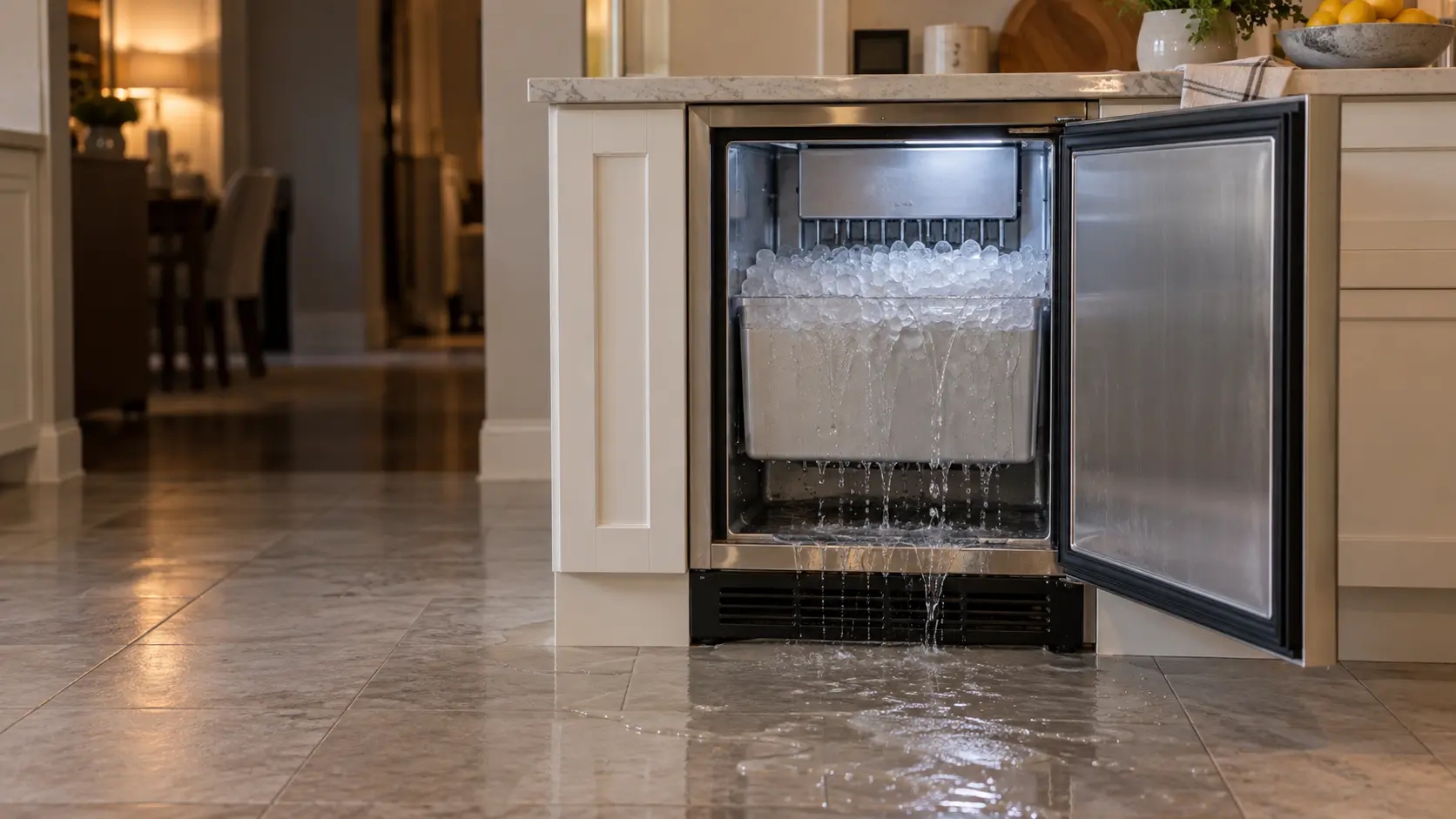
- Water pooling inside the bin cabinet: a blocked drain or a stopped drain pump.
- Water around a countertop unit: a tipped reservoir or an open drain cap.
Door and freezer ice makers
On these, the usual sources are a compression nut at the back that loosened when the unit was pulled out, a cracked plastic line, a split in the water inlet valve, or a fill tube that froze so the next fill ran over the mold and melted down to the floor. GE's installation instructions warn that plastic lines not approved for the purpose can crack or rupture with age, because they are under pressure all the time.
Undercounter units with a drain
A built-in unit makes meltwater all day and needs somewhere to send it. On a gravity drain, U-Line calls for at least a 1 inch drop per 48 inches of run and no traps in the line, and a drain that has lost its slope or clogged will back up into the cabinet. Units with a drain pump overflow when the pump stops or its line kinks.
Source: GE Appliances — Side by Side Owner's Manual and Installation Instructions (49-60198) — The water line is under pressure at all times; certain plastic lines crack or rupture with age and cause water damage; U-Line — User Guide and Service Manual, UHNB115 nugget ice maker — A GFCI is not recommended for the unit because of nuisance tripping (consult local codes); do not use a plastic supply line, which is under pressure and may crack or rupture with age; gravity drain needs at least a 1 inch drop per 48 inches of run and no traps
Before the power goes back on
Mop up and let the area dry fully, including the floor under the unit and the wall behind it. Leave the breaker off until the outlet box, the plug and the cord are dry, and look at them before restoring power. Brown marks on the outlet face, a melted edge on the plug, a burnt smell or a crackle when the breaker goes back on all mean switching off again and calling an electrician for the outlet.
Leave the ice maker's water valve closed until the leak is found and fixed. The unit can run with its ice maker switched off in the meantime, which keeps the freezer cold while nothing new fills. Water that reached the inside of a cabinet or a wall cavity is worth noting when you book, because it can keep dripping and staining after the source is fixed.