When the water that made it was not safe
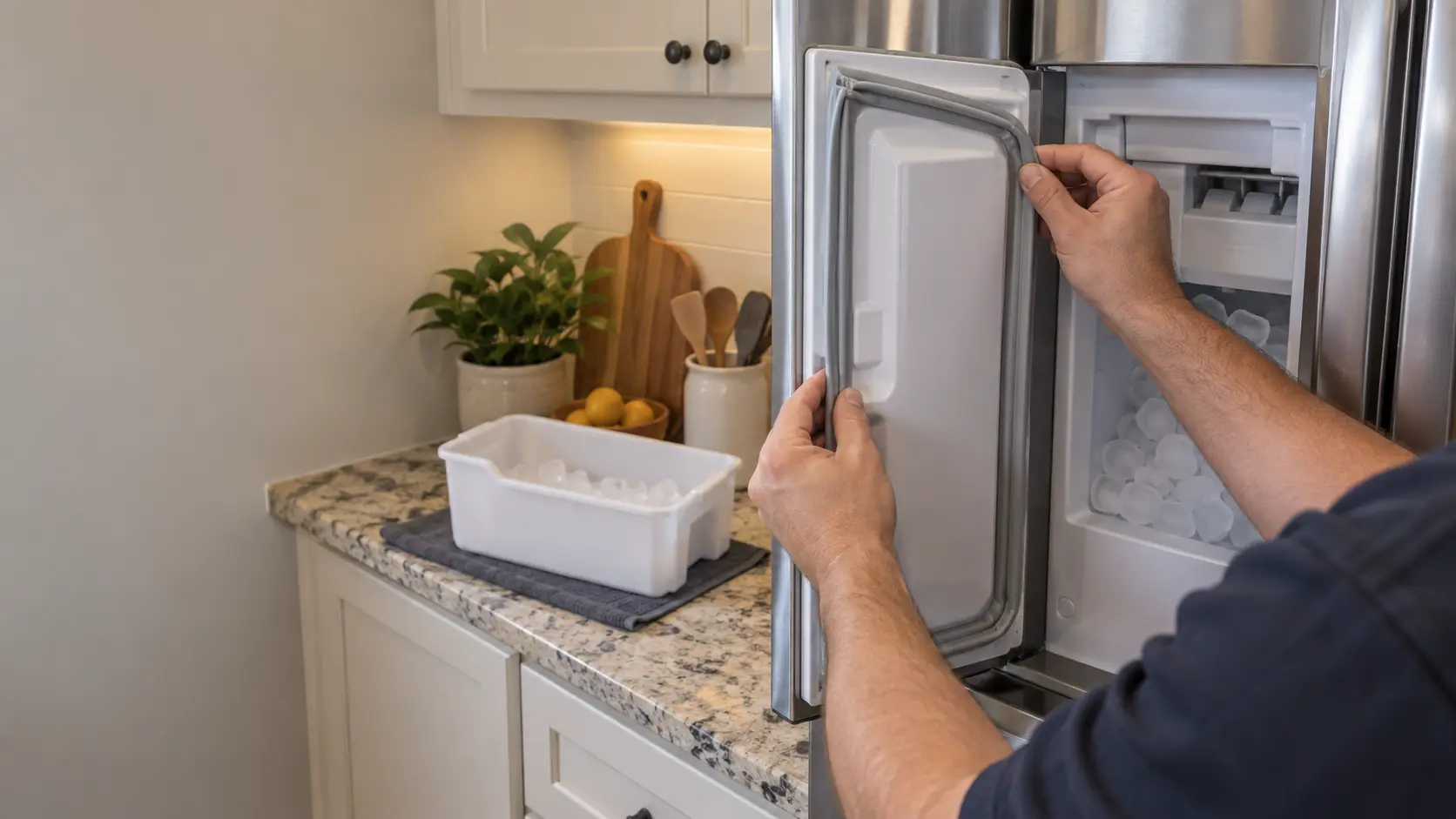
Deciding when to throw out ice starts with the simplest rule, which is also the strictest: ice is only as safe as the water it was made from on the day it froze. When the local utility issues a boil notice, CDC's household guidance is to throw out all ice made with tap water and not to use ice from trays, dispensers or ice makers. The same toolbox, in its questions for a nitrate advisory, tells households to throw out all ice previously made with tap water as well.
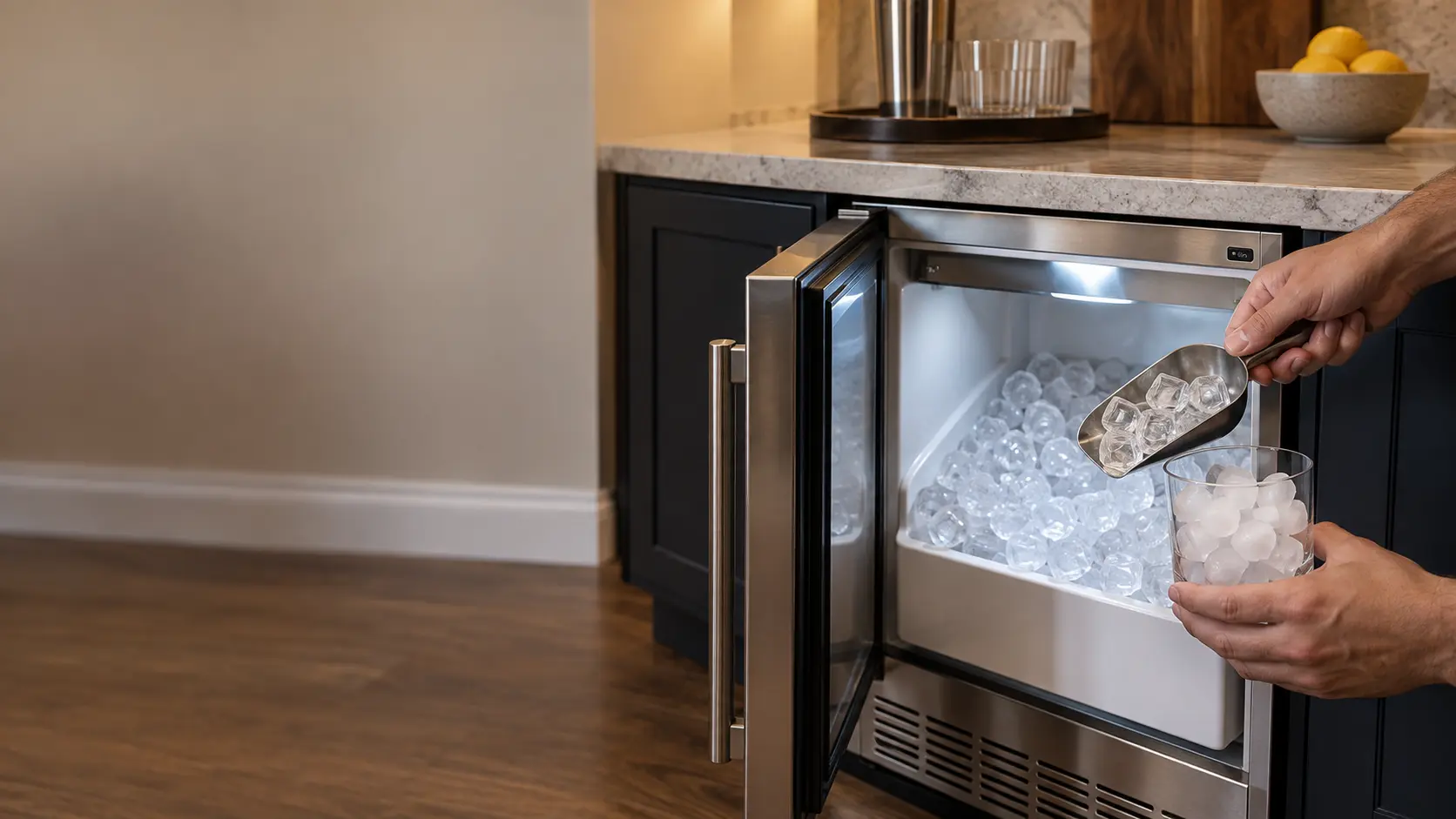
That covers every plumbed ice maker in the house at once: the door ice maker, the freezer ice maker, an undercounter unit in the bar and any trays filled at the sink. A well owner who finds out after a test that the water carries bacteria or nitrate is in the same position as a city customer under a notice, and the bin goes too.
The ice made just after the notice ends
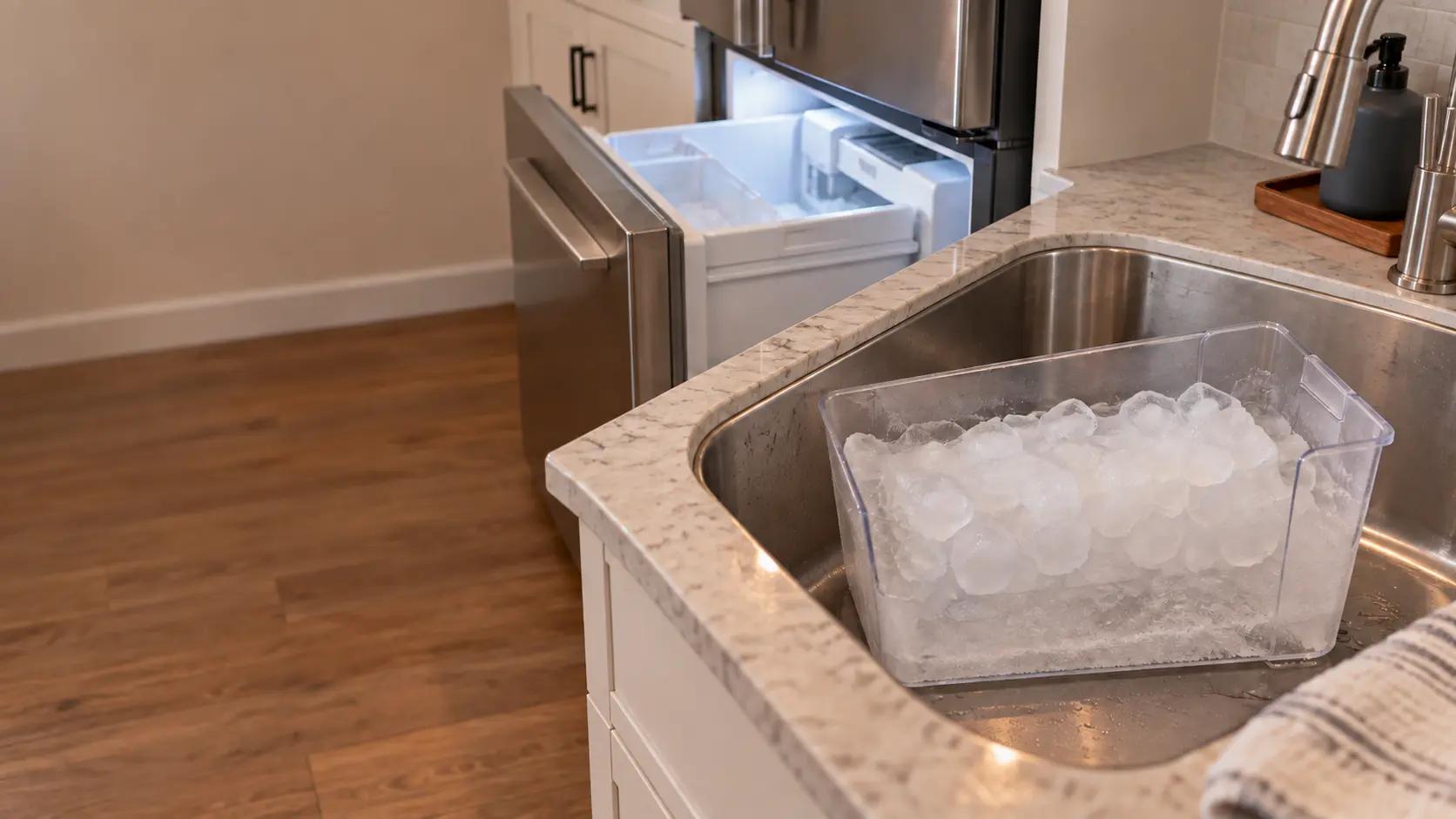
Throwing out what was in the bin is not the end of it. The first bin made once the notice is lifted comes from water that sat in the valve, the filter and the fill tube, so CDC's checklist has it filled completely and thrown away as well. The full routine is in our guide to ice after a boil water notice.
Source: CDC — Drinking Water Advisory Communication Toolbox (2016) — Do not use ice from trays, dispensers or ice makers; throw out all ice made with tap water; under a nitrate advisory throw out ice previously made with tap water; after an advisory fill the ice container once more and throw that ice away
After a power outage or a flood
A power outage does not spoil ice the way it spoils meat, but it changes what is in the bin. FDA says a full freezer holds its temperature for about 48 hours with the door closed, and a half-full one for about 24. Cubes that are still separate and hard when the power returns kept frozen and can stay. Cubes that have welded into one block, or a bin with water in the bottom, thawed and refroze, and that water sat in the bin while it did.
Flooding is simpler: FDA's advice is to discard any food that may have come into contact with flood water, and ice counts as food. An undercounter ice maker that stood in floodwater has water in its pump, drain and bin, and it needs cleaning and a check before any ice from it is used again.
- Separate, hard cubes after a short outage: keep them.
- Cubes fused into a block or water in the bin: throw them out.
- Any ice touched by floodwater: throw it out.
- An undercounter unit that stood in water: clean and inspect before use.
Source: FDA — Food and Water Safety During Power Outages and Floods — A full freezer holds its temperature about 48 hours (24 hours half full) with the door closed; discard any food that may have come into contact with flood water

After a new line, filter or machine
Brand-new plumbing sheds whatever was left inside it, from bits of copper shaving to thread sealant and the sediment disturbed when a valve is tapped into a pipe. GE's owner's manual tells people to throw away the first few batches of ice to allow the water line to clear, and U-Line's nugget ice maker guide asks for the ice made during the first two or three hours to be discarded because dirt or scale may come loose from the line.
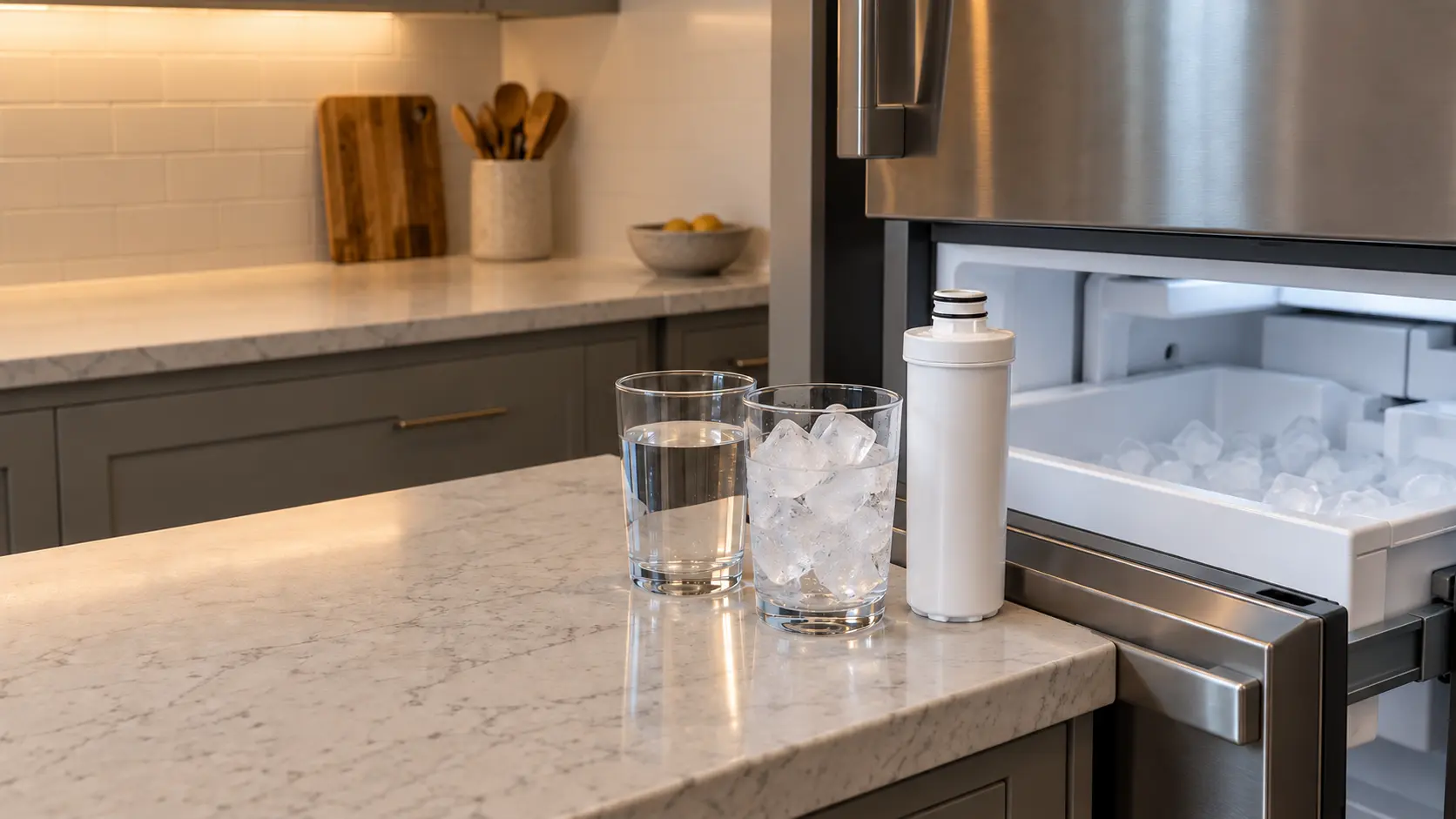
The same logic applies after a new filter cartridge, a repaired inlet valve or a line that was disconnected so the unit could be pulled out. The first cubes often carry carbon dust from the cartridge or trapped air that makes them cloudy and brittle; both clear within a few cycles.
Source: GE Appliances — Side by Side Owner's Manual and Installation Instructions (49-60198) — Throw away the first few batches of ice to allow the water line to clear; old cubes become cloudy, taste stale and shrink; several cubes joined together is normal; U-Line — User Guide and Service Manual, UHNB115 nugget ice maker — Discard the ice produced during the first two or three hours of operation to avoid dirt or scale that may dislodge from the water line
Ice that has simply been there too long
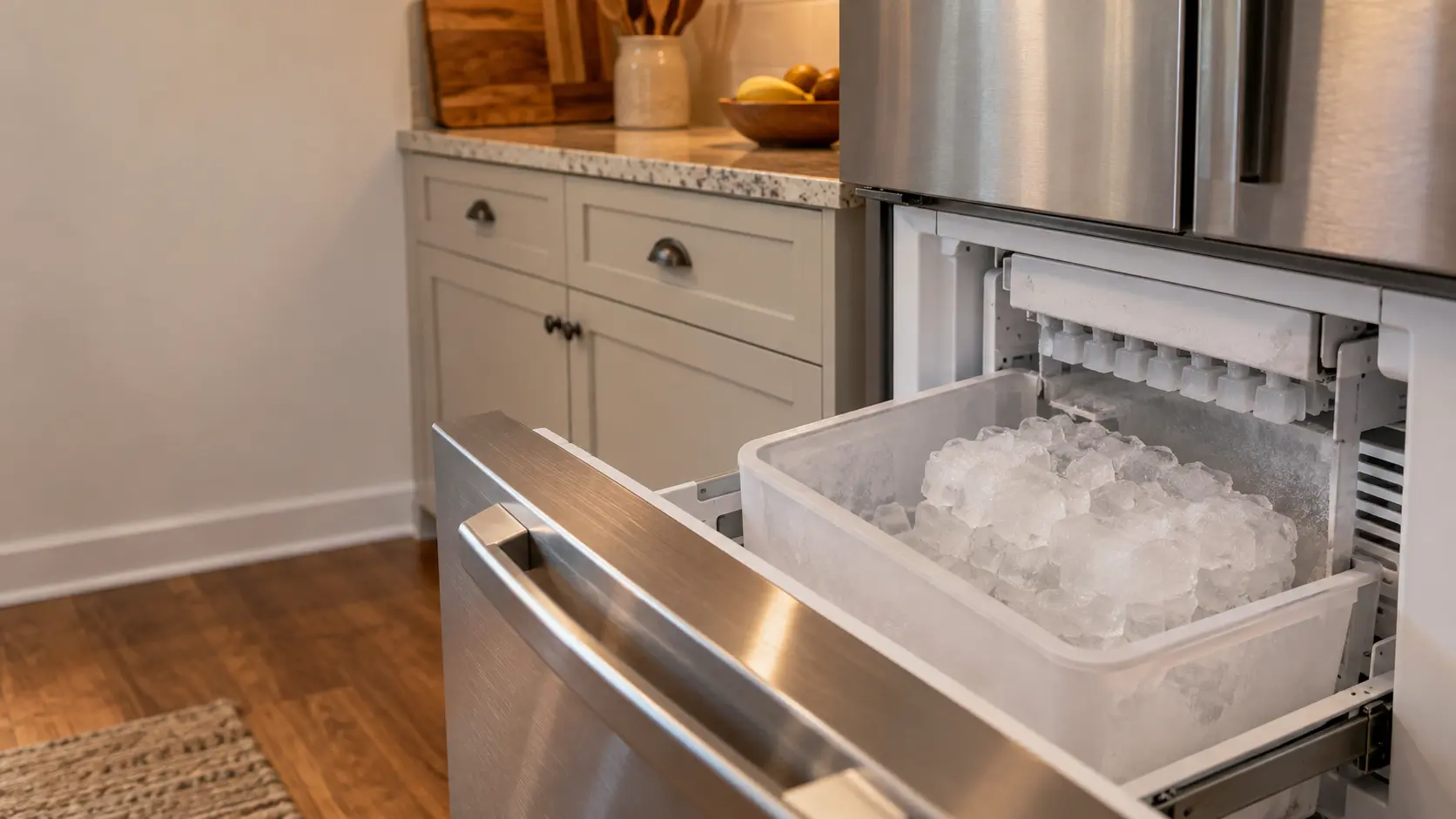
Ice that nobody uses slowly shrinks. The cubes lose water straight to the cold dry air of the freezer, their corners round off, and they take on a dull, cloudy look. GE's manual puts it plainly: if ice is not used often, old cubes become cloudy, taste stale and shrink. A bin that is always full and rarely emptied is the usual sign that half of it has been there for a month.
Old cubes also pick up smells. Ice is porous enough on its surface to take on odors from uncovered food, fish, onions or a spilled container, and a drink shows it instantly. If the ice tastes like the freezer, dump the bin, wash it, and look for the source before the next batch fills.
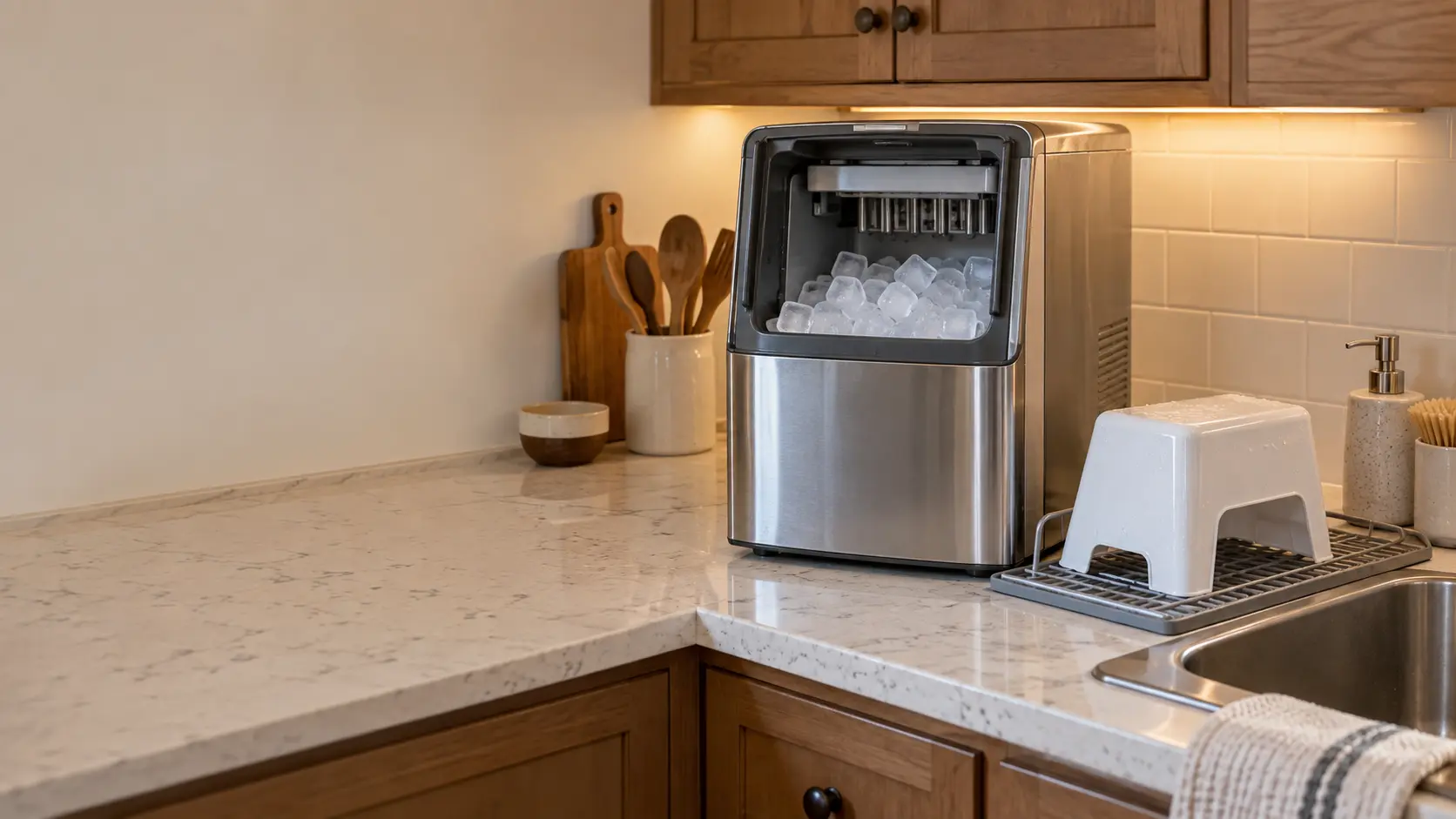
Countertop nugget ice and its meltwater
A countertop nugget ice maker is not a freezer. Its nuggets slowly melt in the bin, the meltwater runs back to the reservoir, and it is frozen again. GE's Opal manual recommends draining the machine when you are not using much ice, because meltwater recirculating over and over may affect the taste.
Source: GE Appliances — Side by Side Owner's Manual and Installation Instructions (49-60198) — Throw away the first few batches of ice to allow the water line to clear; old cubes become cloudy, taste stale and shrink; several cubes joined together is normal; GE Appliances — Opal Nugget Ice Maker Owner's Manual (49-1000418) — Drain the Opal when not using much ice, because continuous recirculation of meltwater may affect taste
Things you can see in the bin
Some signs need no event behind them. They come from the ice maker, the bin or the water, and each points to a different problem, so it is worth noting what you saw before you rinse it away.
Throwing out the ice clears the symptom. If the same thing is back within a week, the cause is still in the machine or the water, and the next step is cleaning, a new filter or a visit.
- Black grains that fade after a few batches: filter carbon.
- White flakes or a gritty feel: scale in the machine.
- Pink, orange or black film: growth in the bin or chute.
- Hard fragments that are not ice: a broken part, so stop using the ice and book a check.
Specks, flakes and slime
Black specks are often carbon from a new filter, and they stop once it has been flushed. White flakes floating as the ice melts are usually mineral scale, common in nugget and clear-ice machines on hard water. Pink or black slime on the bin, the chute or the ice itself is growth, and everything it touched gets washed.