
Keeping water, wiring and ice safe
Water, power and clean ice
guides.
What to do when water from an ice maker reaches the floor near an outlet, when ice must be thrown out after a boil-water notice or an outage, and how to keep the ice you serve clean.
Mon–Sat, 8am–8pm
- Three guides
- Read before you book
- Says where to stop
Book a visit
Three short steps, about a minute.
or call (844) 773-0701
Loading appointment form…
The appointment form couldn’t load. Please try again.
Water, power and clean ice,
guide by guide.
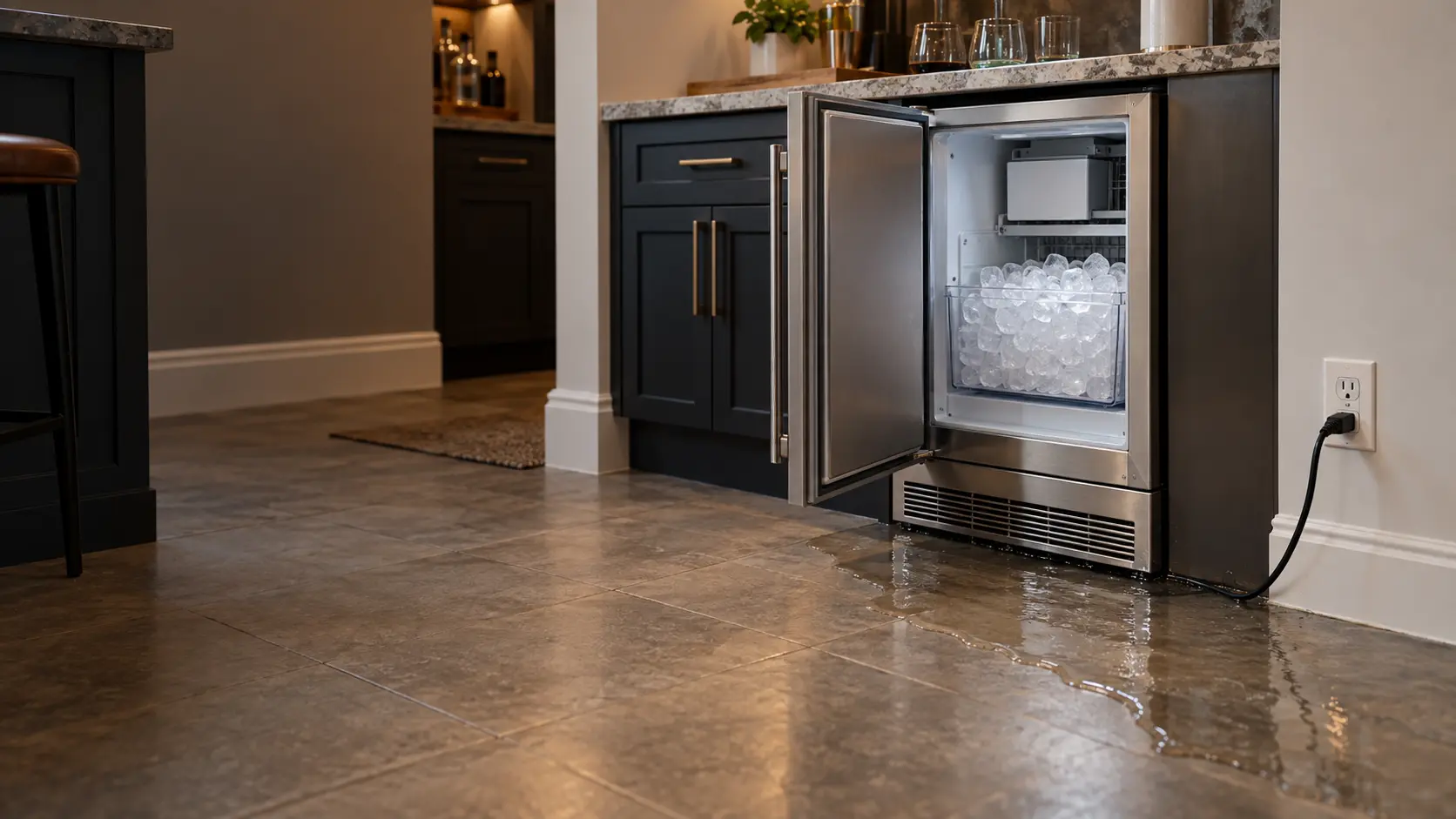
An ice maker brings two things into the kitchen that do not mix well: a water line under pressure and an electrical outlet a short reach away. It also turns tap water into something people put straight into their mouths, weeks after it froze. This section covers the moments when those facts stop being background: a utility notice about the water, water spreading across the floor toward a plug, and a bin of ice that may no longer be fit to use.
All 18 guides
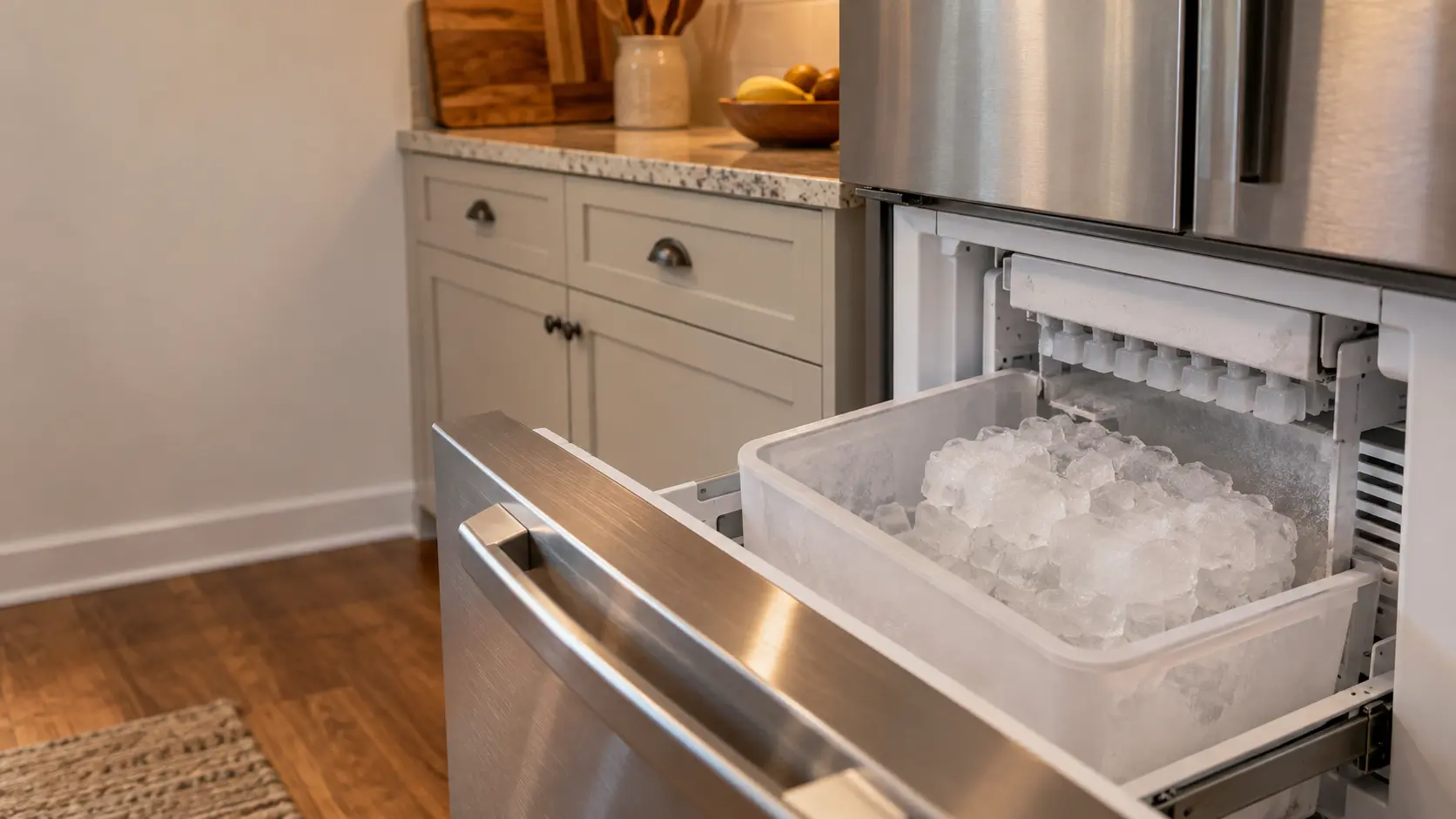
Keeping water, wiring and ice safe.
Each guide starts with the first move rather than the diagnosis. Under a boil water notice that means switching the ice maker off and emptying the bin; with a leak near an outlet it means staying out of the water, closing the supply valve and switching the breaker off only from a dry panel. The figures come from CDC, FDA, Ready.gov and the ice maker makers' own manuals, and each source is printed beside the part of the guide it backs.
Read these before you need them if the household relies on a door, freezer, undercounter or countertop ice maker every day. They say plainly where your part ends and the utility, an electrician or our technician takes over.
Not sure where to start?The short answerIce After a Boil Water Notice: What to Dump, Flush and Replace
Using an ice maker after a boil water advisory safely means switching it off as soon as the notice arrives, throwing out every cube made from tap water, and restarting only once the utility lifts the notice.
The short answerWater From the Ice Maker Near an Outlet: The Safe Order of Moves
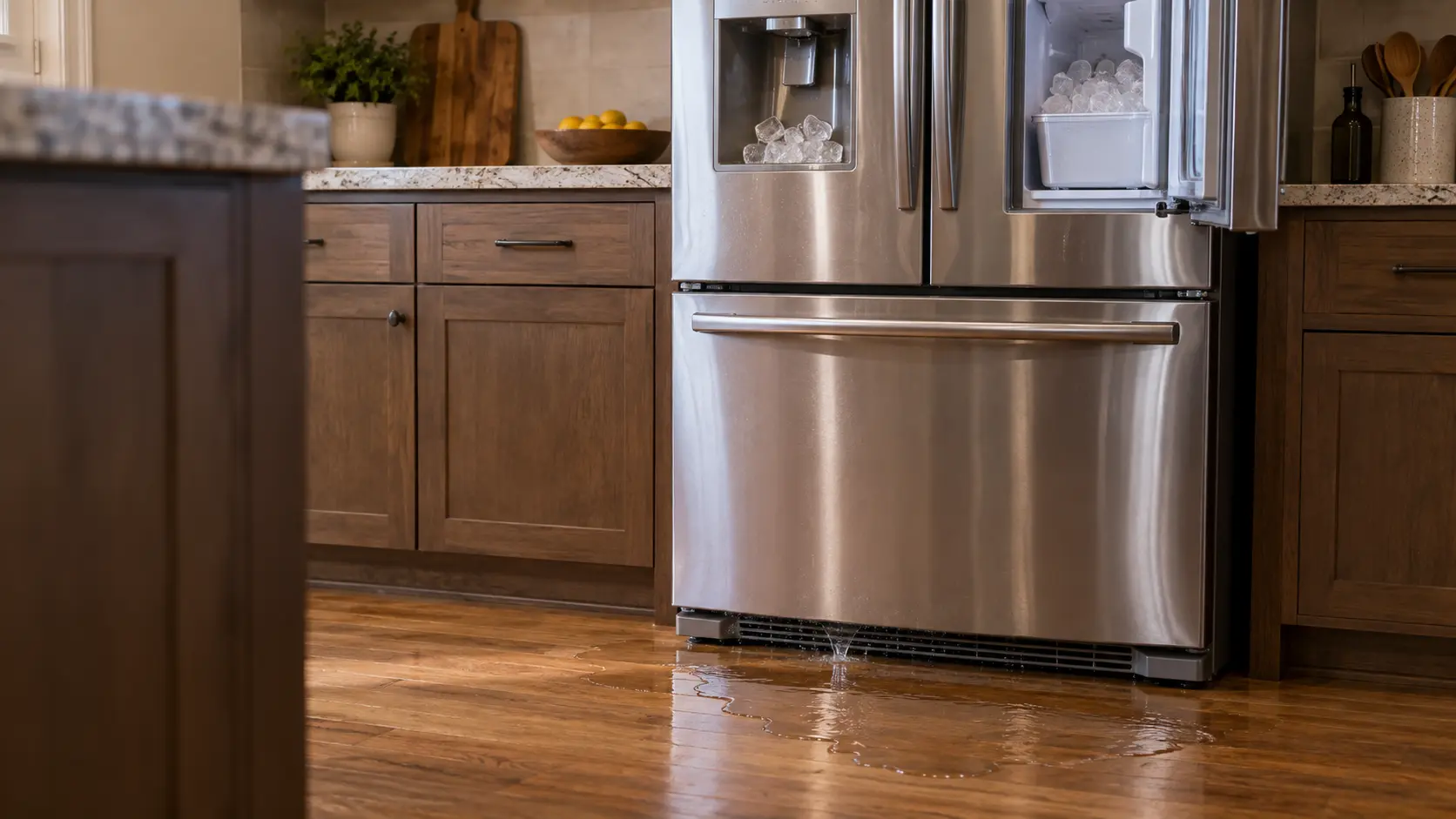
With an ice maker leaking near an outlet, keep out of the water and leave the plug alone.
The short answerWhen to Throw Out the Ice in the Bin, and When It Can Stay
Knowing when to throw out ice comes down to three triggers: the water that made it may have been unsafe, the ice may have thawed and refrozen, or it came from a new line, filter or machine.
When reading
is not enough.
If the checks in these guides did not settle it, the visit picks up from there, stop by stop.
What repairs cost- 01Water traced from the valve to the mold
- 02A number before the work
- 03Everyday ice maker parts already on board
- 04Filled, frozen and dropped in front of you
The problems
these answer.
Each has a page of its own, with the causes in the order worth checking.
All 17 problems

Questions about
water, power and clean ice.
Water is spreading from the ice maker toward a plug. What comes first?
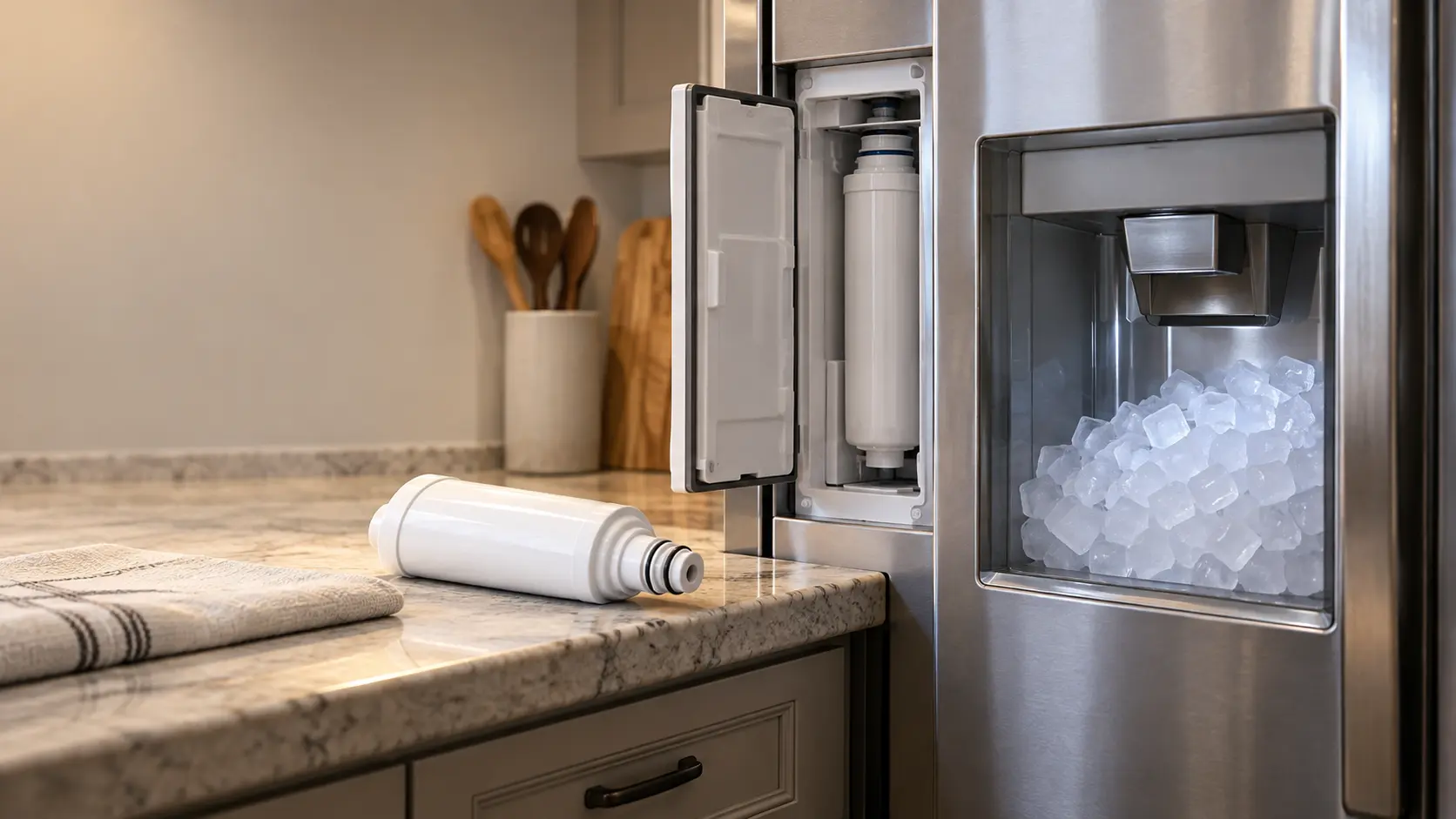
Does a water filter make the ice safe during a boil water notice?
How can I tell whether ice in the bin should be thrown away?
The other
sections.
Split by what you are trying to find out rather than by which part of the appliance it concerns.
All guides
Back to your everyday
Let’s get your ice maker working again.
Three short steps online, or one call. Tell us what you are seeing and pick a window that works.